


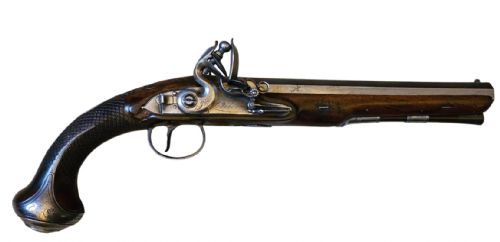
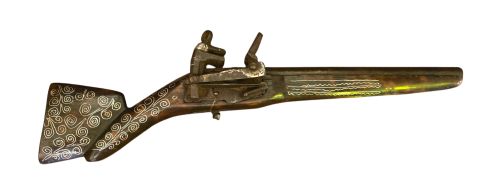


Dark Steel Flintlock
These dark steel flintlock pieces are functional firearms and military arms that collectors seek for their historical mechanics and period craftsmanship.
Dark Steel Flintlock
A dark steel flintlock comprises historical firearms and militaria originating from periods such as the seventeenth, eighteenth, and nineteenth centuries. The listings on this page include pistols, muskets, and rifles spanning styles like Georgian, Balkan Ottoman, and Napoleonic French.
Buyers will encounter various forms ranging from cavalry holster pistols and sea service pistols to long pistols and musketoons. These arms reflect military service and civilian protection across Britain, Europe, and the Ottoman Empire.
How they were made
Makers shaped these arms using dark steel and iron for the barrels, locks, and mechanisms, combined with stocks carved from walnut, walnut wood, and general wood. These primary components formed the durable foundation required for operational firearms of the era.
Craftsmen often enhanced the metal and wood components with applied brass mounts, bone details, and silver inlay. These decorative additions frequently coincided with engraving work on the mounts and metal parts.
Overcoat pistols were cleverly tucked away by mail coach inspectors to ensure unexpected travellers kept their distance.
What varies in quality
The standard of a piece depends on the crispness of the lock mechanism, the integrity of the wooden stock, and the presence of original maker markings or proofs. Higher grade examples retain clear evidence of their working parts and original configuration without undue replacement.
Artistry in the mounts and decorative metalwork also distinguishes individual arms, as seen in engraved brass or silver inlay. Pieces carrying identified maker signatures or specific military service connections demonstrate greater historical documentation.
T. Potts, London·Barber of Newark
The Dark Steel Flintlock Glossary
- Flintlock
- A firearm ignition mechanism that uses a flint struck against a steel frizzen to create sparks for igniting the powder charge. This system dominated military and civilian arms for centuries.
- Snaphaunce
- An early type of flintlock mechanism that preceded the standard true flintlock design. It utilises a separate mechanism for opening the pan cover.
- Frizzen
- The upright steel plate on a flintlock struck by the flint to produce sparks and expose the priming powder in the pan. Its grooved surface aids spark generation.
- Musketoon
- A shorter, lighter version of a musket designed for cavalry or naval use. It delivered similar firepower in a more maneuverable length.
Dark Steel Flintlock: Frequently Asked Questions
What is a dark steel flintlock?
A dark steel flintlock refers to historical firearms utilising the flint ignition system with steel barrels and lock mechanisms. These pieces encompass pistols, muskets, and rifles from the seventeenth to the nineteenth centuries.
They reflect the military and personal defence technology of periods such as the Georgian era and the Napoleonic Wars.
How do I identify the period?
Dating relies on stylistic indicators, lock mechanisms, barrel proof marks, and construction methods. Seventeenth-century arms often feature snaphaunce or early locks, while eighteenth-century examples show standard flintlock configurations.
Military contracts and maker signatures also provide precise chronological markers for British and continental pieces.
Were these used in combat?
Many examples saw active service with cavalry units, naval forces, and infantry during major historical conflicts. Military models include cavalry holster pistols, sea service arms, and campaign muskets.
Civilian variants were similarly carried by travellers and officials for personal protection on the road.
How should I care for one?
Preserving these arms requires a stable environment with controlled humidity to protect the steel and wooden components. Light cleaning and oiling maintain the metal surfaces without altering their historical finish.
Displaying them securely away from direct sunlight ensures the walnut stocks and metal parts remain stable.