
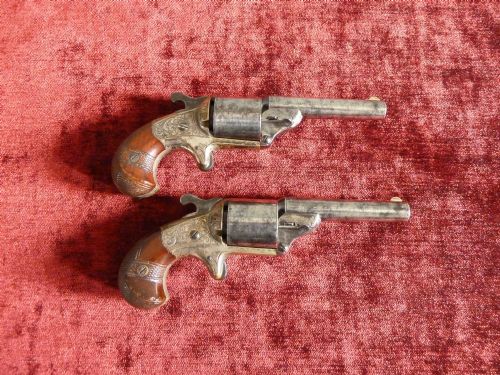


Engraved Brass Firearm
These engraved brass firearm pieces combine utility with decorative metalwork across centuries of global arms production.
Engraved Brass Firearm
An engraved brass firearm centres on historical weaponry embellished with metalwork, most frequently appearing as 18th-century flintlock pistols and regional matchlocks. Buyers seeking an engraved brass firearm encounter items spanning the 17th century through the Victorian era, with notable examples originating from British, French, and Ottoman workshops.
The category encompasses pocket pistols, holster pistols, and muskets featuring decorative metal mounts alongside functional mechanisms. Regional variations include Balkan snaphaunce mechanisms and North-West Frontier matchlocks adorned with brass bands.
Makers such as Thomas Henshaw, I Parr, J. Robinson, and A.W Spires represent the British subset of these arms. Meanwhile, continental and Ottoman pieces display distinct regional aesthetics through elaborate metal mounts and stock inlays.
Quality factors in manufacture
The calibre of engraving on the brass mounts dictates much of the visual distinction between standard arms and masterwork pieces. Crisp, deep chiselling demonstrates superior workshop skill compared to shallow or worn surface scratching.
The integration of secondary materials such as mother-of-pearl and silver inlay reveals the artisan's precision. Original signed locks and matching components elevate the integrity of the piece.
Some pocket pistols have barrels that unscrew entirely like jam jars.
Thomas Henshaw·I Parr·J. Robinson·A.W Spires
The Engraved Brass Firearm Glossary
- Snaphaunce
- An early type of flintlock mechanism utilising a steel separate from the pan cover. It preceded the more unified flintlock systems common in later centuries.
- Miquelet
- A form of snaplock ignition featuring an external mainspring and a combined battery and pan cover. This mechanism appeared frequently on Mediterranean and Ottoman arms.
- Turn-off pistol
- A firearm where the barrel unscrews from the breech to facilitate loading. This design eliminated the need for a ramrod in pocket pistols.
- Matchlock
- An early firearm action where a slow-burning match is lowered into the priming powder by pulling a lever. It represents one of the earliest mechanical ignition systems.
- Holster pistol
- A large firearm designed to be carried in a saddle holster rather than a pocket. These weapons saw extensive use by cavalry officers.
Engraved Brass Firearm: Frequently Asked Questions
How do I identify a flintlock mechanism?
A flintlock mechanism uses a piece of flint held in a cock to strike a steel frizzen, creating sparks that ignite the priming powder. This system replaced earlier matchlock and wheel-lock designs.
Observing the external hammer, pan, and frizzen helps confirm the ignition type. Most 18th-century examples utilise this specific method.
Where were brass mounted pistols made?
These arms originated across various global centres, including London, Birmingham, France, and the Ottoman Empire. Each region imparted distinct artistic styles to the brass mounts.
British makers signed their work on the lock plate, while Balkan and Ottoman pieces relied heavily on decorative brass bands and regional stock shapes.
What is a turn off barrel?
A turn-off barrel unscrews entirely from the frame to allow powder and ball to be loaded directly into the breech. This design improved projectile sealing upon firing.
Gunsmiths used this method frequently on pocket and coat pistols during the Georgian era to ensure compact efficiency.
How should I display my firearm?
Displaying historical arms requires stable indoor humidity and protection from direct sunlight to preserve the wood and metal. Wall mounts or enclosed cabinets provide physical security and environmental control.
Ensuring the firearm remains unloaded and inert is the primary requirement for safe domestic display.