

Dark Rosewood Wine Table
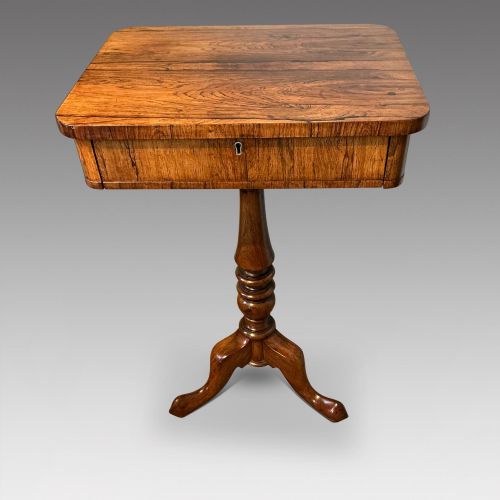
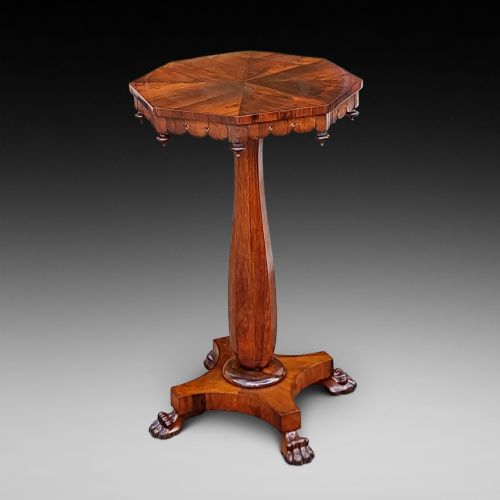
A dark rosewood wine table brings rich grain and compact elegance to a corner, serving glasses or a lamp with quiet authority.
Dark Rosewood Wine Table
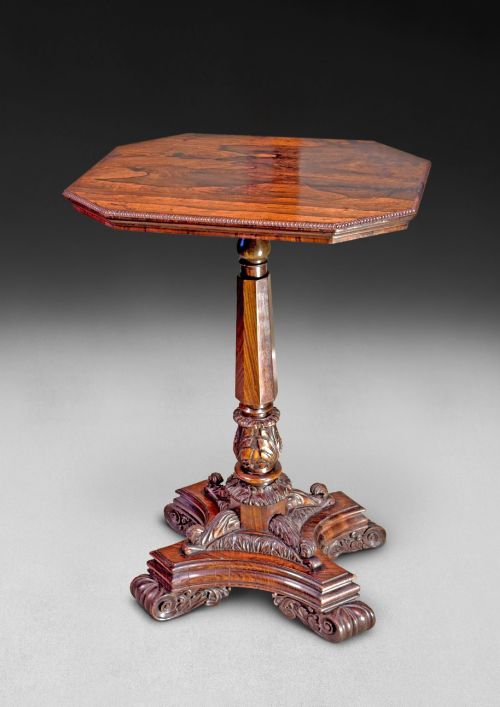
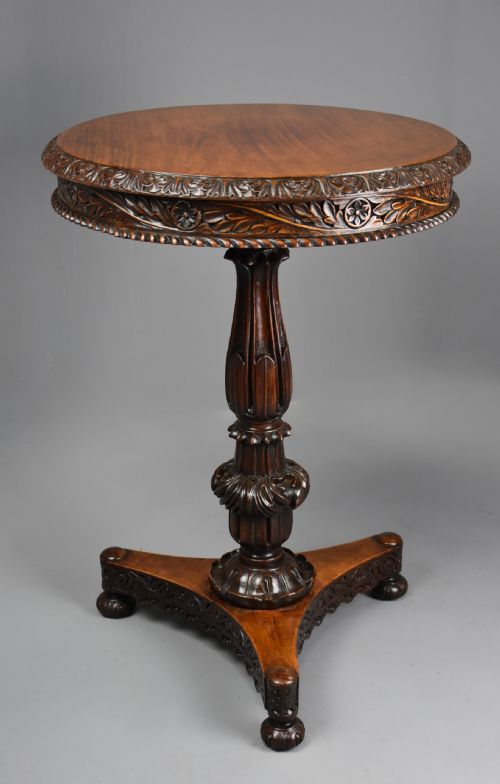
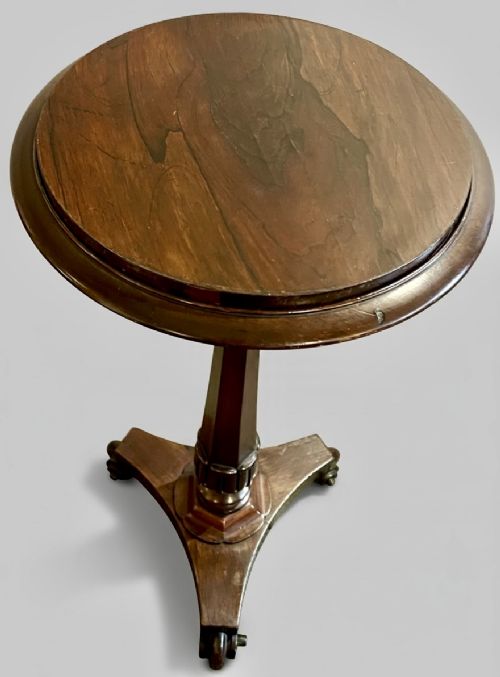
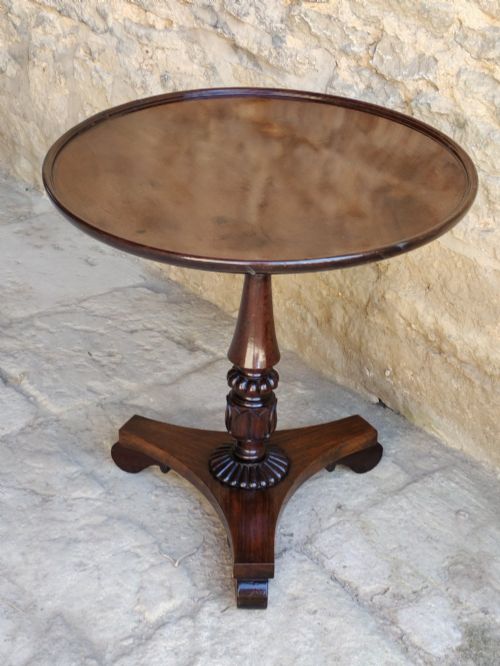
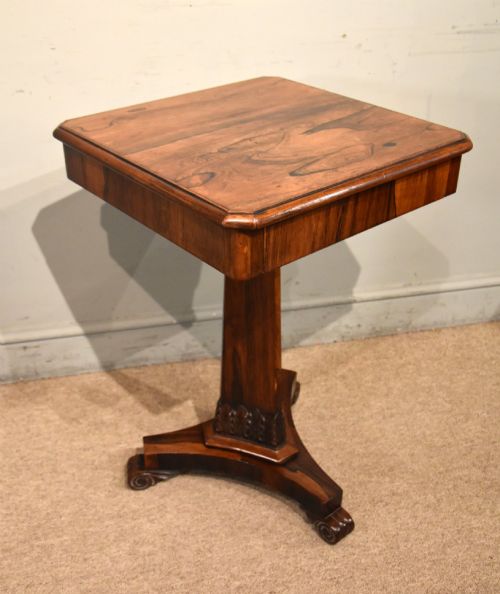
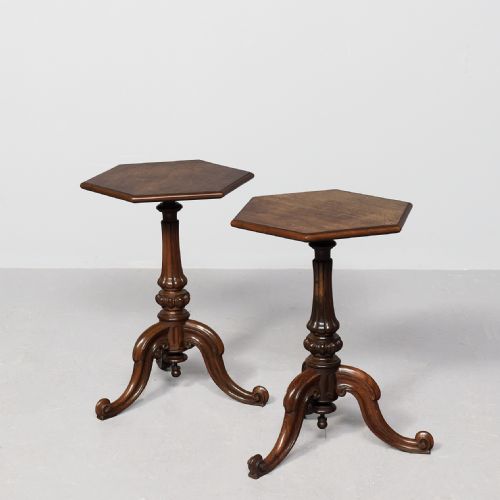
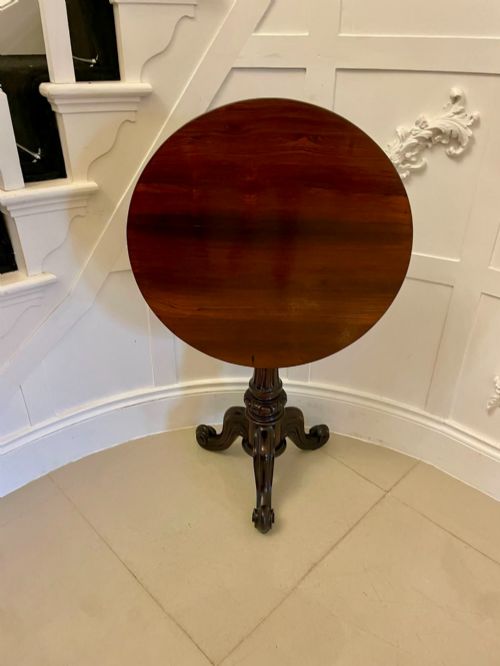
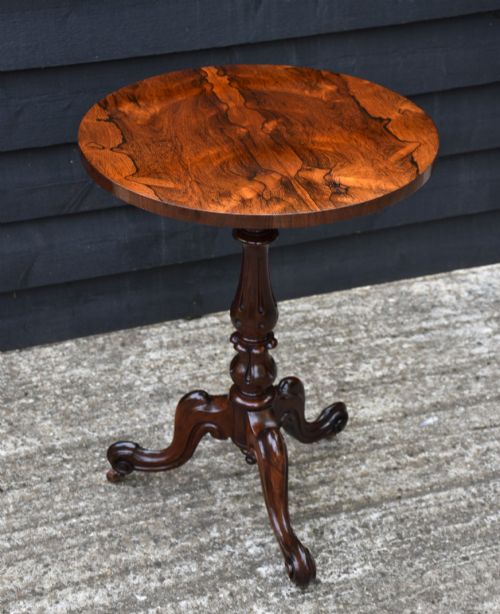
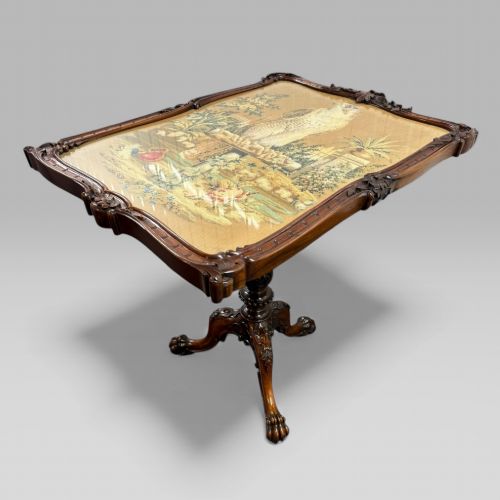
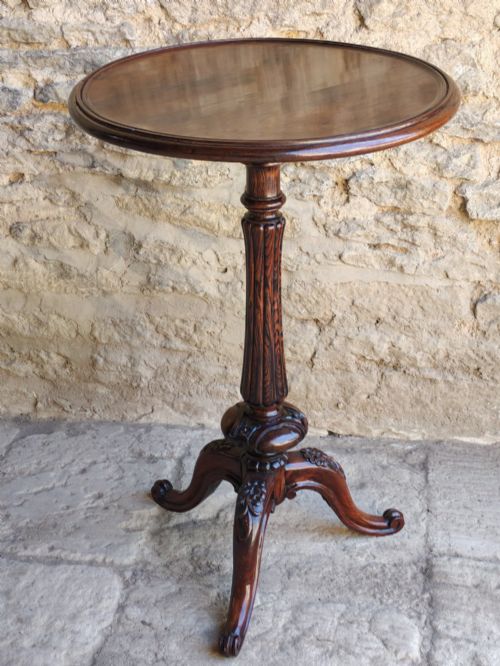
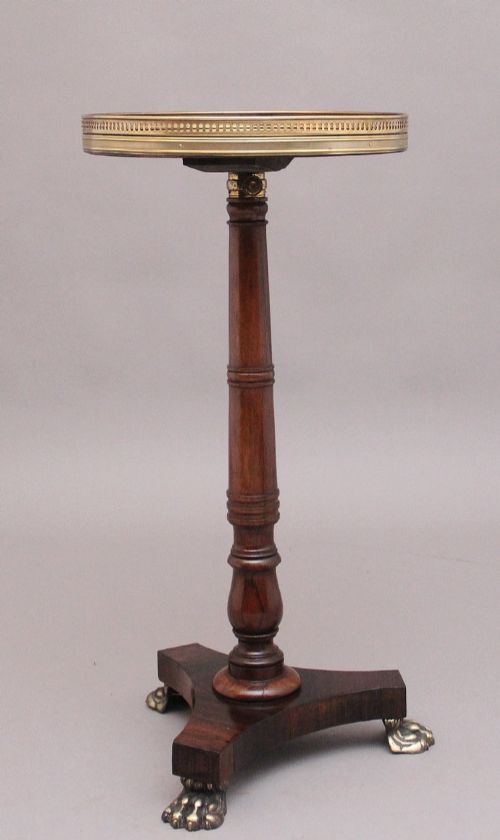
A dark rosewood wine table combines dense tropical timber with compact proportions designed for holding glasses or small objects beside a chair. These pieces emerge predominantly from nineteenth-century workshops, spanning Regency, William IV, and Victorian periods.
Most examples feature a circular or square top mounted on a central pillar supported by a tripod base, though occasional rectangular and multi-tiered forms appear. The selection frequently includes tilt-top mechanisms, beadwork borders, and brass stringing that reflect the refined tastes of their original domestic settings.
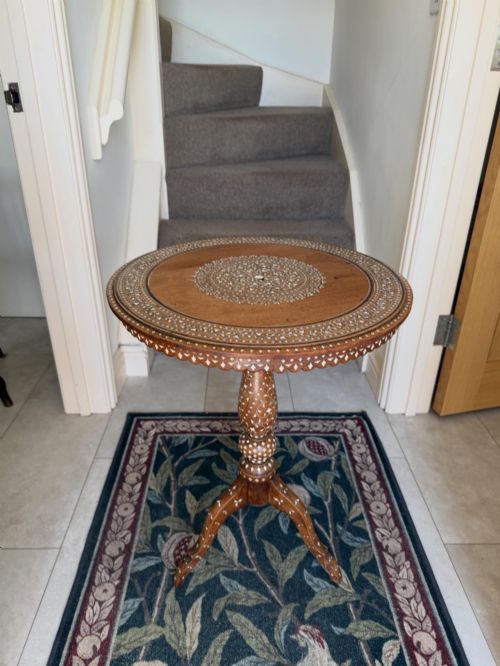
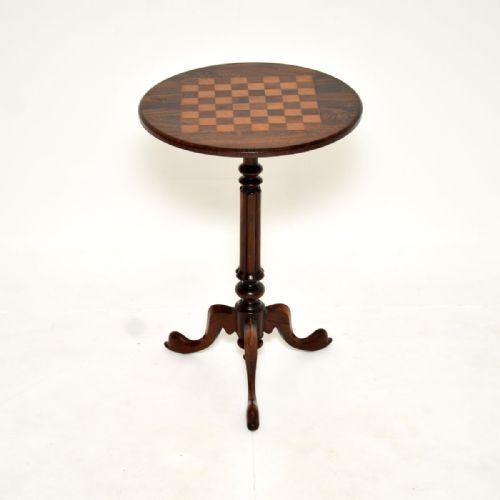
Beyond standard pillar formats, the selection extends to related occasional furniture such as lamp tables, games tables, and low stands. Regional variations introduce Anglo-Indian carving and Chinese export influences alongside traditional English cabinetmaking.
Materials and construction
Cabinetmakers select heavy, dark rosewood for its deep colour and distinct grain patterns, frequently applying solid timber or rich veneers over secondary hardwoods. Turning, carving, and joinery define the structural uprights and tripod legs, often incorporating tilt mechanisms for convenient storage.
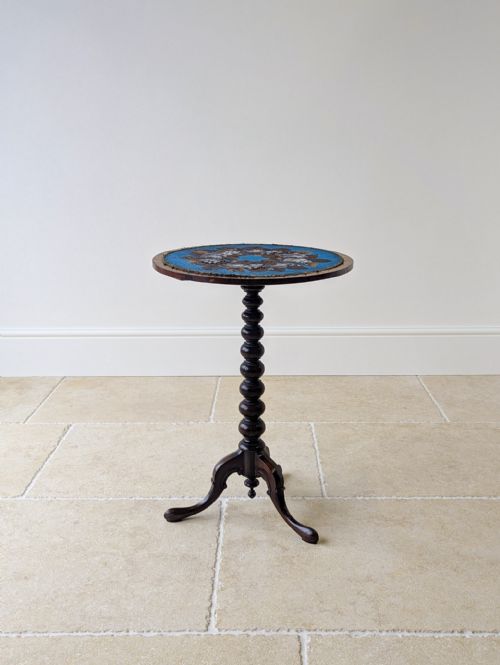
Decorative embellishments rely on contrasting materials such as brass inlay, satinwood stringing, marble inserts, and bone inlay. Specialised techniques include beadwork carving and barley twist turning, which add tactile depth to the structural columns and edges.
Dark Rosewood Wine Table Retail Price Guide 2026
Typical asking prices for dark rosewood wine table among the pieces listed under this phrase on Sellingantiques today, from the lower quarter to the upper quarter. They describe what is for sale here now, not the wider market.
Listings feature nineteen-century rosewood wine tables alongside nineteenth-century occasional tables, jardiniere stands, and games tables.
Defining quality
The distinction between standard production and exceptional work rests on the crispness of carved details, the choice of timber figurations, and the stability of the central pillar assembly. Superior pieces demonstrate meticulous hand-joinery and harmonious proportions that retain their structural integrity through centuries of use.
Gillows·Collinson and Lock·George Bullock
The Dark Rosewood Wine Table Glossary
- Tripod table
- A small freestanding table supported by three legs radiating from a central pillar. This configuration prevents wobbling on uneven floors.
- Tilt-top mechanism
- A hinge under the tabletop that allows the surface to fold vertical when not in use. It enables the table to stand flat against a wall.
- Brass stringing
- Narrow strips of brass inlaid into channels cut in the wood surface. This technique creates fine geometric lines and decorative borders.
- Beadwork
- Carved ornamentation resembling a string of beads along the edge of a top or base. It is typical of the William IV period.
- Barley twist
- A spiral turning resembling a twisted rope on a table column or leg. This form adds dynamic vertical movement to the support.
Dark Rosewood Wine Table: Frequently Asked Questions
What is a wine table used for?
These small stands hold glasses, decanters, or reading lamps beside a seating area. Their compact size allows them to fit easily into tight corners or beside armchairs.
Historically, they served refreshments in morning rooms and drawing rooms. Today, they function well as accent pieces or bedside tables.
How do I identify a Regency wine table?
Regency pieces often feature clean architectural lines, rosewood timbers, and classical tripod bases. Brass stringing and brass inlay are common decorative elements from this era.
Proportions tend to be refined and balanced, reflecting early nineteenth-century neoclassical design influences.
What is a tilt-top table?
A tilt-top table includes a pivoting catch beneath the surface that allows the top to lock into a vertical position. This mechanism enabled servants to store multiple tables compactly against the wall when not in use.
Most surviving examples retain a functioning brass or iron catch that secures the top when lowered.
How do I care for dark rosewood?
Dust the surface regularly with a soft, dry cloth to prevent accumulation. Keep the timber away from direct sunlight and heat sources to avoid fading and splitting.
Apply a quality wax polish sparingly when the wood appears dry, buffing gently to maintain the natural lustre.