

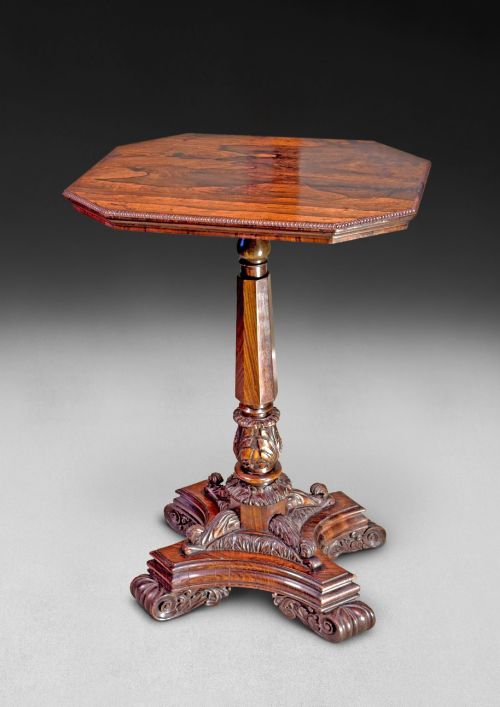
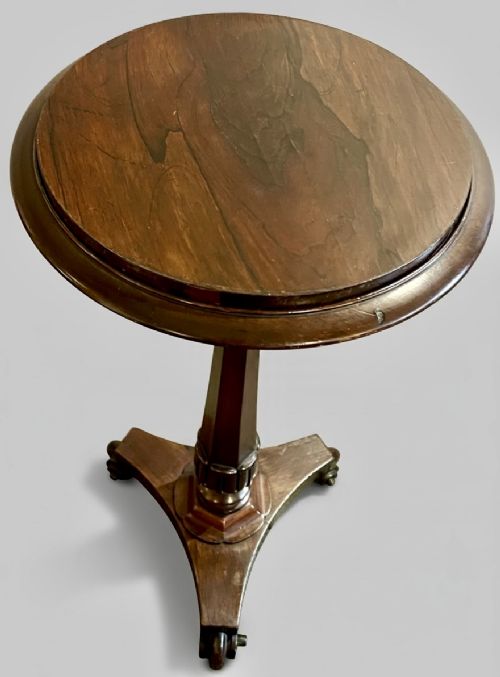
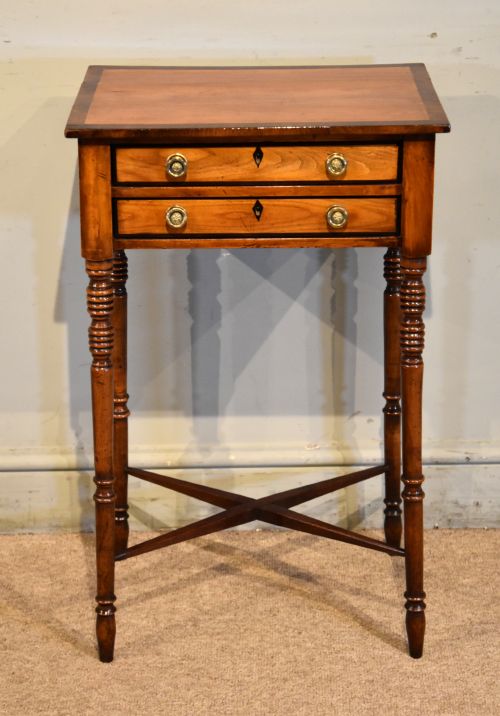
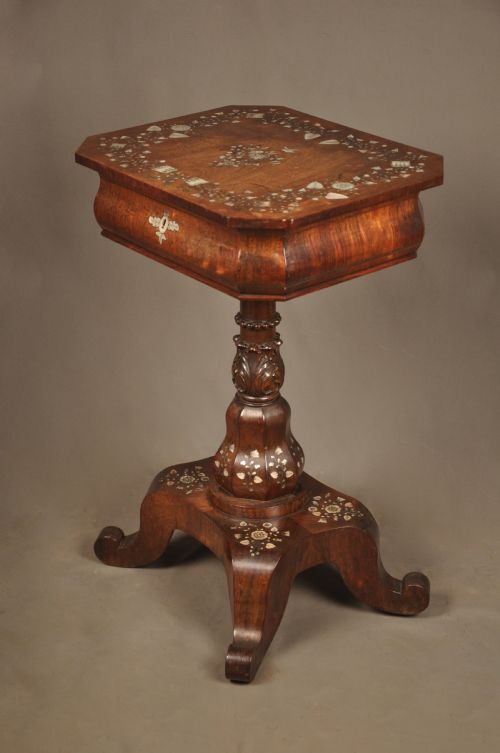

Georgian Rosewood Occasional Table
A georgian rosewood occasional table brings warmth and rich grain to a room, offering a compact surface suited to daily use.
Georgian Rosewood Occasional Table
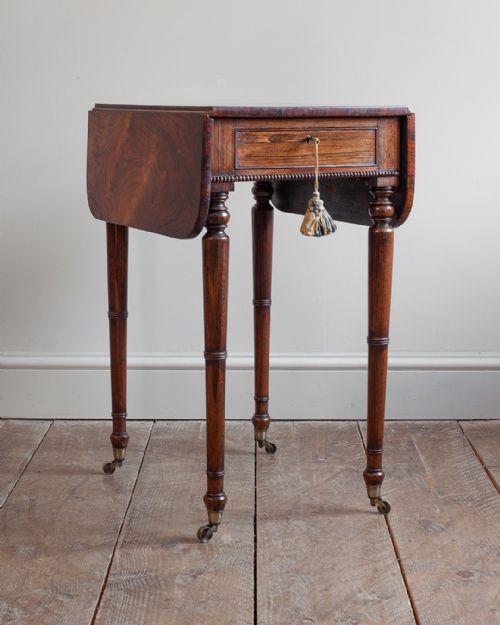
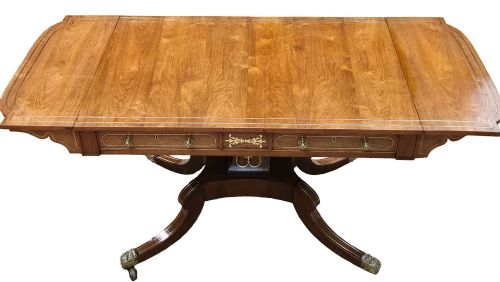
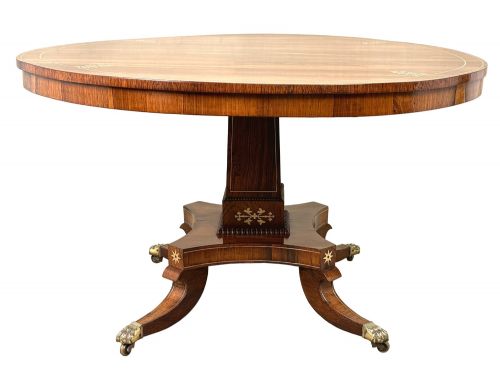
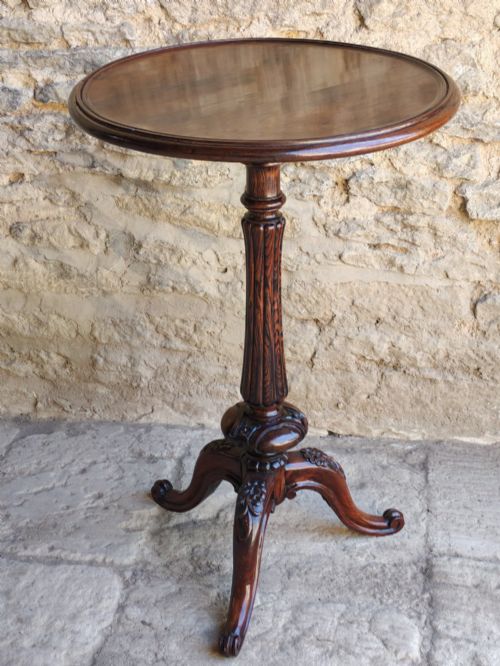
A georgian rosewood occasional table encompasses various small-scale furniture pieces designed for specific household tasks in the late eighteenth and early nineteenth centuries. You will frequently encounter sofa tables, work tables, and nest of tables alongside traditional circular lamp tables.
The pieces on this page span the Georgian, Regency, and William IV periods, reflecting shifts in taste from the restrained elegance of George III designs to the bolder forms of the early nineteenth century. Makers constructed these items for versatile placement in morning rooms, libraries, and drawing rooms.
While some examples serve purely as lamp or wine tables, others incorporate drawers, drop leaves, or nesting configurations to maximise utility. Rosewood remains the defining material across these forms, often paired with contrasting timbers.
Materials and Technique
Cabinetmakers utilised dense rosewood for its deep colour and pronounced grain, frequently applying veneers over a stable secondary wood to create expansive, figured surfaces. Solid rosewood also appears in simpler tripod and occasional tables from around eighteen-twenty.
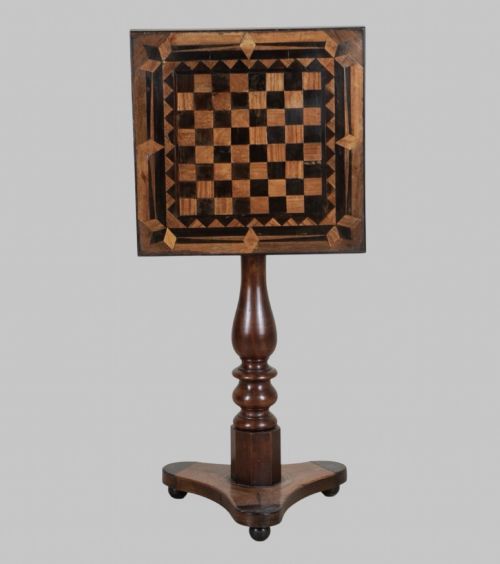
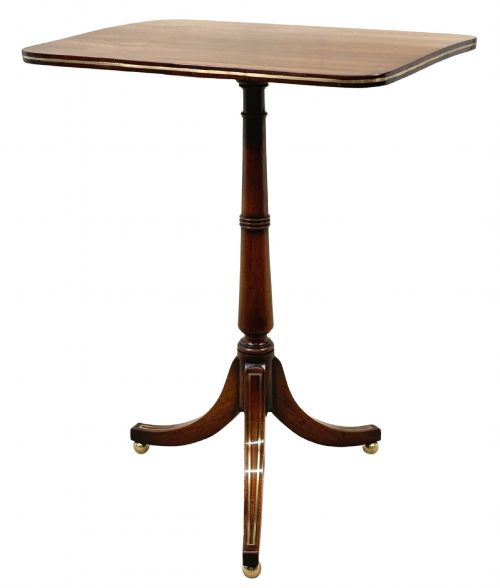
Brass inlay and brass stringing provide linear contrast on Regency and late Georgian examples, set directly into channels cut into the timber surface. Artisans integrated boxwood, satinwood, and mahogany for marquetry and border details.
Tables with specialised functions, such as sewing tables and games tables, incorporate intricate internal compartments, hinged lids, and drop leaves supported by folding brackets.
Georgian Rosewood Occasional Table Retail Price Guide 2026
Typical asking prices for georgian rosewood occasional table among the pieces listed under this phrase on Sellingantiques today, from the lower quarter to the upper quarter. They describe what is for sale here now, not the wider market.
Listings feature rosewood alongside supporting elements of brass, satinwood, and boxwood across various occasional forms.
Standards of Craftsmanship
The refinement of the rosewood grain and the precision of the brass inlay distinguish standard production from exceptional work. Finer tables exhibit carefully matched veneer panels that create symmetrical patterns across the top.
Structural integrity relies on the execution of joinery in table bases, pillars, and leg assemblies, particularly on pivoting sofa tables and nested quartetto sets. Smooth operation of drawers and drop leaves indicates superior workshop practice.
Gillows of Lancaster
The Georgian Rosewood Occasional Table Glossary
- Quartetto
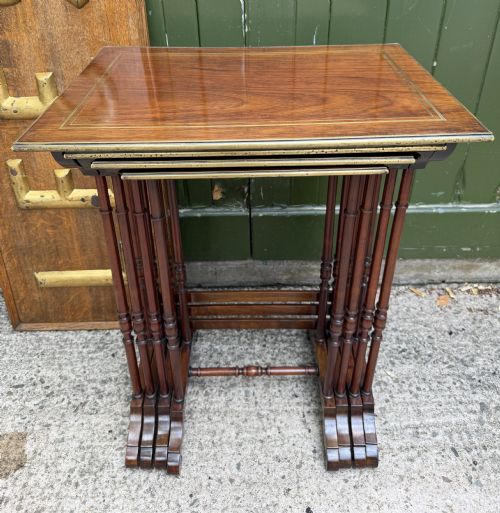
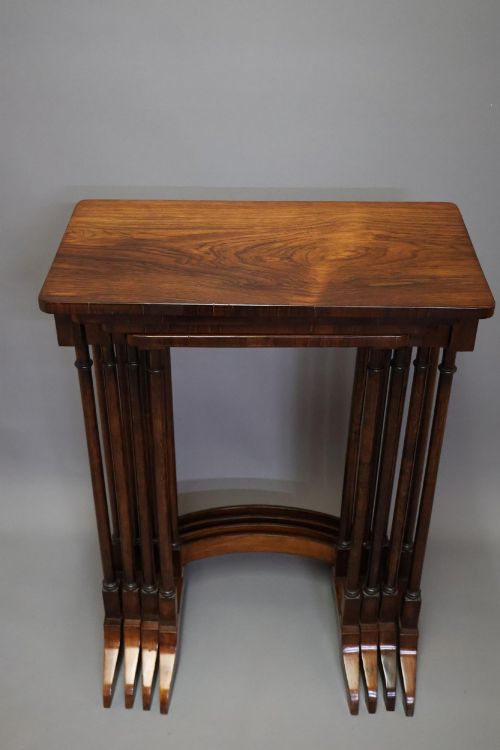
- A matched set of four graduating nesting tables designed to slide neatly beneath one another. This form gained popularity during the Regency period.
- Sofa table
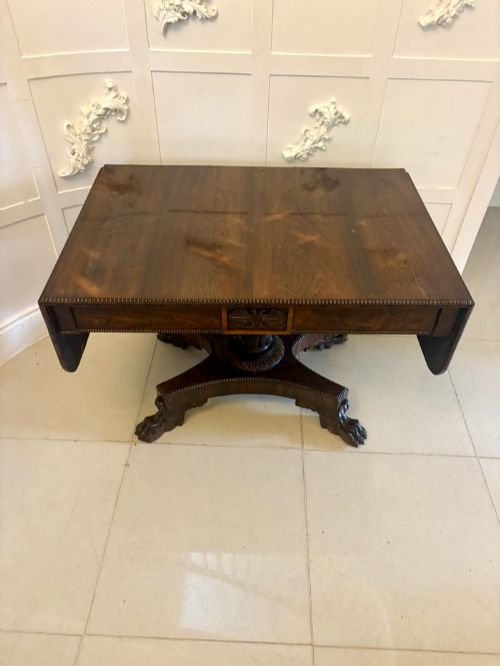
- A rectangular table intended to stand directly in front of a sofa, typically featuring drop leaves on either end and two small drawers.
- Work table
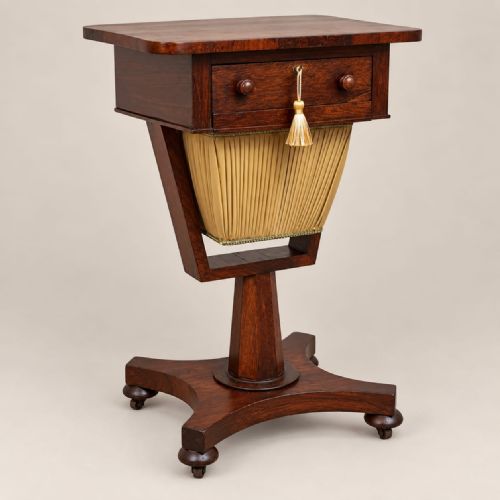
- A specialised small table equipped with a bag, drawer, or compartment for needlework and sewing supplies.
- Brass stringing
- Fine inlaid lines of brass set flush into the wooden surface to frame panels and edges.
- Drop leaf
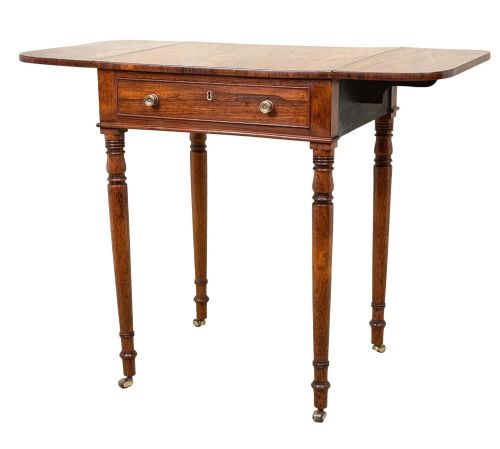
- A hinged flap on the side of a table that folds down to save space or lifts up to expand the surface area.
Georgian Rosewood Occasional Table: Frequently Asked Questions
What is a quartetto table?
A quartetto table is a nest of four graduated tables designed to slide together into the footprint of the largest single table.
Cabinetmakers of the Regency period produced these sets in rosewood to serve guests for tea or reading without cluttering the room.
Where were sofa tables placed?
Sofa tables traditionally stood freestanding behind or alongside a sofa, featuring drop leaves that could be raised when needed.
Their finished backs allowed them to occupy prominent positions in the centre of a room rather than pushing strictly against a wall.
What defines Regency rosewood furniture?
Regency rosewood furniture utilises dark, heavily figured timber often accented with contrasting brass inlay, gilt mounts, or boxwood stringing.
The style leans toward classical architectural motifs, sabre legs, and pillar-and-platform bases.