
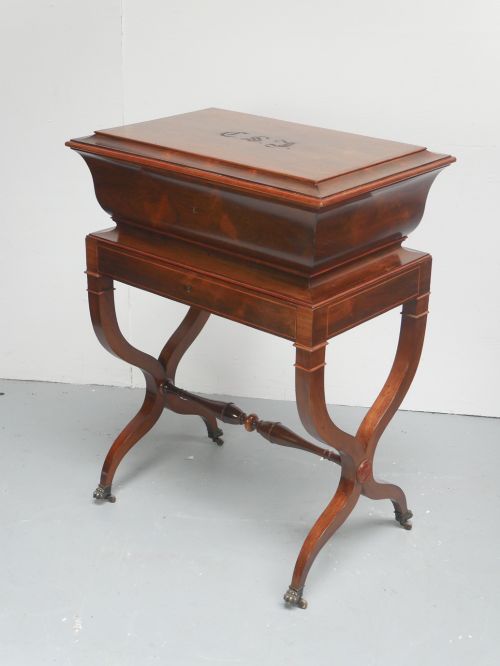

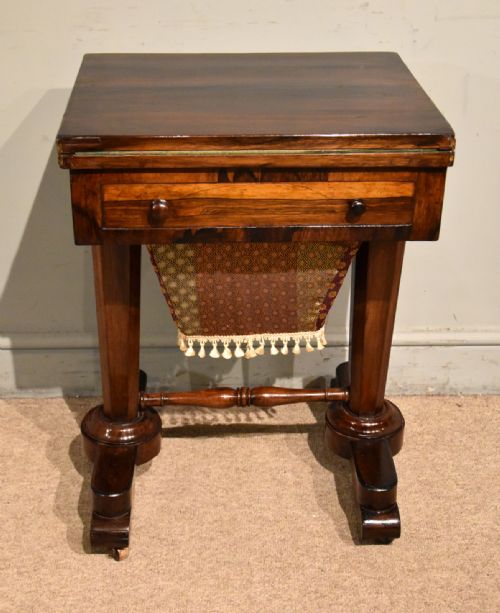


Dark Rosewood Sewing Table
A dark rosewood sewing table is a compact nineteenth-century piece designed for needlework and small crafts, offering rich grain and fitted interiors for period charm.
Dark Rosewood Sewing Table
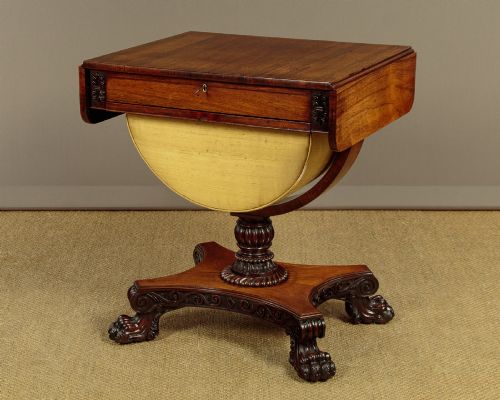
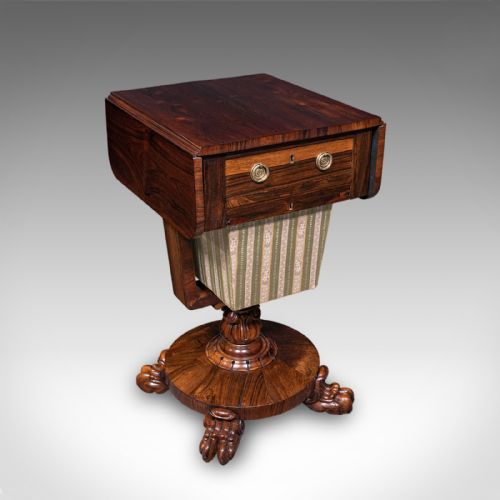
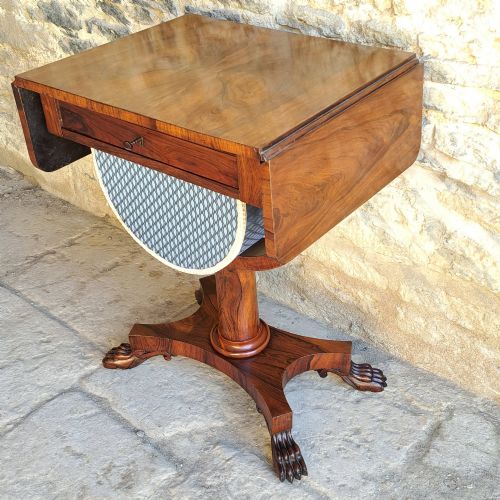
A dark rosewood sewing table brings nineteenth-century craftsmanship into a modern room as a versatile stand or occasional surface. These pieces combine drop-leaf tops, fitted drawers, and fabric bags designed originally for holding thread, needles, and textile crafts.
The selections available here span the Regency, William IV, and Victorian periods, often appearing as work tables, games tables, or compact writing stands. Most examples date from the nineteenth century, reflecting the era's taste for dense, figured timbers in domestic parlours.
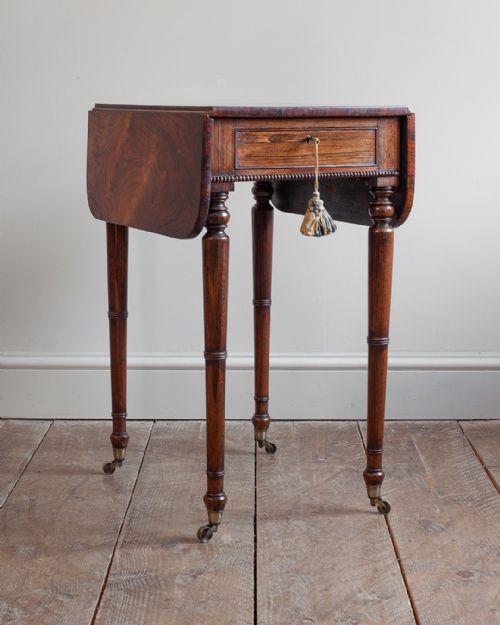
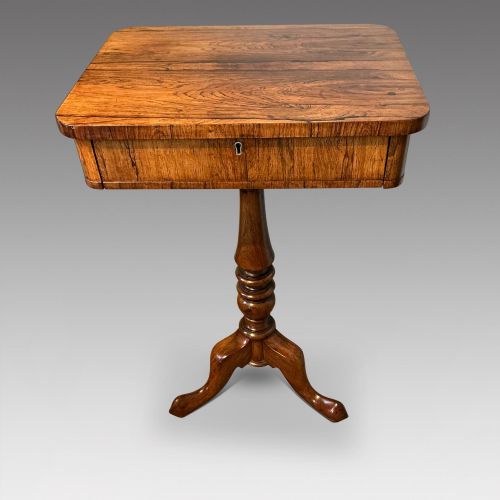
Buyers meet variations featuring pedestal columns, trumpet-shaped bases, or Pembroke drop leaves supported by turned legs. Many include internal compartments or sliding storage trays hidden beneath hinged lids.
How they were made
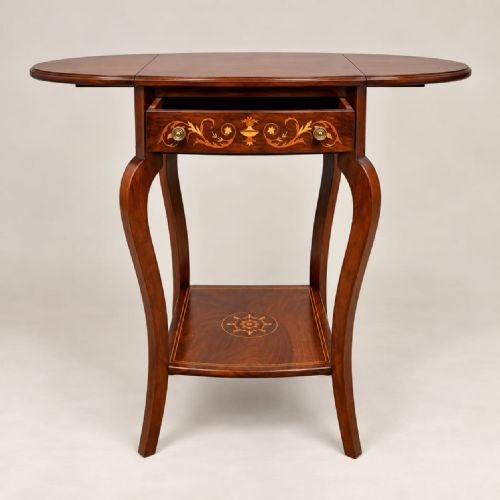
Cabinet makers utilised dense tropical rosewood veneers laid over solid secondary timbers to achieve deep, dark surfaces with pronounced grain patterns. Workshops employed brass fittings, silk linings, and intricate boxwood or satinwood inlay to decorate the tops and borders.
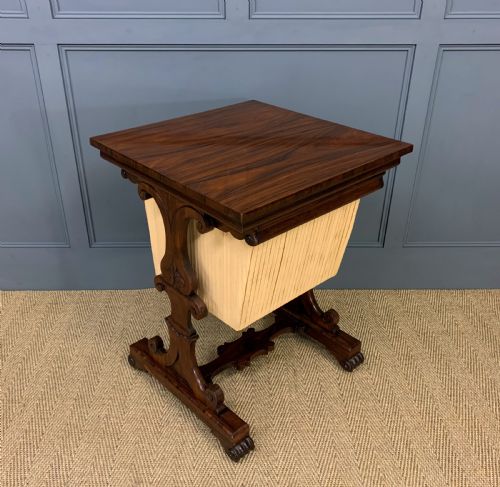
Construction techniques included drop-leaf hinges, foldover mechanism joints for combined games and work surfaces, and pedestal frames anchored on platform bases with carved scroll feet.
Some nineteenth-century work tables hide secret velvet-lined compartments designed specifically for storing delicate ivory bobbins and gold thimbles.
What varies in quality
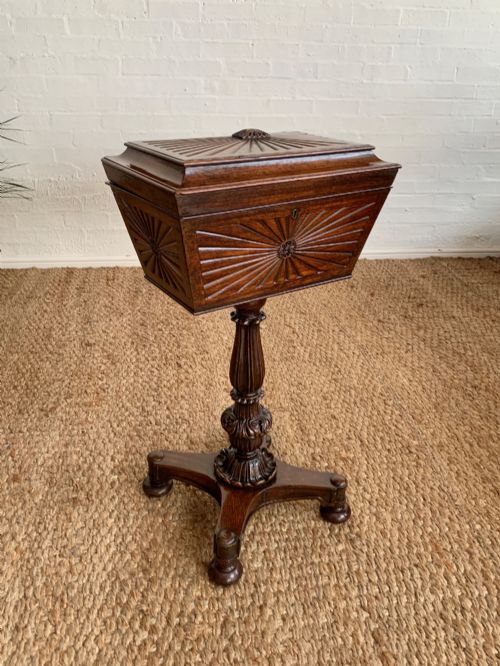
Quality rests on the depth of the timber figure, the crispness of carved details like sunburst motifs, and the precision of fine marquetry inlay. Superior pieces display seamless veneer matching across the drop leaves and solid brass hardware original to the frame.
Internal arrangement complexity also separates standard items from finer works, particularly where fitted writing slides, velvet-lined compartments, or intact silk sewing bags survive within the drawer.
Gillows of Lancaster·Lesage
The Dark Rosewood Sewing Table Glossary
- Rosewood
- A dense, heavily figured dark timber utilised throughout the nineteenth century for fine cabinet work. Its natural oils yield a rich polish.
- Work table
- A multi-purpose domestic piece featuring storage compartments for sewing equipment, often combining writing or games surfaces.
- Drop leaf
- A table design featuring hinged side flaps that lift to extend the surface area when needed. These folds are typical on parlour sewing stands.
- Marquetry
- Decorative inlay work using various woods such as boxwood and satinwood to create pictorial patterns across the table surface.
- Trumpet table
- A pedestal sewing table featuring a flared, trumpet-shaped body widening toward the base to conceal a deep storage bag.
Dark Rosewood Sewing Table: Frequently Asked Questions
What is a dark rosewood sewing table used for today?
These tables function well as bedside stands, lamp tables, or decorative occasional surfaces in a living room. Their internal compartments provide useful concealed storage for small household items.
Collectors and interior stylists appreciate their compact footprint and rich timber tones, which complement both period and contemporary interiors.
How do I tell Regency from Victorian sewing tables?
Regency and William IV pieces typically exhibit cleaner classical lines, bold rosewood grain, brass inlay, and robust pedestal bases with carved scroll feet. Victorian examples often introduce more ornate marquetry, trumpet-shaped pedestals, or lighter turned legs.
Examining the secondary woods and construction joints helps confirm the exact period of manufacture alongside stylistic cues.
Are the silk bags inside original?
Original silk or fabric sewing bags rarely survive intact due to fragile textiles perishing over time. Most surviving bags are period-appropriate replacements or later restorations fitted during conservation.
Cabinet work and structural timber remain the primary indicators of a piece's authenticity.
How should I care for rosewood furniture?
Keep dark rosewood surfaces away from direct sunlight and heat sources to prevent timber splitting and fading. Regular dusting with a soft, dry cloth preserves the polished finish.
Occasional application of appropriate wax feed helps maintain the natural moisture and depth of the nineteenth-century wood.