
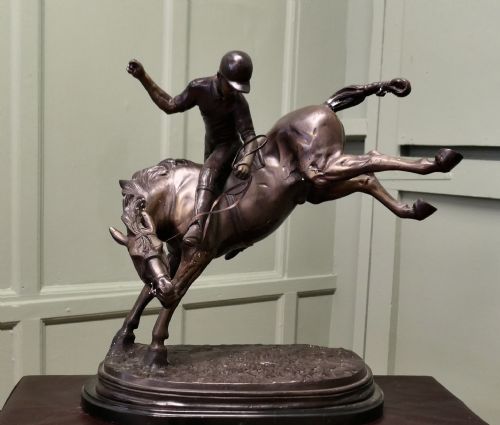
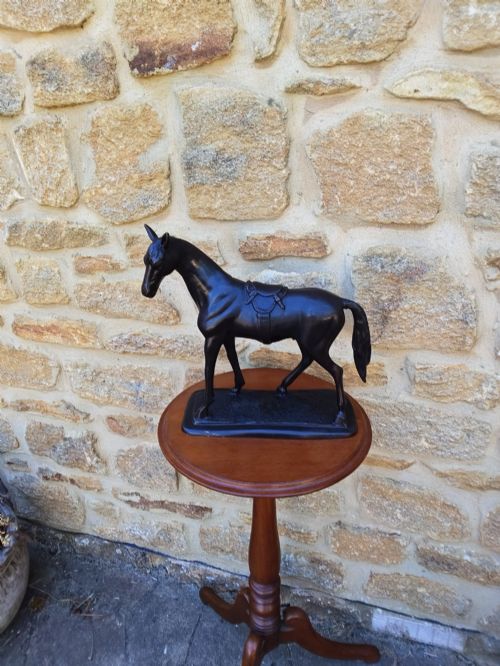
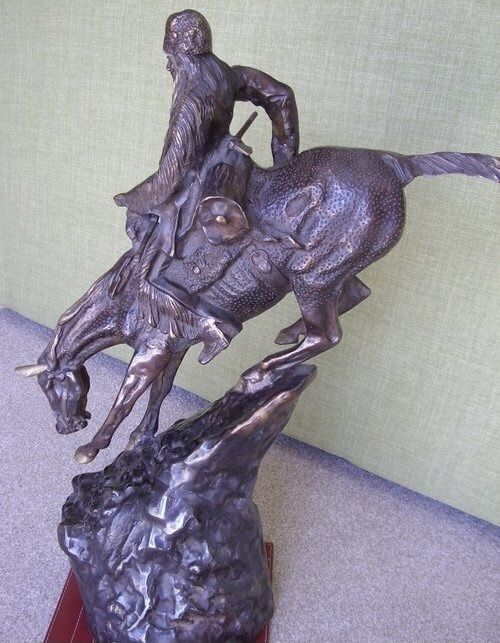
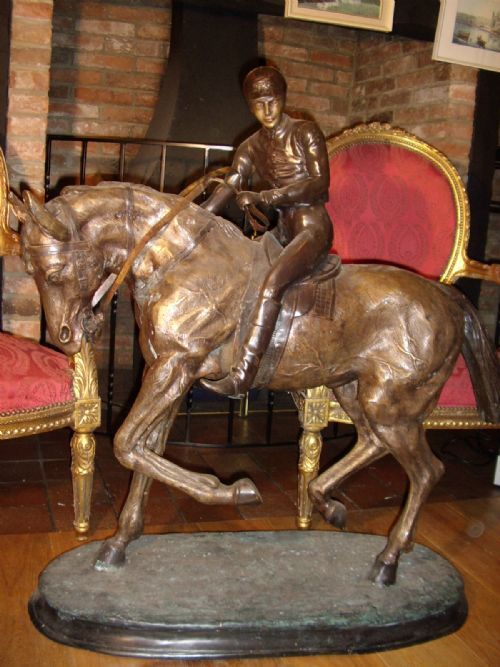




Dark Patinated Bronze Horse
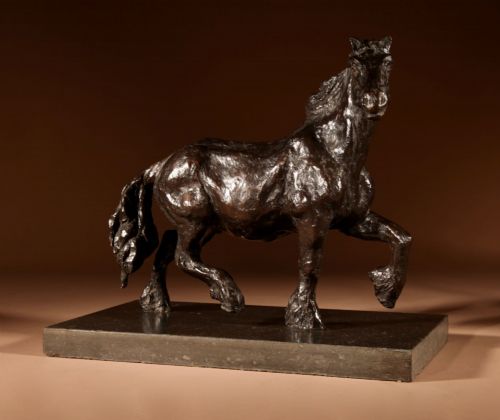
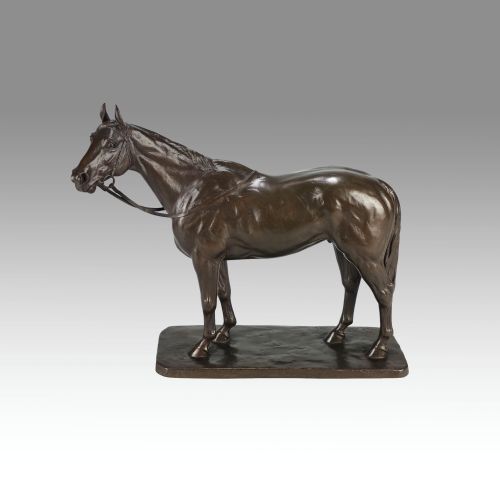
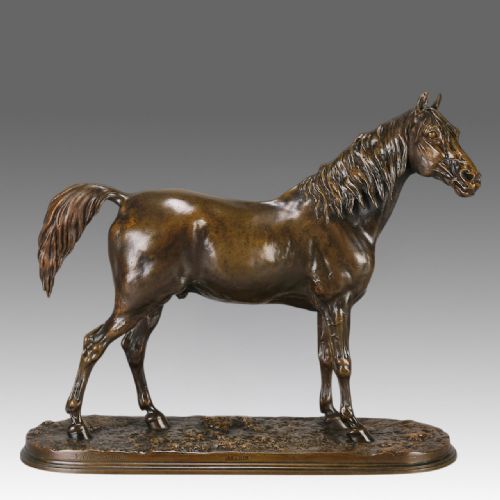
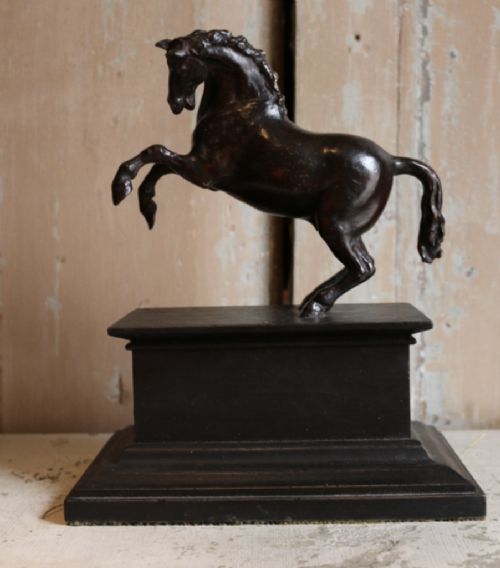
A dark patinated bronze horse is a sculptural study in equine power, valued for its deep surface tones and anatomical precision.
Dark Patinated Bronze Horse
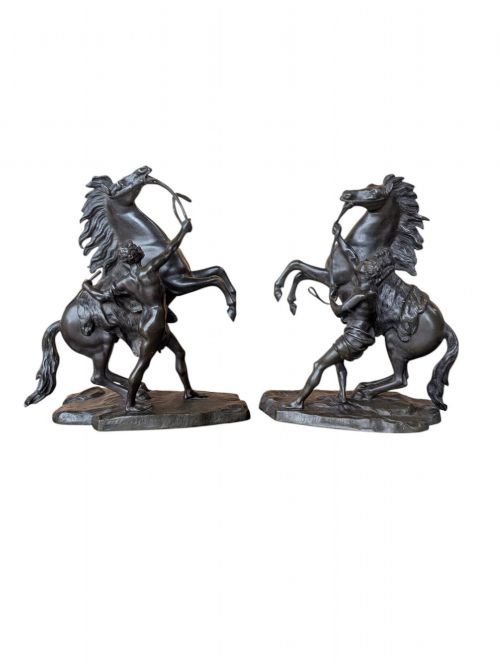
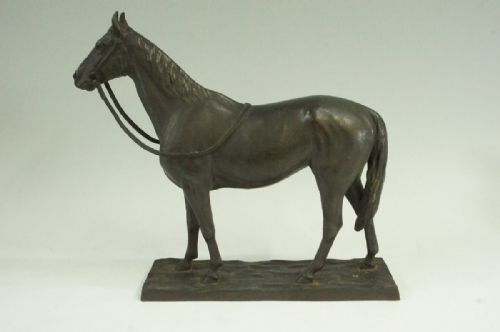
A dark patinated bronze horse brings classical movement and animalier realism into an interior space. These pieces range from monumental pairs to small cabinet bronzes representing thoroughbreds, draft horses, and equestrian riders.
The selections span the nineteenth century through the early twentieth century, incorporating French Animalier traditions, Japanese foundry work, and Neoclassical interpretations. Victorian examples and French school castings appear frequently among these sculptures.
Many works reference historical models or renowned sculptors, offering collectors a connection to established foundry traditions. Subjects extend from polo players and racing horses to mythological groups and bucking Western figures.
Materials and casting methods
Foundries utilised traditional metal casting techniques to shape molten bronze into complex equine forms. The resulting metal sculptures frequently incorporate chemical surface treatments that produce dark, layered patination.
Heavier display pieces often incorporate structural mounts or display plinths formed from marble, slate, stone, or wood. These supportive bases complement the dense weight of the cast metal figures.
Several horses wear full polo gear or historic military costume, proving that even bronze thoroughbreds appreciate a proper sporting outfit.
Assessing sculptural quality and finish
The degree of anatomical definition in the muscle structure, sinew, and expression dictates the sculptural quality of each casting. Superior pieces capture tension and movement with high precision in the chiselling and finishing stages.
Depth and preservation of the dark patina distinguish finer works from simpler productions, along with the crispness of foundry marks or artist signatures. The integration between the bronze figure and its stone or marble base also reflects the standard of manufacture.
Pierre Jules Meme·Kunio Ito·Luigi Secchi·Charles Crozatier·Pierre Lenordez·Sakai Kozan·John Willis Good
The Dark Patinated Bronze Horse Glossary
- Animalier
- A nineteenth-century artistic movement focused on the realistic depiction of animals. Sculptors in this style studied live subjects closely to capture authentic movement.
- Patina
- The surface coloration and chemical layer developed on bronze through age or intentional treatment. Dark patination enhances the contours of the metal sculpture.
- Grand Tour
- A traditional educational trip across Europe undertaken by the wealthy during the eighteenth and nineteenth centuries. Travellers often acquired miniature bronze replicas of famous classical monuments.
- Foundry
- A workshop where metal is melted and poured into moulds. Maker marks on the base often identify the specific establishment responsible for the cast.
Dark Patinated Bronze Horse: Frequently Asked Questions
How do I clean a bronze horse?
Dust the surface gently with a soft, dry cloth to prevent the accumulation of particles. Avoid harsh chemical cleaners or abrasive materials that could strip the dark patinated finish.
Apply a microcrystalline wax very sparingly if the metal requires protection against humidity. Buff lightly after application to maintain the subtle sheen without altering the historic surface.
What is an Animalier bronze horse?
An Animalier bronze horse is a nineteenth-century sculpture dedicated to the realistic and dynamic portrayal of equine anatomy. These works focus on natural movement rather than idealised classical forms.
Artists in this genre observed horses in motion, capturing the tension in muscle and sinew. Such pieces range from racing thoroughbreds to powerful draft animals.
How do I identify the period?
Examine the mounting style, foundry stamps, and casting technique to determine the era of manufacture. Nineteenth-century and early twentieth-century pieces often display distinct patination methods and signature styles.
Reference marks and biographical details of the credited sculptor provide further chronological clues. Material choices for the base, such as specific types of marble or slate, also indicate the period.
Where should I display these sculptures?
Place the sculpture on a stable surface away from direct sunlight and excessive moisture fluctuations. Heavy marble or bronze pieces require strong furniture capable of supporting considerable weight.
Position the figure where side lighting can accentuate the dark patinated surface and muscular definition. Ensuring adequate clearance protects protruding elements like tails and reins from accidental damage.