



Dark Oak Weather Instrument
A dark oak weather instrument brings the practical domestic science of the nineteenth and early twentieth centuries straight onto the wall.
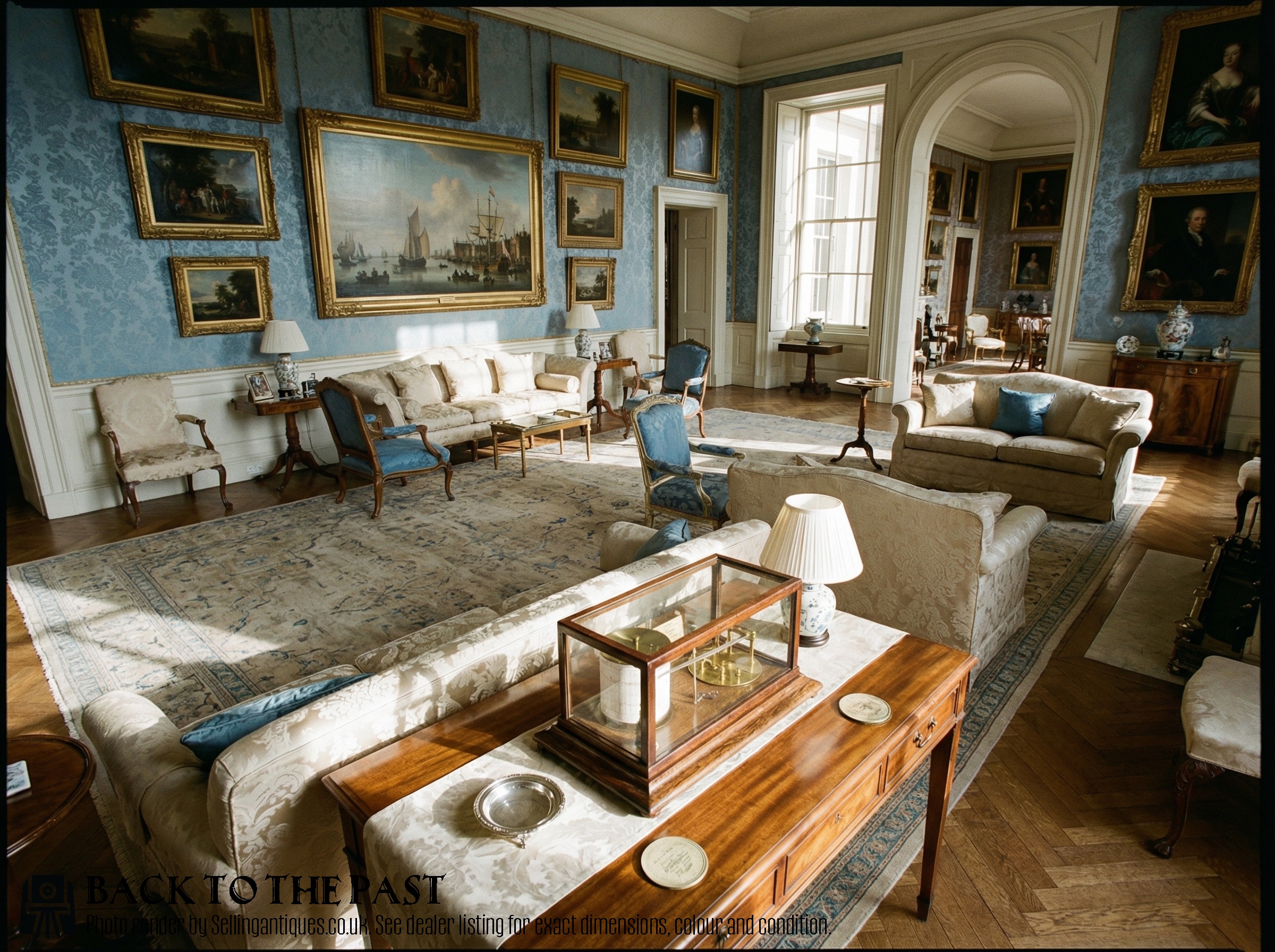
Dark Oak Weather Instrument
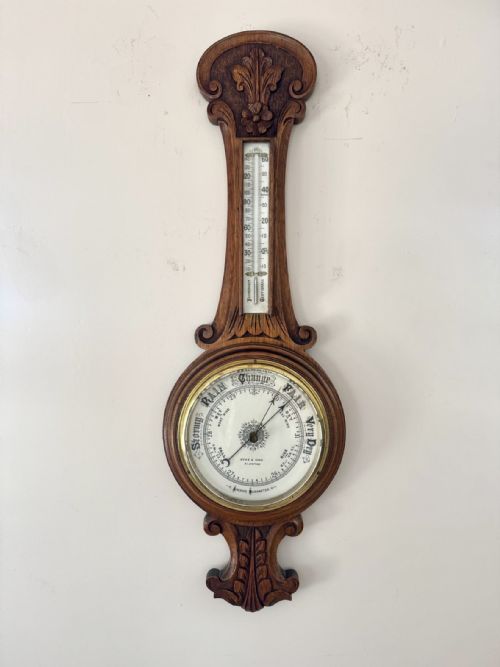
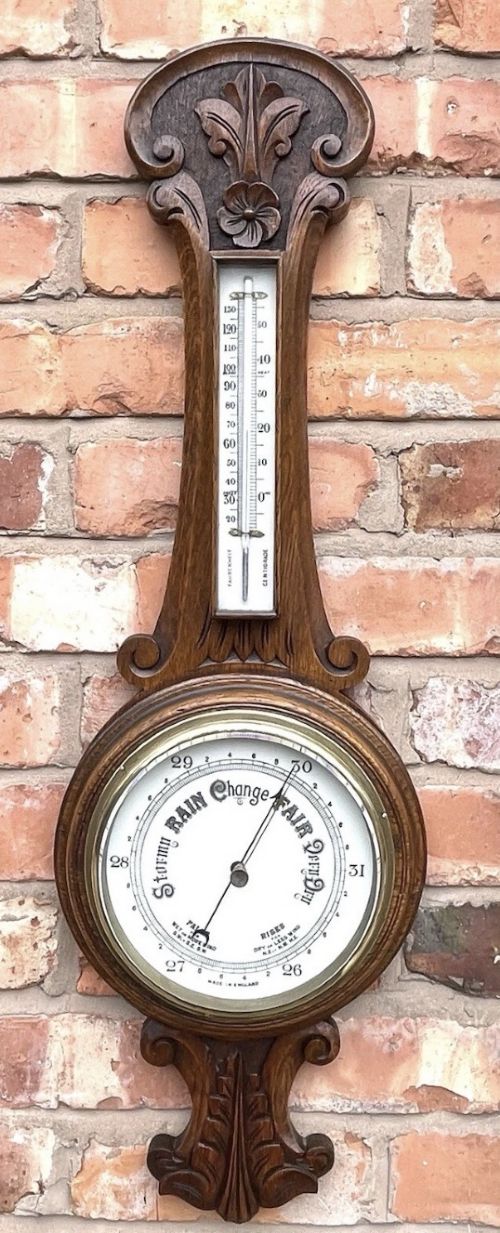
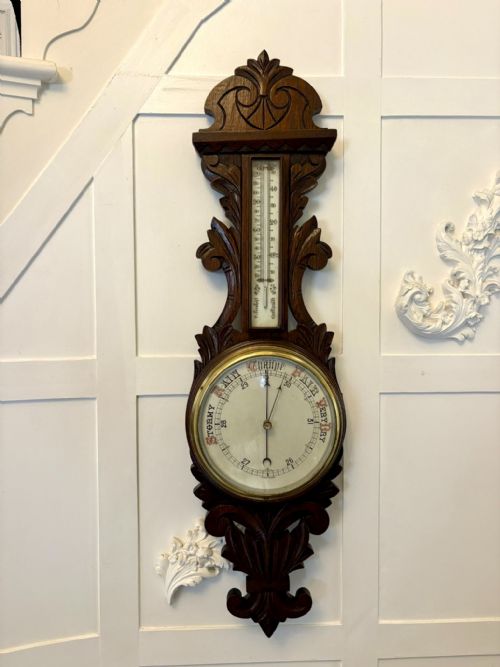
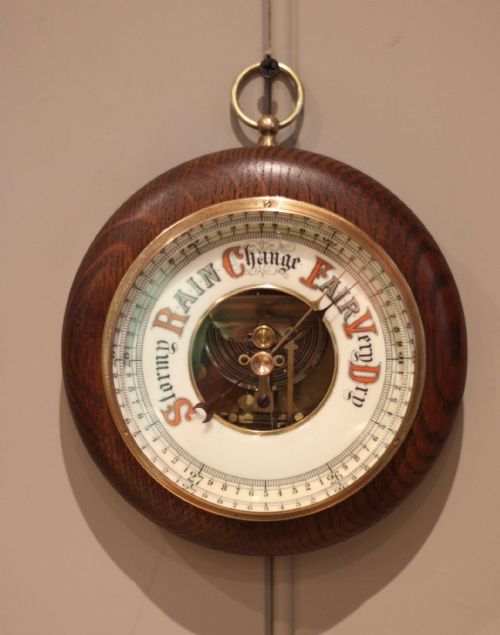
When you search for a dark oak weather instrument, you encounter pieces designed to measure atmospheric pressure, temperature, and moisture within a sturdy timber housing. These instruments range from banjo barometers and stick barometers to barographs and Admiral Fitzroy storm barometers produced across the Victorian and Edwardian eras. The selection draws heavily upon late nineteenth-century styles, including carved Black Forest examples and substantial banjo formats.
The domestic interior of the period relied on these wall-hung devices to anticipate meteorological changes before daily forecasts became widespread. You will frequently find aneroid mechanisms housed in deeply carved cases, alongside mercury-filled stick barometers and boxed barographs equipped with chart drawers. Workshops from London to provincial market towns produced these instruments for both domestic halls and commercial shop displays.
What varies in quality
The depth and crispness of the wood carving distinguish standard production pieces from exceptional examples. Finer housings exhibit undercut foliage and sculptural animal or avian motifs that remain sharp and well-defined.
The reputation of the maker and the legibility of the dial play a substantial role in distinguishing better specimens. Instruments signed by established opticians and instrument makers generally demonstrate superior mechanical refinement alongside higher-grade brass and glass components.
Listings feature oak weather instruments spanning the Victorian and Edwardian eras, incorporating glass, brass, ceramic, and bone components alongside carved lindenwood.
Negretti & Zambra·J Hicks of London·Hyde & Sons Sleaford·Aitchison
The Dark Oak Weather Instrument Glossary
- Aneroid barometer
- An instrument that measures atmospheric pressure using a flexible metal capsule rather than liquid mercury. Changes in pressure cause the capsule to expand or contract, moving a pointer across the dial.
- Barograph
- A recording meteorological instrument that draws a continuous line of atmospheric pressure onto a rotating drum holding a paper chart. These devices are typically housed in oak cases with bevelled glass viewing panels.
- Admiral Fitzroy storm barometer
- A specialised instrument design incorporating chemical tubes and a thermometer, popularized by the nineteenth-century meteorologist to predict impending gales. They are frequently mounted on large carved oak floor or wall boards.
- Banjo barometer
- A wall-mounted barometer shaped like the stringed instrument, featuring a circular dial at the top and a longer thermometer or level housing below. This form allowed makers maximum surface area for elaborate wood carving.
Dark Oak Weather Instrument: Frequently Asked Questions
How do aneroid and mercury barometers differ?
Aneroid barometers rely on a sealed metal vacuum box that flexes with air pressure changes, whereas mercury barometers use a column of liquid balanced against atmospheric weight.
Most domestic wall pieces use the aneroid system because it operates safely in any orientation without spilling liquid.
Where should I hang a heavy oak barometer?
These instruments require a secure fixing directly into wall studs or masonry rather than simple plaster hooks due to the substantial weight of the dense oak cases.
Internal walls away from direct heat sources and heavy vibrations ensure the delicate internal linkages remain accurate.
How do I read an Admiral Fitzroy storm barometer?
The glass tubes contain chemical mixtures that cloud or clear depending on atmospheric conditions, while the accompanying thermometer tracks ambient temperature.
Instructions printed on the fitted paper scales guide the user on interpreting the sediment changes alongside the main barometer dial.
How can I date a carved oak weather instrument?
Stylistic clues such as deep Black Forest leaf carving point to the late nineteenth century, whereas cleaner circular frames often indicate Edwardian production.
Maker signatures and registration numbers stamped on the brass bezels or paper dial backs provide further chronological markers.