



Dark Oak Trinket Box
A dark oak trinket box is a sturdy desktop receptacle for small valuables, offering centuries of regional folk craft and formal period design.
Dark Oak Trinket Box
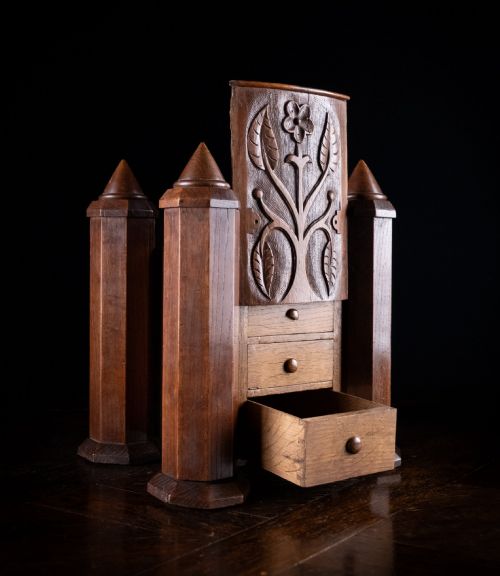
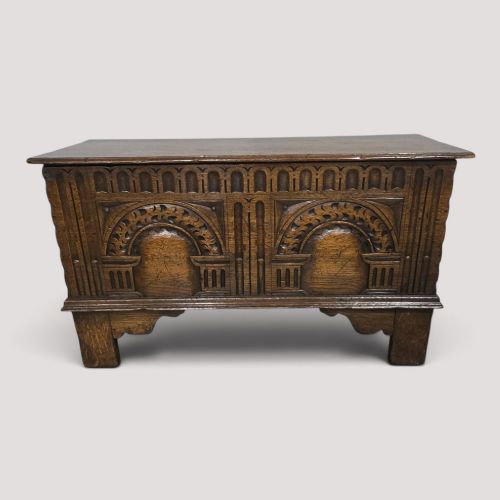
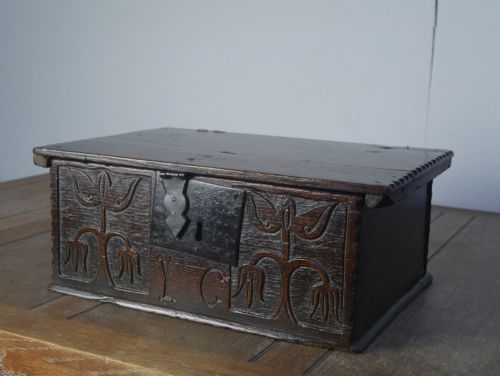
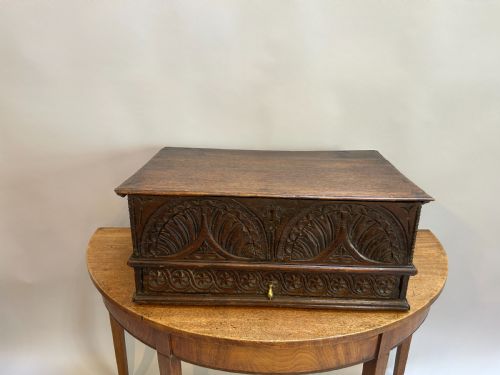
When you search for a dark oak trinket box, you encounter a varied group of small wooden containers including Bible boxes, desk boxes, miniature coffers known as coffor bach, and snuff boxes. These objects originate from several periods, ranging from the seventeenth century through the Georgian era and into the nineteenth and twentieth centuries.
The regional examples often stem from Welsh vernacular and folk art traditions, displaying chip carving and heart inlays. Other variations include campaign boxes with regimental arms, correspondence boxes, and apprentice mule chests designed for desktop use.
Most items on this page combine functional storage with decorative carving, featuring hinged lids and occasionally small internal drawers. Their forms reflect domestic and military utility across British and European workshops.
How they were made
Makers constructed these boxes primarily from solid oak, frequently augmented by secondary hardwoods and contrasting inlays of holly and bog oak. Structural hardware typically incorporates brass hinges, iron latches, and steel fixings.
Surface decoration relies heavily on hand chip carving, a technique prominent in seventeenth-century and Welsh folk pieces. Lids and panels are joined using traditional methods suited to small domestic containers and miniature coffers.
Dark Oak Trinket Box Retail Price Guide 2026
Typical asking prices for dark oak trinket box among the pieces listed under this phrase on Sellingantiques today, from the lower quarter to the upper quarter. They describe what is for sale here now, not the wider market.
Apprentice mule chests allowed young woodworkers to demonstrate their joinery skills on a miniature scale before graduating to full-sized furniture.
What varies in quality
The distinction between standard utility items and finer examples rests on the crispness and complexity of the hand carving. Elaborate chip-carved geometric patterns or detailed regional motifs elevate the stature of a piece significantly.
Integrity of the timber and survival of original hardware also define the upper tier of these objects. Pieces retaining their early hinges, locks, and contrasting wood inlays demonstrate superior craftsmanship and preservation.
The Dark Oak Trinket Box Glossary
- Coffor Bach
- A miniature Welsh coffer or chest used historically for holding valuables and documents. These small storage boxes often feature drawer bases and carved decoration.
- Chip Carving
- A traditional woodworking technique where small chips are removed from the surface of the timber to create geometric patterns. This method is common on seventeenth-century and folk art boxes.
- Bible Box
- A desk box designed originally to hold a large family Bible and writing materials. Many feature sloping lids suited for reading and writing.
- Campaign Box
- A portable container made for military use, frequently fitted with regimental arms or brass carrying handles. These pieces were designed to withstand travel.
Dark Oak Trinket Box: Frequently Asked Questions
How do I date an oak box?
Dating an oak box involves examining the construction methods, hinge types, and decorative styles. Seventeenth-century examples often display simpler board construction with heavy chip carving, while Georgian pieces may incorporate drawers and inlay work.
Changes in hardware and timber preparation also assist in establishing a timeline. Comparing the carving motifs to documented regional styles helps narrow down the period of manufacture.
What were desk boxes used for?
Desk boxes provided a portable writing surface and secure storage for letters, ink, and important papers. Their sloping lids allowed the owner to write comfortably while seated at a table.
Many of these boxes sat upon desks or tables in homes and offices. They kept writing implements organised before dedicated bureau furniture became common.
What is a campaign box?
A campaign box is a portable container built for military officers and personnel on active service. These boxes often feature reinforced corners, recessed brass handles, and regimental arms.
Constructed to endure rigorous travel, they housed personal effects and official documents. Their practical design reflects the specific demands of nineteenth and twentieth-century military life.