

Dark Oak Tea Stand
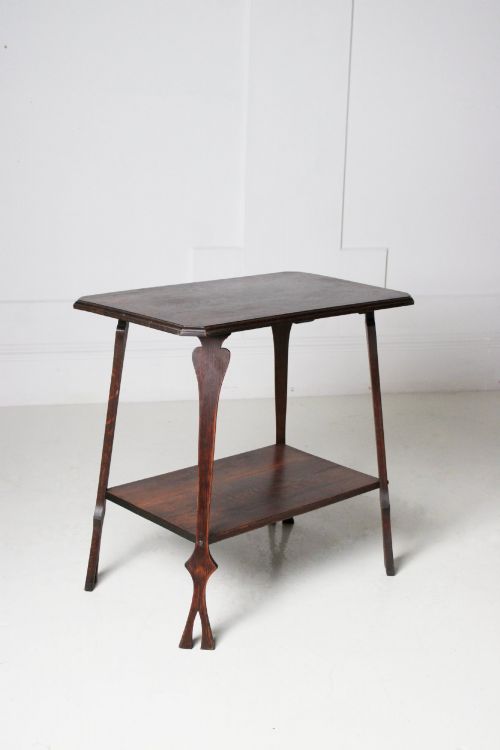
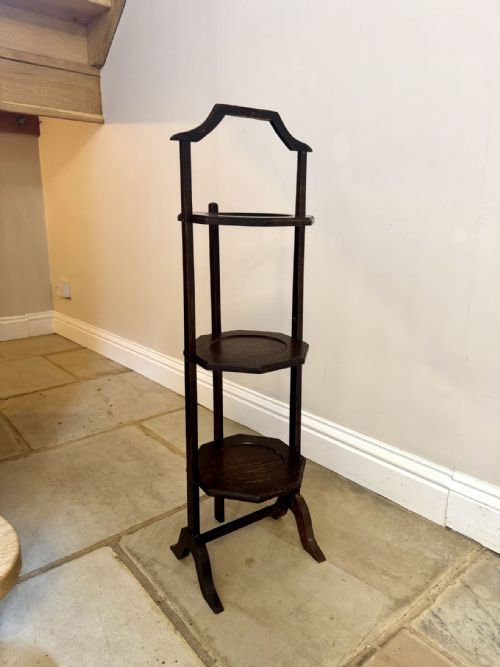
A dark oak tea stand brings sturdy vernacular utility and rich grain into a room, spanning periods from George III to Edwardian revivals.
Dark Oak Tea Stand
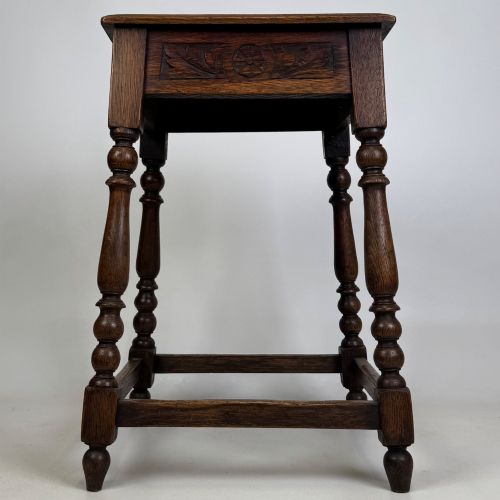
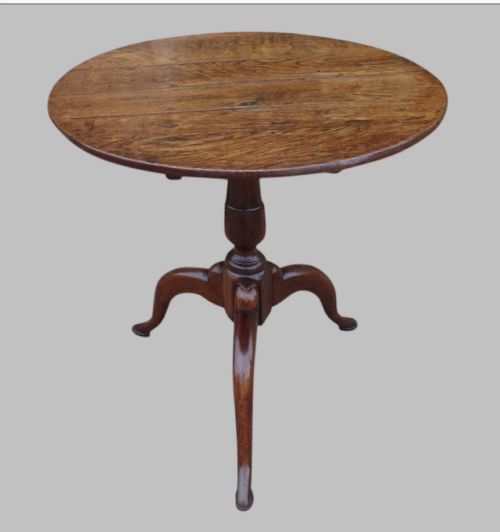
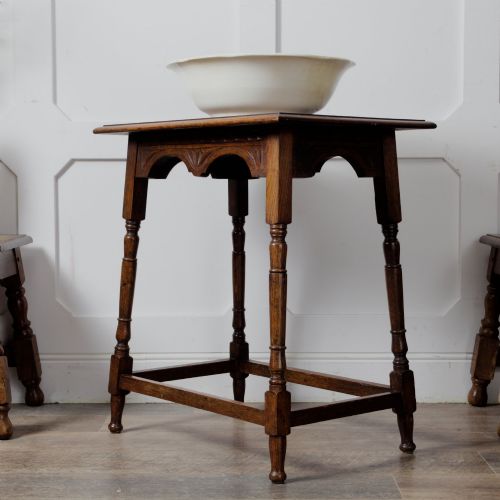
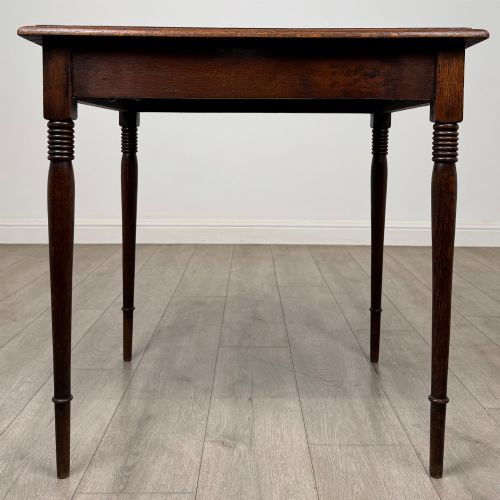
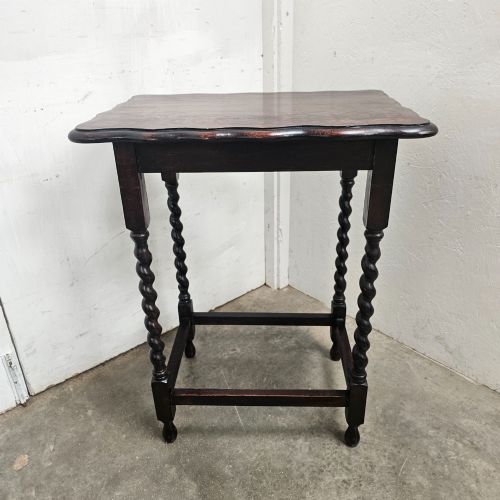
A dark oak tea stand encompasses a variety of compact surfaces designed for hospitality and display, most frequently encountered here as tripod tables, side tables, and occasional tables. These pieces emerge across the Georgian, Victorian, and Edwardian eras, reflecting changing domestic habits through centuries of British cabinet making.
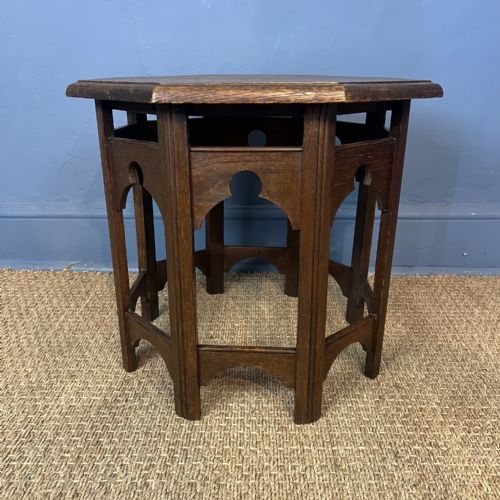
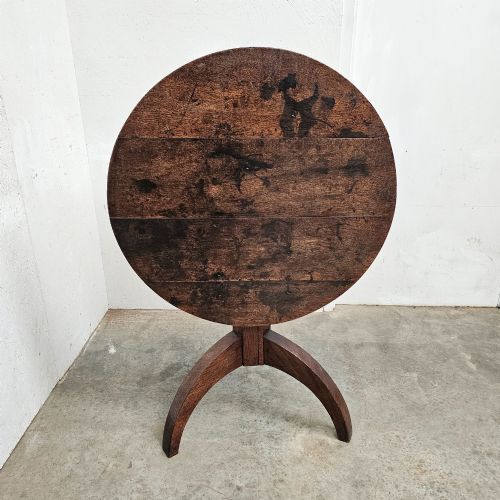
The selection ranges from country vernacular tilt-top tables with simple cleated tops to more ornate Arts and Crafts or Moorish revival designs. Buyers will frequently find circular, oval, and occasional formats shaped for practical placement beside seating.
Originating largely from British workshops, these utilitarian forms rely on robust timber construction to endure daily use. The prevalence of oak, burr oak, and fruitwood highlights a preference for domestic hardwoods that develop a deep, patinated surface over time.
Materials and construction
Makers utilised solid oak, burr oak, fruitwood, and beech, frequently pairing them with iron and brass for structural support or mechanical movement. Timber selection determined the weight and longevity of each piece, with dense heartwood resisting the wear of heavy household items.
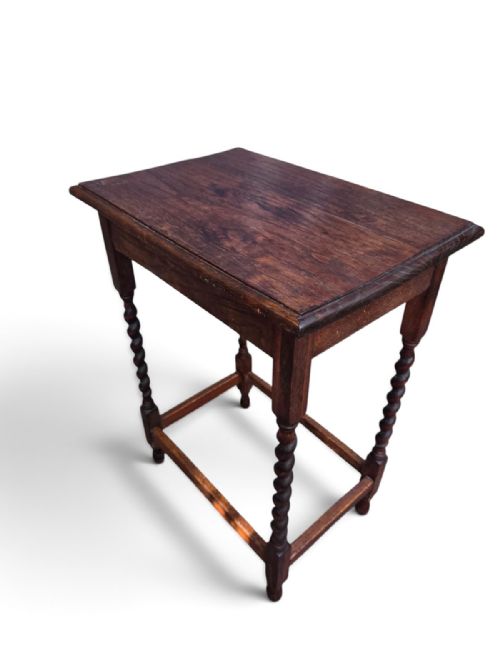
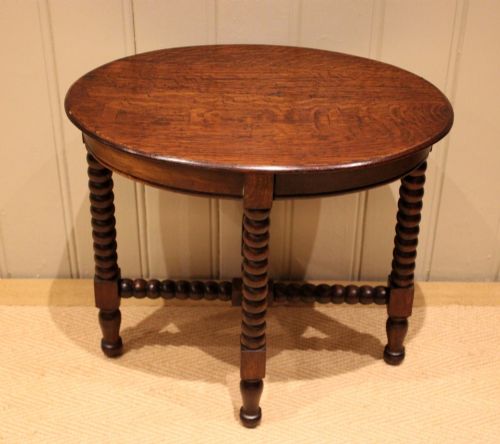
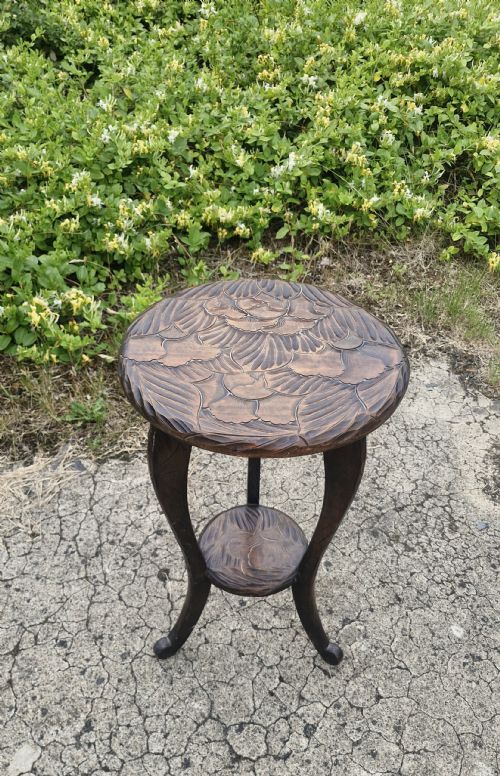
Turned elements such as barley twist legs and carved detailing demonstrate regional joinery traditions, while tilt-top mechanisms employ precise wooden catches and iron fittings. Surfaces finished with natural oils or waxes allow the grain pattern to remain prominent while protecting the wood.
Some surfaces tilt just so, ready to hide flat against the wall like a polite guest who knows when to leave.
Assessing quality
Quality rests in the integrity of the timber selection, visible in the choice of burr oak or finely figured fruitwood over plain planks. Grain alignment and the seamless integration of turned or carved elements separate standard utility items from finer workshop commissions.
The precision of the joinery, particularly in folding mechanisms, tilt-top pivots, and leg tenons, dictates the stability of the piece. Superior examples maintain firm joints and balanced proportions without relying on excessive modern reinforcement.
Liberty·Gillows
The Dark Oak Tea Stand Glossary
- Tripod table
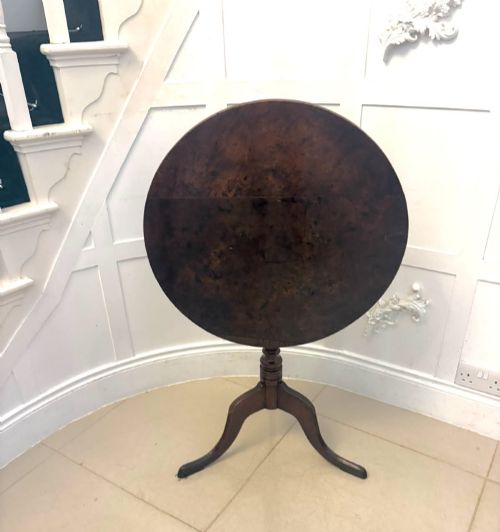
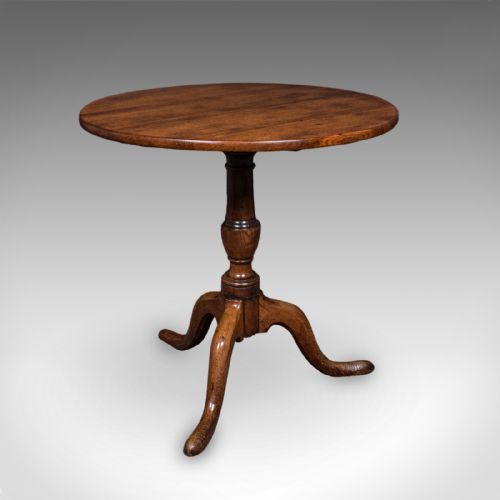
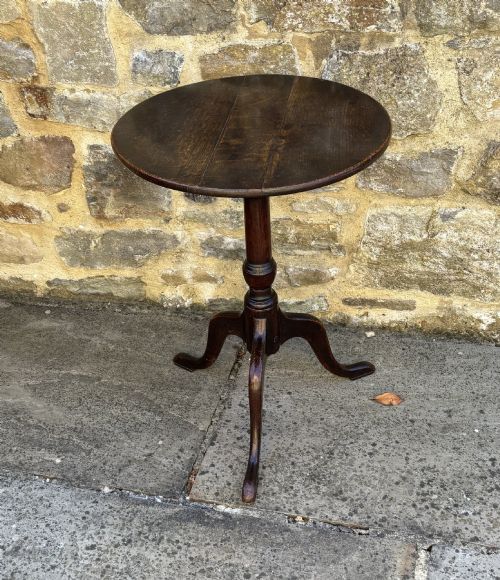
- A small freestanding table supported by a central pillar and three legs. This form gained popularity during the Georgian period for its stability on uneven floors.
- Tilt-top table
- A table with a hinged top that rotates to a vertical position when not in use. This clever mechanism allowed the furniture to be stored flat against a wall.
- Barley twist
- A turned wooden column resembling a spiralling rope. Makers utilised this decorative lathe technique extensively during the Victorian and Edwardian periods.
- Vernacular furniture
- Domestic objects made by local craftsmen for everyday use rather than high-style court commissions. These pieces display regional character and straightforward construction.
- Pie crust table
- A small occasional table featuring a raised, carved edge shaped in undulating curves. The moulding mimics pastry work popular in formal dining.
Dark Oak Tea Stand: Frequently Asked Questions
How do I date an oak table?
Dating relies on observing construction marks, timber preparation methods, and stylistic indicators such as leg turnings and edge moulding. Georgian examples often show hand-sawn board marks and simple peg joinery.
Later Victorian and Edwardian pieces incorporate machine-cut precision and revival motifs like barley twists or Gothic trefoils that reflect the tastes of their era.
Where were these tables used?
These compact surfaces served multiple functions in the parlour, drawing room, or hallway for holding tea service, books, or lamps. Their portability allowed servants or residents to move them easily around the home.
Smaller tripod and occasional formats were specifically sized to sit beside armchairs or near hearths for convenient access.
Are these pieces made of solid oak?
Many examples utilise solid oak throughout the top, column, and legs, whilst others incorporate related native hardwoods like beech or fruitwood for internal framing. Burr oak veneers occasionally appear on select circular tops to showcase striking natural grain patterns.
Checking the underside reveals the underlying timber structure and confirms the traditional construction methods employed by the maker.