
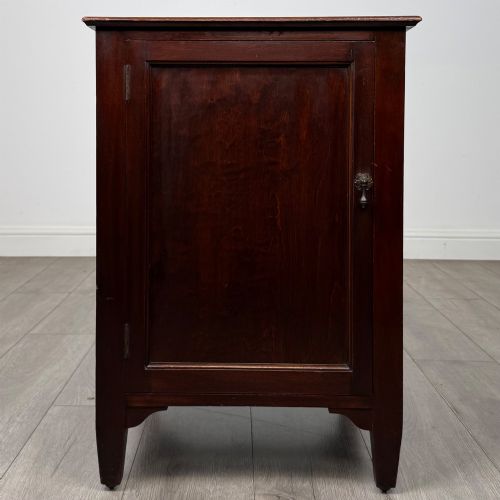
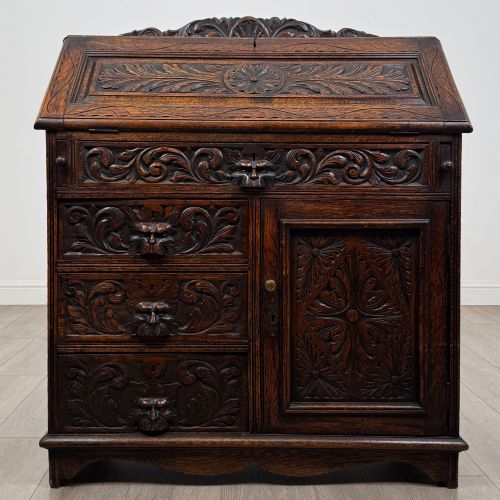
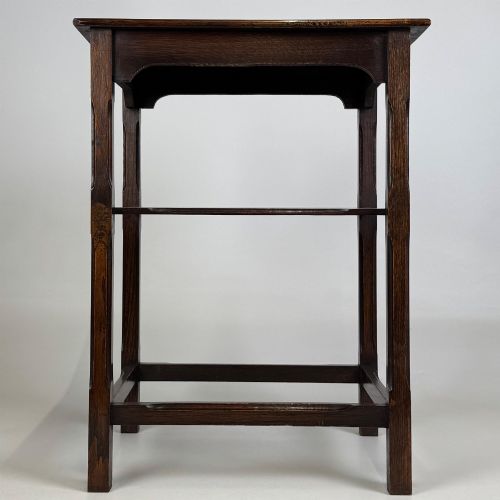
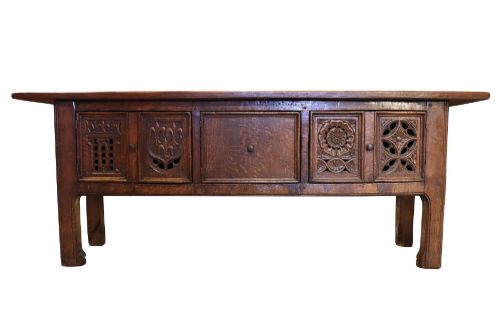
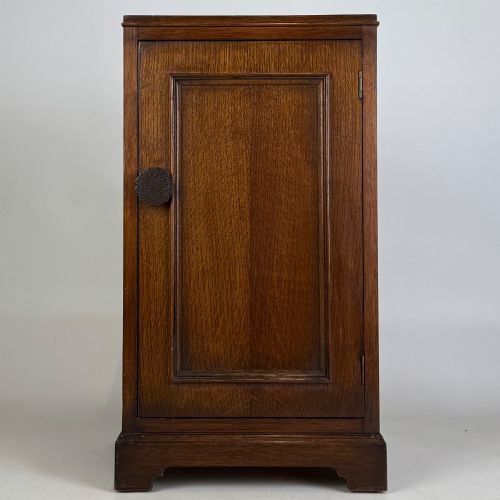
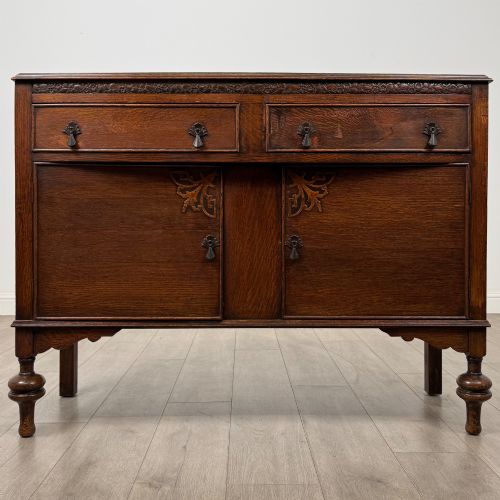
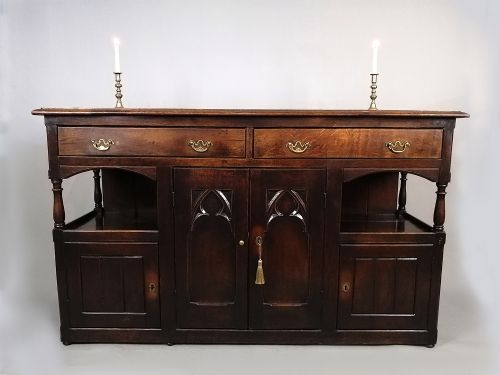
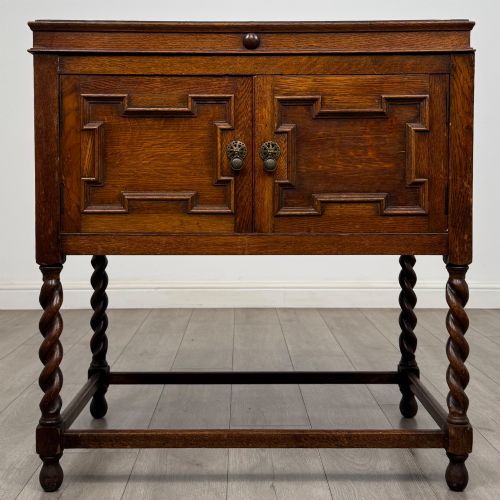
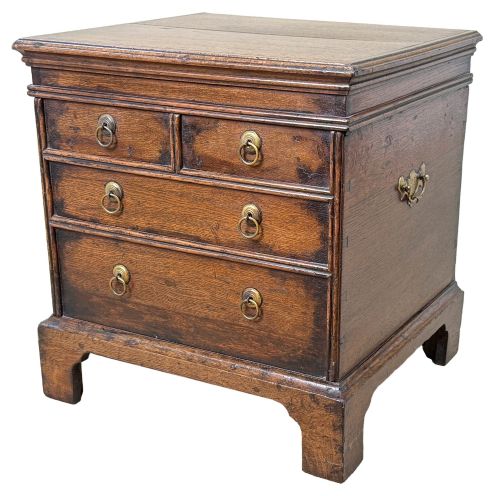
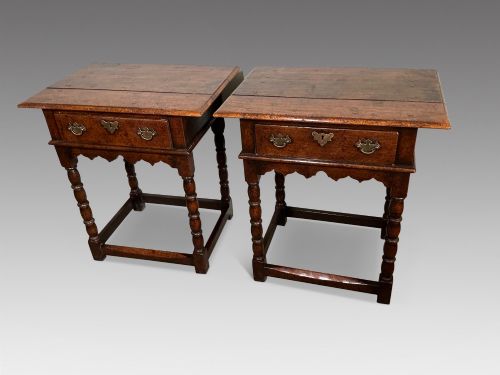
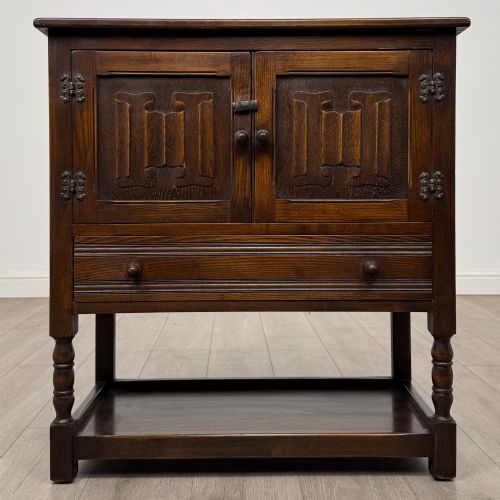

Dark Oak Table Cabinet
Dark oak table cabinet selections combine compact utility with the rich grain of traditional timber.
Dark Oak Table Cabinet
A dark oak table cabinet sits securely on a larger surface while providing enclosed storage through fitted doors.
Most examples appearing here date from the Edwardian era or the 1920s, constructed with sturdy timber proportions.
Makers adapted these small forms from larger sideboards, cupboards, and dressers to suit smaller domestic spaces.
Materials and Construction
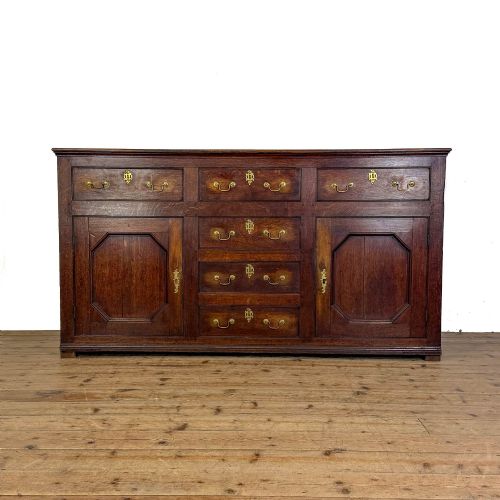
Solid oak provides the primary carcass, frequently enhanced with brass or iron hinges and handles.
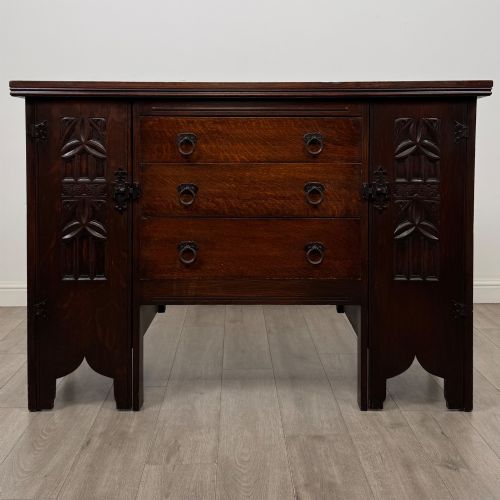
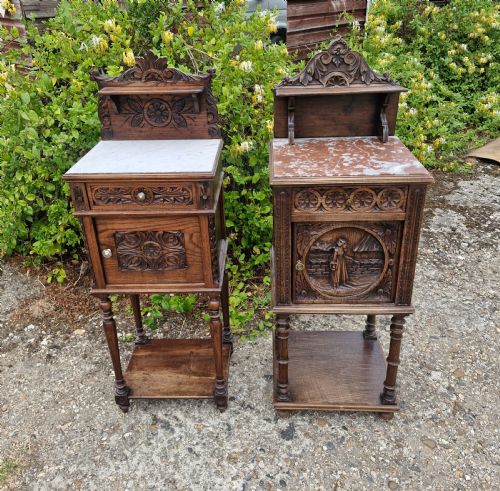
Carved details often reflect Jacobean Revival, Gothic Revival, or vernacular regional traditions.
Listings span from the 18th century through to the 1920s, predominantly featuring solid oak construction paired with iron and brass fittings.
Determining Quality
Depth of carving and sharpness of detail separate standard production pieces from finer handcrafted examples.
The integrity of the timber joints and the retention of original hardware dictate the enduring worth of a cabinet.
The Dark Oak Table Cabinet Glossary
- Jacobean Revival
- A design style drawing on 17th-century motifs like geometric mouldings and heavy turning.
- Gothic Revival
- An architectural style employing pointed arches, tracery, and dark carved panels.
- Dresser Base
- A low sideboard or table base historically used for food preparation and serving.
- Frieze
- The decorative horizontal band running along the upper portion of a cabinet or table.
Dark Oak Table Cabinet: Frequently Asked Questions
What is a dark oak table cabinet used for?
These small cabinets sit on desks or tables to hold paperwork, small valuables, or tabletop collections.
Their enclosed shelving keeps contents tidy while occupying minimal floor space in a room.
How do I date a dark oak cabinet?
Look closely at the joinery methods, hardware types, and any decorative carving styles present on the doors.
Edwardian and 1920s pieces often show machine-assisted finishing, whereas earlier Georgian or Victorian examples display hand-cut joints.
Are these cabinets made of solid wood?
The pieces listed utilise solid oak timber for the main structure and panels.
Some examples incorporate secondary woods such as pine or elm in less visible areas like internal shelving or backs.
Where should I place a table cabinet?
Place the cabinet on top of a sturdy sideboard, desk, or low chest where the base is fully supported.
Ensure the surface is level and away from direct heat sources to protect the dark oak finish.