

Dark Oak Spindle Chairs
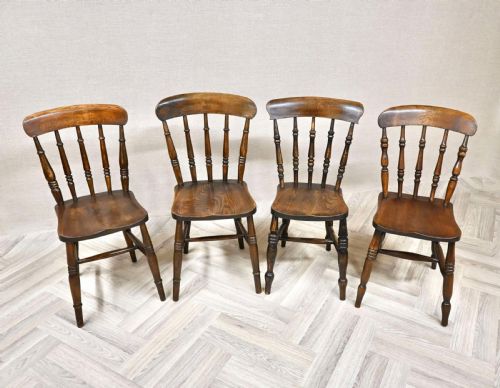
Dark oak spindle chairs bring sturdy vernacular character and practical country seating to a room.
Dark Oak Spindle Chairs
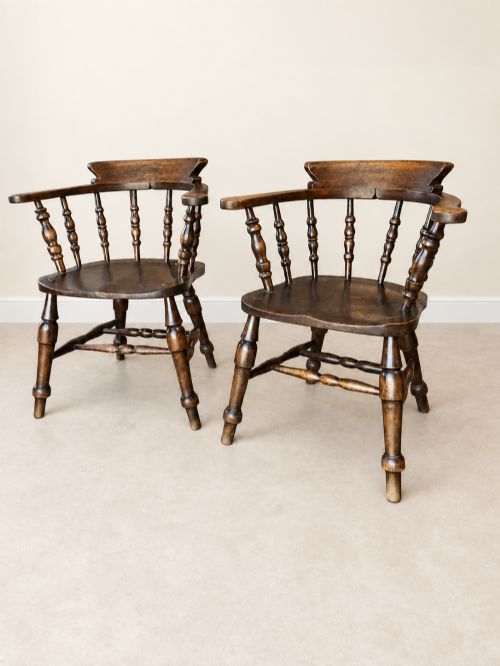
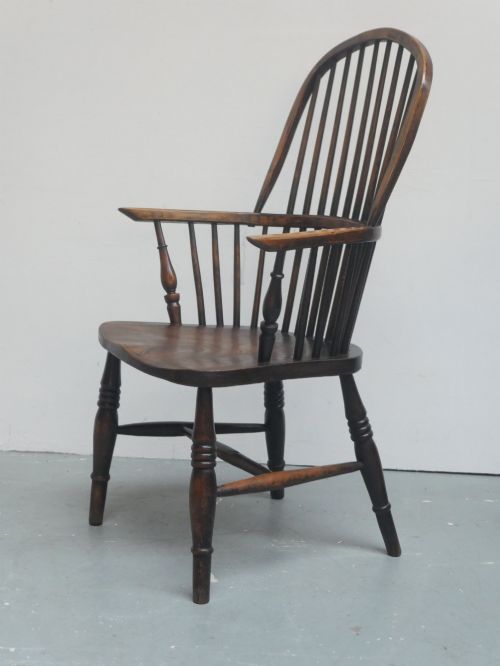
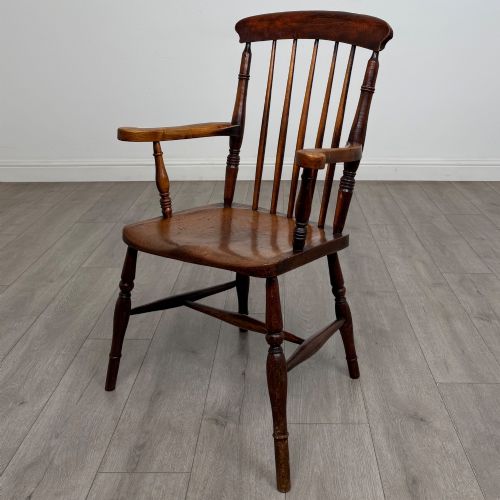
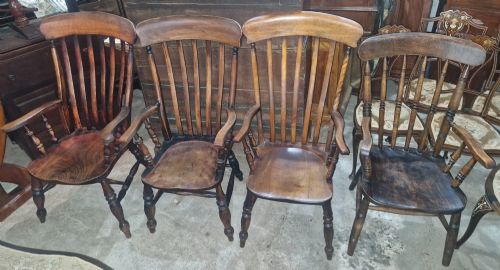
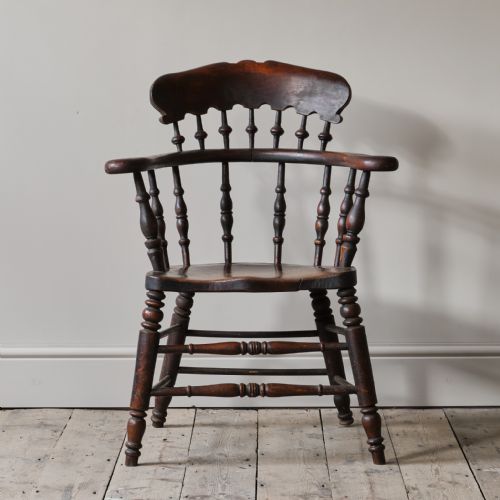
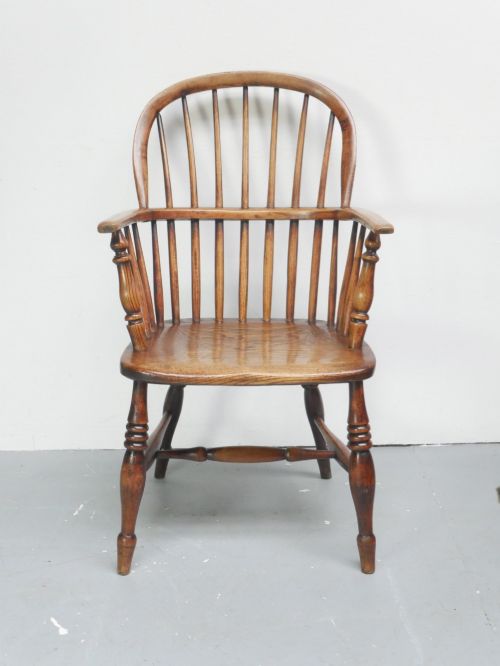
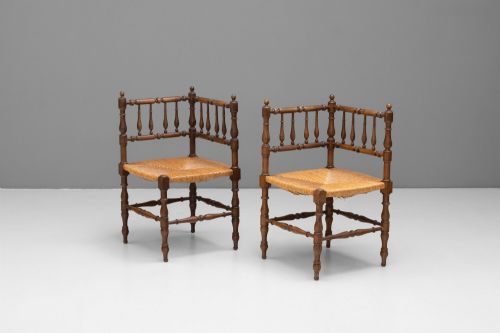
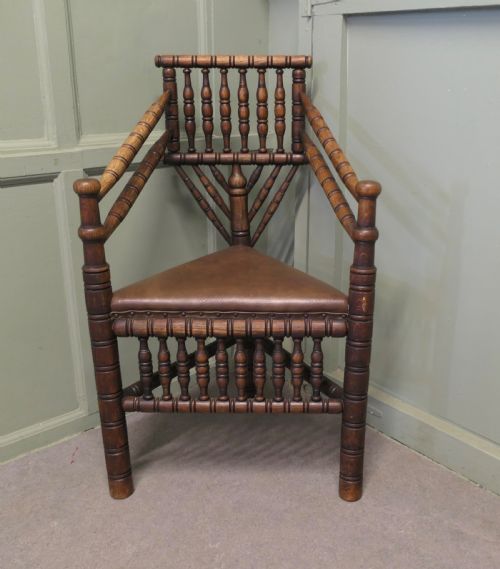
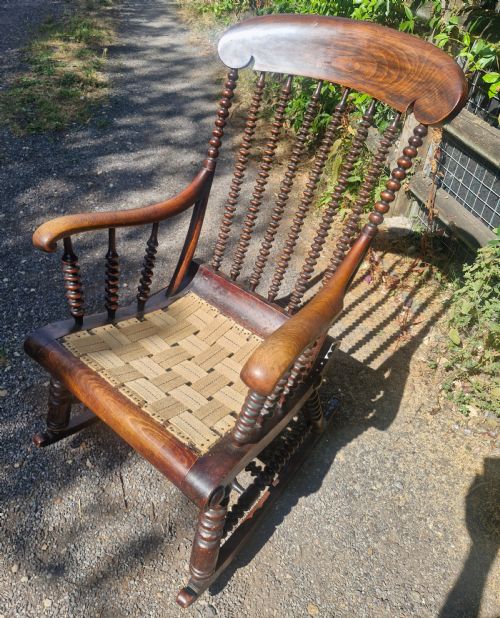
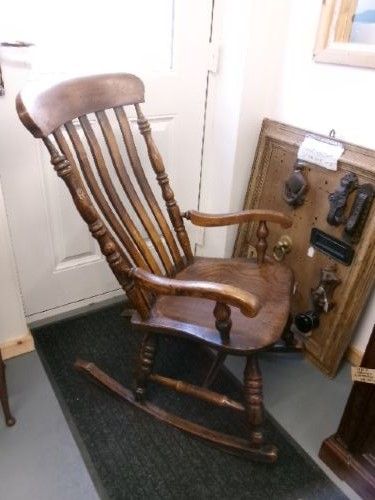
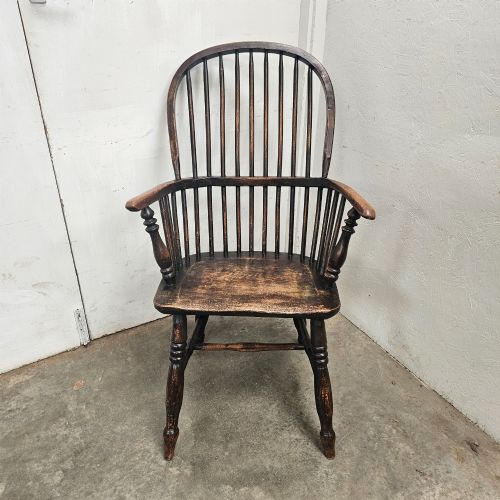
Dark oak spindle chairs encompass a diverse group of vernacular seating including Windsor armchairs, smoker's bows, turners chairs, and dining sets spanning the eighteenth, nineteenth, and early twentieth centuries. Buyers seeking dark oak spindle chairs encounter regional variations such as Scottish, Yorkshire, and Thames Valley pieces, alongside practical corner chairs and rocking chairs.
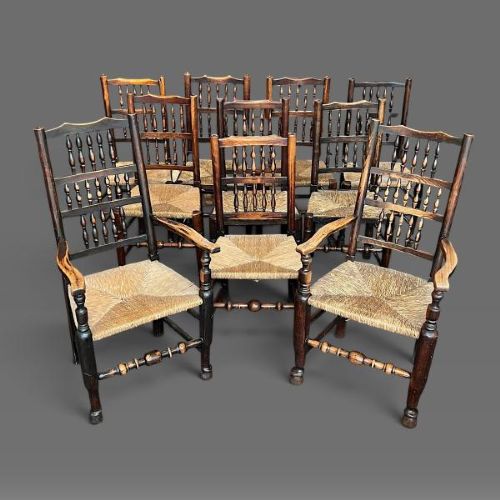
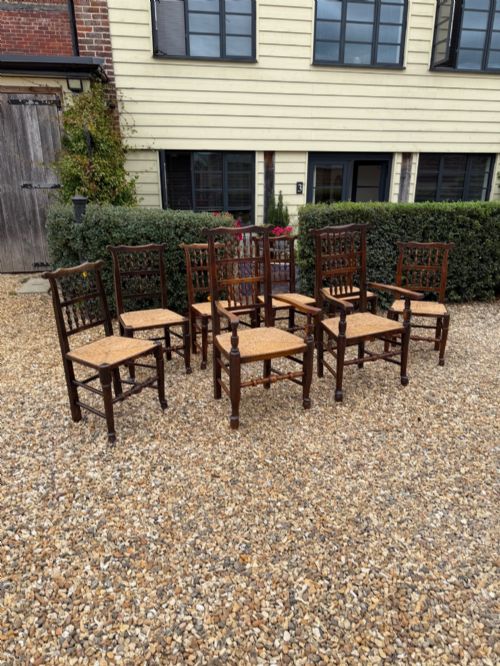
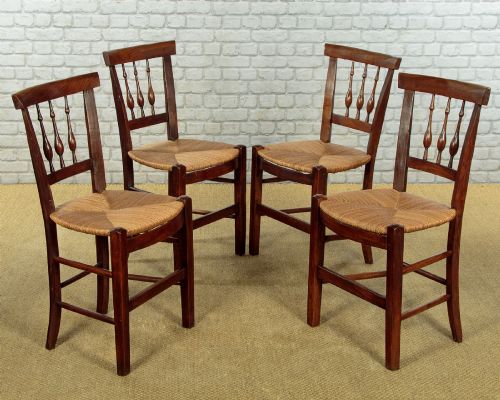
Most examples originate from nineteenth-century English and Scottish farmhouse and country house settings, where sturdy timber construction met daily domestic use. The selection ranges from single armchairs to matched sets of dining chairs and low rocking variants fitted with rush, fabric, leather, or solid wood seats.
Timber Construction and Materials
Maker construction relies heavily on native hardwoods like oak, ash, elm, and beech, often combining multiple timbers within a single frame to balance strength and flexibility in the spindles and legs. Seats are typically carved from solid wood planks or woven from rush, while specific examples incorporate secondary materials such as leather or upholstered fabric pads.
Joinery techniques span traditional turning, steam-bending for hoop backs, and wedged tenons that lock spindles firmly into shaped seats. Bobbin framing, spindle backs, and structural turnings demonstrate traditional country craftsmanship designed to withstand heavy domestic service.
Some chairs are small enough for nurseries yet possess the exact same grown-up spindle joinery as their full-sized farmhouse relatives.
Distinctions in Quality
Quality separates along the lines of timber selection, structural integrity, and the crispness of the turned spindles and framing members. Superior examples display thoughtful grain matching, well-proportioned arms and crest rails, and minimal timber replacement over centuries of use.
Regional distinctiveness and attribution to specific regional traditions, such as Thames Valley or Scottish vernacular workshops, elevate certain pieces. The retention of original surface patination and tight, unyielding joints distinguish finer vernacular survivals from heavily altered equivalents.
Liberty & Co·Duncan McKellar
The Dark Oak Spindle Chairs Glossary
- Windsor chair
- A traditional wooden chair built with a solid timber seat into which the legs and back spindles are separately inserted. They often feature curved back bows and sculpted armrests.
- Smoker's bow
- A low-backed Windsor armchair designed for smoking rooms and parlours, featuring a continuous curved arm rail supported by numerous turned spindles.
- Turners chair
- A heavy armchair constructed entirely from turned wooden spindles and members, following ancient geometric patterns sometimes called bobbin or sausage turning.
- Vernacular
- Objects designed by local craftsmen for everyday practical use rather than following high-style academic architectural fashions. These pieces reflect regional timber availability and local domestic traditions.
- Rush seat
- A seating surface woven from dried marsh rushes twisted into cords and patterned across the chair frame. This technique provides a resilient and traditional seat base.
Dark Oak Spindle Chairs: Frequently Asked Questions
What is a smoker's bow chair?
A smoker's bow is a sturdy low-back Windsor armchair characterised by a continuous rounded arm rail and short turned spindles. They were traditionally used in kitchens, libraries, and smoking rooms.
These pieces offer a lower profile than standard armchairs while maintaining robust country construction and comfortable elbow rests.
How do I date an old spindle chair?
Dating relies on examining tool marks, timber shrinkage, construction methods, and design evolution across periods. Eighteenth-century examples often display deep vernacular wear and hand-carved details, whereas nineteenth-century pieces frequently show more uniform machine-turned components.
Matching the specific chair type, such as hoop back Windsors or bobbin-turned rocking chairs, to recorded stylistic eras helps narrow the window of manufacture.
Are these chairs comfortable for daily use?
Many country spindle chairs were built for practical domestic seating, featuring ergonomically scooped wooden seats and supportive high or low spindle backs. Some incorporate rush, leather, or upholstered pads for added comfort.
Evaluating the seat depth and back angle helps determine how well a particular historic chair suits modern sitting habits.
What timber were they made from?
Makers utilised locally available native hardwoods, frequently combining oak frames with elm seats, ash spindles, and beech turnings. This multi-timber approach allowed craftsmen to use each wood for its specific mechanical property.
Dark oak typically forms the visible framework, while secondary timbers provide structural resilience where flexibility is required.