
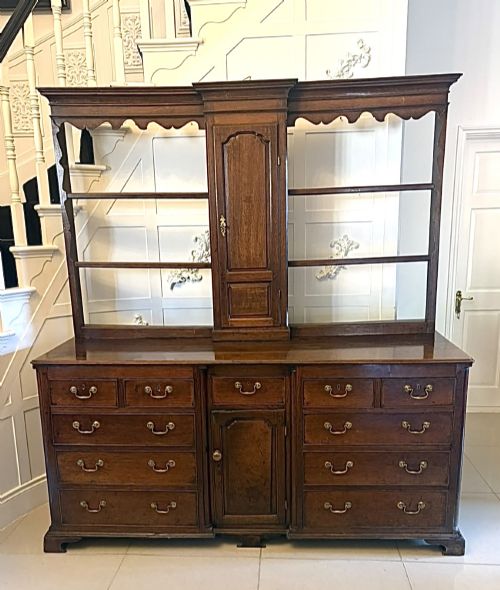
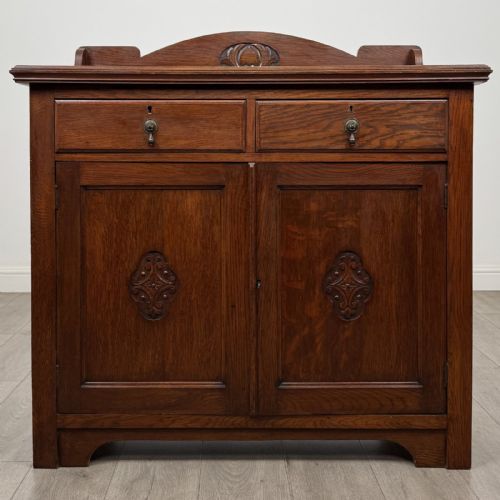
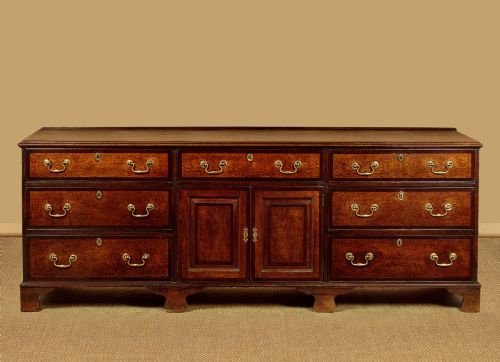
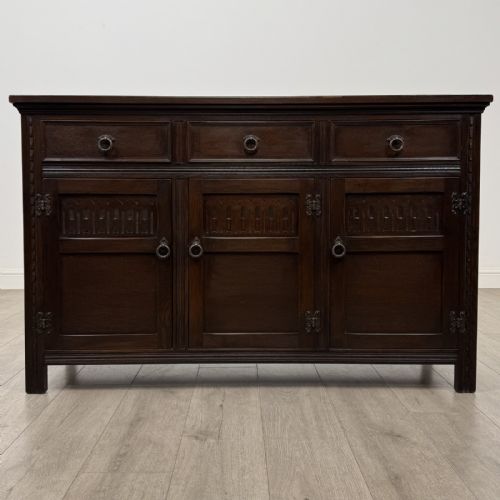
Dark Oak Sideboard Dresser
A dark oak sideboard dresser brings grounded utility and rich grain to a room, offering deep storage beneath generous display surfaces.
Dark Oak Sideboard Dresser
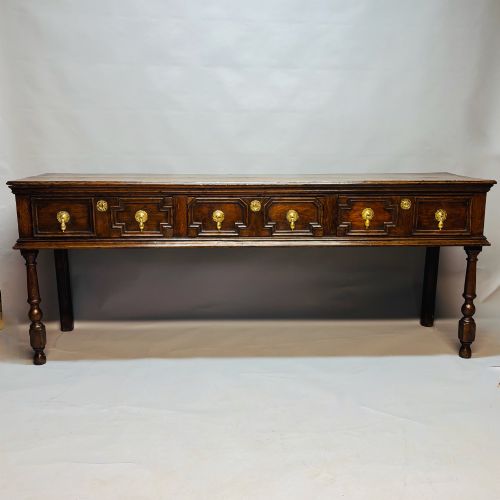
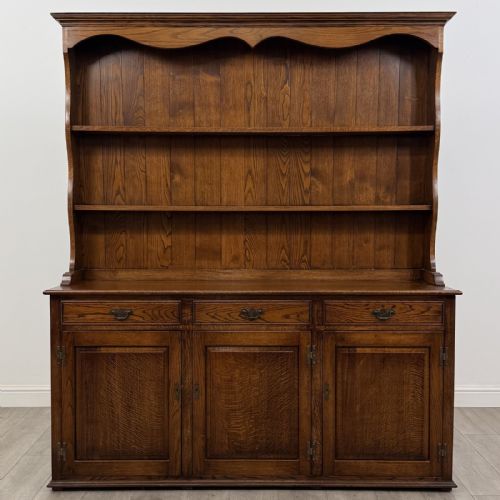
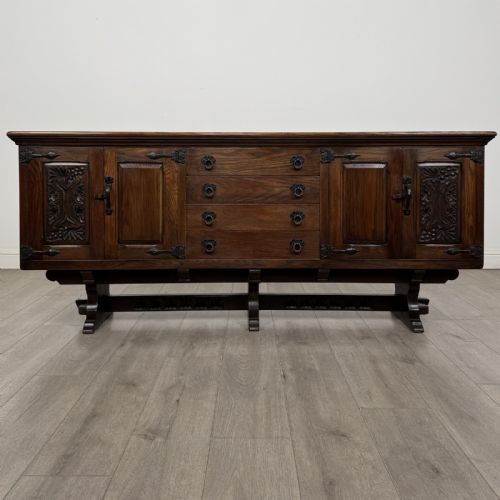
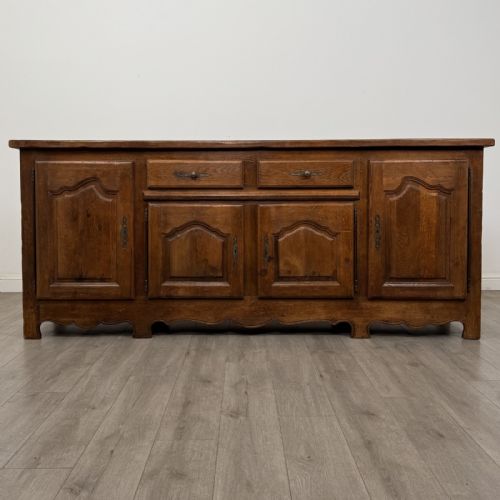
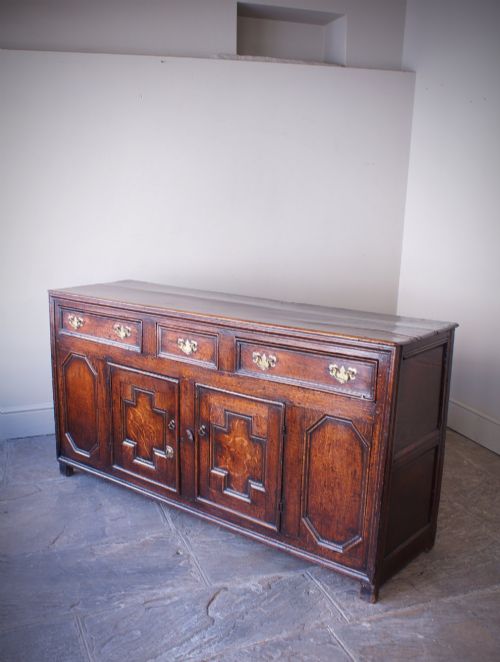
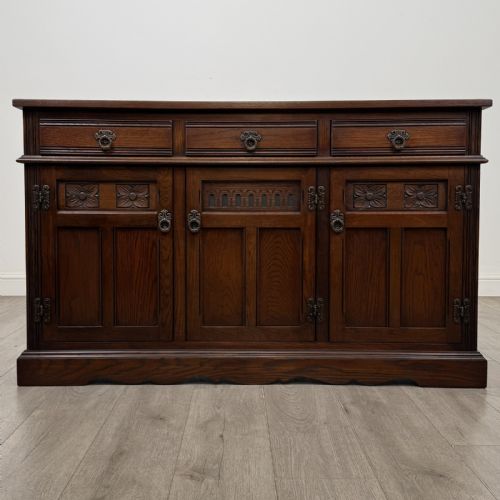
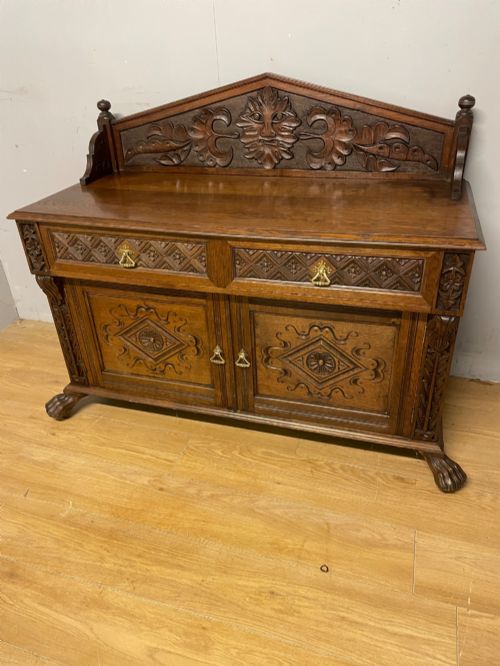
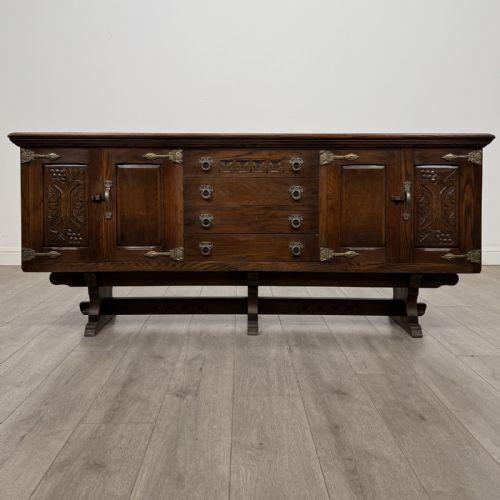
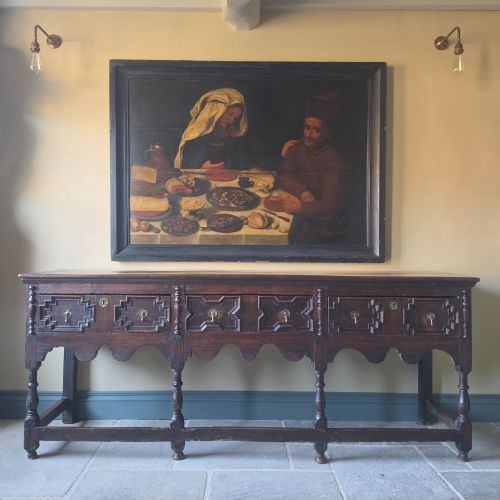
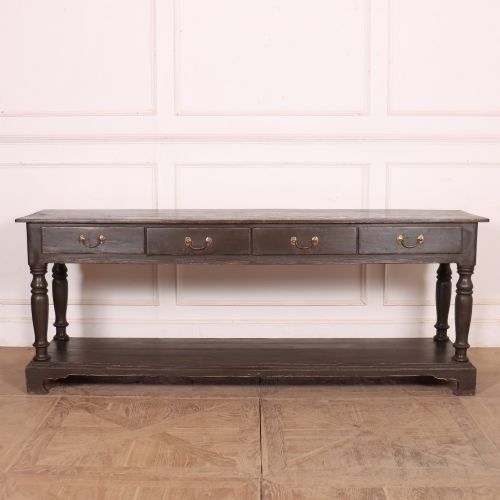
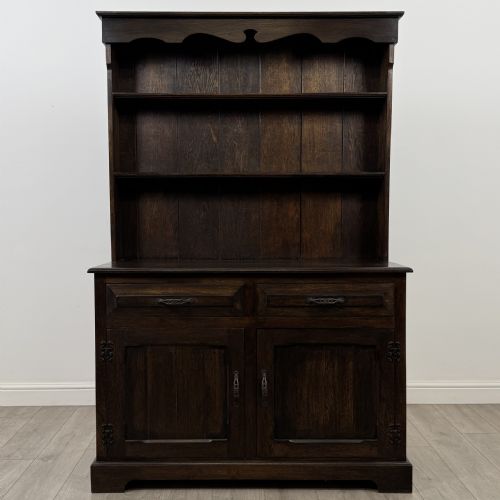
A dark oak sideboard dresser combines utilitarian storage with a low-slung base or an upper display rack, forming a substantial focal point in a dining room or kitchen. Buyers searching for a dark oak sideboard dresser encounter forms ranging from rustic 18th-century potboard bases to heavily carved Victorian and Edwardian revival pieces.
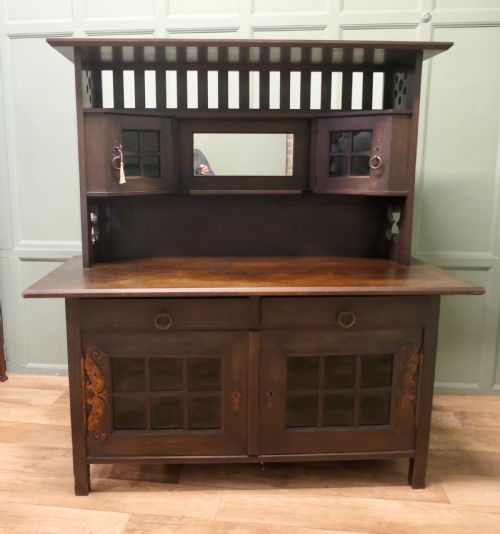
The material palette centres firmly on solid oak, frequently paired with brass hardware, iron fittings, and occasional glass or stained glass doors. Stylistic influences span Georgian restraint, Jacobean and Tudor revivals, and French provincial designs.
Earlier examples display simple planked tops and open potboards, whereas later 19th and 20th-century iterations often incorporate elaborate carving, panelled cupboards, and tiered plate racks.
Materials and construction methods
Cabinet makers built these pieces using solid oak timbers, joining boards with traditional methods such as mortise and tenon joints to withstand decades of daily use. Surfaces were frequently hand-carved with linenfold motifs, geometric panels, or scrolling foliage, particularly during the Victorian and revival periods.
Hardware such as drop handles, escutcheons, and hinges were fashioned from brass or iron, providing functional contrast to the dark timber. Open potboards and lower shelves were integrated into dresser bases to hold heavy kitchen wares and ceramics.
Early potboards below dresser bases were built sturdy enough to survive generations of heavy stoneware pots, muddy boots, and enthusiastic house cats.
Distinguishing quality across periods
Quality rests in the integrity of the timber selection and the crispness of the hand-carving rather than mass-produced uniformity. Earlier pieces derive their standing from unpretentious proportions, pegged joints, and heavy, patinated boards that have darkened naturally over centuries.
Later revival pieces depend upon the depth of the relief carving, the weight of the brass or iron fittings, and the stability of the carcass. Pieces with integrated potboards and well-balanced drawer arrangements command greater attention from collectors.
The Dark Oak Sideboard Dresser Glossary
- Dresser base
- A low cabinet featuring drawers above cupboards or an open potboard, designed without the upper display rack. It served as a primary work and storage surface in historic kitchens.
- Potboard
- An open lower shelf built into the base of a dresser, originally intended for storing heavy pots and pans off the damp floor.
- Court cupboard
- A heavy enclosed storage cabinet featuring a recessed upper section supported by carved columns or pendants, popular in revival styles.
- Linenfold
- A decorative wood-carving pattern imitating the folds of stiff fabric, frequently seen on Tudor and Jacobean revival panels.
- Barley twist
- A turned column or leg carved in a helical screw shape, commonly found on Edwardian and late 19th-century oak furniture.
Dark Oak Sideboard Dresser: Frequently Asked Questions
How do I clean dark oak furniture?
Dust regularly with a soft, dry cloth to prevent the accumulation of grit in carved crevices and mouldings. Apply a quality beeswax periodically to nourish the timber and maintain a soft sheen without building up heavy chemical layers.
Avoid placing these heavy oak pieces near direct heat sources or strong sunlight, which can dry out the ancient timber and cause splits in the panels.
What is the difference between a dresser and a sideboard?
A traditional dresser often includes an upper rack or plate shelf mounted above the base, whereas a sideboard consists solely of a low storage cabinet with drawers and cupboards.
In practice, many antique listings use these terms interchangeably, particularly for pieces originating from regional English and Welsh workshops.
Where were Welsh dressers traditionally used?
Welsh dressers originated as utilitarian kitchen furniture designed to store and display earthenware plates, platters, and everyday cooking utensils. The open shelves allowed damp pottery to air dry before being stacked for the next meal.
Over time, these functional pieces moved from farmhouse kitchens into formal dining rooms and living spaces as decorative display furniture.
How can I date an oak dresser base?
Examine the construction methods, such as hand-cut dovetails on drawer boxes, pegged tenon joints, and the overall tool marks left by early cabinet makers. Timber patination and the natural darkening of oak over centuries provide strong visual clues to an item's age.
Stylistic markers like Georgian bracket feet, Victorian Gothic carvings, or Edwardian barley twists help narrow down the decade of manufacture.