




Wooden Court Cupboard Dresser
These wooden court cupboard dresser examples bring centuries of sturdy architecture into the home.
Wooden Court Cupboard Dresser
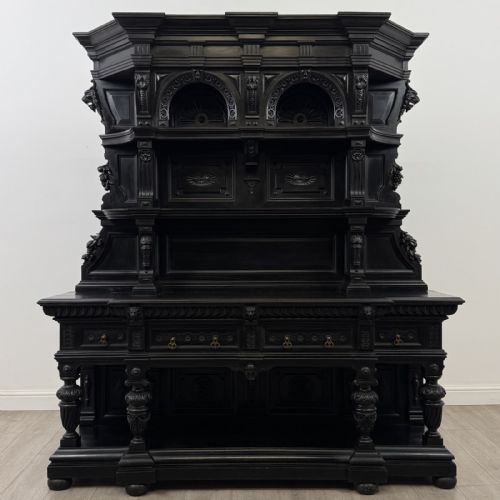
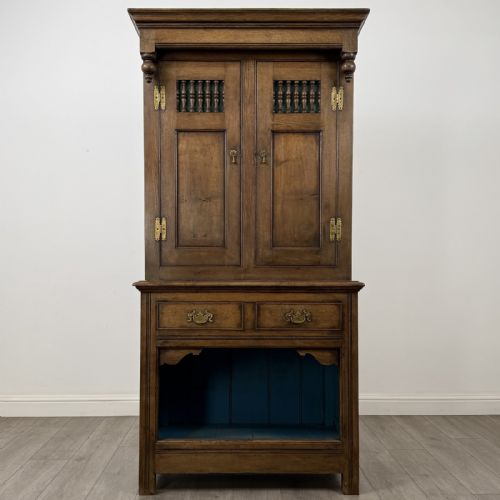
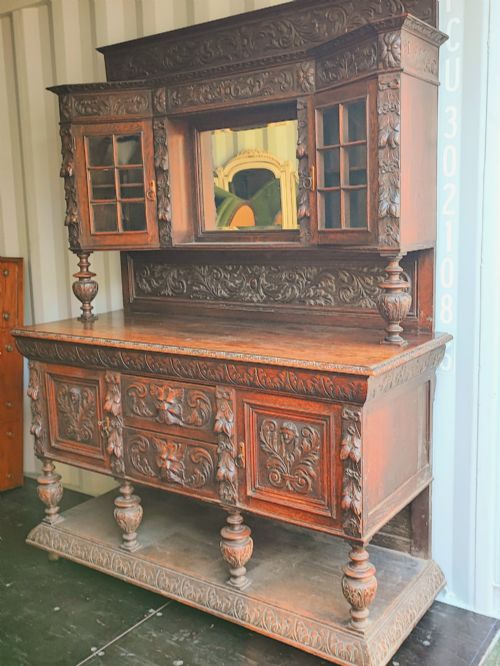
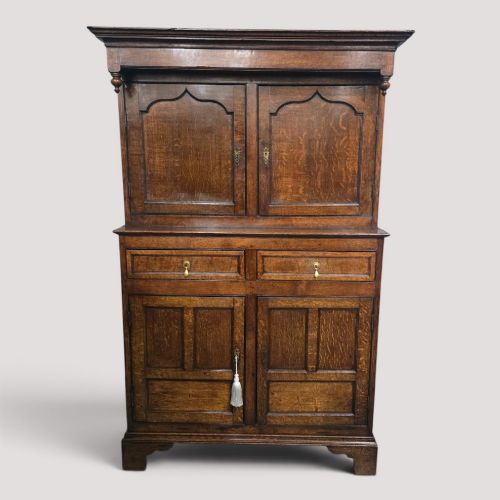
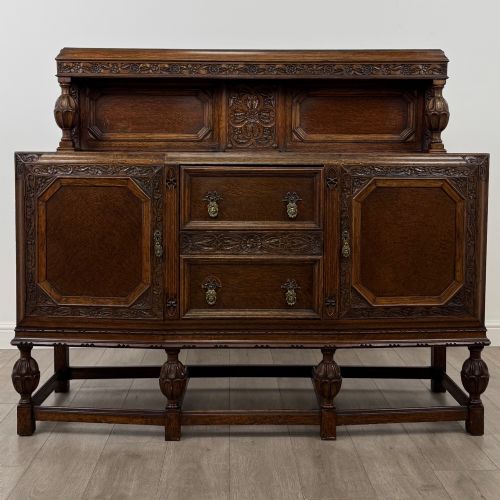
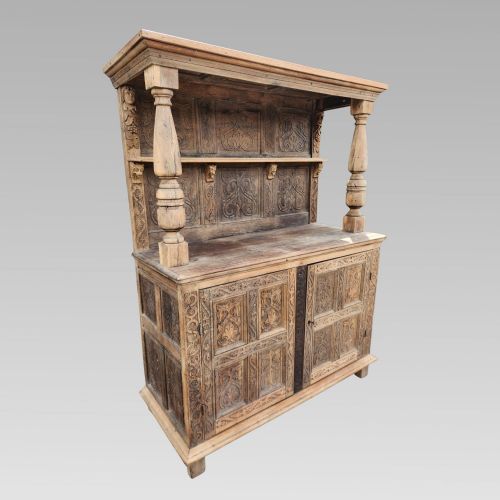
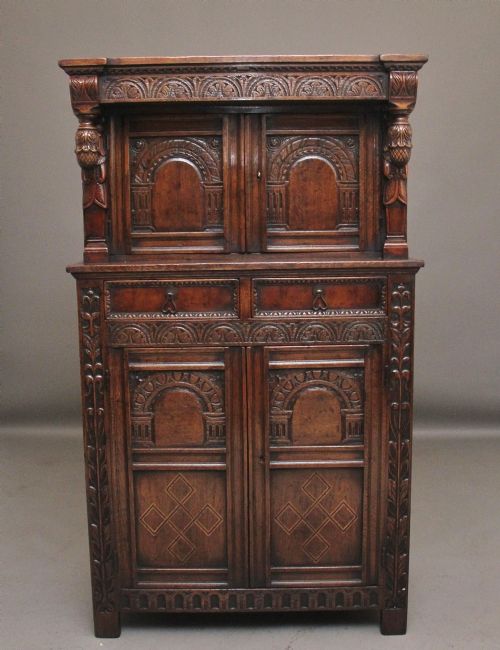
A wooden court cupboard dresser represents a heavy, timber-framed storage piece with roots stretching back to the seventeenth century. When you search for wooden court cupboard dresser items, you encounter formats that combine display tiers, enclosed lower cabinets and upper recesses.
The pieces appearing on this page span several distinct periods, most notably the seventeenth, eighteenth and nineteenth centuries, alongside revival movements. You are most likely to meet substantial oak examples bearing deep carved motifs, heavy doors and multi-tiered upper sections.
How they were made
The primary material across these pieces is solid oak, frequently joined using traditional peg and mortise techniques rather than modern mechanical fasteners. Walnut and elm also appear, contributing different grain patterns and tonal depths to the constructed frames.
Makers utilised hand tools to achieve the heavy relief carving, panelled doors and turned supports characteristic of the style. Iron and brass fittings such as hinges and handles secure the heavy doors and drawers.
Listings feature pieces spanning from the seventeenth century through to the Edwardian era, with solid oak as the dominant material.
What varies in quality
Quality in a wooden court cupboard dresser depends heavily on the integrity of the timber and the depth of the hand-carved detail. Early period examples show crisp tool marks and substantial panel construction that contrast with lighter revival pieces.
The proportion of the upper and lower sections and the survival of original brass or iron hardware determine the visual balance. Pieces retaining their original joined framework command greater interest than those altered or rebuilt during later centuries.
The Wooden Court Cupboard Dresser Glossary
- Court cupboard
- A traditional enclosed piece of furniture featuring stacked tiers or recessed upper levels used historically for displaying plate and storing valuables.
- Joined cupboard
- An early form of cabinetwork constructed with mortise and tenon joints held together by wooden pegs rather than metal nails.
- Jacobean Revival
- A nineteenth-century style that mimics the heavy carving, geometric paneling and dark finishes of early seventeenth-century English furniture.
- Arts and Crafts
- A movement prioritising visible hand construction, simple lines and honest use of materials like solid oak over mass-produced ornamentation.
Wooden Court Cupboard Dresser: Frequently Asked Questions
How do I date a wooden court cupboard dresser?
Dating relies on examining the construction methods, such as joined pegged framing versus machine-cut screws, alongside the style of carving and timber choice. Seventeenth-century examples display hand-split panels and dense oak, while later revivals often feature standardised moulding and softer secondary woods.
Hardware and hinges also offer clues, as hand-forged iron differs significantly from nineteenth-century brass machine casting. Comparing the joinery inside the cabinet to documented period pieces helps confirm the era of manufacture.
Where should I place a heavy wooden cupboard?
These substantial pieces require a strong, level floor and adequate wall clearance due to their heavy timber construction and prominent upper tiers. Placing them away from direct heat sources and strong sunlight prevents the oak or walnut from drying out and splitting.
Because they offer deep storage and display space, dining rooms and large hallways provide traditional contexts that balance their visual weight. Ensure the surrounding room has sufficient ceiling height, particularly for seventeenth and eighteenth-century forms with tall upper sections.
How do I care for antique oak furniture?
Maintaining antique oak involves keeping the timber nourished with traditional wax rather than modern silicone polishes that build up over time. Regular dusting with a soft cloth prevents abrasive particles from settling into the deep carved recesses and grain.
Maintain stable room humidity to protect the wood from expanding or contracting too quickly, which can stress historic joints and panels. Checking the stability of pegged joints periodically ensures the heavy frame remains secure.