


Dark Oak Serving Dresser
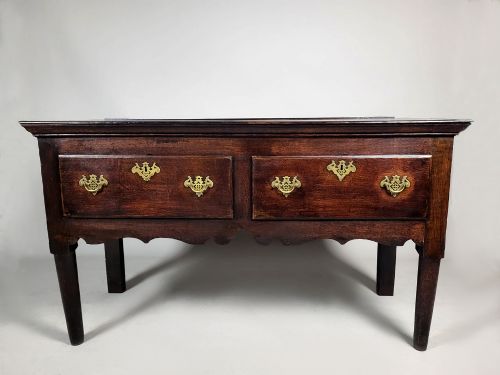
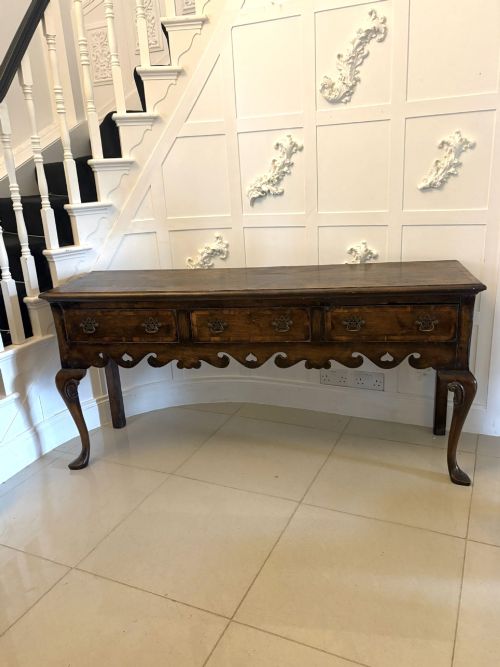
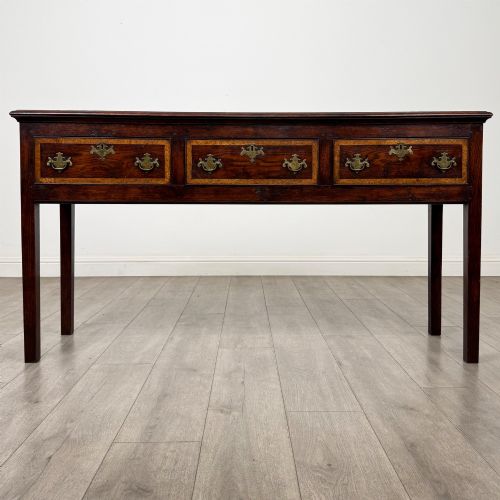
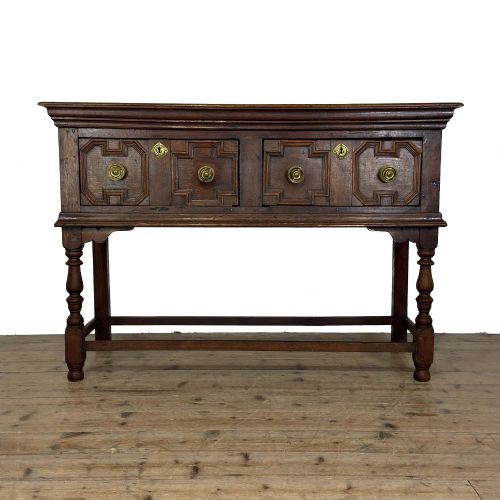
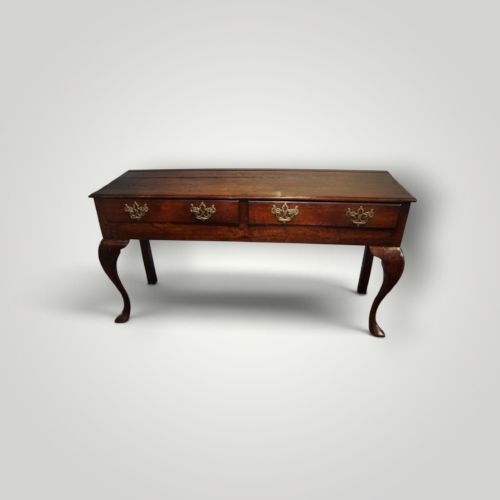
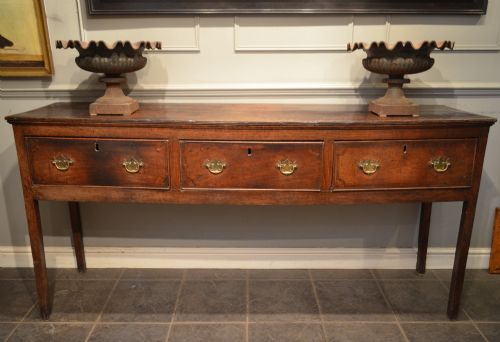
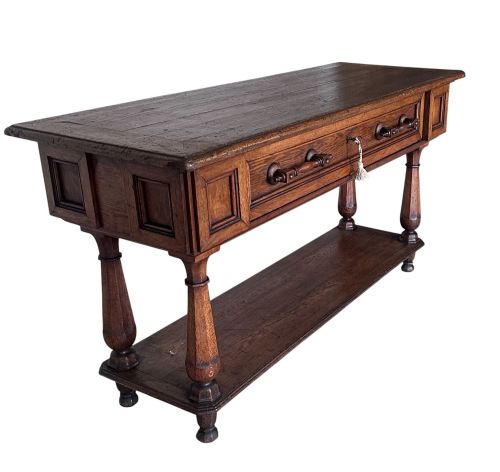
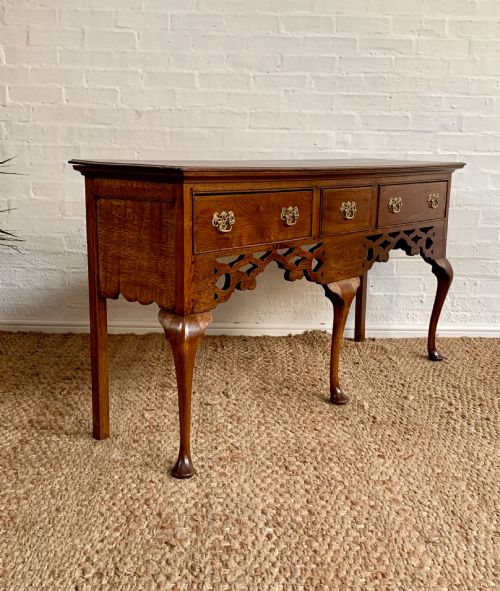
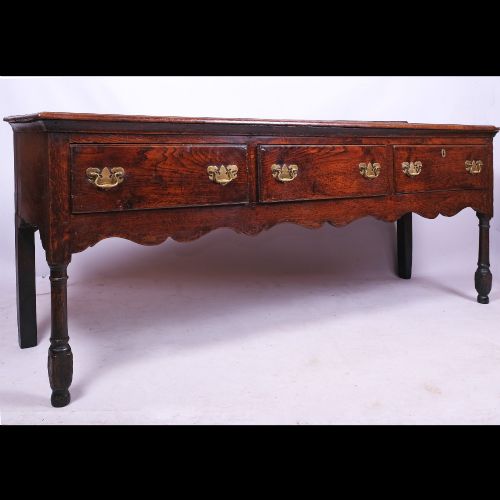
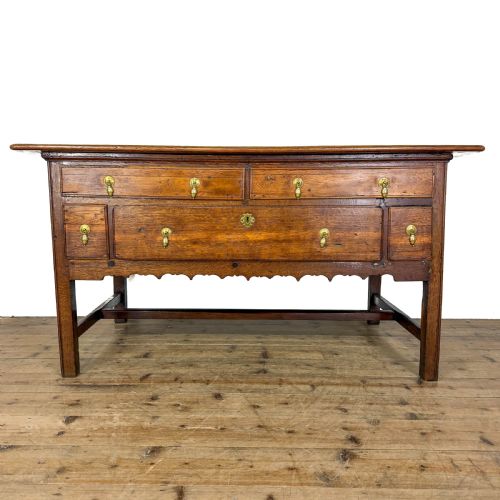
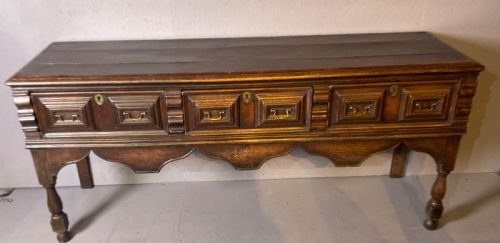
These dark oak serving dresser examples provide practical storage and surface space built from solid timber across centuries of British and European cabinetmaking.
Dark Oak Serving Dresser
A dark oak serving dresser provides a robust surface and drawer storage derived from centuries of functional domestic furniture. When you search for a dark oak serving dresser, you encounter heavy timber forms designed for food preparation and display.
The pieces listed on this page span the seventeenth, eighteenth, and nineteenth centuries, alongside Edwardian and revival iterations. You meet formats ranging from low dresser bases and console tables to carved buffet tables and traditional serving tables.
Origins stretch from English country workshops to French provincial makers. The core vocabulary of these items relies on sturdy timber frames, planked tops, and functional under-counter storage drawers.
What varies in quality
Quality differences stem from the depth of hand-carved detail, the integrity of the timber, and the originality of the brass or iron hardware. Pieces retaining their early patination and original structural fixings command greater appreciation from collectors.
Proportion and execution of turned legs or cabriole supports distinguish high-craft regional pieces from simpler utilitarian examples. The stability of the joined oak frame and the smooth operation of multiple drawers indicate superior workshop standards.
Generations of kitchen staff left their mark on these boards, pounding pastry and carving joints right where you now set your coffee cup.
The Dark Oak Serving Dresser Glossary
- Dresser base
- A low cabinet featuring a flat top surface above a row of drawers, used for serving food and storing household provisions. This form lacks the upper plate rack of a traditional tall dresser.
- Cabriole leg
- A furniture leg that curves outward at the knee and tapers inward toward the foot, inspired by animal limbs. This stylistic feature appears frequently on Georgian examples.
- Jacobean style
- A heavy, rectilinear design style popular during the seventeenth century featuring geometric moulding and dark finishes. Revival pieces emulate these robust early characteristics.
- Patina
- The surface sheen and colour depth developed by timber through decades of handling, polishing, and ageing. A natural patina indicates unblemished historical surfaces.
- Escutcheon
- A protective brass or iron plate surrounding a keyhole on a drawer or cupboard door. These fittings often provide clues to the period of the hardware.
Dark Oak Serving Dresser: Frequently Asked Questions
How do I date an oak dresser base?
Dating relies on examining construction marks, timber thickness, and joinery methods visible inside the drawers and beneath the top. Hand-cut dovetails and hand- turned legs usually point to earlier seventeenth or eighteenth-century origins.
Style indicators like cabriole legs or heavy geometric mouldings connect pieces to specific periods such as the Georgian era or Jacobean revivals. Hardware fixings and the depth of the timber's patina offer further chronological context.
Were these used in kitchens or dining rooms?
These pieces served primarily as utilitarian furniture for food preparation, carving, and storing tableware in domestic service areas. Over time, their role shifted toward the dining room or hall for serving meals and displaying silver.
The sturdy oak construction handled heavy daily kitchen demands before evolving into decorative furniture for formal living spaces.
How do I maintain a dark oak surface?
Routine care involves dusting with a dry or slightly damp lint-free cloth to prevent dirt accumulation on the timber grain. Avoid placing the wood in direct sunlight or near heat sources to prevent cracking.
Applying a traditional beeswax polish periodically helps nourish the oak and preserves its natural sheen without creating a heavy buildup.
Are these pieces made of solid oak?
The majority of pieces utilise solid oak throughout the frame, top, and drawer construction, reflecting historical cabinetmaking standards. Secondary timbers might appear inside drawer linings or backboards depending on the regional workshop.
Solid hardwood construction ensures the durability that allows these serving tables to survive across multiple centuries.