


Dark Oak Salt Box
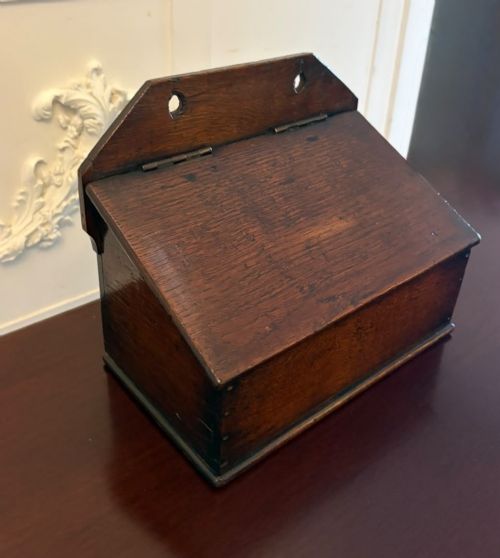
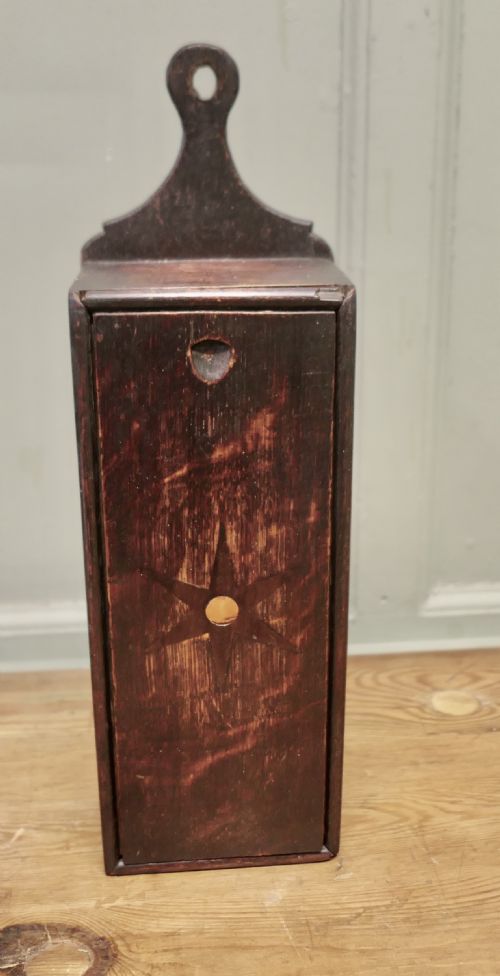
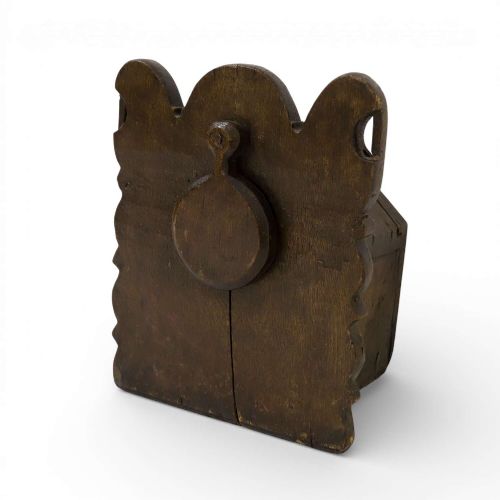
A dark oak salt box is a sturdy wall-mounted receptacle designed to keep kitchen salt dry, offering utilitarian charm and rich timber grain.
Dark Oak Salt Box
A dark oak salt box forms a practical part of historic domestic interiors, designed specifically to hang on kitchen walls near hearths. Buyers examining this category encounter various wall-mounted storage forms alongside the primary salt boxes, including candle boxes, spice cabinets, and wall organisers.
The pieces appearing on this page span several centuries, encompassing seventeenth-century, eighteenth-century, and nineteenth-century examples. Alongside traditional salt boxes, the selection includes Georgian and Victorian interpretations in oak, sometimes incorporating pine or iron hardware.
Regional vernacular traditions heavily influence these forms, shifting from seventeenth-century British country styles to later Victorian utility. Many of these hanging boxes served utilitarian roles in domestic spaces before becoming sought-after decorative antiques.
What varies in quality
Quality differentiates through the integrity of the timber, the depth of the natural patina accumulated over centuries, and the originality of the brass or iron hardware. Pieces retaining their early surface finishes, such as historic paint traces or mellow wax, command greater interest.
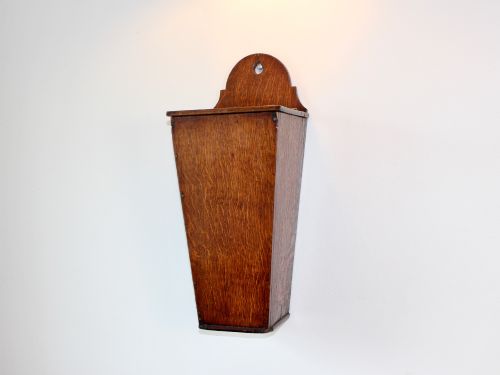
Construction subtlety also separates standard domestic items from finer examples, noting particularly the skill in tapered board shaping, lid hanging, and dovetailed joints. The survival of original hanging mechanisms and untouched backboards alters the standing of individual boxes.
Listings feature oak alongside pine, brass, and iron, spanning the seventeenth, eighteenth, and nineteenth centuries.
The Dark Oak Salt Box Glossary
- Salt Box
- A lidded wall-mounted container designed to store coarse kitchen salt safely away from dampness. These typically feature a sloping lid and a high backboard with a hanging aperture.
- George III
- The period of British history spanning from 1760 to 1820, noted in furniture for balanced proportions and understated classical influence. Pieces from this era often show refined tapered lines.
- Hardware
- Metal components attached to furniture, including hinges, latches, and hanging loops. Original iron or brass hardware contributes significantly to the historical integrity of a wall box.
- Backboard
- The vertical wooden panel at the rear of a hanging box that incorporates the mounting hole. It bears the weight of the box against the wall.
Dark Oak Salt Box: Frequently Asked Questions
What is a dark oak salt box?
A dark oak salt box is a historic wall-mounted wooden container utilised in domestic kitchens to keep salt dry and accessible near the hearth. These pieces combine utilitarian storage with enduring vernacular craftsmanship.
Most examples feature a hinged sloping lid to protect the contents and a shaped backboard pierced for hanging on a wall. Their dark oak timber develops a deep patina through age and handling.
How were salt boxes used historically?
Salt boxes hung on kitchen walls within easy reach of the cook, as salt was a precious commodity requiring protection from damp cooking environments. The sloping lid allowed quick access while shedding kitchen debris.
Over time, similar wall-mounted forms evolved for other domestic essentials, including candles, spices, and kitchen knives. They formed an essential element of everyday kitchen organisation before fitted cabinetry.
How do I distinguish eighteenth-century boxes?
Eighteenth-century boxes typically display hand-sawn board construction, pegged joinery, and forged iron hinges rather than mass-produced screws. The timber shows the distinctive grain and darkening associated with centuries of exposure to domestic environments.
Details such as tapered rectangular profiles and early paint traces help separate these earlier vernacular pieces from later nineteenth-century interpretations. Examining the backboard and interior surfaces reveals the hand tools utilised by the maker.
Where should I hang a salt box?
These boxes suit kitchen or dining areas where wall space allows them to hang securely from their original mounting points. Pairing them with other period treen or wall boxes creates an authentic display of historic utility.
Care should be taken to avoid placing antique wood in direct sunlight or above active heat sources that might dry out the timber. Using appropriate fixings matching the weight of the solid oak and iron hardware ensures secure mounting.