

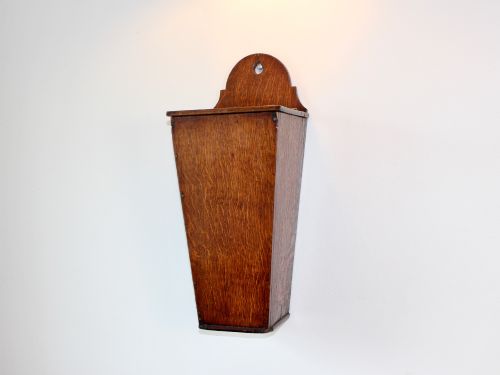


Wooden Wall Hanging Box
A wooden wall hanging box is a practical domestic container designed to be mounted on a wall to keep household necessities safe and dry.
Wooden Wall Hanging Box
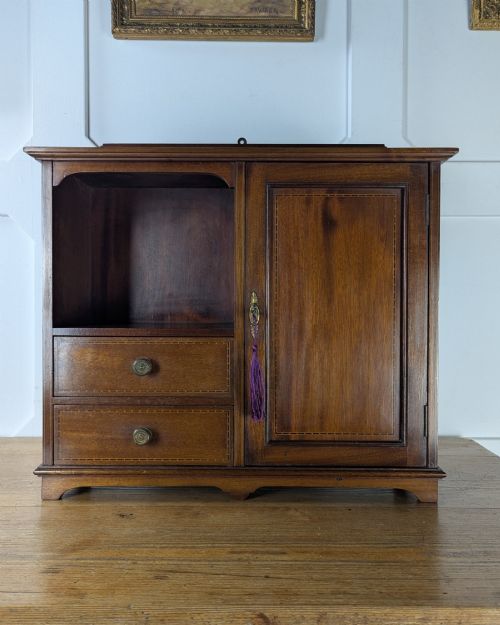
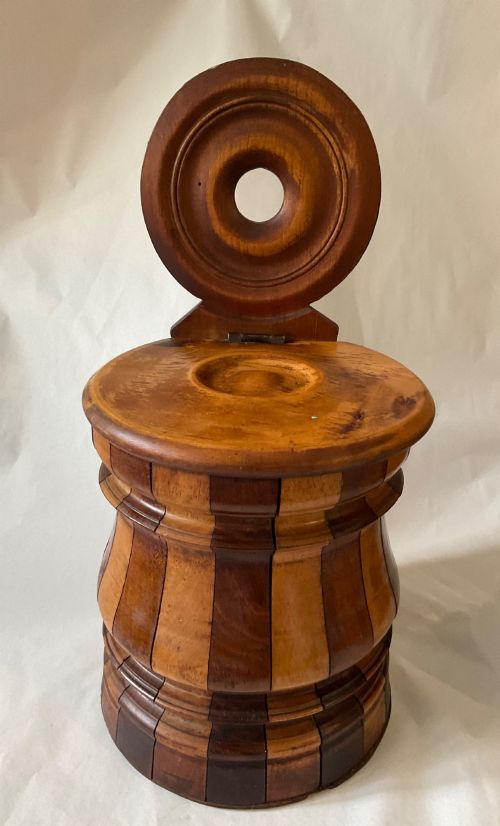
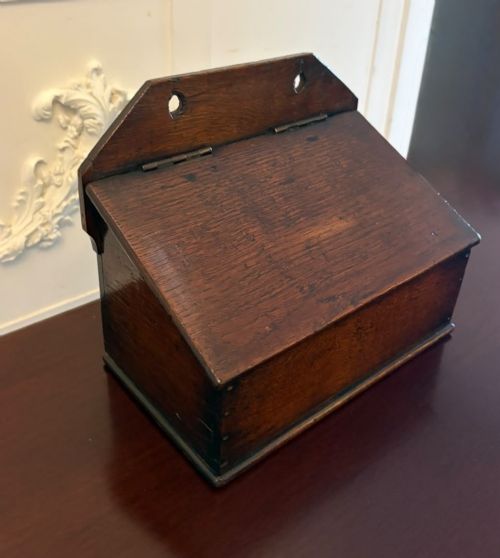
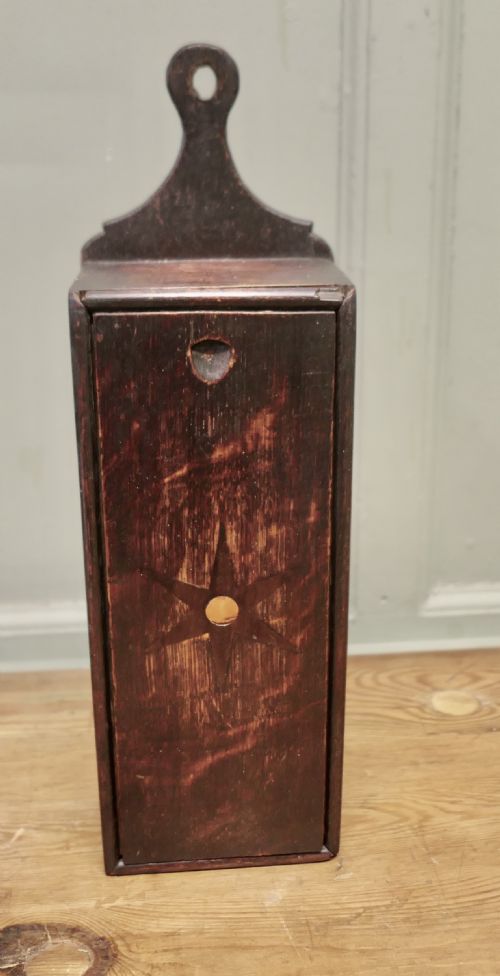
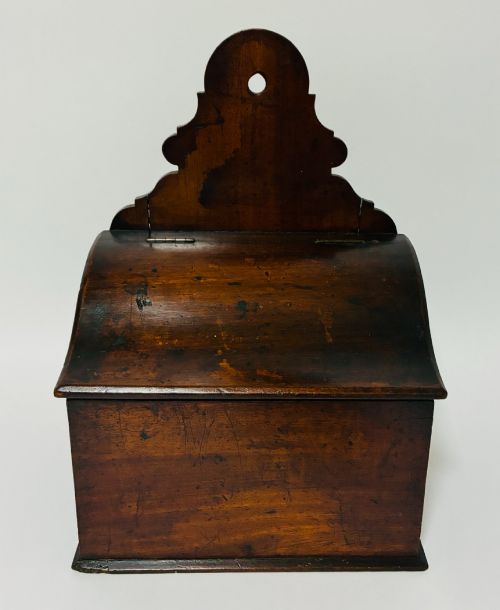
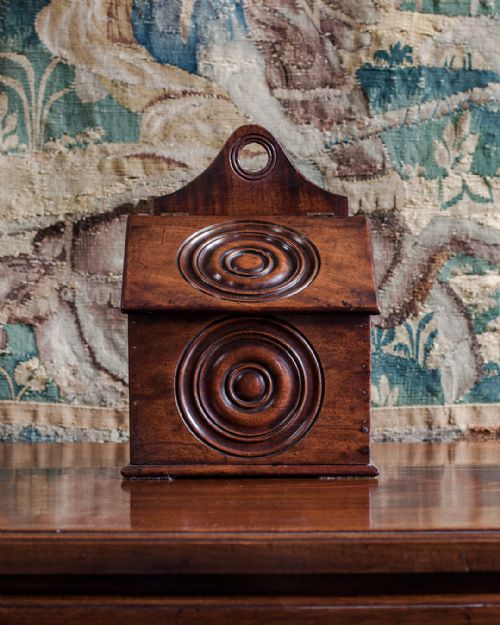
A wooden wall hanging box is typically encountered in utilitarian forms such as oak candle boxes, salt boxes, and spice cupboards originating from the seventeenth, eighteenth, and nineteenth centuries. These pieces were made to be suspended in kitchens, hallways, or living spaces to organise household goods close at hand.
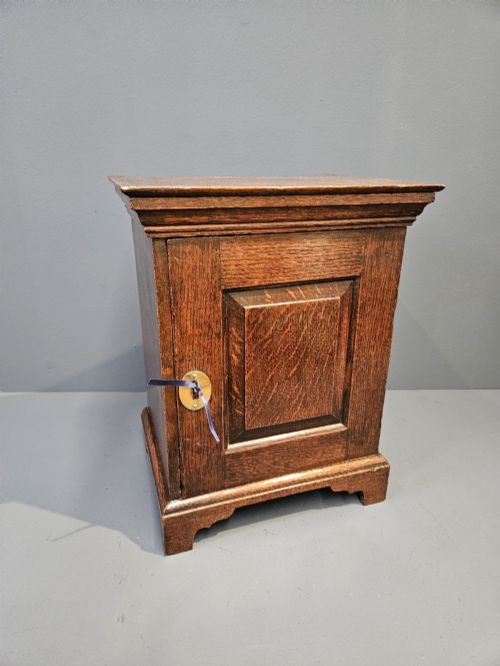
The selection ranges from simple eighteenth-century country pieces in oak and pine to more decorative Victorian designs featuring carving, inlay, and glass doors. Collectors will find domestic storage forms including key cabinets, knife hanging boxes, and small wall cabinets among the periods represented.
Materials and construction
The primary woods utilised in these pieces are oak, mahogany, and pine, frequently joined with traditional pegging or dovetailing suitable for items subjected to daily domestic use. Timbers were often left with their natural grain, though surviving examples show traces of early red paint or satinwood inlay.
Hardware forms an integral part of the construction, featuring original iron hinges, latches, and brass fittings that secure doors and lids. Secondary woods such as pine appear alongside oak in composite pieces like spice boxes, reflecting regional British and continental workshop practices.
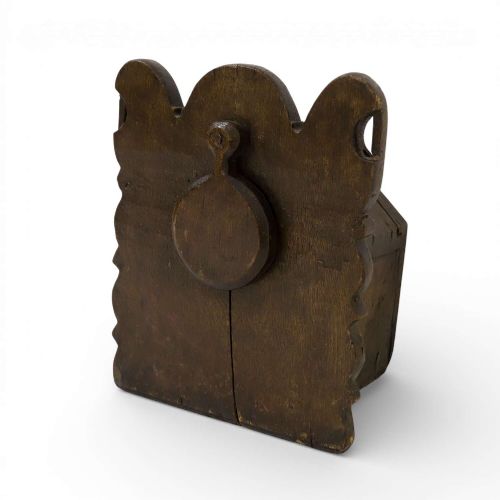
One listed salt box preserves the faint ghost of old red paint beneath its sturdy iron hardware.
Distinguishing quality in domestic boxes
Quality in a wooden wall hanging box rests on the integrity of its timber, the survival of its original surface finish, and the unaltered state of its iron or brass hardware. Pieces retaining early paint traces, original hinges, and well-proportioned mouldings sit at the higher end of the range.
The presence of hand-carving or geometric inlay, such as that seen on Arts and Crafts or Georgian examples, demonstrates greater workshop skill than plain utility items. Construction details like neatly dovetailed corners and undamaged hanging points further separate superior specimens from basic kitchen storage.
The Wooden Wall Hanging Box Glossary
- Treen
- Small handmade wooden household objects. This term covers domestic items like spoons, boxes, and kitchenware produced before the era of mass manufacturing.
- Dovetail
- A joint formed by interlocking wedge-shaped fingers. It provides strong tensile strength for securing the corners of wooden boxes and drawers.
- Spice cupboard
- A small wall-mounted cabinet with internal small drawers or shelves. These were utilised for storing precious cooking spices and herbs in domestic kitchens.
- Salt box
- A sloping-lidded container designed to keep salt dry. They often feature a hinged lid and a high backboard with a hanging hole.
- Pine
- A softwood commonly used in regional British furniture and secondary box construction. It was frequently painted or left plain in country workshops.
Wooden Wall Hanging Box: Frequently Asked Questions
How were wooden wall hanging boxes used?
These boxes were mounted on walls in kitchens and living rooms to store everyday household items securely away from damp flagstone floors. Common contents included tallow candles, cooking salt, spices, and keys.
By keeping supplies elevated and enclosed, the boxes protected perishable goods from household pests and dust while keeping them within easy reach of the hearth.
How do I hang an antique wall box safely?
Most antique wall boxes feature original hanging brackets, pierced backboards, or iron rings designed for suspension on a sturdy wall hook. Weight distribution should be assessed carefully before hanging.
It is advisable to use professional picture hanging fixings rated for the weight of solid hardwood rather than relying on modern adhesive hooks.
How can I tell an 18th-century box from a 19th-century one?
Eighteenth-century boxes typically display simpler, robust construction in solid oak or pine, often showing tool marks from hand saws and adzes. Iron hardware on these earlier pieces is hand-forged.
Nineteenth-century examples frequently incorporate machine-sawn timber, finer mahogany veneers, glass panels, or decorative carving associated with Victorian and Arts and Crafts styles.
Where should I place a wall box in a modern home?
A wooden wall hanging box functions well in a modern kitchen, hallway, or study to hold letters, keys, or small accessories. They add texture and historical character to plain walls.
Avoid positioning antique wood in direct sunlight or directly above active heat sources like radiators to prevent the timber from splitting or warping.