




Dark Oak Pedestal Desk
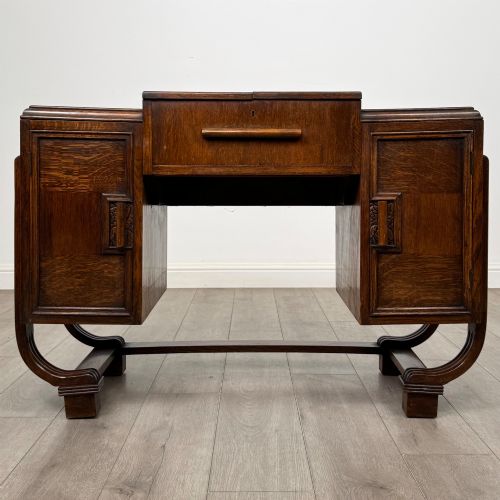
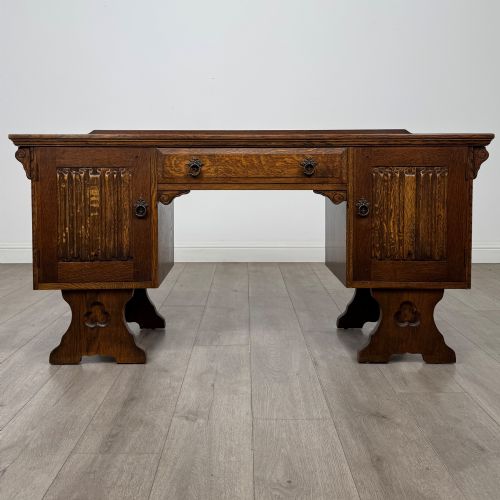
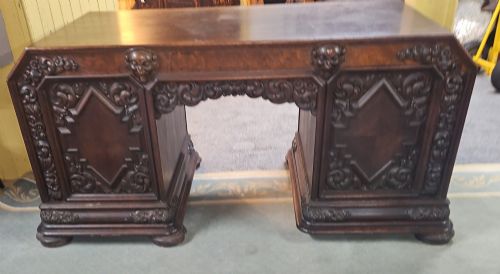
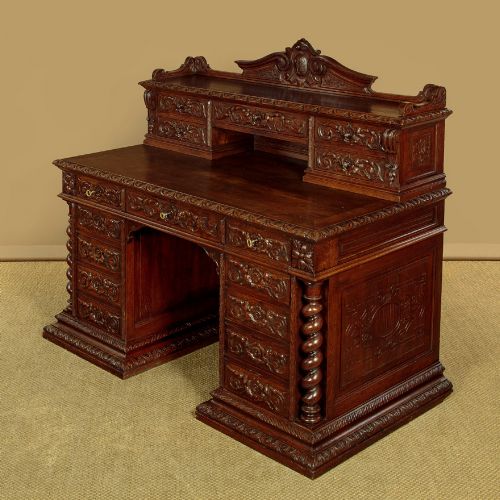
A dark oak pedestal desk provides a sturdy working space with deep timber tones, offering multiple drawers and solid proportions for a traditional study.
Dark Oak Pedestal Desk
When searching for a dark oak pedestal desk, buyers encounter heavy timber workspace furniture designed with flanking stacks of drawers to support daily writing and administrative tasks. The evidence shows these pieces surface primarily from the Victorian and Edwardian eras, alongside late nineteenth century examples.
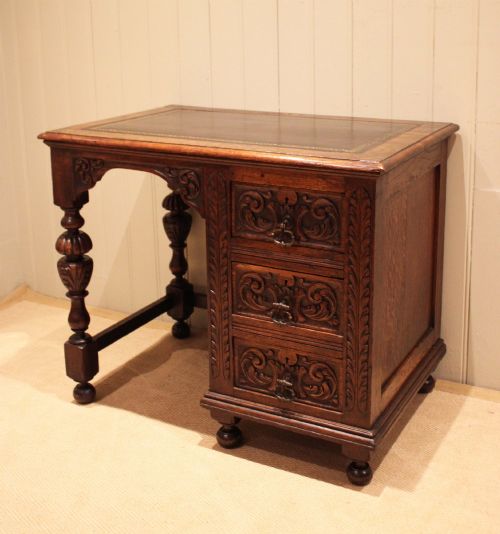
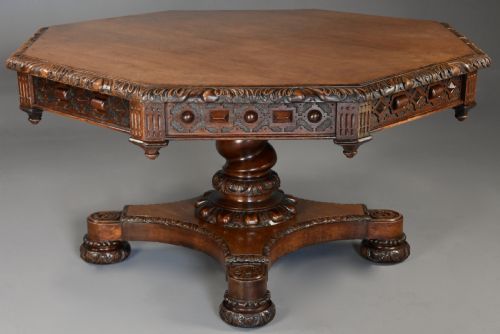
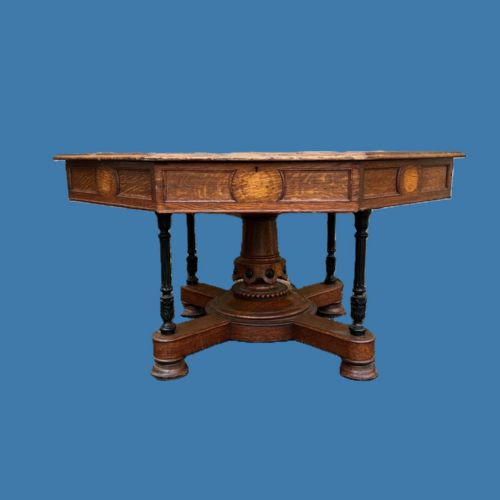
The layout typically involves a twin pedestal format or a kneehole arrangement, while variants include partners writing tables, roll top desks with tambour mechanisms, and carved library tables. Many items display stylistic influences from the Jacobean, Gothic, and Renaissance revivals, bringing deep historical character into a study or office.
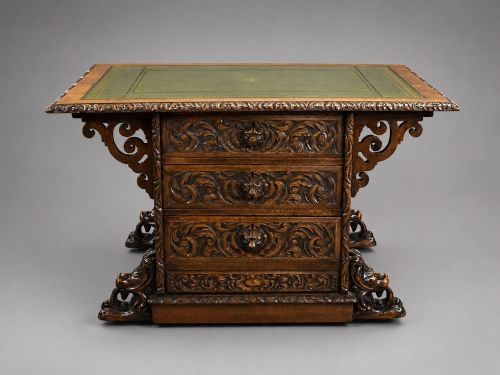
Makers and workshops utilised robust timber construction, often incorporating panelled sides, carved linenfold motifs, and figural details such as lions heads or Green Man masks. These desks serve as substantial anchor points in a room, combining practical storage compartments with imposing architectural presence.
What varies in quality
Quality in these desks rests on the crispness of the hand-carved relief work, from linenfold panels to figural carvings, which separates standard production from superior examples. The choice and matching of timber grain across large expanses like pedestal sides and writing tops dictate the visual cohesion of the piece.
Internal construction standards, including the dovetailed jointing of drawer boxes and the smooth operation of sliding tambour shutters or partners drawers, define the structural integrity. The incorporation of original brass hardware and well-preserved leather inserts further elevates the standing of an individual desk.
Green Man carvings peer out from Victorian Davenport desks, watching over your daily correspondence with ancient foliage spilling from their mouths.
Edwards and Roberts·Étienne Kohlmann
The Dark Oak Pedestal Desk Glossary
- Pedestal desk
- A freestanding writing table supported by two columns or blocks of drawers beneath the main top. This format forms the core of the items seen in the evidence.
- Partners desk
- A large writing table designed with drawers and cupboards on both opposing sides to accommodate two users simultaneously. Such pieces often feature fine panel work.
- Tambour
- A flexible shutter made from narrow strips of wood glued to canvas, allowing roll top desks to slide open smoothly. This mechanism conceals pigeonholes and small drawers.
- Linenfold
- A style of wood carving representing folded linen, frequently used on the panels of Victorian and Edwardian oak furniture. It adds textured relief to drawer fronts and sides.
- Kneehole
- A recessed central space beneath the desk top designed to accommodate the user's legs, flanked by pedestals of drawers. This configuration structures the classic writing desk layout.
- Padouk
- A dense tropical hardwood with reddish-brown tones, utilised in Anglo-Indian furniture pieces appearing alongside standard oak examples.
Dark Oak Pedestal Desk: Frequently Asked Questions
What is a partner desk?
A partner desk is a large double-sided writing table featuring banks of drawers and cupboards facing both directions. It allows two people to work opposite one another.
These substantial tables often served in shared libraries or administrative offices, requiring ample floor space to be accessed from all sides.
How do I use a roll top desk?
A roll top desk uses a flexible tambour shutter that slides upward in tracks to reveal an interior arrangement of pigeonholes and small stationary drawers. Pulling the shutter down secures the workspace.
This mechanism allows you to leave paperwork organised on the writing surface and conceal it instantly by closing the slatted wooden cover.
How do I identify Victorian oak desks?
Victorian oak desks are identified by their heavy proportions, dark timber finishes, and dense period carvings such as linenfold patterns, strapwork, or figural motifs like Green Man masks. They frequently date from the mid to late nineteenth century.
Examining the construction methods, such as hand-cut dovetails in the drawers and the presence of original brass hardware, helps confirm the nineteenth-century origin.
Where does padouk wood come in?
Padouk wood appears in Anglo-Indian pedestal desks and library tables from the nineteenth century, offering a distinct dense timber alternative to standard British oak. These pieces reflect colonial cabinet-making traditions.
The reddish-brown timber brings a different visual weight and colour palette to a room while maintaining the traditional pedestal desk format.