



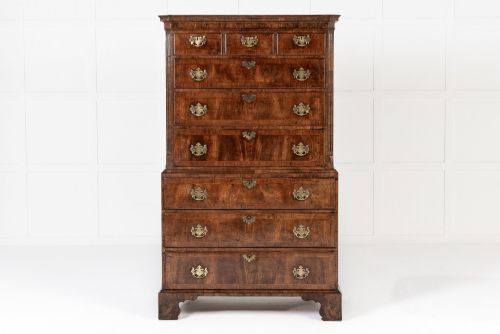


Dark Oak Highboy
These dark oak highboy pieces offer commanding storage, bringing substantial proportions and rich timber grain to period interiors.
Dark Oak Highboy
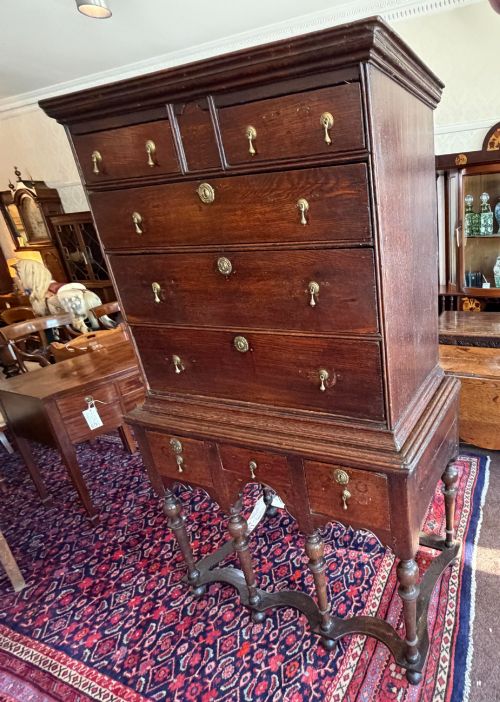
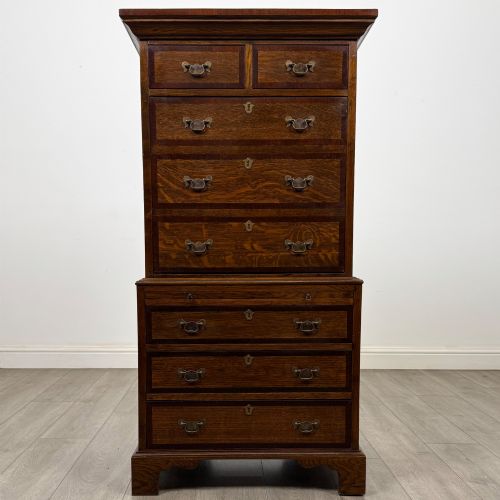
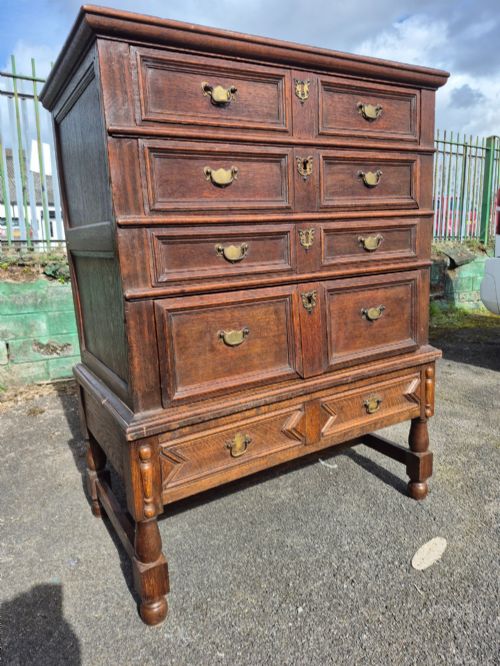
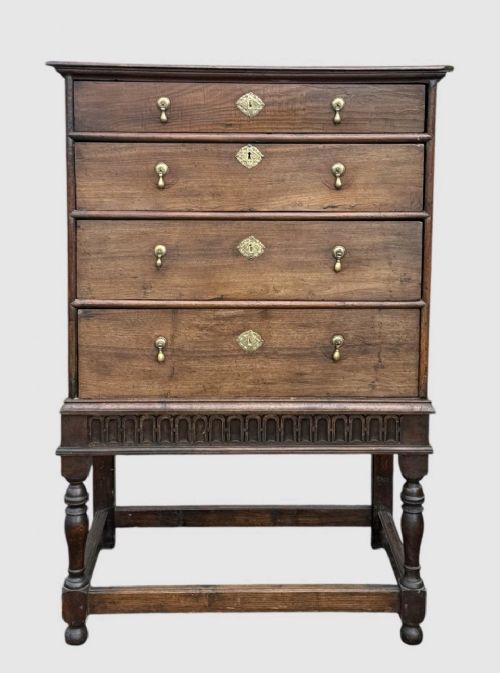
When you search for a dark oak highboy, you are looking at tall storage furniture that combines a chest of drawers sitting upon a low stand or set upon a second larger chest. The form appears across the seventeenth and eighteenth centuries, taking shape as chest on stand or tallboy configurations.
The versions you are most likely to meet on this page date from the seventeenth century through the eighteenth century, including George I, Georgian, and Queen Anne periods, alongside Edwardian revivals. These pieces utilise sturdy oak construction, occasionally featuring walnut or brass details.
Makers designed these tall chests to maximise vertical storage while maintaining a manageable footprint in domestic chambers. The arrangement typically divides drawer storage across multiple tiers, resting either on slender legs connected by stretchers or upon a solid lower chest base.
How they were made
Cabinet makers built these pieces primarily from solid oak, sometimes incorporating walnut veneers and banded drawer fronts to create subtle surface contrast. Timber selection focused on durable domestic hardwoods capable of supporting heavy stacked drawer sections.
Construction relied on traditional joinery methods, housing drawers within sturdy frames and securing stands with strong joints. Brass drop handles, keyplates, and escutcheons were fitted to the drawer faces to provide functional hardware alongside the timber.
Small keys turned hastily in brass escutcheons guarded midnight secrets and folded linens for centuries before reaching these stands.
What varies in quality
Quality rests in the harmony of proportions between the upper drawer section and its supporting stand or lower chest base. Pieces with well-balanced heights and original stands demonstrate superior craftsmanship compared to later alterations or mismatched sections.
The treatment of the timber surface and the retention of period brass hardware also distinguish finer examples. Crisp mouldings, neat banding, and undisturbed timber patination separate standard regional pieces from exceptional cabinet work.
The Dark Oak Highboy Glossary
- Chest on stand
- A drawer chest elevated on a separate low frame with legs. This form provides elevated storage while keeping the overall visual weight lighter than a full floor-standing cabinet.
- Tallboy
- A tall chest of drawers, often constructed as a chest on chest or a chest on stand. The design maximises vertical capacity in smaller bedchambers.
- Banding
- A narrow strip of contrasting timber inlaid around the perimeter of drawer fronts or tabletops. It frames the primary wood grain for decorative effect.
- Escutcheon
- A protective metal plate surrounding a keyhole. It prevents the timber around the lock from sustaining wear when keys are inserted.
- Stretchers
- Horizontal wooden rails connecting the legs of a stand for structural stability. They prevent the legs from wobbling under the weight of loaded drawers.
Dark Oak Highboy: Frequently Asked Questions
What is a highboy?
A highboy is a tall chest of drawers built in two sections, typically featuring a smaller upper chest resting on a lower stand or table base. The design allows for substantial storage while occupying minimal floor space.
These pieces served primarily in bedchambers for linens and garments. Their elevated stature kept clothing away from floor dampness in older homes.
How do I date an oak highboy?
Dating relies on observing construction methods, timber choices, hardware styles, and overall proportions. Seventeenth-century examples often display simpler joinery and heavy framing, while eighteenth-century pieces introduce banded veneers and refined stands.
Comparing the drawer construction, backboards, and handles helps establish the period of manufacture. Surviving elements like original brasses provide reliable chronological clues.
Where were these pieces used?
Historically, highboys functioned as essential storage furniture in private bedchambers and dressing rooms. Their height accommodated large quantities of clothing within a compact footprint.
In modern interiors, they fit well in hallways, living rooms, and bedrooms where vertical storage is required. Their rich timber surfaces anchor traditional and transitional room schemes.
What is the difference between a tallboy and a highboy?
While both terms describe tall storage furniture, a highboy specifically refers to a chest resting on a separate low stand with legs. A tallboy more often describes a chest on chest configuration.
Regional terminology can blur these distinctions, but examining the base construction reveals whether the upper section sits on a leg stand or a second chest of drawers.