



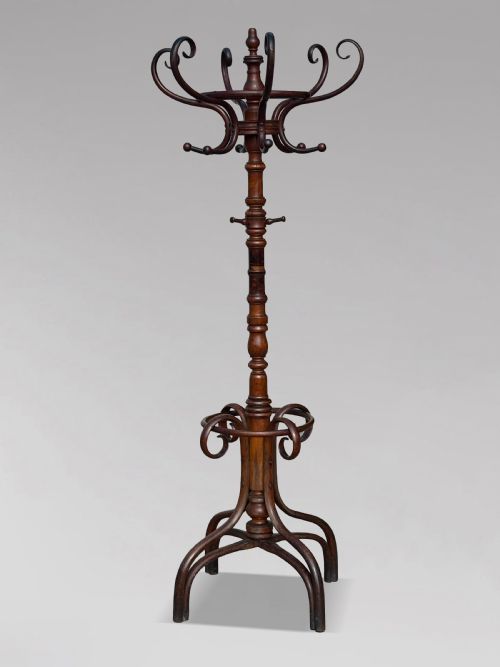


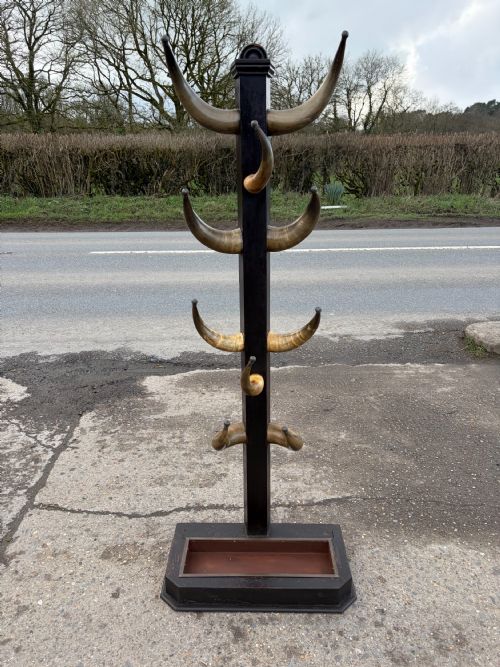

Dark Oak Hat Stand
Dark oak hat stand pieces offer robust storage for hallways, combining practical utility with period character.
Dark Oak Hat Stand
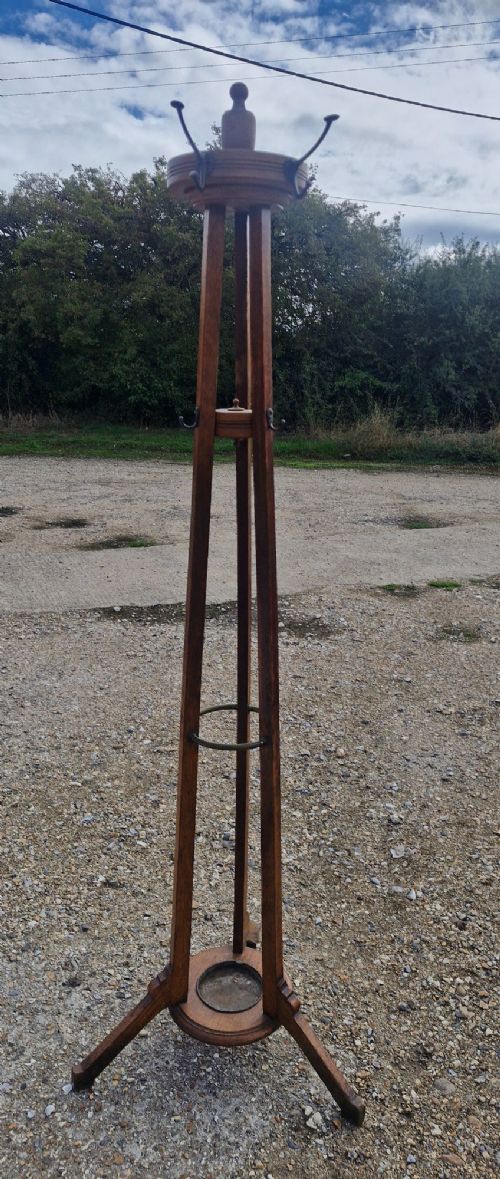
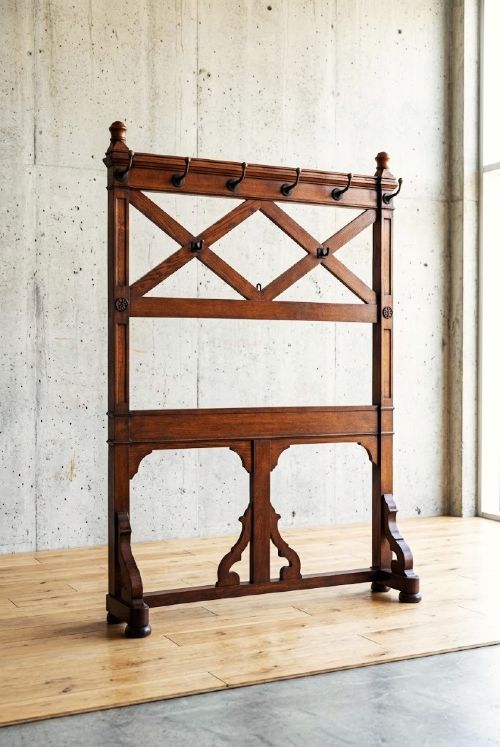
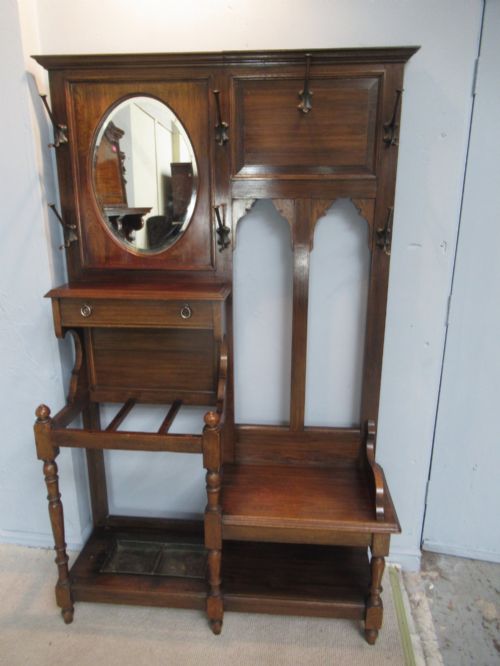
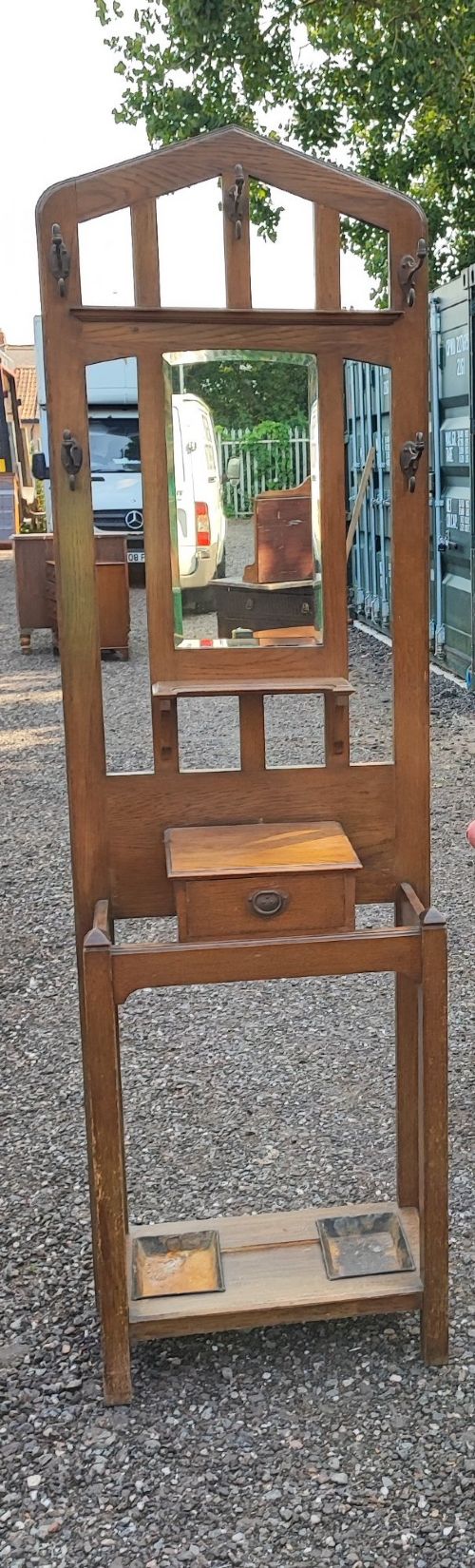
A dark oak hat stand is a functional hall piece designed for coats, hats, and sticks, appearing primarily in Victorian and Edwardian iterations. Buyers find these items ranging from compact wall-mounted racks to imposing floor-standing furniture with integrated mirrors and umbrella wells. The selection relies heavily on styles such as Arts and Crafts, Gothic Revival, and vernacular country house designs.
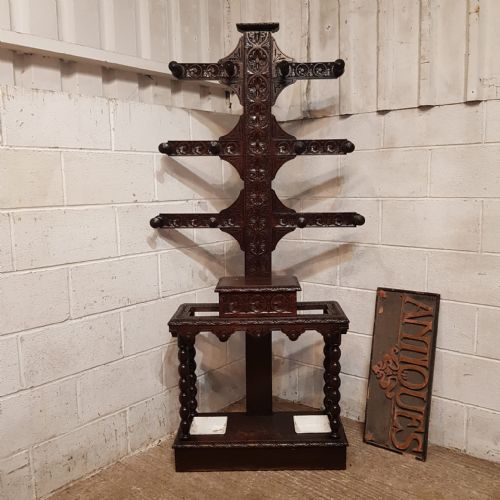
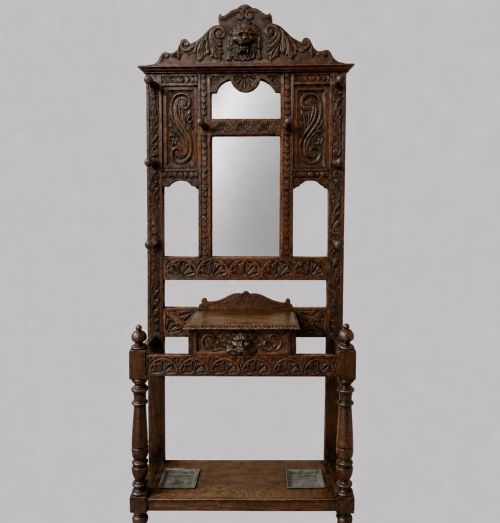
Most examples date from the nineteenth and early twentieth centuries, constructed to anchor a entranceway with dark timber tones. Forms vary from revolving revolving stands to monumental Flemish-carved hallstands featuring Green Man motifs and intricate fretwork. These pieces served a distinct domestic purpose in period homes, keeping outdoor garments organised near the front door.
Materials and Construction
Makers utilised solid oak as the primary structural timber, often darkening the surface to achieve deep patination. Secondary elements incorporate brass, iron, and cast iron for hooks, drip trays, and framing support.
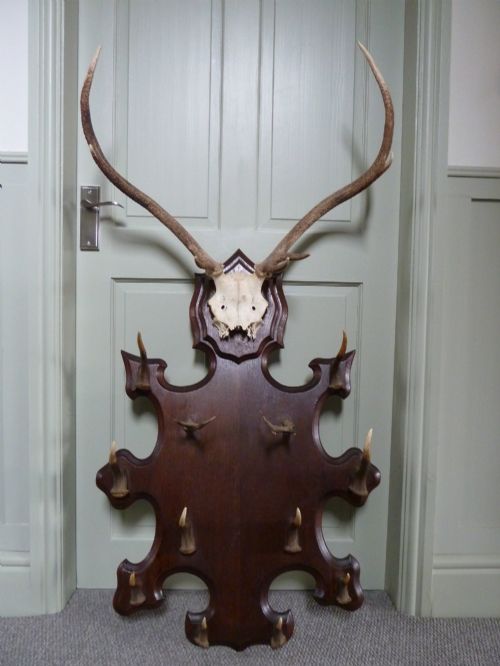
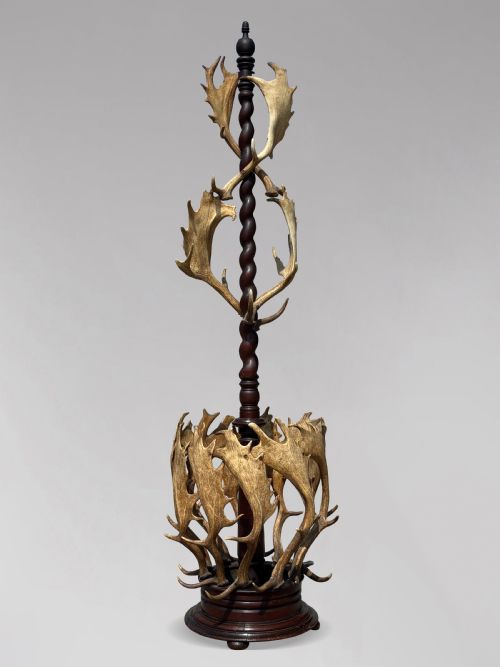
Organic materials such as stag horn, bone, cow horn, and antler appear frequently as decorative hooks or structural branches. Carving techniques range from simple chamfered edges to elaborate relief work depicting foliage and mythical figures.
Stags' horns and foxes peer out from the hallway, reminding visitors that Victorian designers enjoyed bringing the wild outdoors straight into the lobby.
Assessing Quality and Execution
The distinction between standard domestic pieces and finer items rests in the ambition of the carving and the integrity of the timber. Heavy proportions and dense, deeply carved relief work indicate a more expensive commission, whereas simpler constructions serve everyday utility.
Hardware selection and material combination alter the character of each piece. The integration of bevelled mirror glass, ceramic drip pans, and genuine antler or brass hooks elevates the craftsmanship significantly above plain utilitarian versions.
J. Parker of Woodstock·Fischel
The Dark Oak Hat Stand Glossary
- Green Man
- A sculptural motif depicting a human face emerging from or entwined with foliage. This recurrent theme appears frequently on Victorian carved oak hall furniture.
- Gothic Revival
- An architectural and decorative style drawing inspiration from medieval forms. Pieces display pointed arches, heavy tracery, and vertical emphasis.
- Arts and Crafts
- A design movement prioritising traditional craftsmanship and simple materials. Objects from this tradition display honest construction and minimal machine carving.
- Flemish
- A continental style known for exuberant, deep relief carving depicting scrolls, fruit, and figures. It influenced heavy Victorian hall furniture.
- Revolving hat and coat stand
- A rotating design allowing access to garments from multiple angles. This functional variation utilises a central pivoting timber shaft.
Dark Oak Hat Stand: Frequently Asked Questions
How do I date a dark oak hat stand?
Dating relies on stylistic clues and construction methods. Victorian pieces often feature heavy carved relief, while Edwardian and Arts and Crafts examples display cleaner lines.
Materials also provide context, as nineteenth-century pieces regularly incorporate cast iron hardware and native oak boards.
What is the difference between a hallstand and a hat stand?
A hat stand generally refers to a vertical piece focused on headwear and coats, sometimes in a revolving format. Hall stands are typically larger pieces of furniture incorporating mirrors, glove boxes, and umbrella wells.
Both forms occupied the entrance hall in period homes to receive visitors' outdoor wear.
Are antler hat stands authentic?
Antler and stag horn hat stands are genuine nineteenth-century creations utilising natural materials. Makers mounted red deer or stag antlers onto oak backboards to serve as coat and hat hooks.
These pieces reflect the Victorian taste for country house and taxidermy-influenced interior design.
Where should I place a heavy oak hall stand?
These pieces require adequate wall space and floor area in an entrance hall or large hallway. Their deep timber tones suit period properties and high-ceilinged rooms.
Floor-standing versions benefit from placement near an entrance where they can continue their original function.