



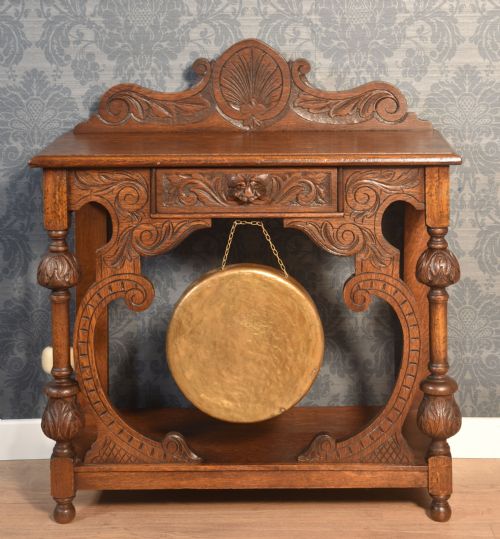
Dark Oak Gong
A dark oak gong summons the household to dinner with a deep, resonant note.
Dark Oak Gong
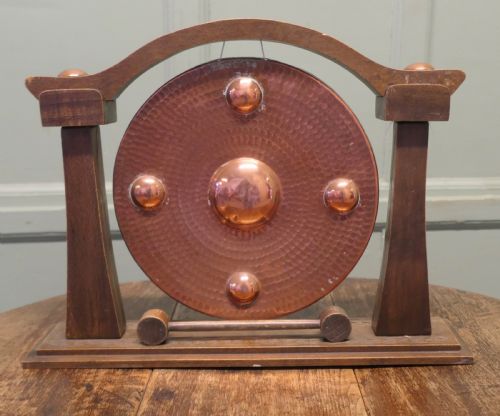
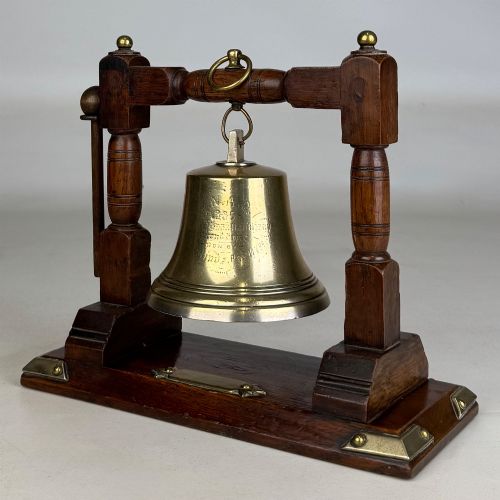
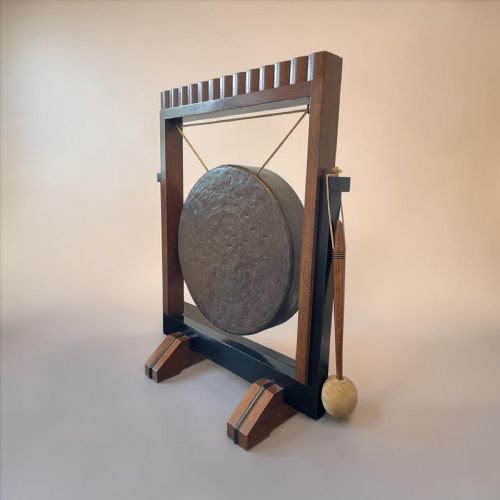
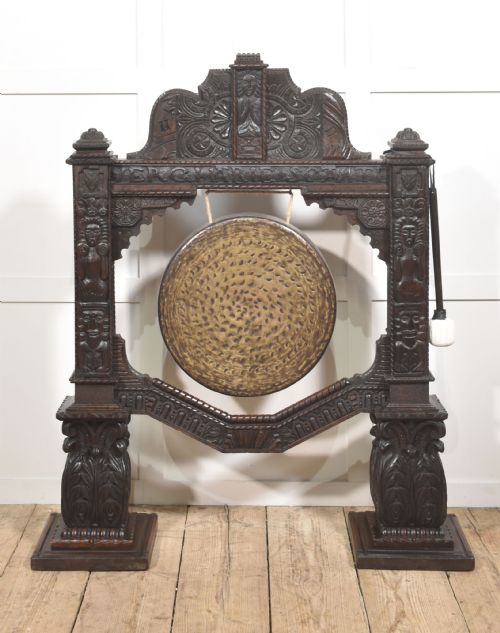
When you search for a dark oak gong, you are looking at substantial pieces of furniture and metalwork designed to call people to meals. These objects combine a sturdy wooden frame with a metal disc suspended inside.
You are most likely to meet Victorian and Edwardian examples on this page, spanning the late nineteenth century and the early decades of the twentieth. They appear in styles ranging from Gothic Revival and Arts and Crafts to simpler rustic forms.
The primary forms include dinner gongs designed to stand on tables or floors, alongside related items such as table bells and hall furniture. The dark oak frames provide a heavy support for the brass or bronze hanging discs.
How they were made
Makers shaped the timber from oak, often carving the woodwork with Gothic motifs, linear patterns or simple chamfered edges to give the frames architectural presence. The wood receives a dark finish that accentuates the grain and age.
The suspended gongs themselves consist of cast brass, copper or bronze, hung securely from the wooden uprights using cord or leather straps. These metal discs are struck with a mallet to produce the characteristic tone.
Materials recorded across the current selection include oak, brass, copper, bronze, glass, leather and cord.
What varies in quality
The distinction between a standard piece and a finer example lies in the depth of the woodwork carving and the quality of the metal casting. Superior frames exhibit crisply defined hand-carved details rather than simple machine-cut mouldings.
Metal thickness and purity dictate the acoustic resonance of the gong, where heavier and better-alloyed brass or bronze produces a purer, longer-lasting tone when struck. The integration between the hanging mechanism and the wooden frame also dictates structural harmony.
Winterhalder and Hofmeier
The Dark Oak Gong Glossary
- Gong
- A percussion instrument consisting of a flat or concave metal disc that vibrates when struck. It forms the central acoustic element of the assembly.
- Gothic Revival
- An architectural and decorative style drawing inspiration from medieval forms. Pieces in this style often feature pointed arches and heavy tracery.
- Arts and Crafts
- A design movement valuing traditional craftsmanship and visible construction. Objects in this style display honest joinery and hand-finished surfaces.
- Bracket clock
- A portable household clock designed to sit on a shelf or bracket. It shares the domestic interior space of the period with the dinner gong.
Dark Oak Gong: Frequently Asked Questions
How do you sound a dark oak gong?
You strike the suspended metal disc firmly in the centre using a dedicated wooden or padded mallet. This brings out the deepest resonance from the bronze or brass.
Striking the edge too lightly produces a flat rattle rather than the clear tone intended by the maker.
Where were these placed in the home?
These pieces sat prominently in hallways, dining rooms or entrance passages where the sound could travel through the house. They served as a practical household signal before modern timekeeping was uniform.
Guests and family members heard the note from upstairs rooms, gathering promptly for the evening meal.
How do you date a dark oak gong?
Dating relies on stylistic clues found in the oak carving and the construction of the frame. Victorian examples often show heavier Gothic revival ornamentation, while 1910 and 1930 pieces lean towards cleaner Arts and Crafts or Art Deco lines.
Matching the metal fittings and hanging cords to known period manufacturing methods narrows down the decade further.
Are all the frames made of solid oak?
The structural elements and hanging arms utilise solid oak timbers to support the heavy metal disc safely. This dense wood provides the necessary rigidity and weight to prevent tipping.
Secondary woods occasionally appear in internal framing, but the visible surfaces consist of dark oak.