


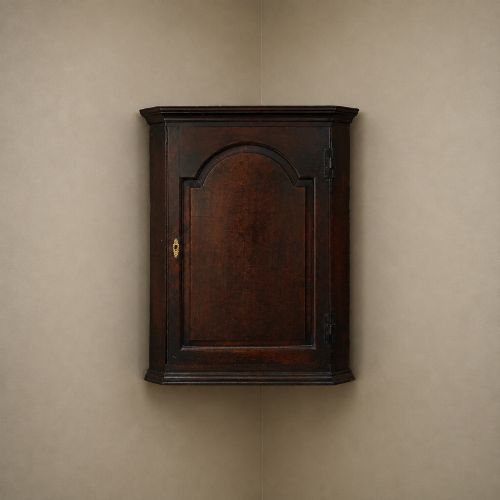
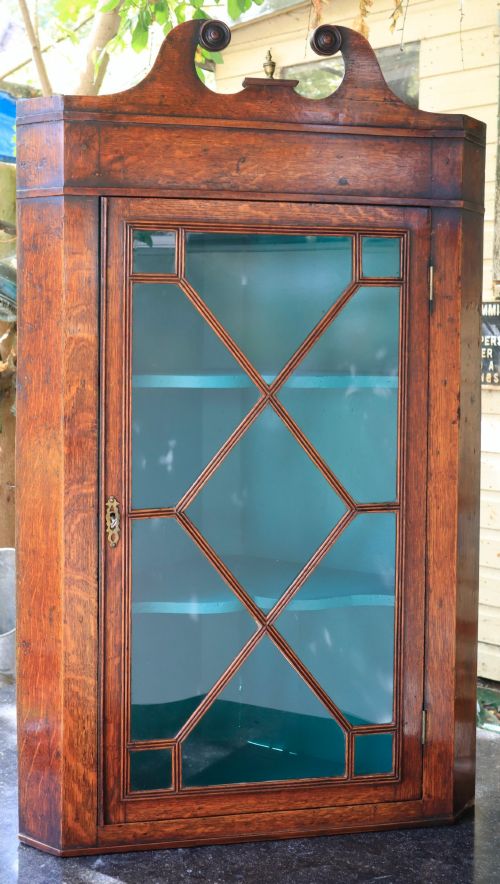
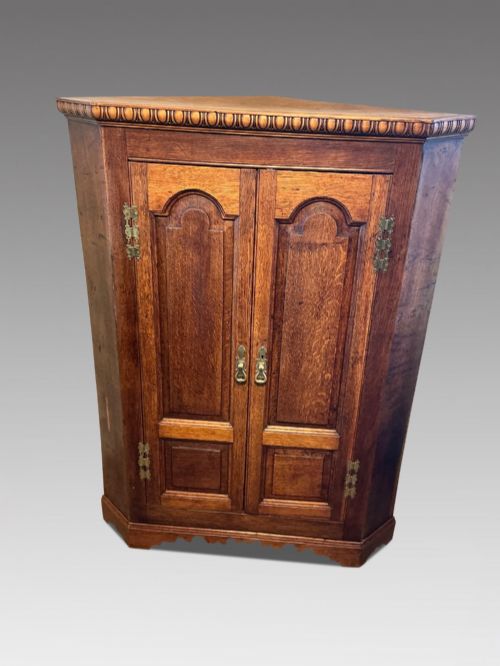
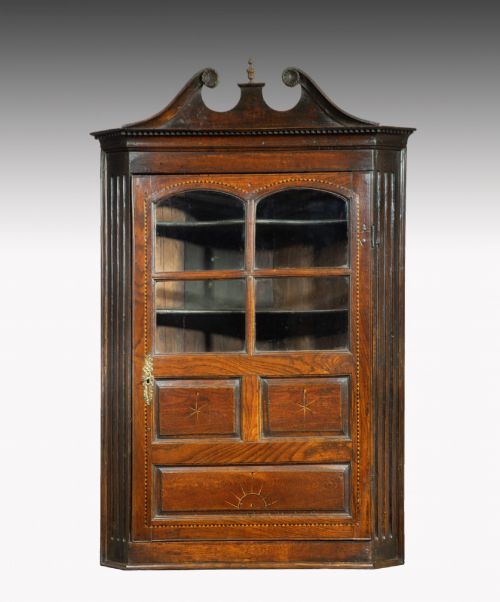
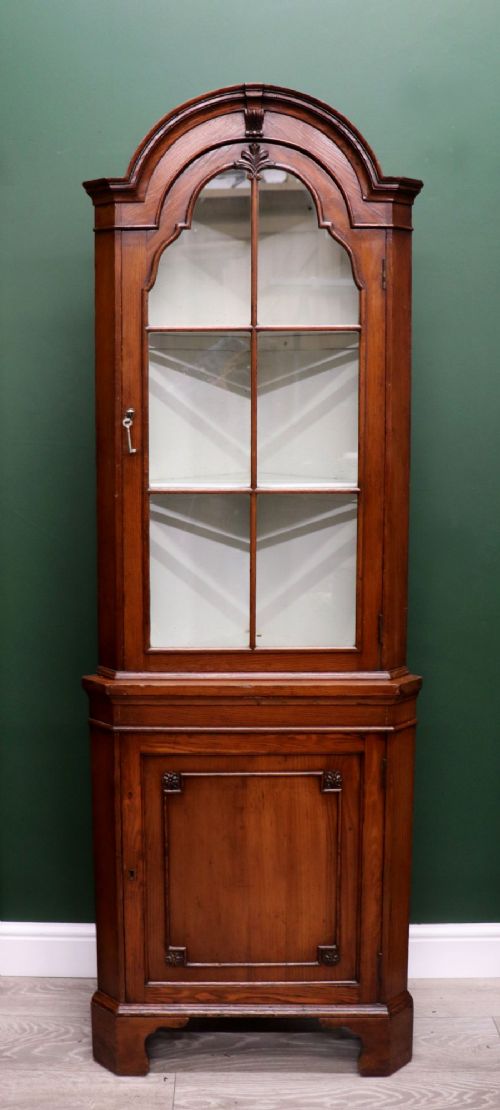


Dark Oak Corner Display
A dark oak corner display makes an efficient use of room by turning unused angles into storage and display space.
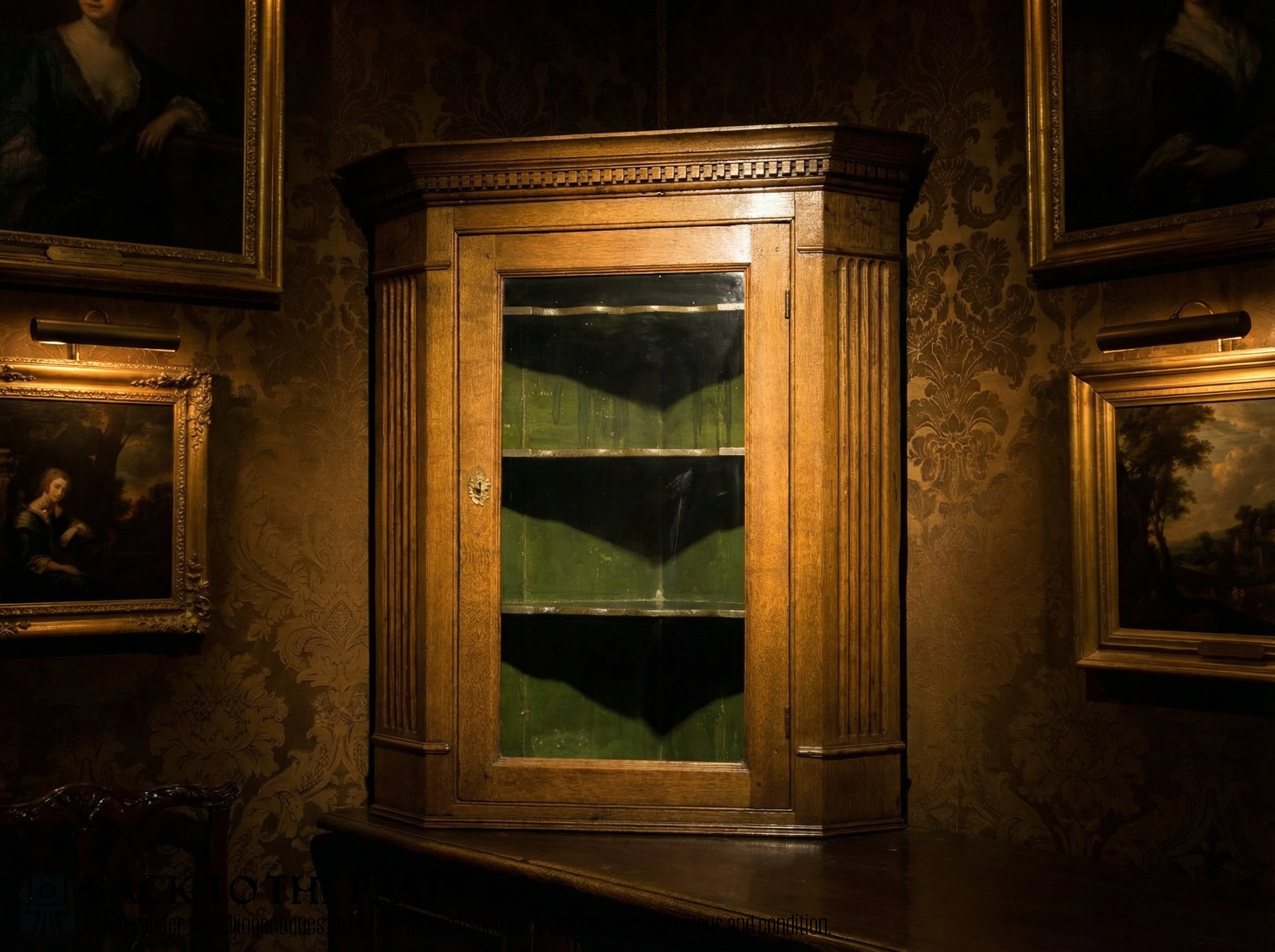
Dark Oak Corner Display
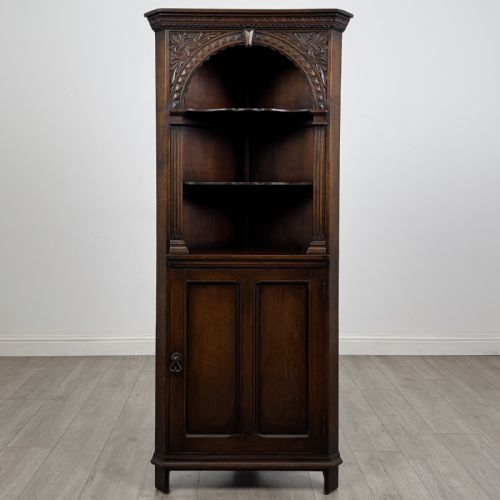
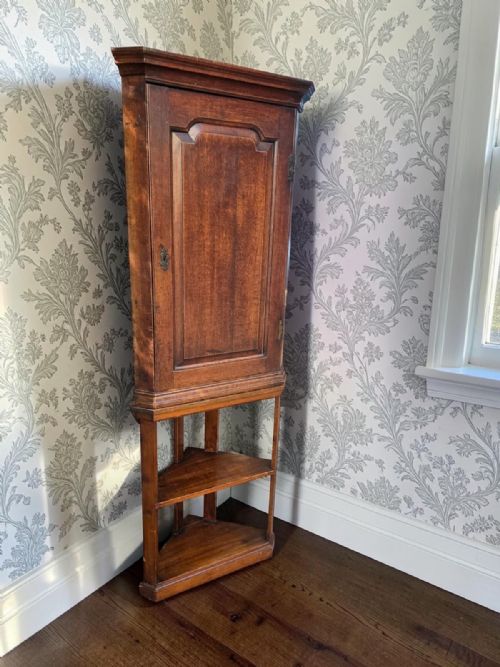
A dark oak corner display solves the problem of difficult room layouts by fitting snugly into right angles. These functional items appear in forms such as wall hanging cupboards, floor-standing units, and two-part cabinets.
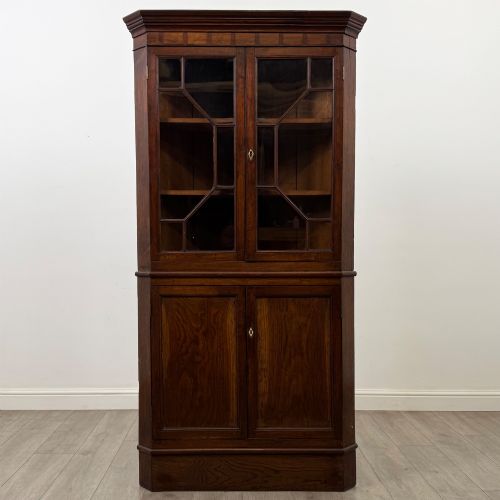
The pieces on this page span several centuries, with Georgian and 18th-century examples alongside Victorian and Edwardian revivals. Buyers encounter both simple country furniture and refined pieces featuring mahogany banding or bow fronts.
Most items serve to store and show items behind glazed doors, though open shelves and etageres also appear. The timber grounds each piece with a deep, traditional tone that suits historic and period interiors.
Materials and construction
Makers utilised solid oak alongside oak veneers, sometimes combining the timber with mahogany details and wood inlay. Glass panes provide the view into display compartments, while brass hardware secures the doors.
Joinery methods range from early panelled construction to later revival techniques, with some examples incorporating turned structural elements like barley twists. Interior surfaces frequently rely on timber boards to form the triangular carcase needed for corner placement.
Dark Oak Corner Display Retail Price Guide 2026
Typical asking prices for dark oak corner display among the pieces listed under this phrase on Sellingantiques today, from the lower quarter to the upper quarter. They describe what is for sale here now, not the wider market.
Formats range from compact wall-hanging cupboards to tall floor-standing cabinets, two-part units, and open etageres.
Assessing quality and craftsmanship
Quality reveals itself in the choice of timber and the crispness of any carved or panelled details. Early 18th-century examples show precise hand-panelling, whereas revival pieces rely on decorative vernacular styles.
The proportion of the cornice and the integrity of the door hanging dictate the visual success of the piece. Superior cabinets maintain tight corner joints and retain original brass hinges and glass without modern replacements.
The Dark Oak Corner Display Glossary
- Bow front
- A convex curved cabinet front that projects outward from the corner. This shape softens the hard lines of a room.
- Corner cupboard
- A storage unit built with a triangular plan to fit directly into the angle of two walls. These items save floor space while offering substantial interior capacity.
- Etagere
- A set of open shelves used for displaying small objects or ornaments. These lighter stands complement enclosed corner cabinets.
- Glazed display cupboard
- A cabinet featuring glass panes set into the doors to view contents. This format protects collection items from dust.
- Jacobean Revival
- A later style imitating 17th-century decoration with heavy mouldings and geometric panels. Makers utilised these motifs well into the Edwardian era.
Dark Oak Corner Display: Frequently Asked Questions
How do I hang a wall cabinet?
Wall-hanging corner cupboards require secure fixings into solid masonry or proper wall studs to bear the weight of the timber and contents.
Professional installation is recommended for older pieces to ensure the triangular carcase remains stable against the walls.
What is the difference between hanging and standing models?
Hanging models mount directly to the walls to clear floor space underneath, whereas standing models rest on the ground on a base or bracket feet.
Standing versions often provide greater storage volume, including two-part configurations and lower drawer sections.
How do I date an oak corner cupboard?
Dating relies on construction methods, timber grain, and hardware style, with early pieces showing hand-cut joinery and period panel work.
Revival pieces from the Victorian and Edwardian eras often copy earlier Georgian proportions but utilise machine-cut elements.
Where should I place a corner cabinet?
These units perform best in empty room angles that require functional storage without obstructing walkways or living space.
Dining rooms and hallways benefit particularly from the way these cabinets utilise otherwise neglected corners.