



Dark Oak Close Stool
These dark oak close stool examples are sturdy historic pieces combining practical sanitation history with handsome timber construction for the collector of early furniture.
Dark Oak Close Stool
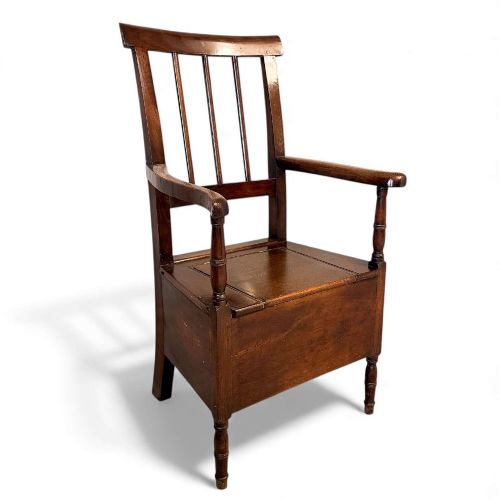
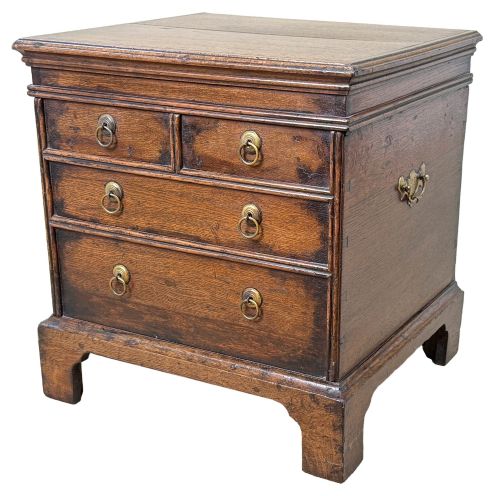
A dark oak close stool takes the form of a low box, small chest, or armchair designed to house a chamber pot beneath a lidded seat. Most pieces encountered on this page date from the seventeenth and eighteenth centuries, reflecting the Georgian and earlier periods.
Makers fashioned these utilitarian items to double as seating or bedside cabinets when not in active use, leading to varied forms including commode armchairs and octagonal box stools.
The materials and styles span seventeenth-century British cabinet-making through to George III country furniture, frequently incorporating secondary timbers such as walnut alongside the primary oak.
How they were made
Joiners constructed these items predominantly from solid oak planks, utilising traditional mortise and tenon joints to withstand heavy domestic service. Selected pieces integrate walnut or secondary woods, shaped into panels or box frames.
Metal components such as brass hinges, handles, and iron fittings were incorporated to secure lids, doors, and interior compartments. Surfaces were finished by hand, relying on wax or oil to nourish the dark grain over centuries of use.
Dark Oak Close Stool Retail Price Guide 2026
Typical asking prices for dark oak close stool among the pieces listed under this phrase on Sellingantiques today, from the lower quarter to the upper quarter. They describe what is for sale here now, not the wider market.
Georgian cabinet-makers occasionally disguised sanitary hardware so successfully that unsuspecting guests might mistake a royal commode for a modest library chair.
What varies in quality
Quality rests primarily on the integrity of the timber and the retention of original structural elements rather than mere age. Pieces displaying crisp joinery, well-figured oak boards, and minimal replacement hardware stand apart.
The sophistication of the form dictates distinction, separating simple box stools from elaborate commode armchairs designed with shaped arms and panelled front elevations. The harmony between the oak primary wood and any walnut elements also influences overall character.
The Dark Oak Close Stool Glossary
- Close stool
- A box or chair enclosing a pan for sanitary use, styled as a piece of fine furniture to blend with domestic interiors. These items date predominantly from the seventeenth and eighteenth centuries.
- Commode chair
- An armchair fitted with a concealed commode seat, often dating from the Georgian era. They combine comfortable seating with concealed utility.
- Box stool
- A rigid container-form stool with a hinged lid providing access to the interior space. Cabinet-makers built these in solid oak with sturdy peg joints.
- Mortise and tenon
- A traditional woodworking joint where a projection on one board fits tightly into a matching cavity on another. This method provides the structural strength found in early oak furniture.
Dark Oak Close Stool: Frequently Asked Questions
How were close stools used historically?
Owners placed these stools in bedchambers or dressing rooms for private sanitary use during the night or morning. The enclosed design kept odours contained and allowed the item to function as standard seating or a bedside table.
Many examples take the form of armchairs or cabinets, masking their true purpose beneath panelled wooden doors and hinged lids.
How do I date an antique close stool?
Dating relies on examining the construction methods, timber species, and stylistic details such as panel mouldings or leg shapes. Seventeenth-century pieces typically show heavier joined oak construction, while eighteenth-century Georgian examples incorporate refined proportions and occasionally walnut veneers.
Hardware styles, including brass hinges and iron handles, also offer clues to the period of manufacture.
Are these stools comfortable to sit on?
While many close stools were built with sturdy wooden seats and supportive armchairs, their primary function dictated a hollow interior rather than deep upholstery. Collectors generally view them as decorative furniture rather than everyday lounging seats.
The hinged lids lift to reveal the internal compartment where the original chamber pot or basin once rested.