


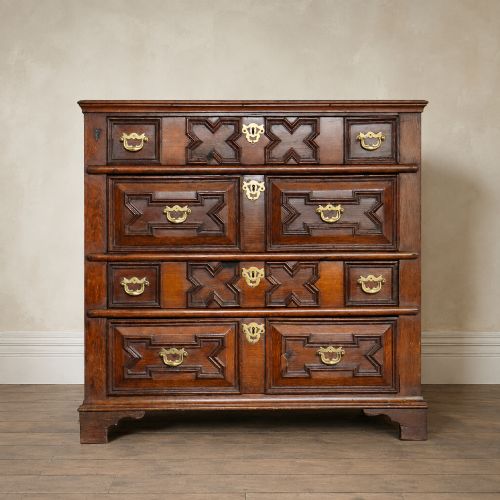
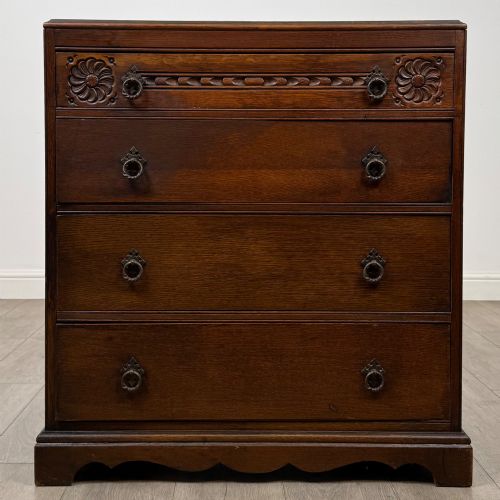
Dark Oak Chest of Drawers
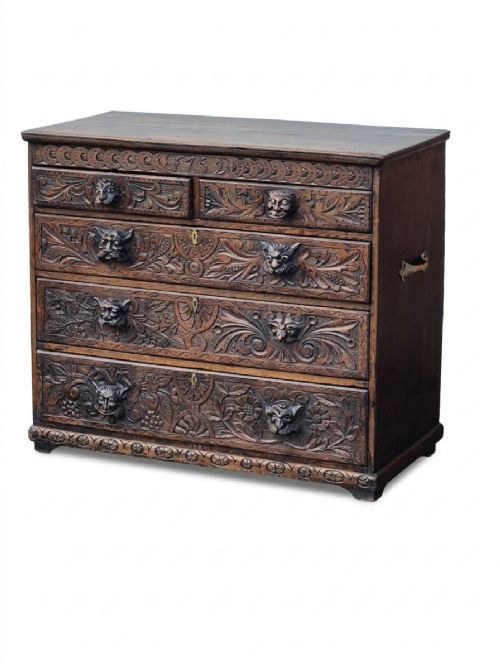
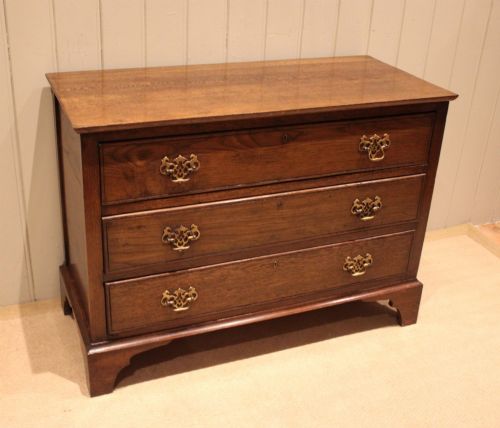
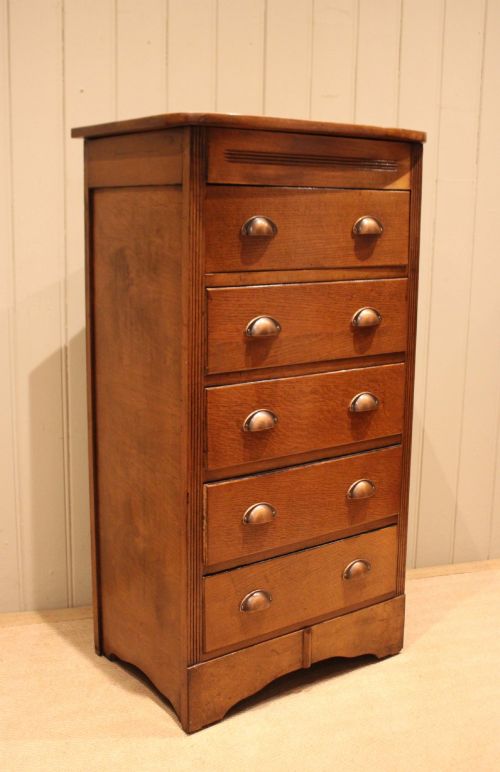
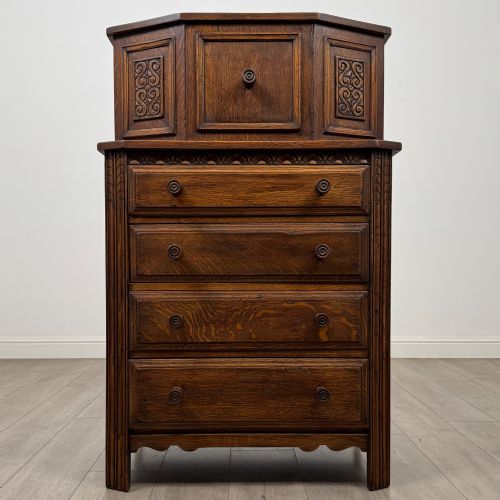
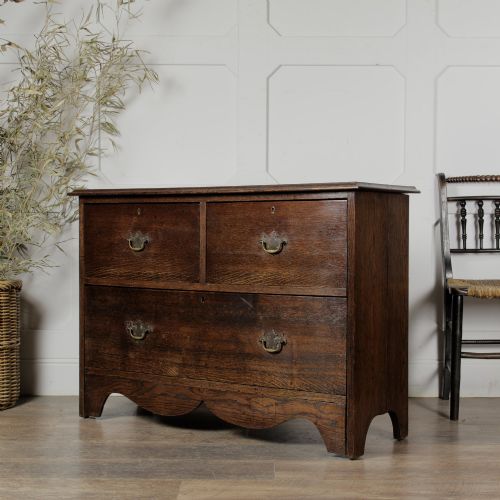
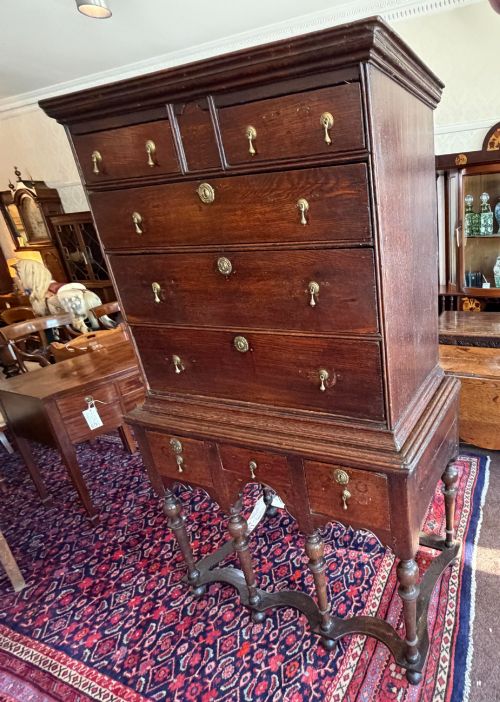
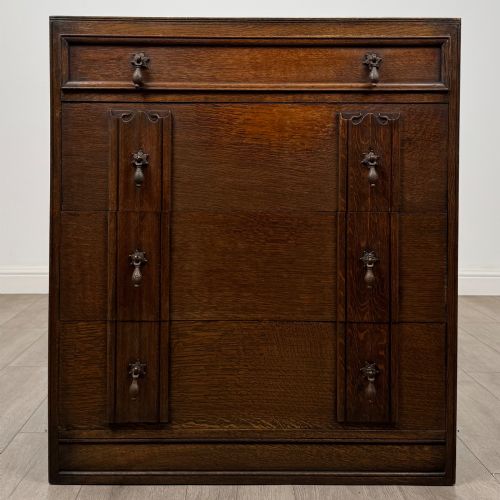
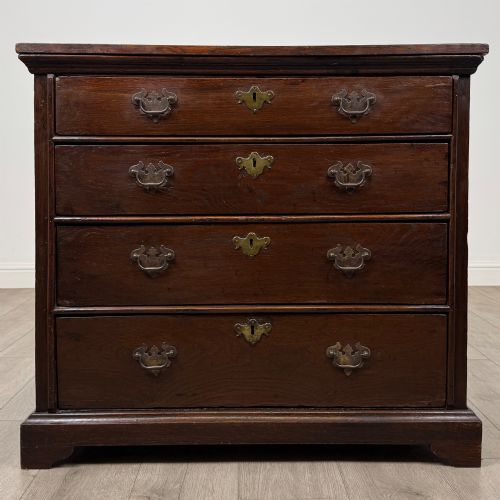
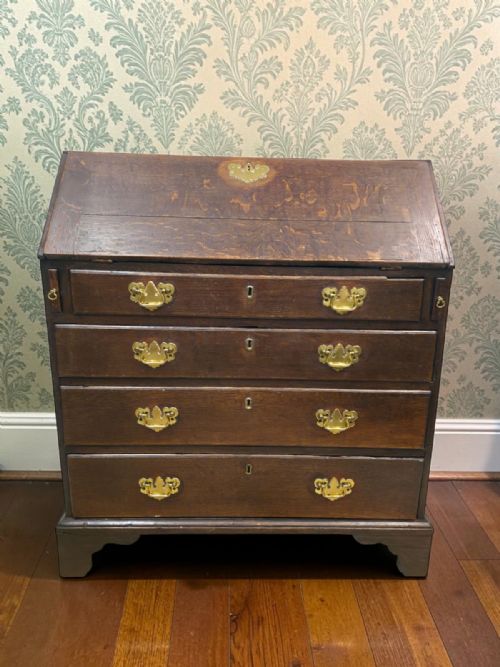
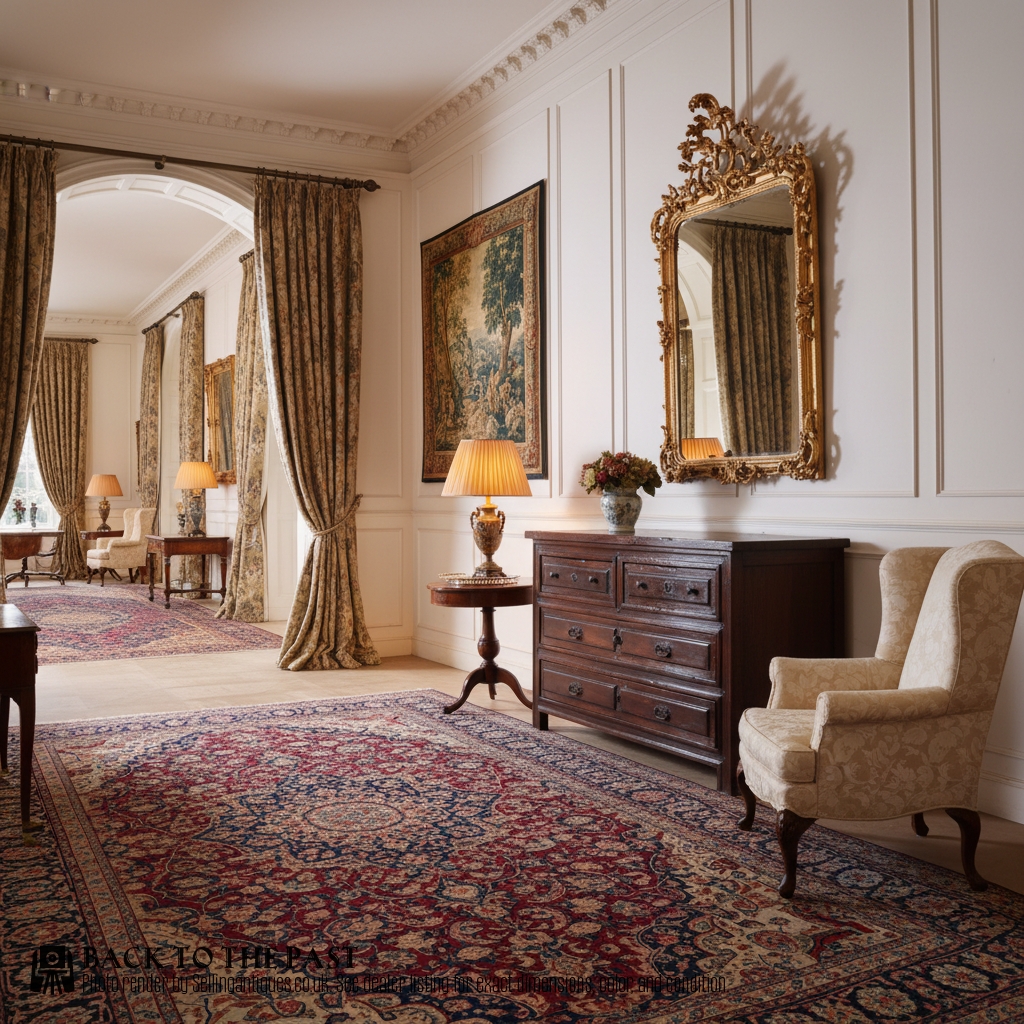
A dark oak chest of drawers brings substantial timber and deep grain into a room, offering historic utility alongside rich colour.
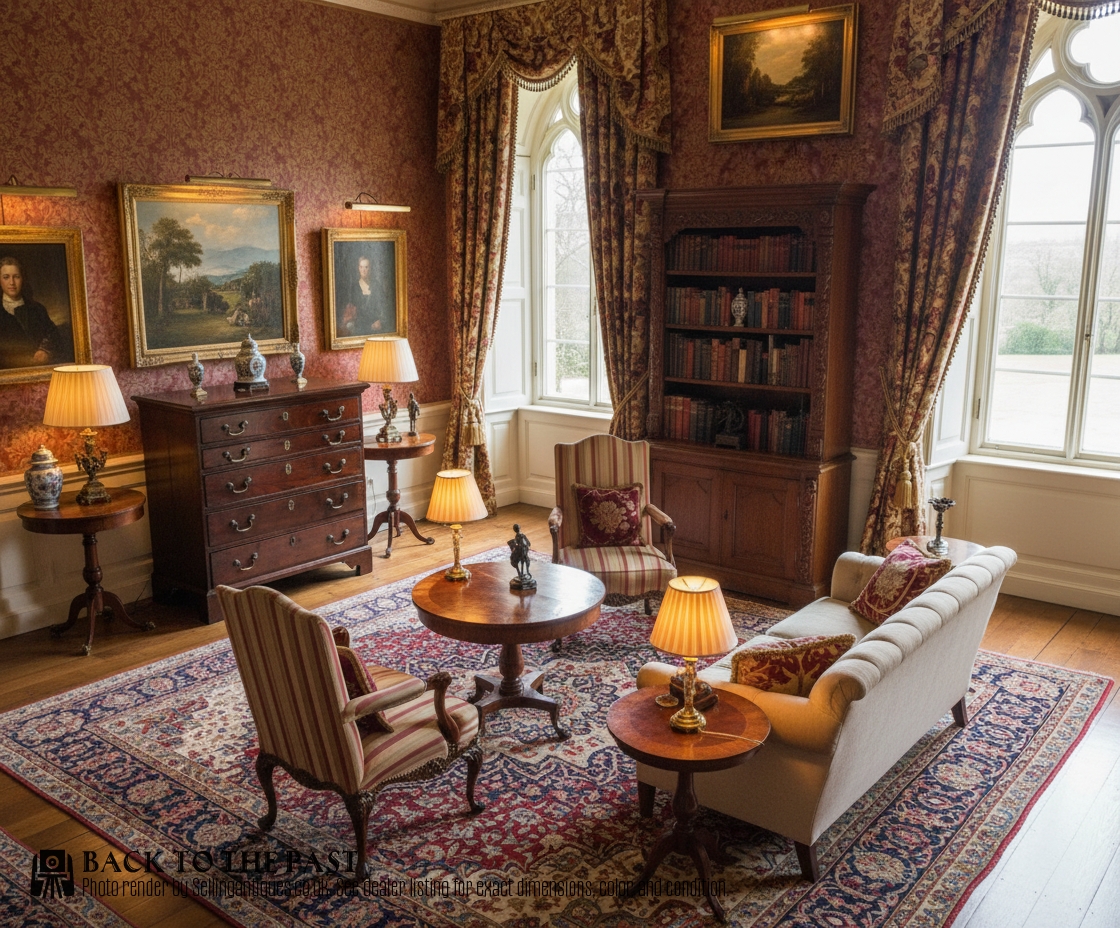
Dark Oak Chest of Drawers
A dark oak chest of drawers is a storage piece defined by its sturdy timber and utilitarian origins, appearing in forms ranging from early seventeenth-century geometric designs to later Georgian and Edwardian examples. When searching for a dark oak chest of drawers, a buyer encounters pieces shaped by centuries of domestic use, spanning the seventeenth, eighteenth, and nineteenth centuries, as well as revival styles from the twentieth century.
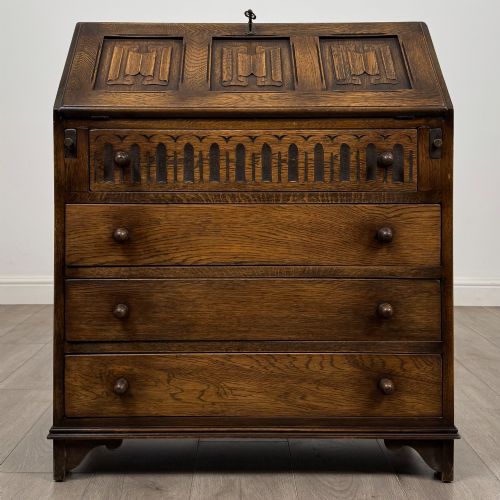
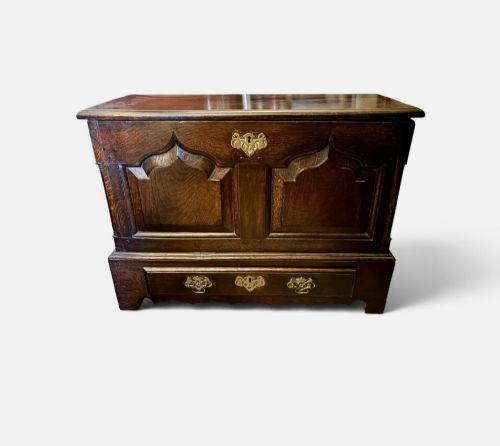
The selection on this page centres primarily on British examples in oak, occasionally complemented by fruitwood inlay, brass, or iron hardware. Alongside standard drawer configurations, related forms such as chests on stands, bureaus, and coffers appear frequently in the listings.
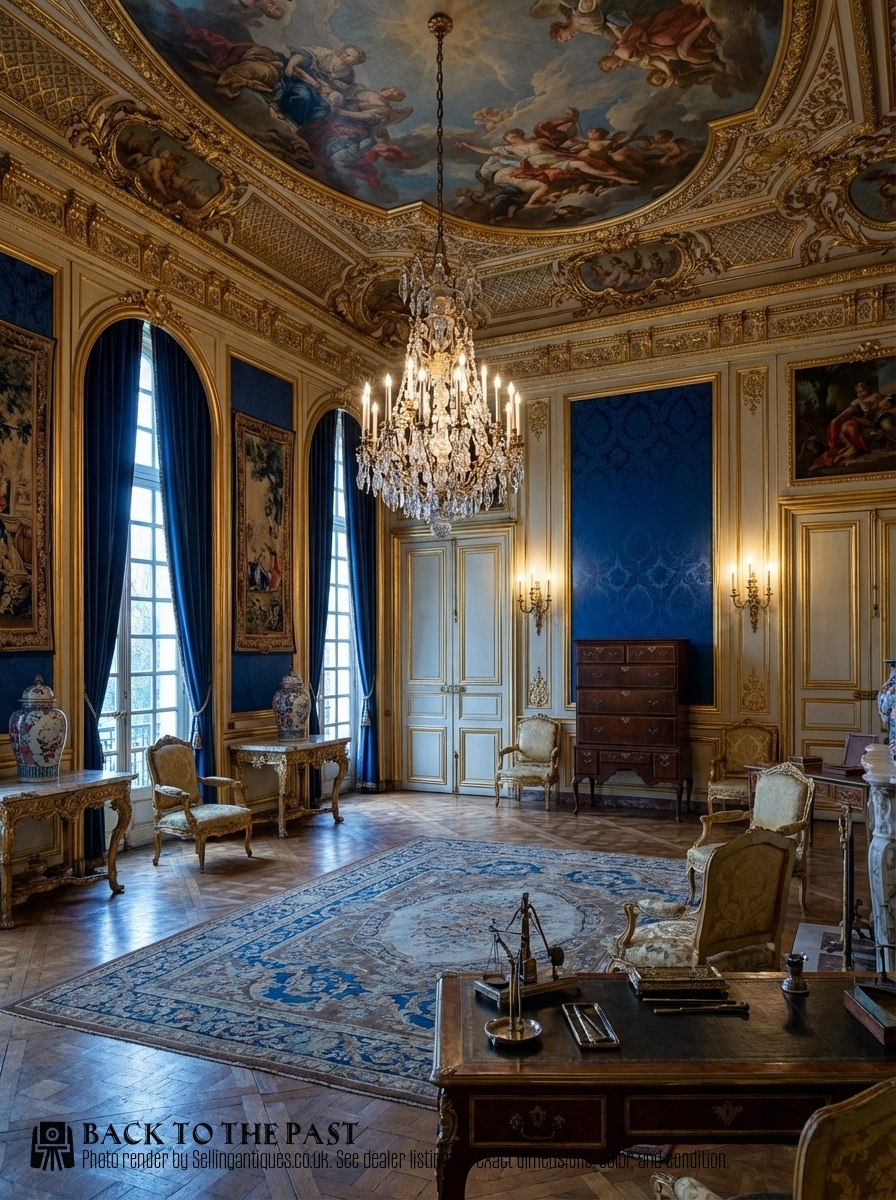
What varies in quality
Quality rests upon the integrity of the timber and the depth of the carving or moulding applied to the structure. Pieces retaining original brass hardware and untouched surface patination stand apart from those altered or heavily restored over subsequent centuries.
The refinement of the joinery, particularly in the construction of the drawers and the crispness of geometric mouldings, distinguishes workshop standards across different periods.
Listings feature oak combined with brass, iron, fruitwood inlay, and solid wood across Georgian, Charles II, Jacobean, and Edwardian styles.
The Dark Oak Chest of Drawers Glossary
- Coffer bach
- A small Welsh chest traditionally fitted with a single drawer beneath the main compartment. These miniature receptacles served domestic storage needs in earlier centuries.
- Crossbanding
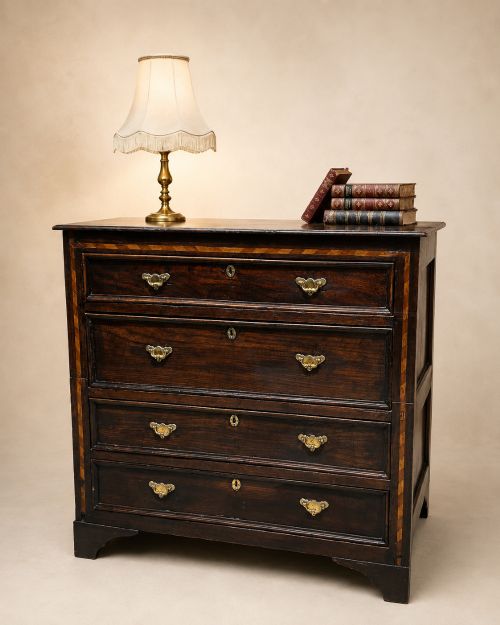
- A decorative border of veneer arranged so that the grain runs at right angles to the surrounding wood. This technique frames drawer fronts on select Georgian pieces.
- Geometric moulding
- Raised wooden mouldings applied to drawer fronts in repeating rectilinear patterns. This ornamentation is characteristic of seventeenth-century joinery.
- Linenfold
- A carved wooden panel motif resembling folded fabric. This style appears on revival pieces from the Edwardian era.
- Patina
- The surface sheen and colour acquired by wood over decades of handling and exposure. It develops naturally through age and friction.
Dark Oak Chest of Drawers: Frequently Asked Questions
How do I date a dark oak chest?
Dating relies on examining construction methods, hardware types, and decorative motifs such as geometric mouldings or linenfold carving. Earlier seventeenth-century examples typically feature joined panel construction, whereas eighteenth and nineteenth-century pieces adopt standard drawer framing.
Secondary details, including the presence of fruitwood inlay or the style of brass handles, provide further clues to the decade of manufacture. Comparing these elements against known period styles helps narrow down the origin.
Were these chests used in bedrooms?
In earlier centuries, low chests and coffers served multiple rooms for storing textiles, documents, and valuables rather than specifically functioning as bedroom furniture. As domestic layouts evolved, the chest of drawers migrated towards sleeping quarters for clothing storage.
Earlier variants like the coffer bach or bureau served specialised writing and tabletop duties in living spaces. Their robust oak construction ensured they could handle heavy daily use across various household functions.
How should I care for dark oak?
Maintaining dark oak involves keeping the timber away from direct heat sources and sudden humidity changes to prevent splitting. Regular dusting with a dry cloth preserves the surface without building up excessive residue.
Applying a traditional beeswax occasionally feeds the wood and enhances the natural patina. Avoid modern silicone-based polishes that can permanently alter the historic finish.
What is the difference between solid oak and inlaid pieces?
Solid oak pieces rely entirely on structural timber for their visual weight and strength, showing natural grain patterns throughout. Inlaid variants incorporate contrasting woods like fruitwood to create decorative borders and geometric designs on the surface.
While solid construction emphasises rugged utility, inlaid examples highlight decorative refinement favored in specific stylistic periods. Both methods utilise durable timber as a primary base.