





Dark Marble Tea Table
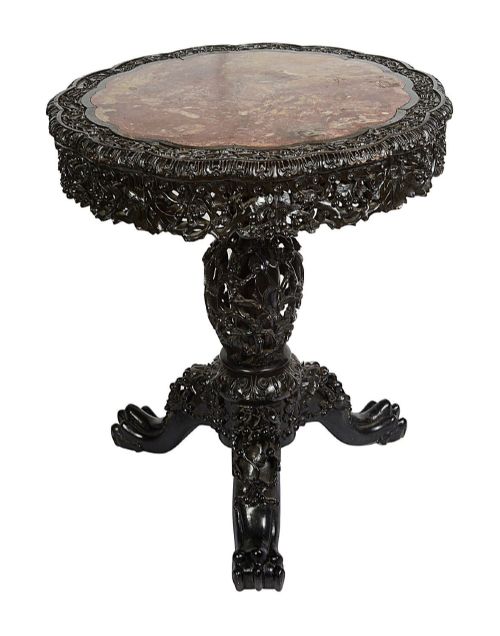
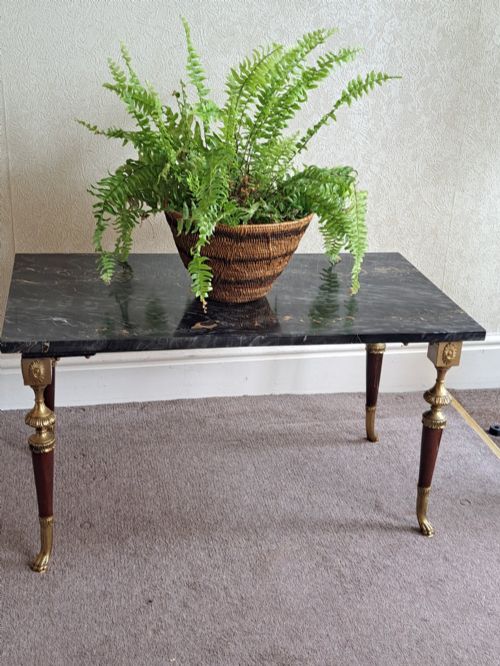
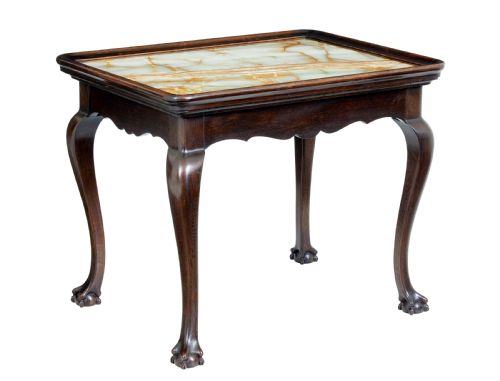
These dark marble tea table pieces bring substantial stone tops and carved hardwood frames together, offering a striking surface for any room.
Dark Marble Tea Table
The selections on this page lean heavily towards Chinese export and Qing Dynasty traditions, alongside Victorian and Chippendale influenced revivals. You are most likely to meet rectangular formats and tiered occasional furniture that pair heavy stone with carved timber supports.
How they were made
The makers of these items utilised dense stones such as marble and onyx for the top surfaces, fitted directly into sturdy wooden frames. Hardwood, oak, and walnut provide the structural support needed to bear the considerable weight of the stone.
Joinery and carving are central to the construction, particularly in the oriental and revival pieces which feature detailed surface work. Brass details and mother-of-pearl accents sometimes appear as supplementary decorative elements within the timber structures.
Dark Marble Tea Table Retail Price Guide 2026
Typical asking prices for dark marble tea table among the pieces listed under this phrase on Sellingantiques today, from the lower quarter to the upper quarter. They describe what is for sale here now, not the wider market.
The listings on this site span the nineteenth and early twentieth centuries, featuring marble, onyx, hardwood, oak, and walnut.
What varies in quality
Quality rests primarily on the depth and crispness of the carving across the wooden frames and the particular figuring of the marble or onyx top. Pieces displaying finer hand-carved detailing and superior timber selection command greater attention than plainer utilitarian versions.
The integration between the stone insert and the surrounding timber frame also dictates the overall standard of construction. A well-fitted top sits flush and secure within a stable, substantial hardwood or walnut chassis.
The Dark Marble Tea Table Glossary
- Centre table
- A freestanding piece designed to be viewed from all sides, placed in the middle of a room rather than against a wall. These often feature substantial stone tops suited to central display.
- Occasional table
- A smaller, movable surface intended for intermittent use around a living space, including multi-tiered formats. They provide versatile placement options for lamps or decorative objects.
- Qing Dynasty
- The final imperial dynasty of China, spanning from the seventeenth to the early twentieth century, known for intricate hardwood carving and export furniture. Pieces from this tradition often incorporate marble inserts.
- Neoclassical
- A style drawing inspiration from classical antiquity, emphasising symmetry, restraint, and classical motifs. It frequently informs the proportions of nineteenth-century European tables.
Dark Marble Tea Table: Frequently Asked Questions
Where should I place a dark marble tea table?
These pieces suit central positions in reception rooms or as substantial low surfaces beside seating. Their stone tops provide a durable, cooling surface that handles daily use easily.
Ensure the floor beneath can support the combined weight of the timber and stone. They anchor a room visually, pairing well with upholstered seating and ambient lighting.
How do I care for the marble top?
Clean the stone surface with a damp cloth and mild soap, avoiding acidic cleaners that can etch the polish. Wipe up spills promptly to prevent staining.
Waxing the wooden base periodically preserves the finish of the hardwood, oak, or walnut. Keep the table away from direct heat sources to protect the natural materials.
Are these tables heavy to move?
The inclusion of solid marble or onyx makes these tables considerably heavier than all-wood equivalents. Two people are typically required to lift and reposition them safely.
Take care when sliding them across delicate flooring to avoid marking the surface. The weight provides excellent stability in daily use.
What styles are common in these listings?
Chinese export and Qing Dynasty designs appear frequently, alongside Victorian and Chippendale influenced European revivals. These styles often feature elaborate carved frames supporting heavy stone inserts.
Occasional, centre, and coffee table formats dominate the selection. The combination of dark stone and carved hardwood unites these diverse aesthetic traditions.