
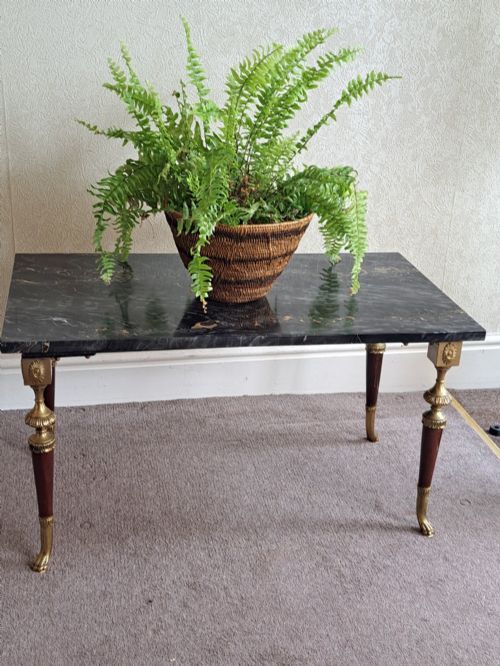
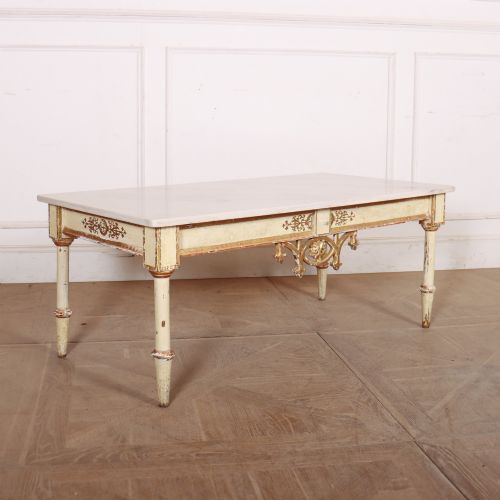


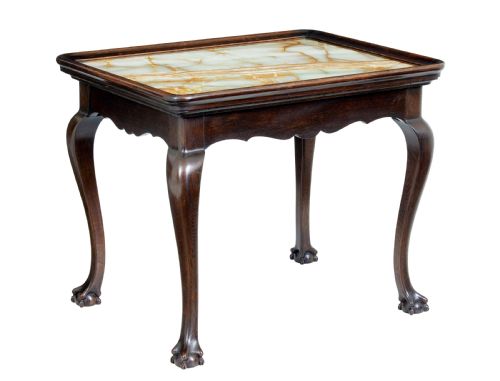


Marble Topped Tea Table
These marble topped tea table pieces combine solid timbers and stone surfaces for functional living spaces.
Marble Topped Tea Table
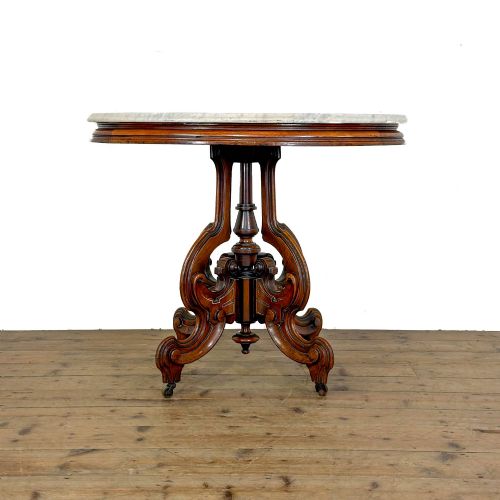
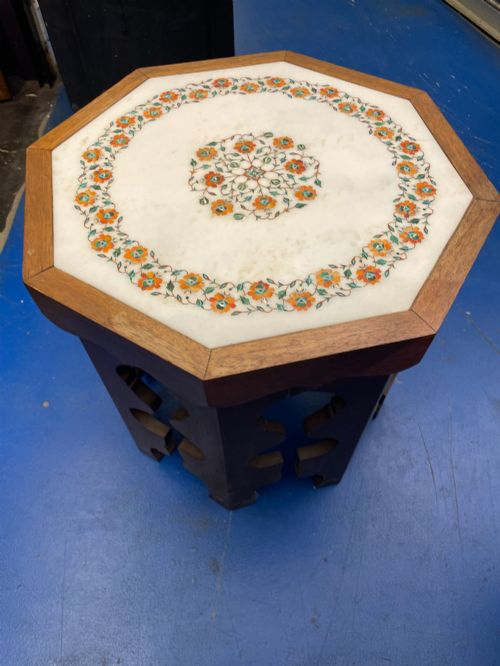
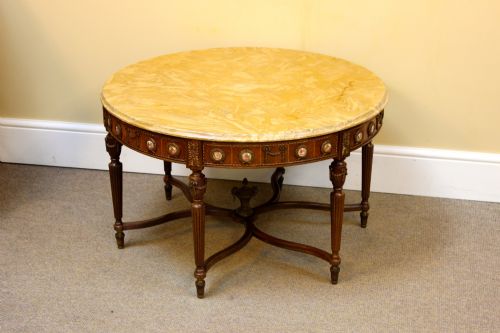
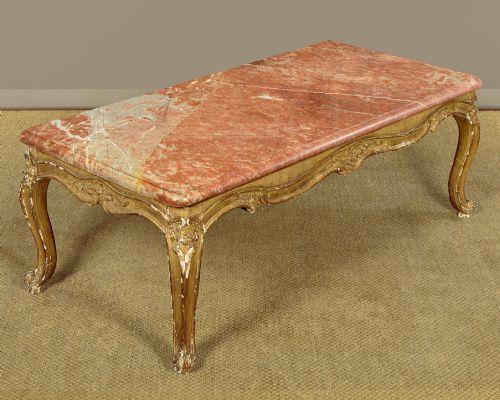
A marble topped tea table combines a sturdy timber or gilded frame with a heavy stone inset surface, designed for domestic display and entertaining. Buyers searching for a marble topped tea table encounter forms ranging from low coffee tables and occasional tables to larger centre tables.
The selection includes 19th Century and Victorian examples alongside Edwardian and 1930 pieces. Origin styles span from French Rococo Revival and Napoleon III to Chinese Export and Anglo-Indian designs.
Most examples utilise mahogany, walnut, or oriental hardwood for the base structure. Others feature giltwood, brass, or ormolu mounts framing the stone top.
How they were made
Cabinetmakers constructed the wooden frames using traditional joinery in mahogany, walnut, oak, and exotic hardwoods. Carved details, painted finishes, and giltwood applications were shaped by hand before mounting the stone.
Stone surfaces, including white marble and onyx, were cut and polished to fit recessed table tops precisely. Metal elements such as brass and bronze ormolu mounts were cast and secured to accent the structural lines of French and English models.
Some tables double as French guéridons, originally designed for holding candlesticks or tea cups during long evening conversations.
What varies in quality
The calibre of the carved woodwork and the weight and figuring of the stone define the upper tier of these tables. Fine hand-carved giltwood and crisp bronze ormolu mounts separate exceptional pieces from simpler production.
Integration between the stone slab and the timber frame shows the standard of manufacture. Well-fitted tops that sit flush without movement indicate superior original construction.
Zwiener Jansen Sucesseur
The Marble Topped Tea Table Glossary
- Guéridon
- A small French table, often round and supported by a central column or pillar. These frequently feature marble tops and gilt bronze mounts.
- Ormolu
- Gilded bronze applied as a decorative mount to furniture frames. It adds metallic contrast to wood and stone surfaces.
- Giltwood
- Timber coated with a thin layer of gold leaf or gesso. This finish appears widely on revival styles from the nineteenth century.
- Specimen top
- A stone tabletop composed of various geometric marble or mineral samples arranged in patterns. These originate often from Italian workshops.
Marble Topped Tea Table: Frequently Asked Questions
How do I clean a marble top?
Use a damp cloth with mild soap and dry thoroughly to preserve the polished surface.
Avoid acidic cleaners that can etch or dull the stone over time.
Are these tables heavy to move?
The inclusion of solid stone makes these pieces considerably heavier than all-wood furniture.
Lifting from the wooden frame rather than the stone top is recommended when repositioning.
Can I use it as a coffee table?
Many period pieces function well in modern reception spaces as low coffee tables.
Ensure floor surfaces are protected beneath the legs due to the substantial weight.
How do I identify the period?
Examine the timber species, joinery methods, and decorative motifs such as ormolu mounts or carved revival styles.
Nineteenth-century examples often display heavier hardwood framing compared to lighter Edwardian or later frames.