




Dark Marble Gueridon Table
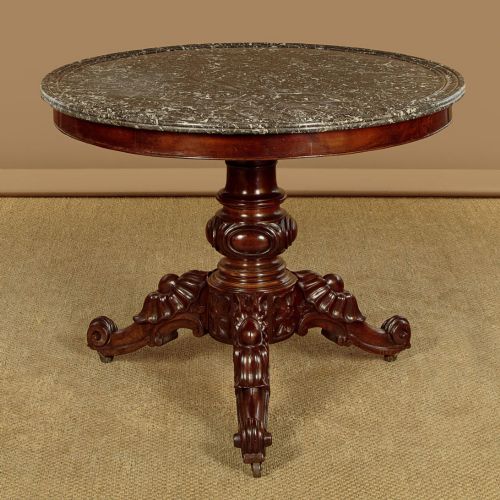
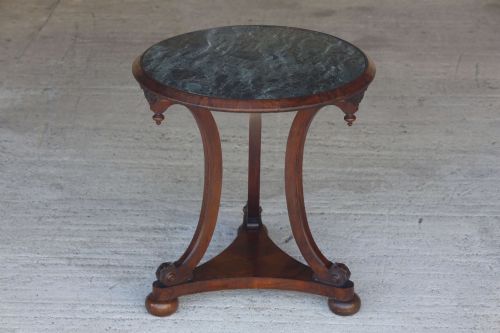
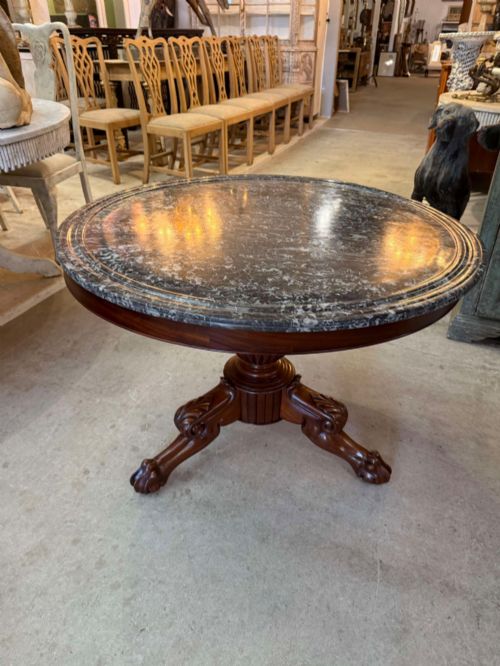
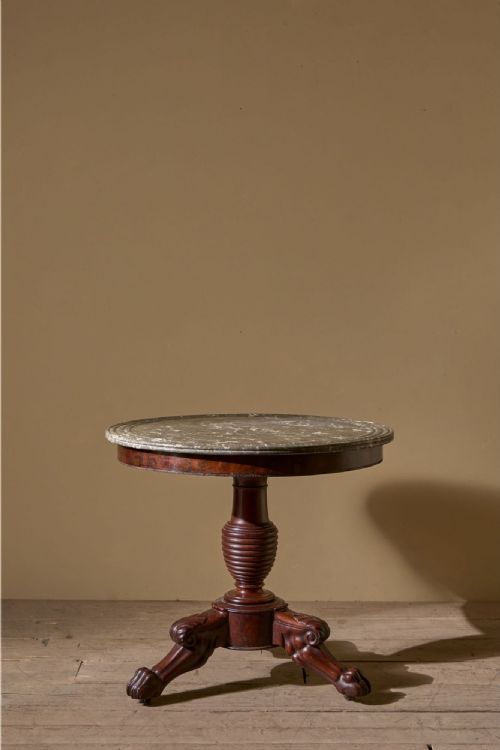
A dark marble gueridon table brings sculptural weight and classic French proportion into a room, serving as a striking centrepiece or intimate lamp stand.
Dark Marble Gueridon Table
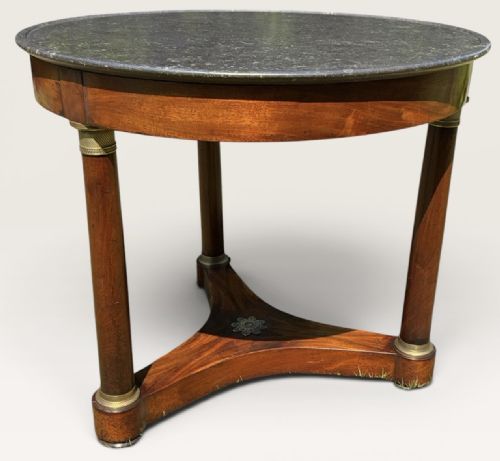
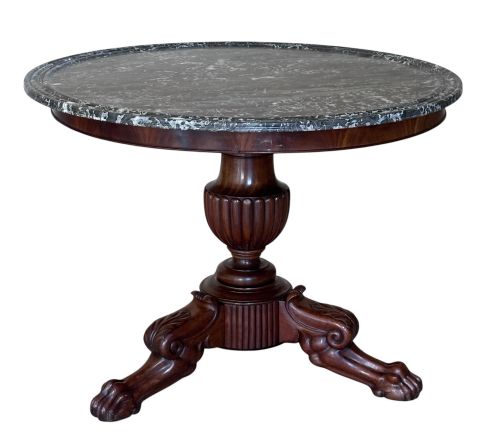
A dark marble gueridon table is a round or occasional pedestal table rooted primarily in nineteenth-century French design traditions. These pieces appear across styles such as French Empire, Napoleon III, Regency, and Louis Philippe, reflecting diverse regional aesthetics from the era.
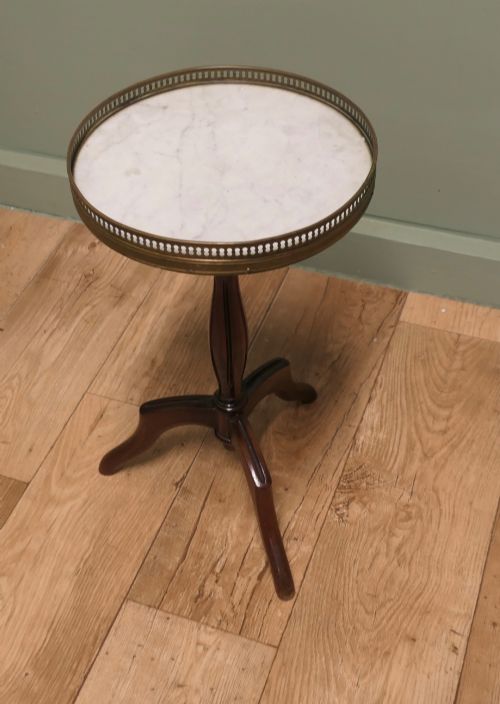
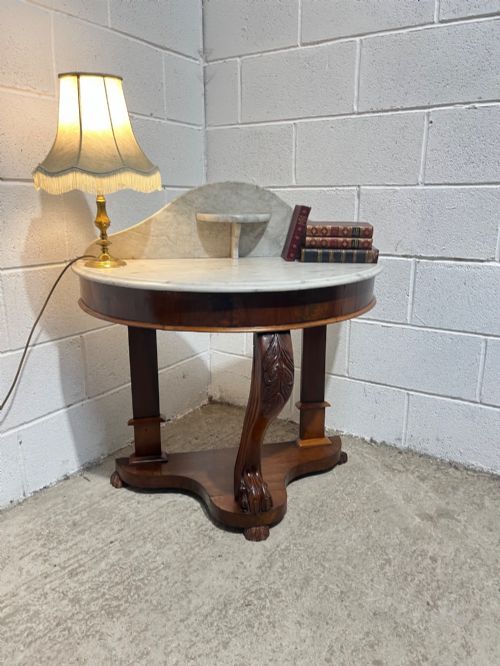
The version most commonly met on this page combines a rich wooden base in mahogany or coromandel with a heavy marble or grey marble top. They function variously as centre tables, side tables, wine tables, and plant stands depending on their height and diameter.
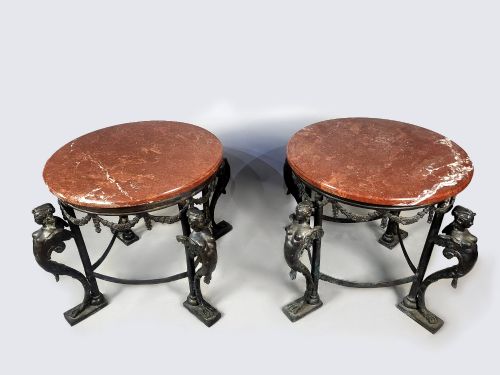
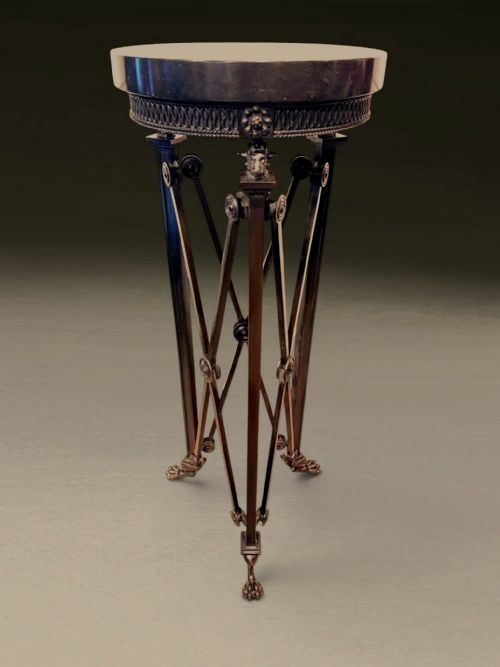
Origins stretch from early nineteenth-century workshops through to later Victorian interpretations, often incorporating classical motifs like rams heads and bronze mounts. Their circular formats make them exceptionally versatile for placing beside seating or within hallways.
How they were made
Construction relies heavily on dense timbers such as mahogany, coromandel, and painted woods shaped into pillar supports or tripod bases. These structural woods provide the necessary rigidity to bear the substantial weight of stone tops.
Marble tops are meticulously cut and polished to create smooth, resilient surfaces that sit atop the timber frames. Many examples incorporate cast brass, ormolu, and gilded bronze mounts, applied as decorative borders, capitals, and feet.
Dark Marble Gueridon Table Retail Price Guide 2026
Typical asking prices for dark marble gueridon table among the pieces listed under this phrase on Sellingantiques today, from the lower quarter to the upper quarter. They describe what is for sale here now, not the wider market.
Listings feature nineteenth-century pieces spanning French Empire, Regency, and Victorian styles, constructed from mahogany, coromandel, brass, bronze, and marble.
What varies in quality
Quality rests significantly on the selection of materials, from the depth of figure in the mahogany or coromandel to the richness of the grey or dark marble chosen for the top. Superior examples demonstrate a careful harmony between the timber base and the stone, often enhanced by finely cast bronze or ormolu detailing rather than plain metalwork.
The sophistication of the joinery and carving separates standard production from finer workshop output, particularly in sculptural elements like swan supports or cast rams heads. Well-executed proportion and stability under the heavy weight of the stone remain key indicators of superior nineteenth-century craftsmanship.
The Dark Marble Gueridon Table Glossary
- Gueridon
- A small circular table on a central pillar or tripod base, originating in seventeenth-century France. They evolved through various nineteenth-century revivals to serve as lamp, wine, or centre tables.
- Ormolu
- Gilded bronze used extensively for decorative mounts on nineteenth-century furniture. It provides a bright metallic contrast against dark marble and mahogany surfaces.
- Coromandel
- A dense, heavily figured exotic timber from Asia utilised in fine nineteenth-century cabinet making. Its dark grain pairs naturally with polished marble tops.
- Regency
- An English design period spanning the early nineteenth century characterised by classical antiquarian motifs and bronze mounts. Pieces from this era often employ dramatic sculptural stands.
- Napoleon III
- A French stylistic period dating to the mid-nineteenth century known for eclectic revivals and luxurious ornamentation. Tables from this era frequently combine brass inlays with marble tops.
Dark Marble Gueridon Table: Frequently Asked Questions
What is a gueridon table?
A gueridon is a traditional French small circular table supported by a single central pillar or a tripod base. These versatile pieces were originally designed for holding light objects or serving drinks.
Over the nineteenth century, cabinet makers adapted the form into centre tables, lamp stands, and wine tables utilising stone tops and rich timber structures.
How do I style a marble top table?
A marble top table works well as a freestanding centrepiece in an entrance hall or placed beside a sofa as a lamp table. The cool stone surface provides a durable platform for lamps, books, or decorative objects.
Parks of chairs can be arranged around larger examples, whilst smaller wine tables suit empty corners or tight spaces where a rectangular table would feel cumbersome.
Are these tables suitable for everyday use?
Nineteenth-century tables are robustly constructed from dense hardwoods like mahogany and fitted with heavy stone tops designed for practical longevity. Caring for them simply involves using coasters and avoiding abrasive cleaners on the polish or marble.
Their solid weight ensures stability, making them reliable surfaces for daily living spaces while retaining their decorative character.