
Dark Mahogany Tripod Stand
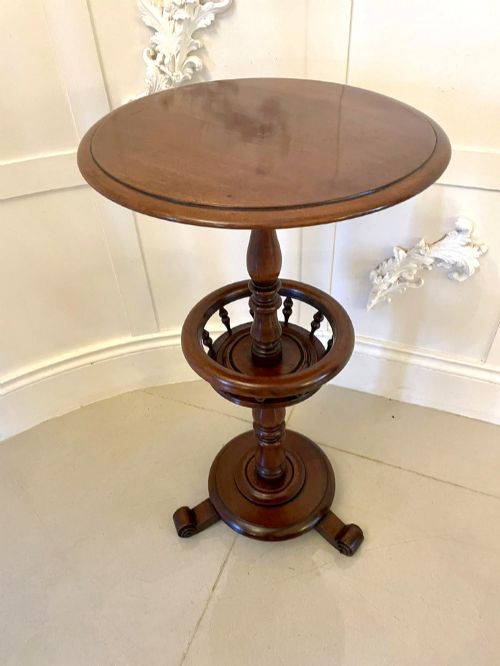
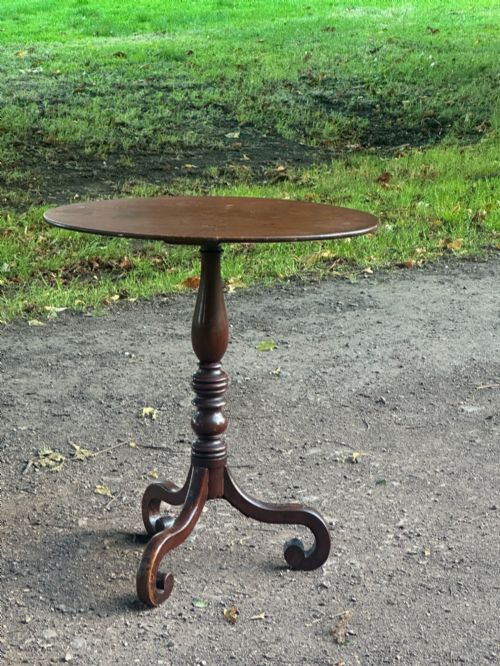
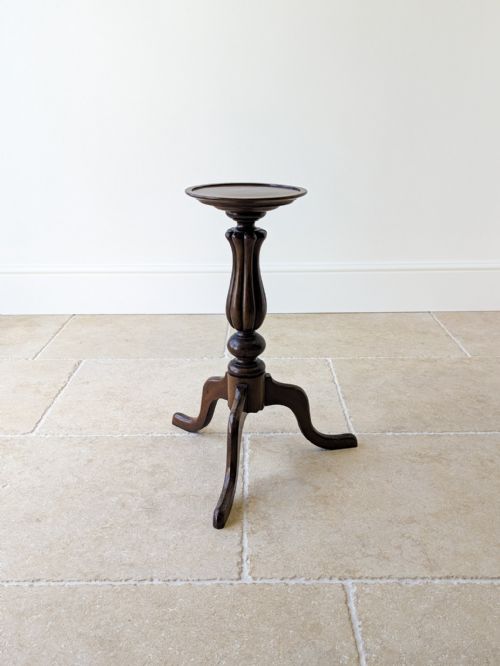
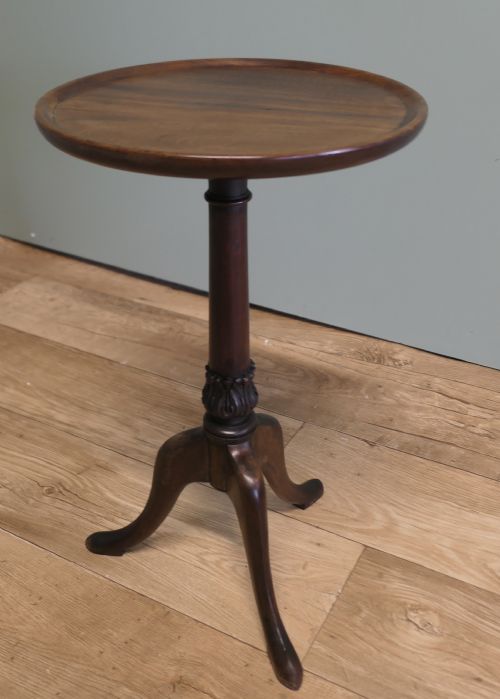
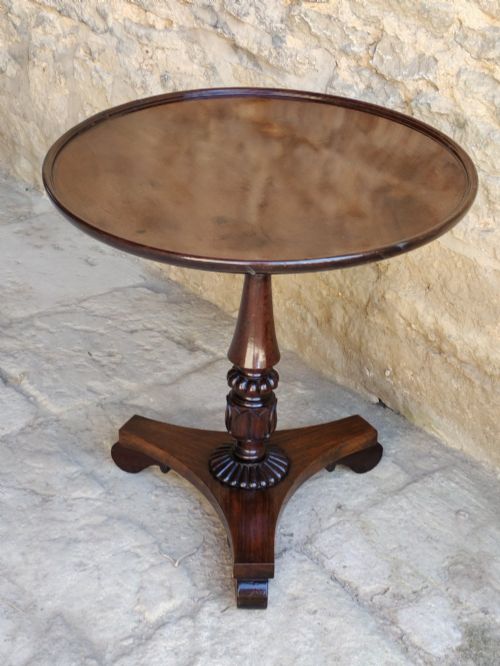
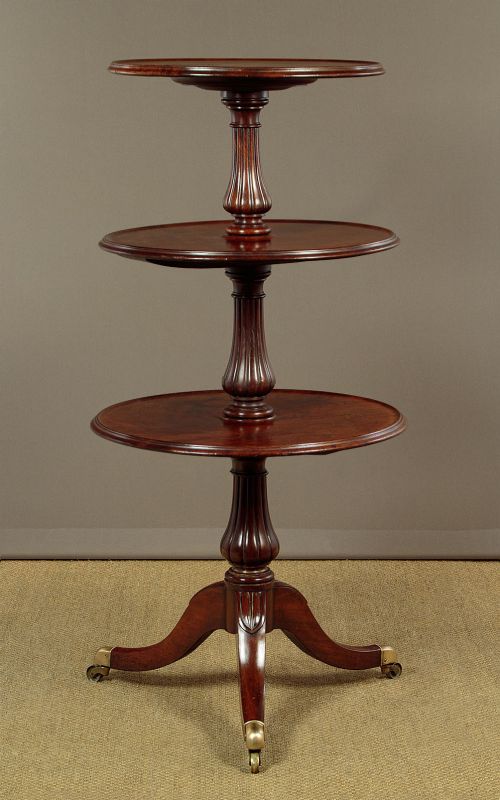
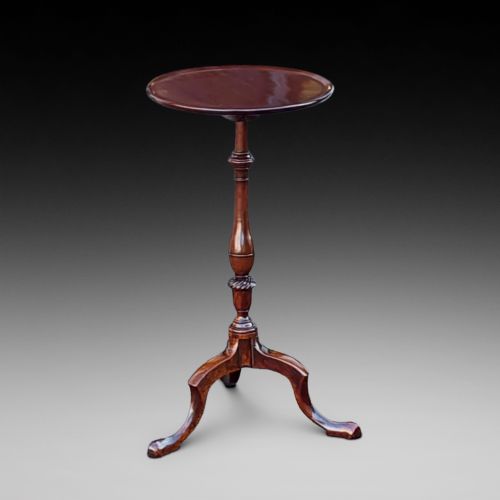
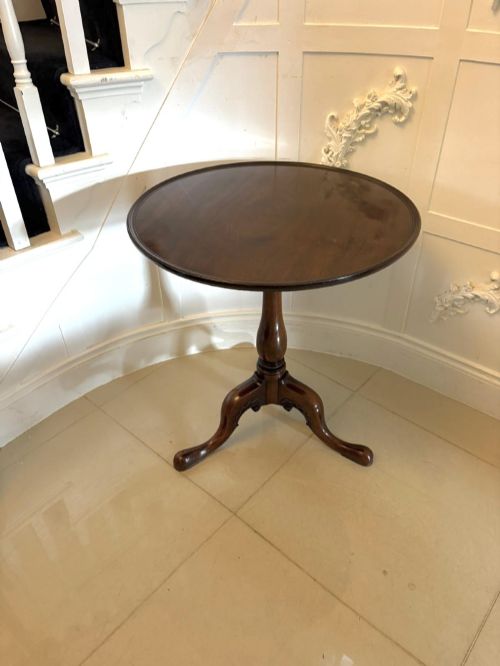
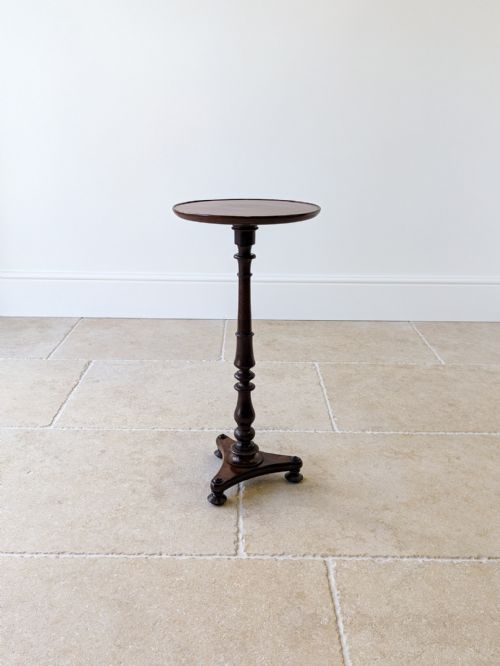
These dark mahogany tripod stand examples combine sturdy timber with slender legs, offering a practical surface for candles, wine or lamps.
Dark Mahogany Tripod Stand
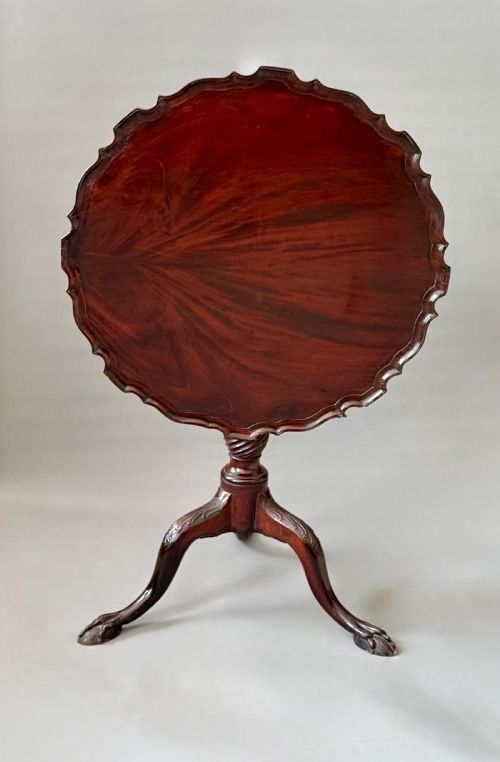
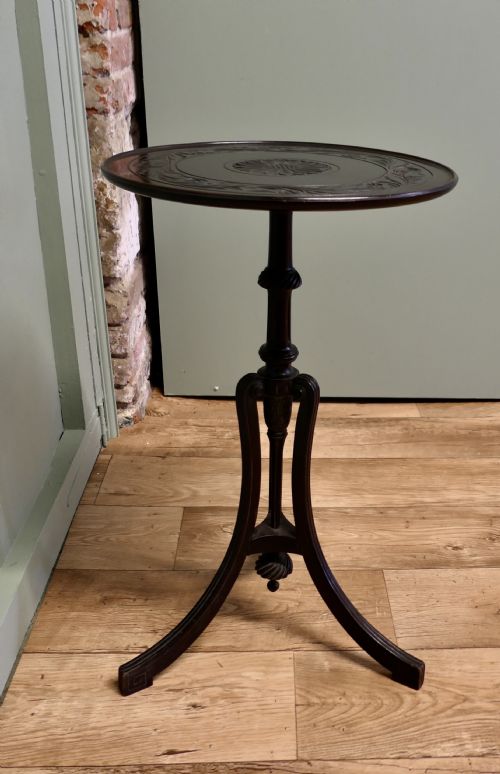
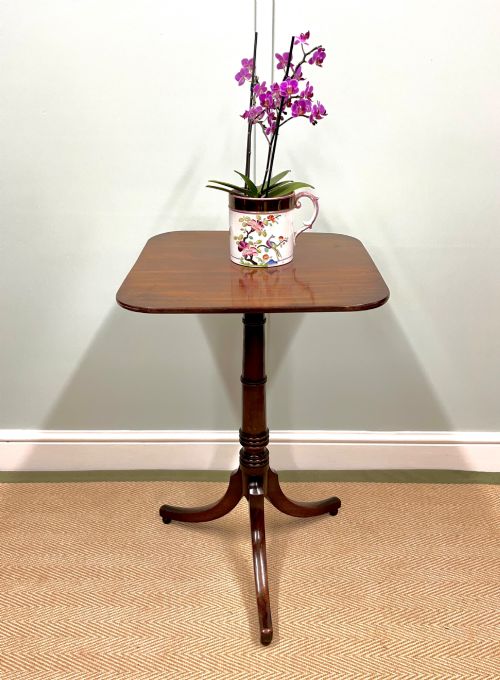
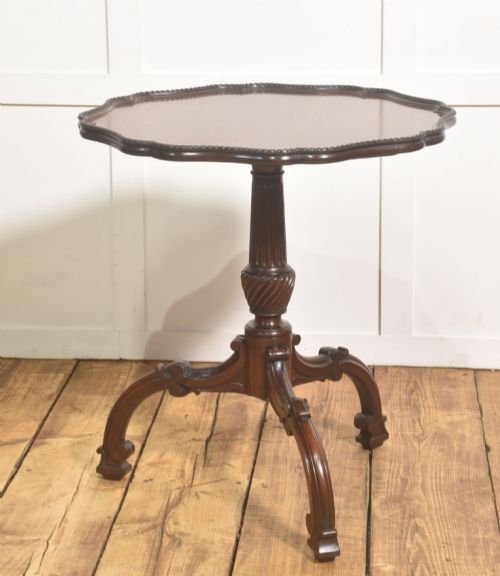
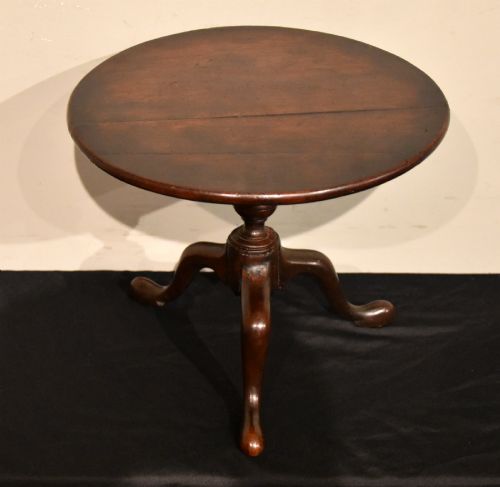
A dark mahogany tripod stand appears most frequently as a wine table, occasional table, or plant stand resting on three splayed legs. These pieces emerge from periods spanning the eighteenth century through the Edwardian era, showing styles from George III to Victorian and Regency.
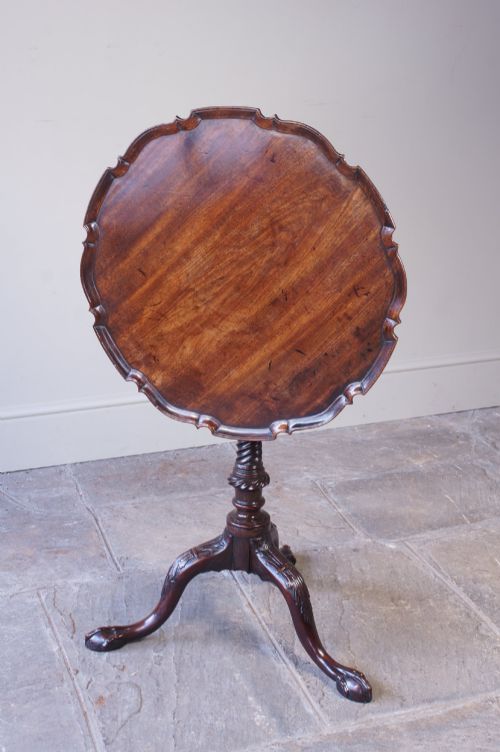
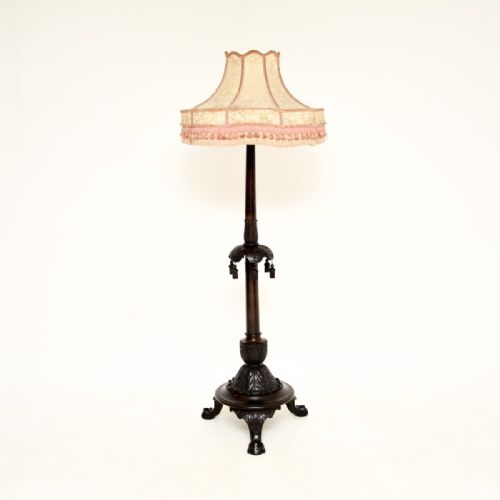
The selection includes tilt top tables, tray top designs, and specialised items like pole screens, torcheres, and music stands. Most examples rely on a central pedestal column branching into a three-legged base to support circular, oval, or shaped tops.
Materials and Construction
Cabinetmakers utilised rich mahogany as the primary timber, occasionally pairing it with cherry wood or walnut, and applying wood inlay for decorative contrast. Tops were fashioned to be fixed or detachable, with some utilising tilting mechanisms supported by brass catches.
Structural integrity depends on the junction where the central pedestal meets the three legs, often strengthened with dovetail joints or internal blocks. Surface finishing incorporates polished wood surfaces that highlight the deep grain of the mahogany.
Listings feature mahogany, walnut, and cherry wood, spanning Georgian, Victorian, and Edwardian periods.
Gradations of Craftsmanship
Superior examples distinguish themselves through the crispness of carved details on the pie crust rims, pedestal columns, and pad or claw feet. Better pieces display carefully selected timber with consistent dark grain running harmoniously across the table top and base.
Subtle differences appear in the balance of the tripod structure and the smooth operation of the tilt top mechanism. Refined execution in the turning of the central pillar separates standard production items from master cabinetmaker output.
Gillow
The Dark Mahogany Tripod Stand Glossary
- Tilt top
- A table mechanism allowing the top to pivot to a vertical position when not in use. This clever design enabled pieces to be stored flat against a wall.
- Tripod base
- A support structure featuring three legs radiating from a central pillar. This configuration ensured stability on uneven floors.
- Pie crust rim
- A raised, decoratively carved edge shaped around the perimeter of a round table top. The undulating profile resembles pastry crust.
- Torchere
- A tall, slender stand designed to hold a light source or plant. These elevated pieces display compact tops atop extended pedestals.
- Pole screen
- A vertical stand featuring an adjustable panel used to block heat from a fireplace. Many incorporate framed textiles or prints.
Dark Mahogany Tripod Stand: Frequently Asked Questions
What is a tilt top table used for?
These tables served as portable surfaces for evening drinks, reading materials, or small lamps. Their pivoting tops allowed them to be tucked away compactly against room walls.
In daily use, owners moved them beside seating areas as needed. The three-legged design prevented wobbling on older, uneven floorboards.
How do I identify a Georgian tripod stand?
Georgian examples typically exhibit dense, dark mahogany timber with hand-turned pedestal columns and precise joinery. Many feature clever snap-top catches and subtle carving on the knees of the legs.
Later Victorian and Edwardian pieces often adopted these earlier Georgian styles. Examining the interior pivot mechanism and timber wear helps confirm the period.
Where should I place a plant stand?
These tall stands suit corners or empty wall spaces where vertical height is needed without a large footprint. They provide stable platforms for trailing foliage or decorative jardinieres.
Keep them away from direct heat sources to protect the polished mahogany finish and prevent the wood from drying out.
Are tripod stands stable?
Three-legged furniture naturally contacts uneven floors firmly without rocking. The splayed stance of the legs distributes weight evenly around the central column.
Heavier items placed on the outer edge require care, but standard decorative objects remain secure on the balanced top.