



Dark Mahogany Tabletop Chest
Dark mahogany tabletop chests are compact wooden storage pieces spanning the Georgian and Victorian eras, prized for surface organisation.
Dark Mahogany Tabletop Chest
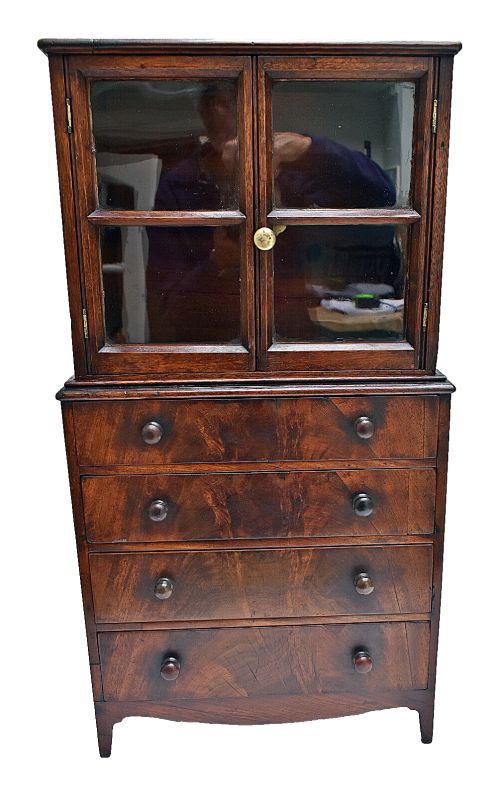
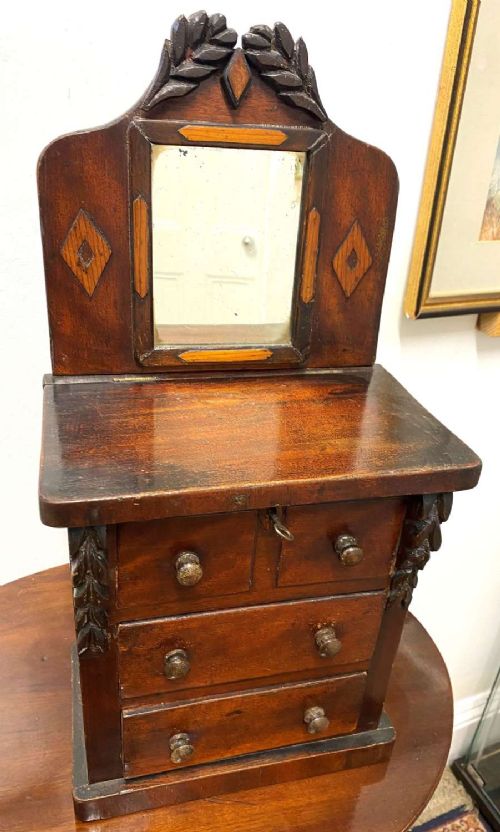
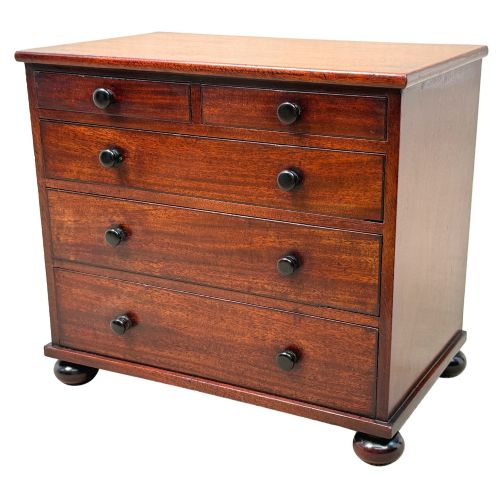
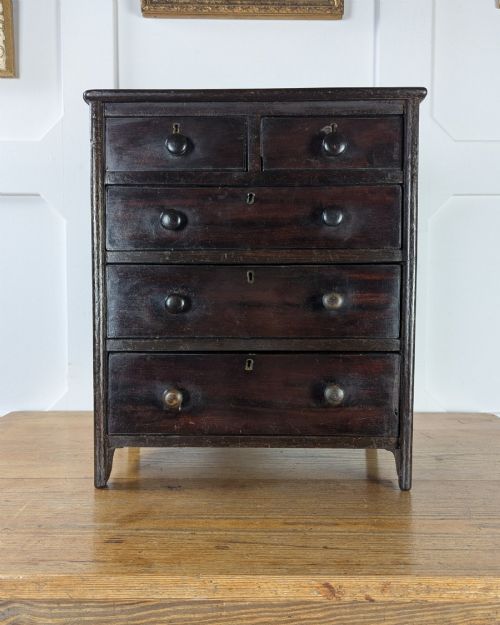
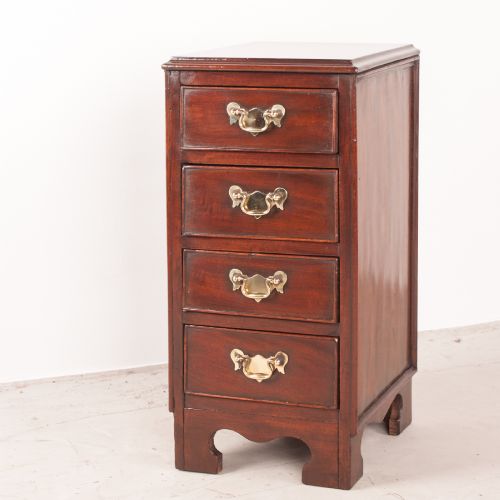
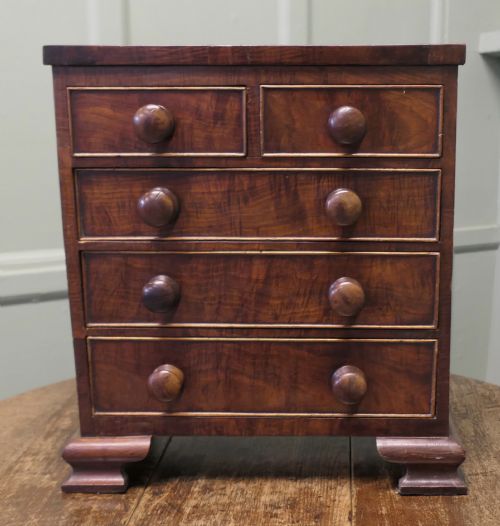
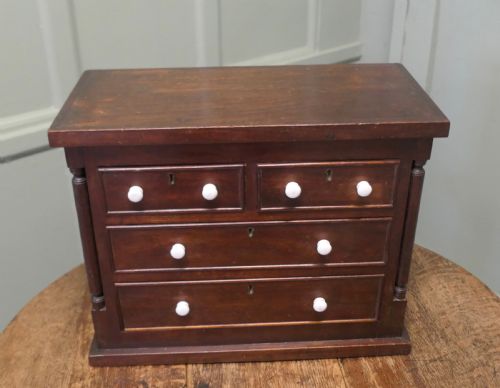
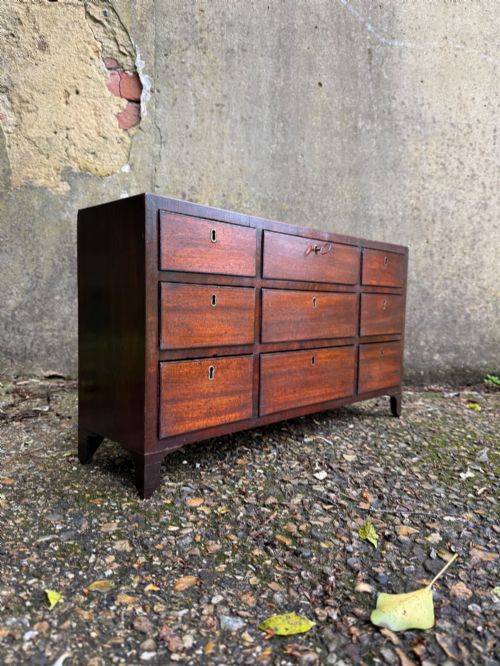
A dark mahogany tabletop chest brings scaled-down cabinetmaking into domestic spaces, appearing primarily as miniature chests of drawers, apprentice pieces, and small specimen cabinets. These tabletop forms echo full-size Georgian and Victorian furniture designs, maintaining functional drawers and compartment layouts.
The pieces on this page span the eighteenth, nineteenth, and early twentieth centuries, encompassing styles from plain George III formats to ornate Victorian specimens. Collectors encounter varied configurations including bow-front chests, flight of drawers, spice cabinets, and watchmaker workstations.
Miniature chests serve various traditional roles, functioning as jewellery boxes, trinket storage, or detailed cabinetmaker samples. Their presence offers a tangible connection to historic woodworking traditions across English and Anglo-Indian origins.
Materials and construction
Makers utilised dense mahogany timber for primary carcass construction, frequently selecting figured grains for visible drawer fronts and top surfaces. Secondary woods and structural elements often incorporate oak, while boxwood inlay provides contrasting linear detail.
Hardware components rely on cast brass for drop handles, escutcheons, and hinges, securing functional access to small compartments and glass-fronted display doors. Construction involves traditional dovetail joints for drawer assembly, ensuring durability across miniature scales.
Dark Mahogany Tabletop Chest Retail Price Guide 2026
Typical asking prices for dark mahogany tabletop chest among the pieces listed under this phrase on Sellingantiques today, from the lower quarter to the upper quarter. They describe what is for sale here now, not the wider market.
Judging quality and craftsmanship
Quality rests upon the precision of miniature joinery and the selection of timber veneers, where tight dovetails and book-matched mahogany figure distinguish superior examples. Cabinets exhibiting refined proportions and original brass hardware retain greater integrity compared to later alterations.
The depth of the natural patina on the mahogany surface indicates age and care, separating pieces with preserved finishes from those stripped or heavily restored. Finer specimens demonstrate meticulous attention to internal drawer construction and subtle boxwood stringing.
The Dark Mahogany Tabletop Chest Glossary
- Apprentice piece
- A small-scale item created by a trainee craftsman to demonstrate mastery of advanced woodworking techniques to a guild.
- Bow-front
- A curved front facade curving outward at the centre, popular during the Georgian and Regency periods.
- Specimen cabinet
- A multi-drawer tabletop case designed for storing natural history samples, coins, or small collectables.
- Dovetail
- An interlocking joint formed by wedge-shaped fingers, used extensively in drawer construction for structural strength.
- Patina
- The surface sheen and coloration developed through age, handling, and oxidation on wood over decades.
Dark Mahogany Tabletop Chest: Frequently Asked Questions
What is a tabletop chest?
A tabletop chest is a miniature furniture piece designed to sit on a desk or surface, providing scaled-down storage for valuables or documents.
These pieces replicate the styles of full-sized furniture from the eighteenth and nineteenth centuries in a compact format.
How were apprentice pieces used?
Apprentice pieces served as test projects where young woodworkers proved their skill in joinery before gaining master status.
Cabinetmakers also used these small models to demonstrate designs to prospective clients in showrooms.
How do I identify a Georgian chest?
Georgian chests typically display restrained classical proportions, premium mahogany timber, and traditional brass drop handles.
Makers from this era often incorporated fine boxwood stringing and subtle bow-front contours into the casework.
Where should I place a tabletop chest?
Tabletop chests fit well on sideboards, desks, or dressing tables where their compact dimensions do not overwhelm a room.
They provide practical storage for jewellery, stationery, or small collections while functioning as decorative focal points.