




Dark Mahogany Standing Clock
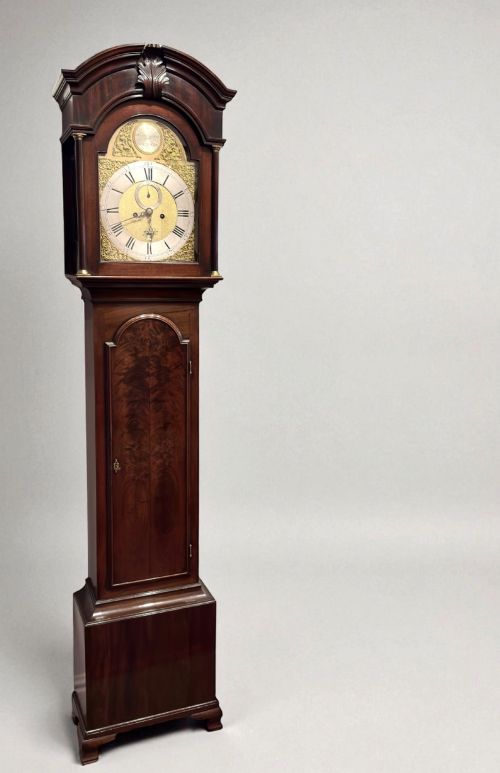
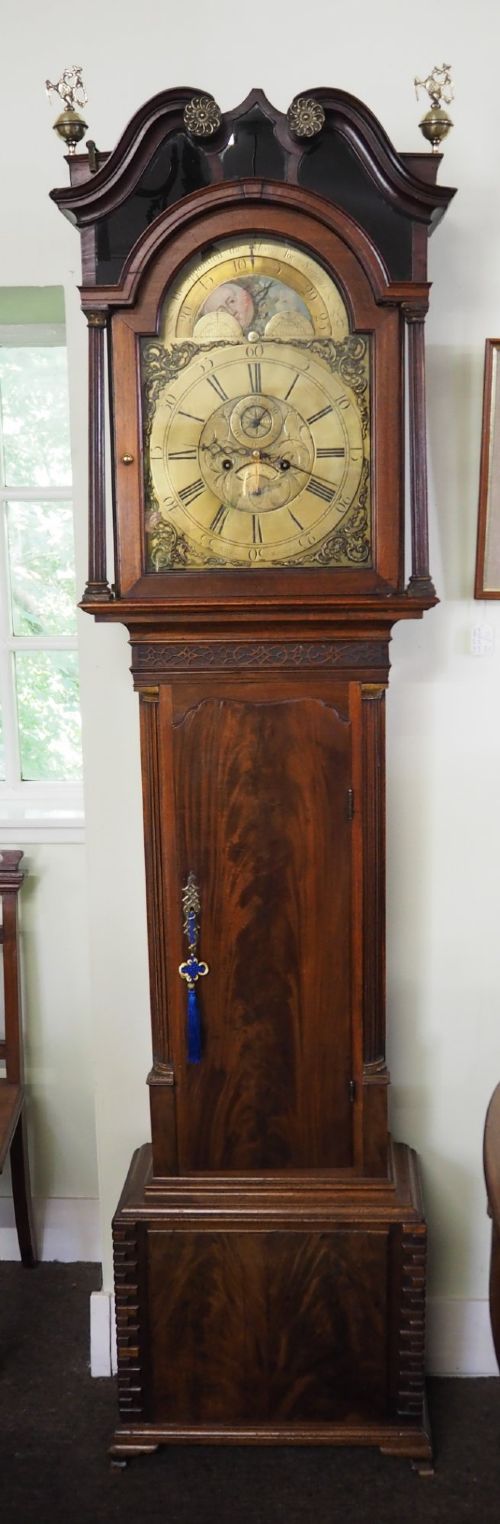
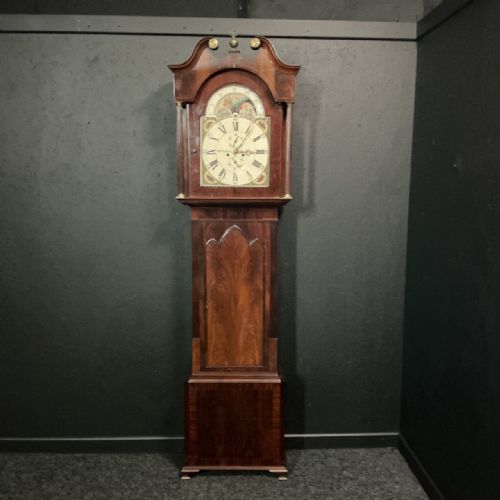
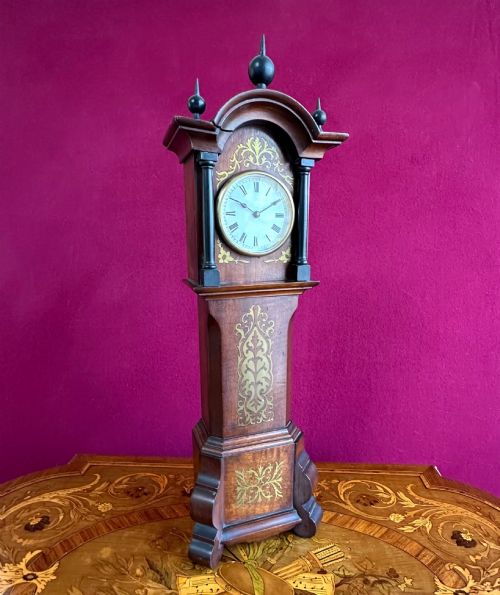
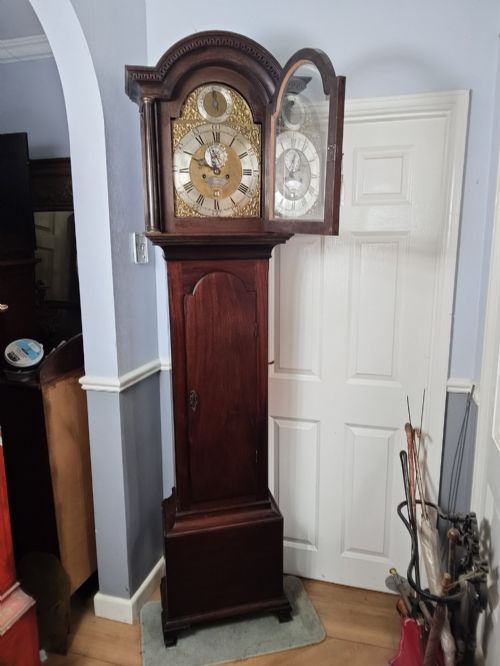
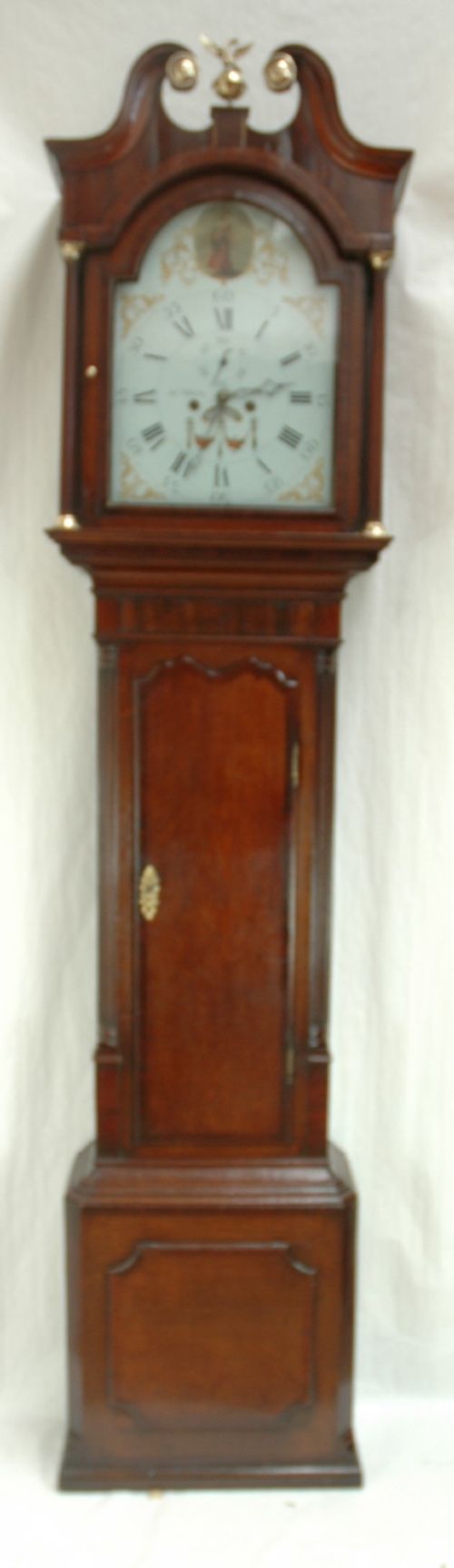
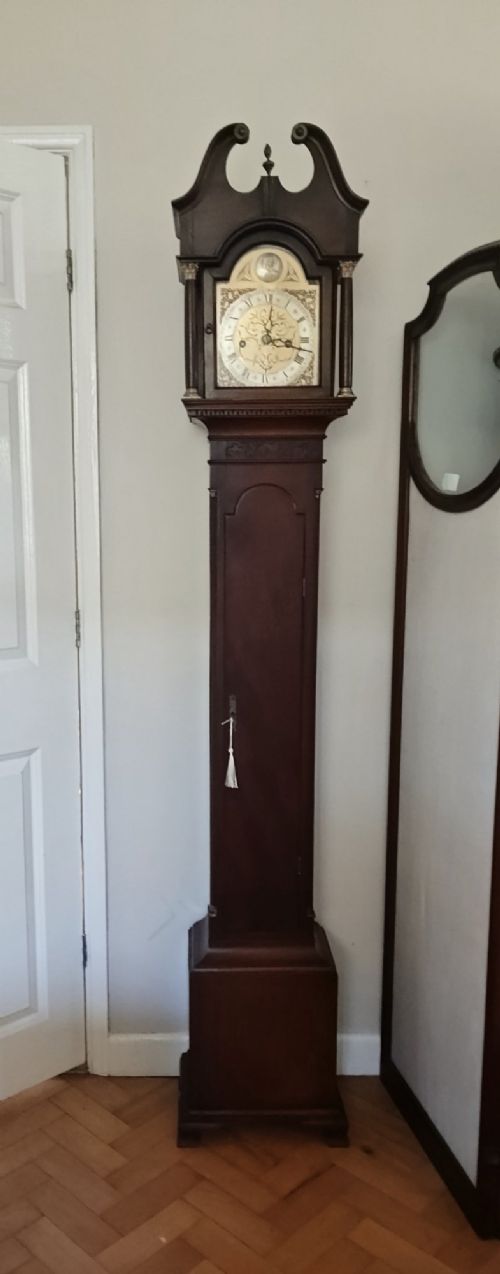
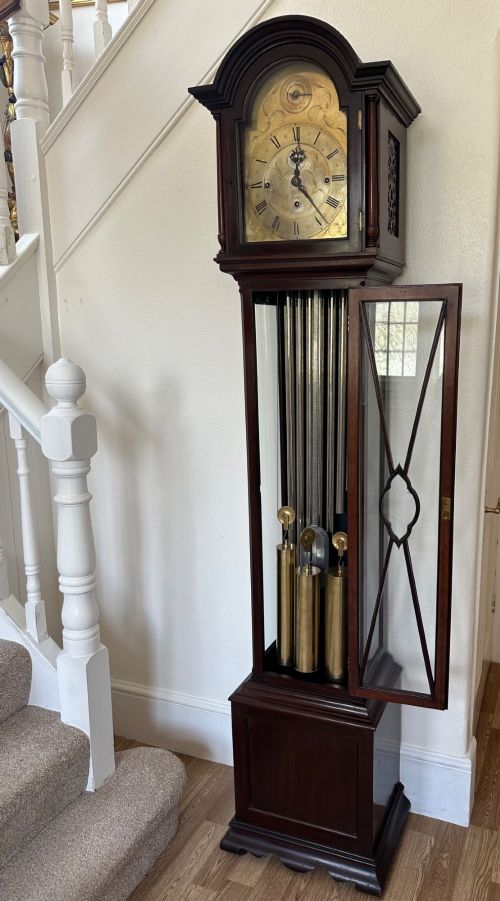
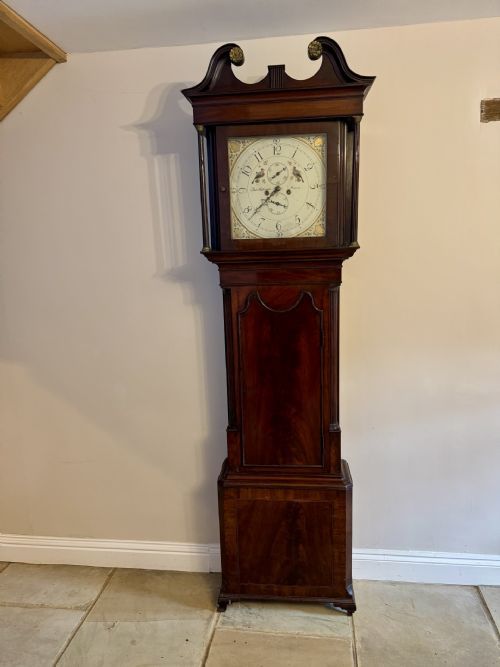
A dark mahogany standing clock commands the hallway with rich timber grain and the steady, resonant chime of a mechanical movement.
Dark Mahogany Standing Clock
Buyers seeking a dark mahogany standing clock are looking at tall case timepieces, frequently referred to as grandfather or longcase clocks, built primarily during the Georgian, Victorian, and Edwardian eras. These vertical floor clocks combine dense tropical hardwood cases with intricate brass and painted dials to record the hours.
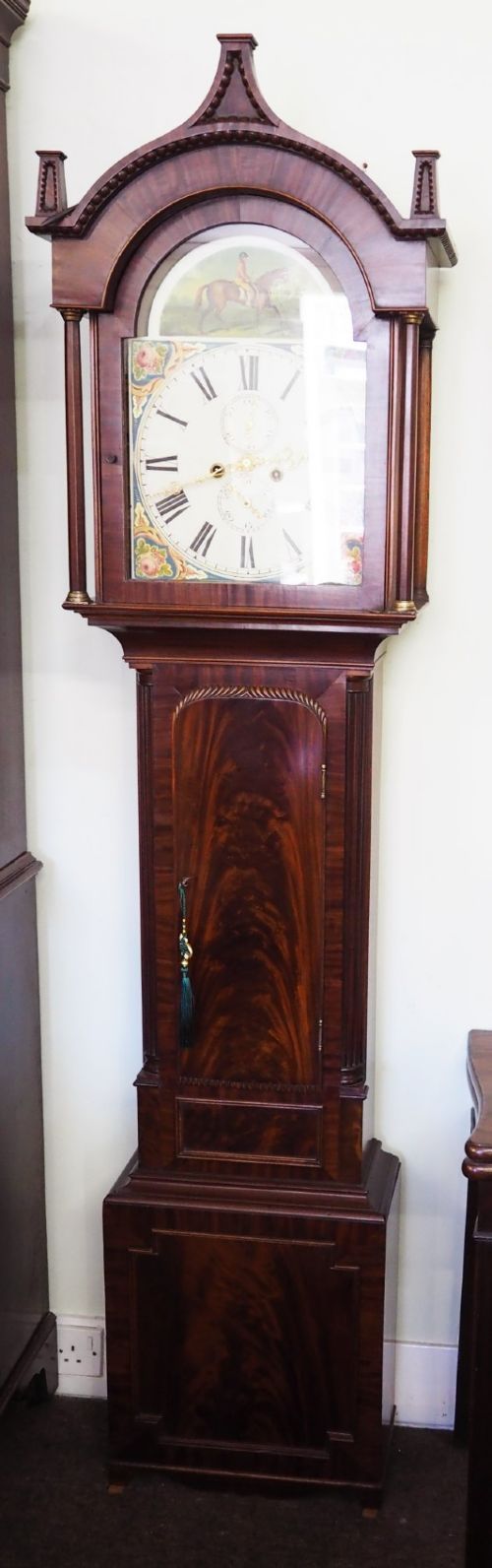
The versions most commonly met on this page span the late eighteenth and early nineteenth centuries, featuring robust mahogany or flame mahogany veneers over oak carcases. Regional variations from Scottish, English, and Welsh makers appear alongside later twentieth-century interpretations, each housing weight-driven or spring-driven movements.
Tall case timepieces served as the domestic timekeepers of substantial homes, requiring generous ceiling clearance and a stable floor to maintain proper pendulum beat. Their presence in a room establishes a traditional focal point through architectural hood designs, trunk doors, and weighted base plinths.
Materials and Construction
Cabinetmakers utilised solid mahogany and selected flame mahogany veneers applied over secondary timbers such as oak, securing the wood with traditional joinery and hide glues. Glass protected the dial face within a hinged hood, while brass was cast and engraved for the chapter rings, spandrels, and movement plates.
Clockmakers fitted mechanical brass and steel gear trains, often incorporating painted iron or enamel dials, steel hands, and lead or iron driving weights suspended by cords or chains. Movements ranged from standard thirty-hour and eight-day time-and-strike systems to complex mechanisms featuring moon rollers, musical chimes, and tubular bells.
Listings span multiple centuries from the Georgian period through the Edwardian era, incorporating mahogany, flame mahogany, oak, brass, and glass materials.
Factors That Determine Quality
The standard of a dark mahogany standing clock rests largely on the sophistication of its movement and the precision of its dial execution. Clocks housing signed movements by notable makers command greater interest than anonymous workshop pieces, particularly when they feature specialised complications like strike-silent functions, moon phases, or multiple chiming tubes.
Cabinetwork integrity also dictates the standing of a piece, separating straightforward utilitarian construction from exhibition grade examples with carved architectural details, inlaid decoration, and well-figured timber. Original surfaces, matching weights and pendulums, and intact door glass further distinguish superior examples from heavily restored or married items.
Gordon of Aberdeen·Henry Weedon London·Edward Shepley of Manchester·Matt Wylie Paisley·Joseph Gibson Ecclefechan·Thwaites London·John Denbigh Merton Park·Handley And Moore Of London·James Tregent of London·Gillett And Johnston·Francis Perigal of Bond Street·Gillows·James Harvey of Abergavenny·Whitelaw of Edinburgh·John Breakenrig
The Dark Mahogany Standing Clock Glossary
- Longcase clock
- A tall, weight-driven pendulum timekeeper enclosed in a wooden floor-standing case, commonly known as a grandfather clock. These vertical instruments protect the delicate movement and hanging weights from dust while displaying the dial at eye level.
- Moon roller
- A rotating mechanical display mechanism positioned on the dial to track the phases of the lunar cycle. This complication required skilled gearing to advance correctly alongside the standard timekeeping train.
- Strike-silent
- A mechanism allowing the clock's striking train to be disengaged so the piece chimes the hours silently. This function proved useful in bedchambers and formal sitting rooms during nighttime hours.
- Regulator
- A precision pendulum clock designed for extreme accuracy, often utilised to set other timepieces. These movements typically feature separated dials for hours, minutes, and seconds.
- Spandrel
- The decorative corner ornament placed outside the circular chapter ring on a clock dial. They evolved from cast brass baroque motifs in the eighteenth century to painted or engraved variations in later periods.
Dark Mahogany Standing Clock: Frequently Asked Questions
How do I wind an eight-day longcase clock?
An eight-day clock requires the driving weights to be raised once a week using a winding key inserted into holes on the dial face. Turning the key draws the weights back up toward the top of the trunk.
Care must be taken not to overwind the movement once the weight reaches its upper limit. Ensuring the pendulum remains at rest during winding prevents damage to the suspension spring.
Where should a standing clock be placed?
Standing clocks require a structurally stable, vibration-free floor away from direct sunlight and strong temperature fluctuations. Exterior walls often provide the necessary rigidity to keep the tall case secure.
Ample vertical clearance is essential, as these pieces frequently exceed standard ceiling heights. Leveling the case using feet or shims ensures the pendulum swings with an even beat.
What is the difference between a longcase and a grandmother clock?
Longcase clocks are full-scale standing timekeepers ranging from six to eight feet in height, designed to house long pendulums and heavy driving weights. Grandmother clocks are smaller, scaled-down versions produced predominantly during the twentieth century.
These smaller derivatives utilise compact spring-driven or shorter weight-driven movements suited for lower ceiling heights and restricted floor spaces. Despite their reduced dimensions, they follow the traditional architectural format of their taller predecessors.