
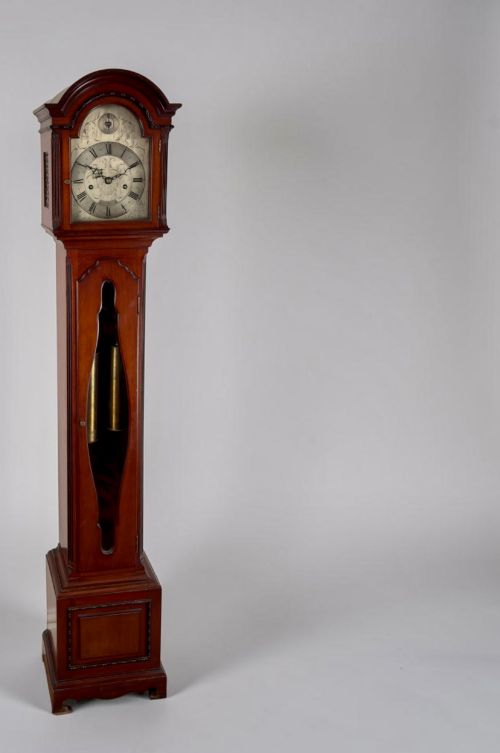


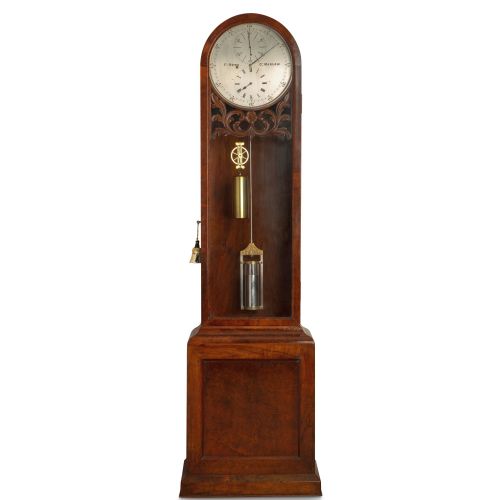


Silvered Dial Floor Clock
A silvered dial floor clock brings heavy brass, deep mahogany, and measured ticks into a hallway.
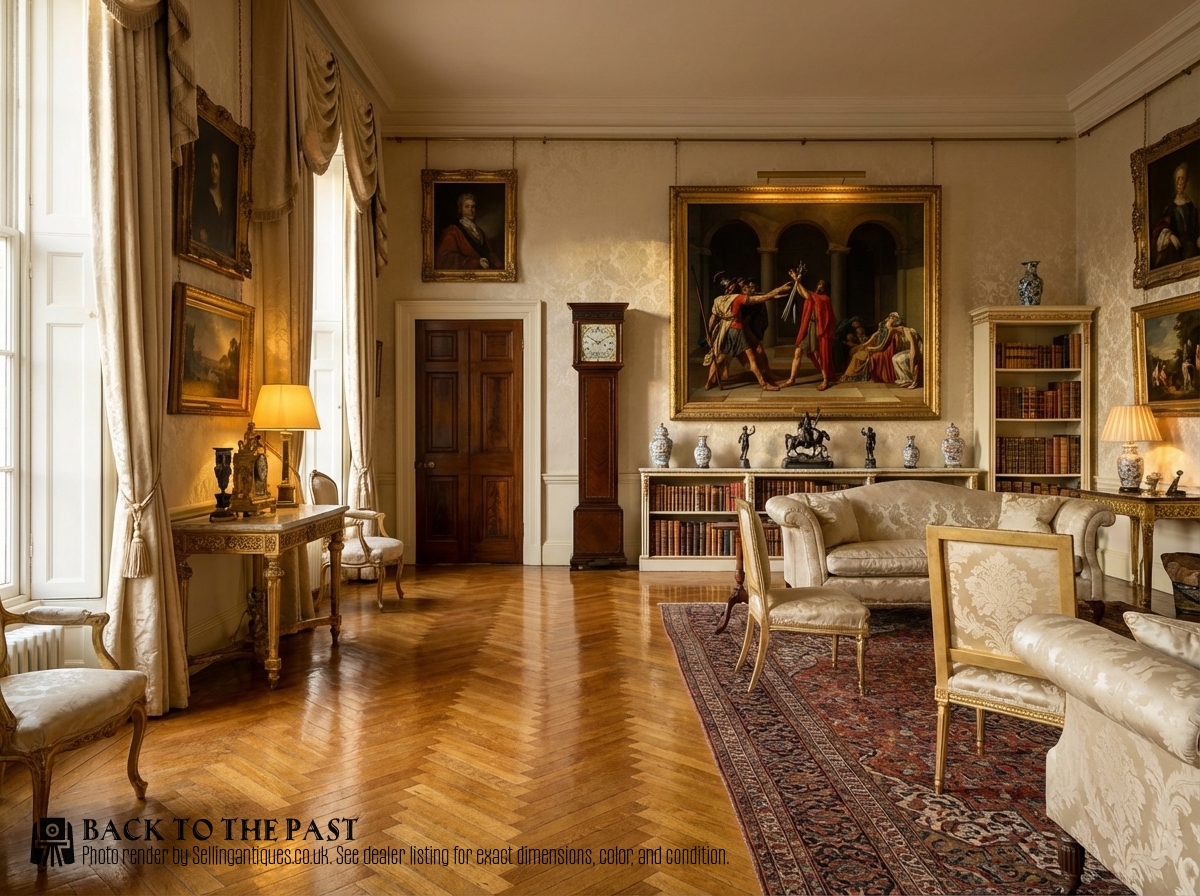
Silvered Dial Floor Clock
When you search for a silvered dial floor clock, you encounter tall timepieces spanning the eighteenth century, the Georgian era, the Regency period, and the early twentieth century.
The evidence shows longcase clocks, grandmother clocks, and precision regulators housed in mahogany, flame mahogany, and walnut cases with brass and glass fittings.
You are most likely to meet Georgian longcase clocks and later nineteenth century regulators, fitted with silvered metal or silvered brass dials.
How they were made
Cabinetmakers constructed the tall floor cases primarily from mahogany, flame mahogany, and walnut, often accentuating the grain with polished finishes.
Clockmakers mounted engraved and silvered metal or brass dials behind glass doors, pairing them with steel and brass movement components.
Some makers ensured their tall cases could accommodate multiple naming conventions at once, labeling a single tall mahogany tower as longcase, grandmother, grandfather, and regulator simultaneously.
What varies in quality
Quality rests in the precision of the movement and the execution of the casework, separating standard workshop production from signed metropolitan pieces.
The crispness of the engraving on the silvered dial and the depth of figure in the mahogany case mark the upper tier of these floor clocks.
Gillett and Johnston·William Allam·James Tregent·James Wood·Pearce and Sons·Frederick Rowe·Archibald Collier·Richard Rowell
The Silvered Dial Floor Clock Glossary
- Longcase clock
- A tall pendulum clock enclosed in a wooden case that rests directly on the floor. These pieces are often referred to as grandfather clocks.
- Grandmother clock
- A smaller, more slender version of the traditional longcase clock, typically dating to the Edwardian period or the early twentieth century.
- Regulator clock
- A precision timekeeper designed for exact time measurement, featuring a refined movement and clear dial layout.
- Silvered dial
- A metal dial treated with a silver solution to create a matte, reflective surface that enhances the legibility of the engraved numerals.
- Break arch
- A dial or case top featuring a central curved arch flanked by small shoulders, common in eighteenth century design.
Silvered Dial Floor Clock: Frequently Asked Questions
How do I set up a floor clock?
These heavy tall clocks require a stable, level floor and careful attachment to a wall if the structure demands it. Positioning the case correctly ensures the pendulum swings evenly.
Once the case is secure, the pendulum and weights are hung in place before the hands are gently advanced to the correct time.
What is the difference between a longcase and a regulator?
A standard longcase clock focuses on domestic timekeeping and often includes striking trains or chiming mechanisms. They were built for general household use.
Regulator clocks prioritise absolute timekeeping accuracy, featuring fine movements designed to minimise friction and error.
How often do these clocks need winding?
Many examples documented in the evidence feature eight-day movements that require winding once a week. This involves using a key to draw the weights back up.
Consistent winding routines help maintain the tension on the movement and keep the timekeeping steady.
Where should I place a floor clock in my home?
Tall timepieces need a dry interior location away from direct sunlight and strong temperature fluctuations that can affect the wood and the delicate metal components. Hallways and landings provide suitable environments.
Ensure there is enough vertical clearance for the specific height of the case before installation.