




Dark Mahogany Dining Room Table
A dark mahogany dining room table brings warmth and rich grain to a room, offering a solid timber surface built for gathering.
Dark Mahogany Dining Room Table
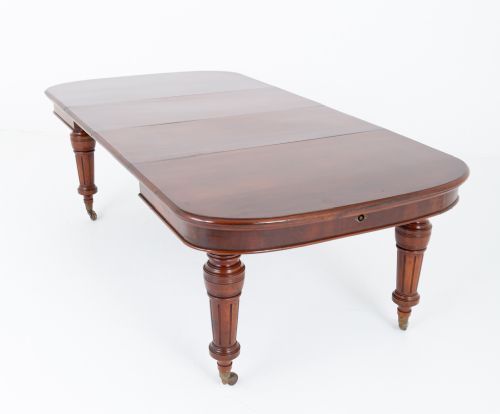
A dark mahogany dining room table brings together timber of deep reddish-brown tones, shaped to serve households from large banquets to everyday meals. When searching for a dark mahogany dining room table, buyers encounter formats spanning multiple periods and styles.
Dating primarily from the Georgian, Regency, and Victorian eras, these tables display the heavy grain and polished surfaces characteristic of solid mahogany and flame mahogany veneer. Revival pieces from later decades also appear, echoing earlier proportions.
What varies in quality
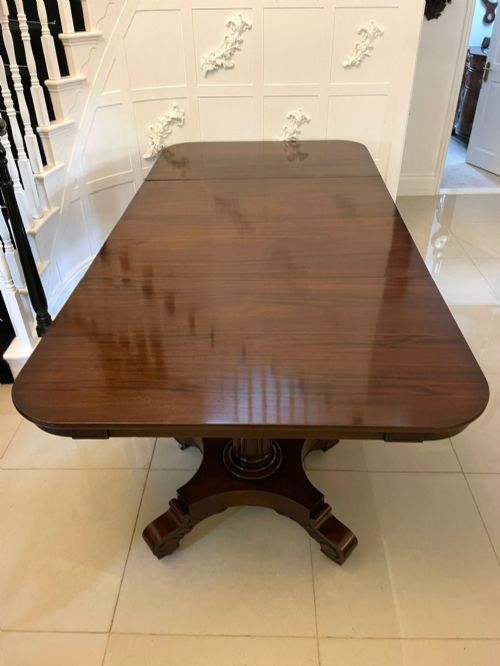
Quality rests on the selection of the timber, particularly the depth of the flame mahogany veneer and the crispness of any boxwood or satinwood inlay. Finer examples display harmonious grain matching across multiple leaves and robust pedestal bases.
The integrity of the extending mechanism and the precision of the cabinet work separate standard utility items from exceptional pieces. Superior proportions and restrained carving define the work of master workshops.
Dark Mahogany Dining Room Table Retail Price Guide 2026
Typical asking prices for dark mahogany dining room table among the pieces listed under this phrase on Sellingantiques today, from the lower quarter to the upper quarter. They describe what is for sale here now, not the wider market.
Listings feature mahogany, brass, boxwood, satinwood, and glass across Georgian, Regency, and Victorian periods.
M. D. Miller and Sons·Mack Williams and Gibton·Gillow
The Dark Mahogany Dining Room Table Glossary
- Pedestal
- A central support pillar, often carved, holding up the centre of a large dining table.
- Serpentine
- A curved front shape that undulates in a gentle wave, typical of finer sideboards and serving tables.
- Veneer
- A thin layer of figured wood applied to a stable secondary timber to create a decorative surface.
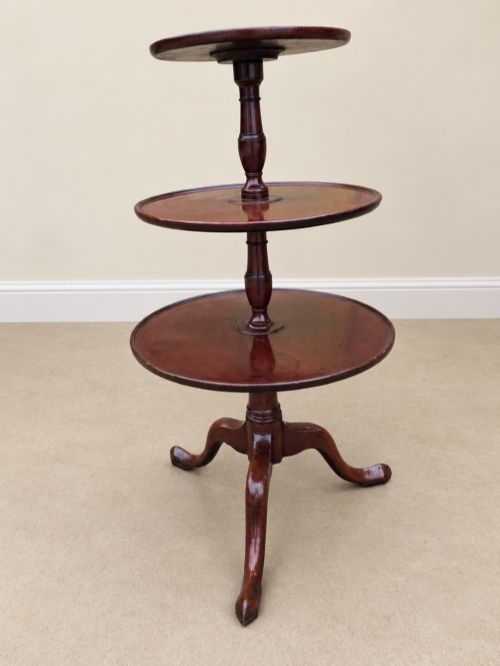
- Dumbwaiter
- A tiered serving stand on a central column used to hold dishes beside the dining table.
- Inlay
- Contrasting woods such as boxwood or satinwood set flush into the primary timber surface to form decorative borders.
Dark Mahogany Dining Room Table: Frequently Asked Questions
How do I identify a Regency dining table?
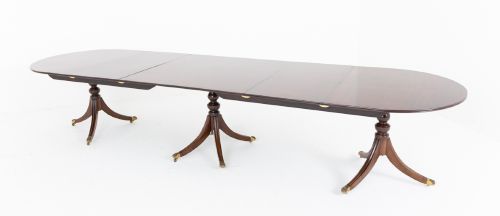
Regency dining tables often feature pillar and tripod bases, robust mahogany timbers, and brass toe castors. They frequently include extending leaves supported on central pedestals.
Proportions tend to be architectural and clean, reflecting the classical taste of the early nineteenth century without heavy ornamentation.
Are extending dining tables practical for daily use?
Extending tables offer flexibility by allowing the surface area to expand when hosting guests and contract for daily meals. Mechanisms rely on removable leaves or central winding systems.
Care should be taken to protect the polished mahogany surface from heat and moisture during everyday use.
What is the difference between a sideboard and a serving table?
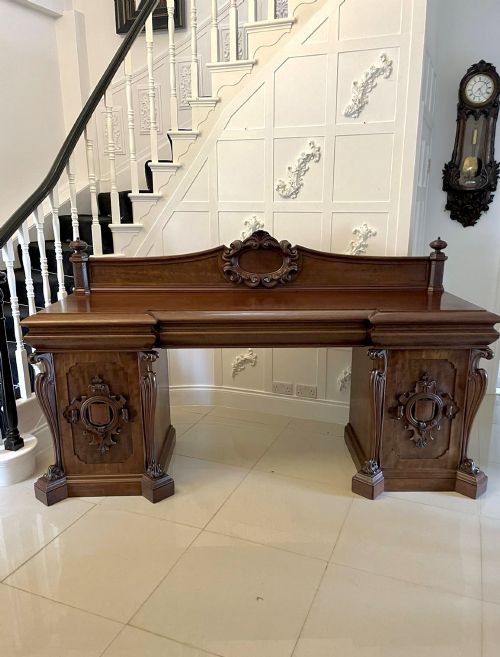
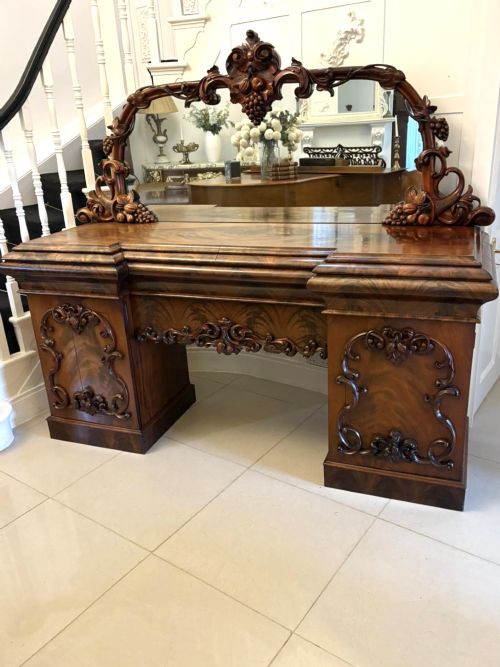
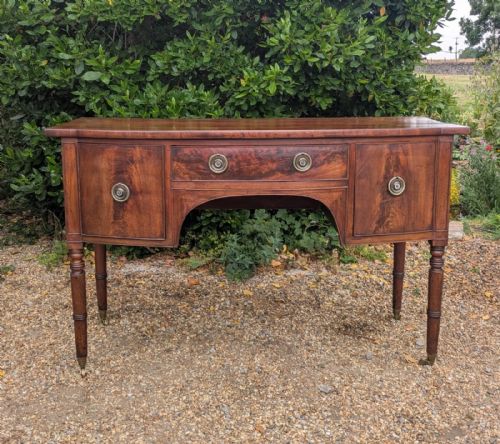
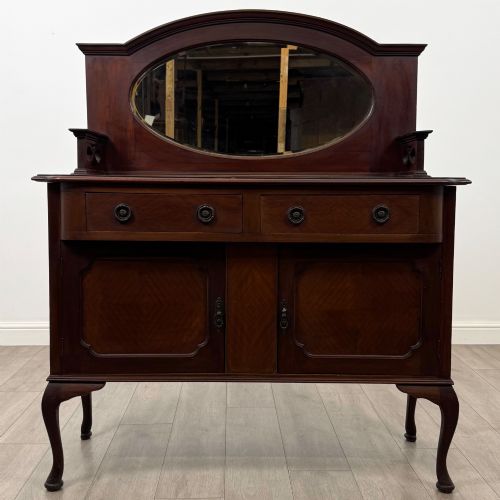
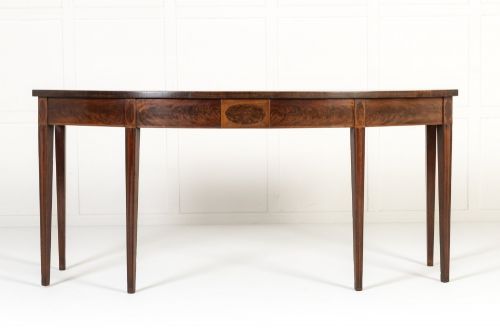
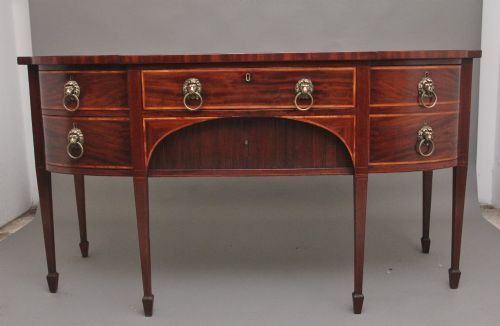
Serving tables are typically earlier console-style pieces with open legs beneath a long top, designed for holding dishes during a meal. Sideboards usually incorporate enclosed cupboards, drawers, and sometimes mirror backs.
Both pieces utilise mahogany and frequently feature matching inlay work.
How should I care for antique mahogany furniture?
Antique mahogany benefits from regular dusting with a soft cloth and occasional waxing to nourish the timber and preserve the polish. Direct sunlight and sudden temperature changes should be avoided to prevent timber movement.
Using mats under hot dishes and liquids protects the finish from staining.