

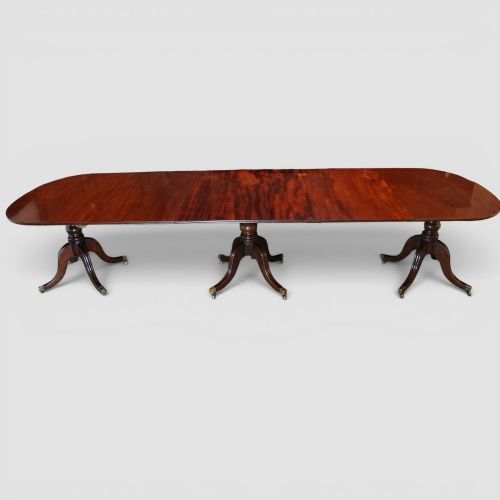
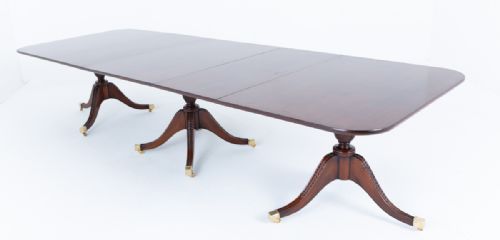
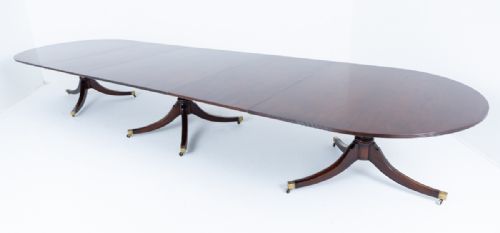
Antique Style Banquet Table
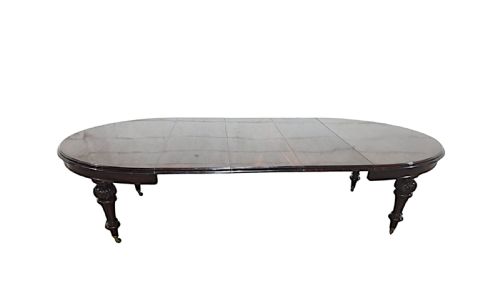
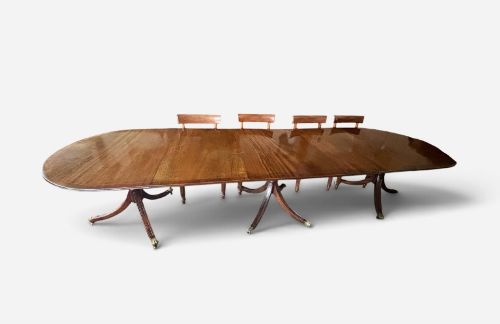
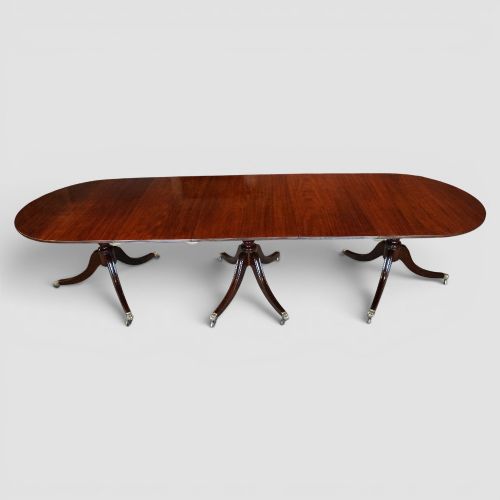
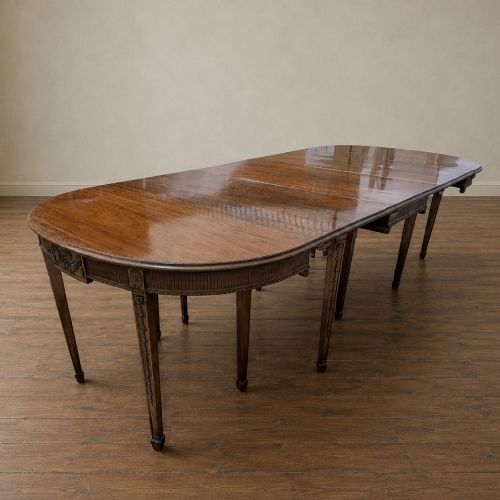
An antique style banquet table brings scale and presence to a room, offering grand proportions and traditional timber construction for hosting large gatherings.
Antique Style Banquet Table
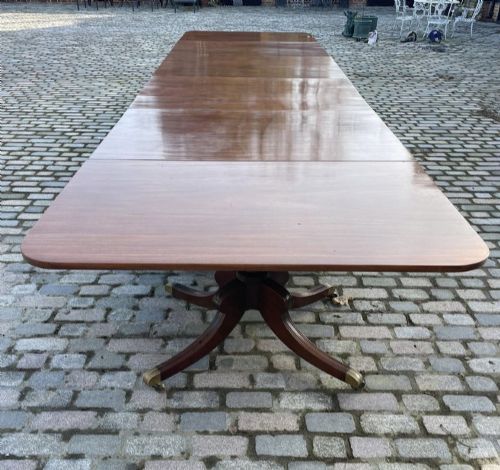
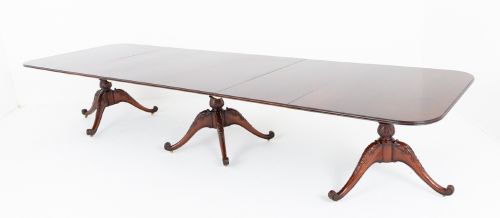
An antique style banquet table is primarily a large extending dining table designed to seat twelve to twenty-eight people for formal meals. The listings here focus on substantial timber dining tables spanning multiple pedestals or refectory designs.
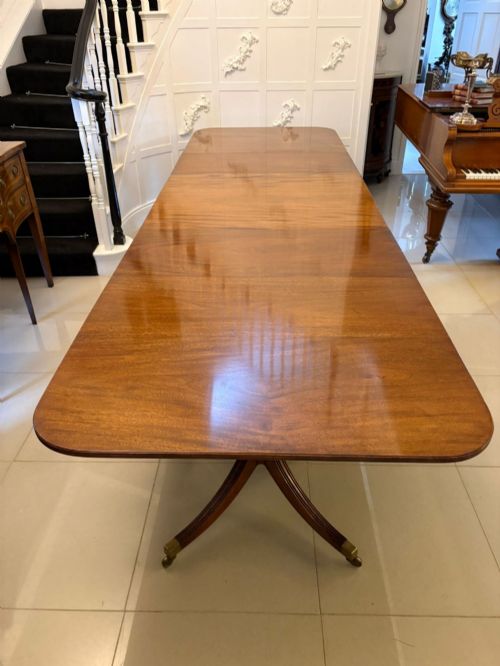
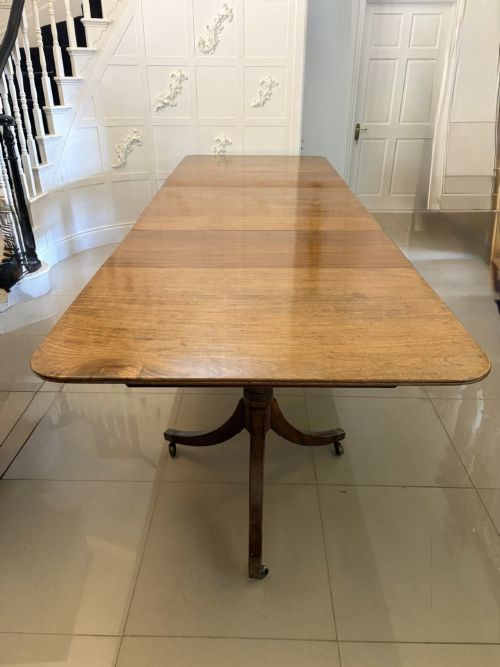
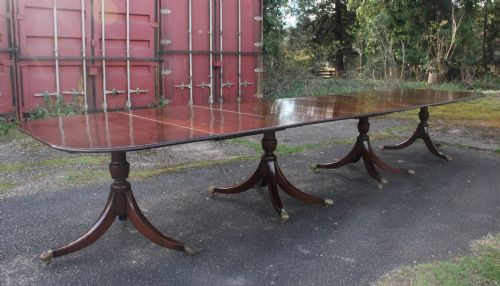
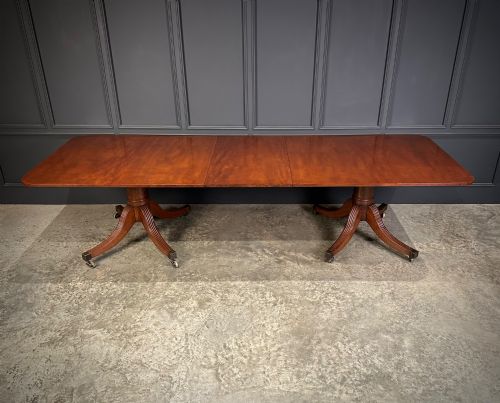
Most pieces seen on this page belong to the Regency, George III, or William IV periods, alongside later twentieth-century revivals inspired by those classic eras. Mahogany dominates the forms, often configured with three or four pedestals and extra leaves to alter the length.
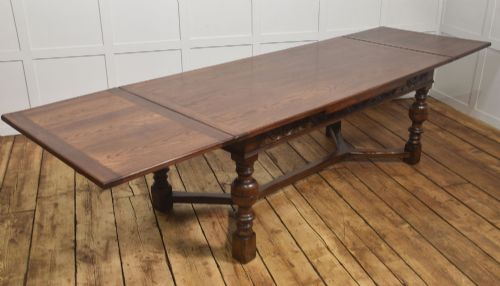
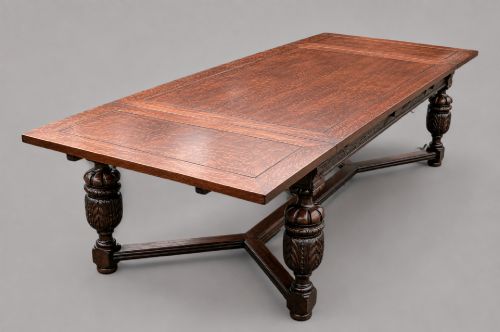
Buyers also encounter robust oak pieces built in Jacobean, Elizabethan, or seventeenth-century styles featuring draw-leaf or refectory mechanisms. While primarily functional dining furniture, the selection occasionally includes related period furnishings such as porcelain oil lamps.
How they were made
Makers utilised solid and figured timbers, predominantly mahogany and oak, supplemented by decorative veneers like rosewood and satinwood inlay. Brass components appear in castors and mechanism fittings, while glass and porcelain feature in ancillary decorative items.
Construction relies on multi-pillar pedestals or heavy framing to support lengths extending up to sixteen feet or more. Tables employ clever extension systems, including draw-leaves and removable extra leaves supported by stable pillar bases or refectory trestles.
Listings feature tables spanning the nineteenth and early twentieth centuries, constructed primarily from mahogany and oak with occasional rosewood.
What varies in quality
The choice of timber creates the primary distinction between standard examples and top-tier pieces, with figured mahogany, flame mahogany, and Cuban mahogany commanding higher regard. Finely matched grain patterns across multiple extra leaves demonstrate superior workshop selection.
Casting and carving detail set the finer tables apart, visible in well-executed pillar turnings, intricate brass fittings, and substantial pedestal bases. The presence of documented workshop influence, such as the manner of Gillows, adds an extra layer of design execution.
William and Gibton·Robert Adam·Whytock and Reid·Gillows of Lancaster
The Antique Style Banquet Table Glossary
- Pedestal
- A central column support resting on carved feet that holds up the table top. Multiple pedestals are necessary to bear the weight of very long extending dining tables.
- D-End
- A table end shaped in the semi-circular outline of the letter D. These sections detach or fold to form smaller tables or attach to extension leaves.
- Draw-Leaf
- An extension mechanism where auxiliary leaves slide out from beneath the main top. This allows the table length to increase quickly without removing separate insert boards.
- Flame Mahogany
- A veneer cut showing a distinctive flame-like pattern in the wood grain. Cabinet makers used this figure on prominent surfaces to catch the eye.
- Refectory Table
- A long, narrow dining table traditionally used in communal halls. They feature sturdy timber legs connected by low stretchers for stability.
Antique Style Banquet Table: Frequently Asked Questions
How do I measure for a banquet table?
Measure your dining space carefully to ensure adequate clearance around the table when fully extended with all leaves inserted. Leave at least one metre of free space between the edge of the table and surrounding walls or furniture for comfortable chair movement.
Consider the number of pedestals underneath, as pillar positions affect where diners place their legs. Multi-pillar tables offer better support for extreme lengths but require checking seat placement relative to the column bases.
How do extension leaves work?
Extension leaves drop into the centre of the table when the top pulls apart along a central runner track. Brass clips or wooden pegs underneath secure the loose leaves firmly to the main sections.
Tables with three or four pedestals often use a winding mechanism to open the frame smoothly. Proper alignment pins ensure the surface remains level across all inserted boards.
What is the difference between George III and Regency styles?
George III pieces tend to display classical proportions with restrained carving and rich mahogany tones. The style reflects eighteenth-century symmetry and traditional cabinet making techniques.
Regency design draws inspiration from classical antiquity, featuring bolder brass inlays, reeded pillar columns, and sabre legs. Tables from this later period often utilise multiple pedestals to support increasingly long dining surfaces.
How do I care for a mahogany dining surface?
Protect the timber from direct sunlight and excessive heat sources to prevent the wood finish from fading or drying out. Use felt pads or coasters beneath hot dishes and glassware during meals.
Clean the surface regularly with a soft, dry cloth and apply a quality beeswax polish periodically to maintain the lustre. Avoid silicone-based sprays, which can damage historic finishes over time.