


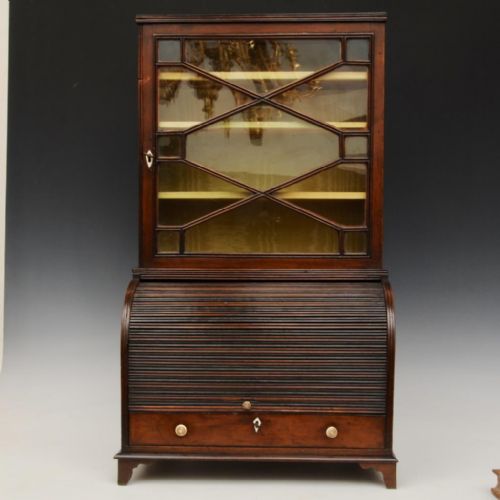

Dark Mahogany Cylinder Desk
These dark mahogany cylinder desk pieces offer enclosed writing surfaces and fine timber construction for the home study.
Dark Mahogany Cylinder Desk
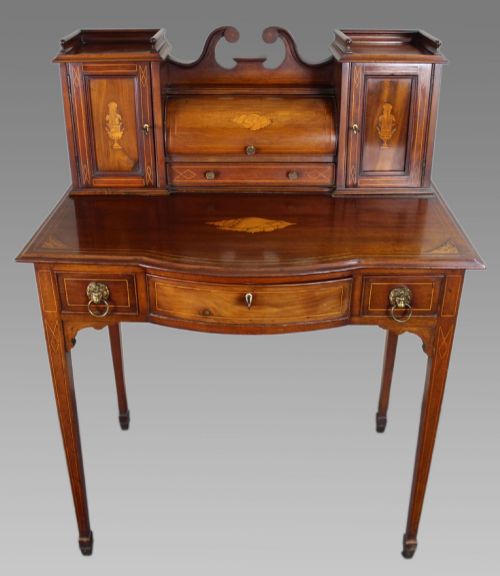
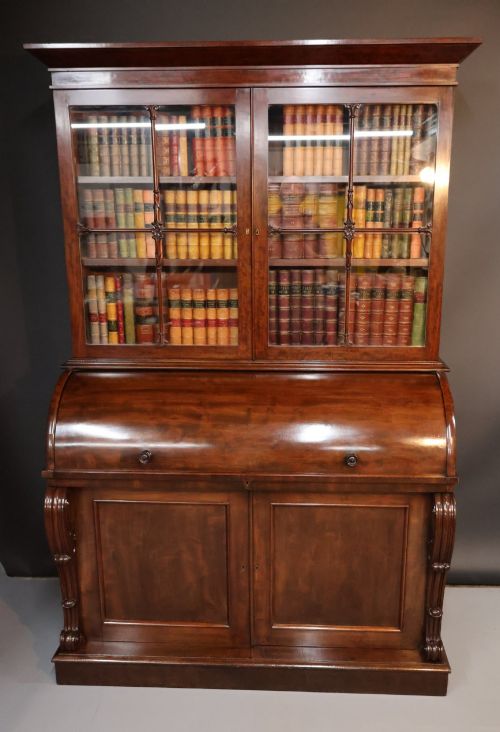
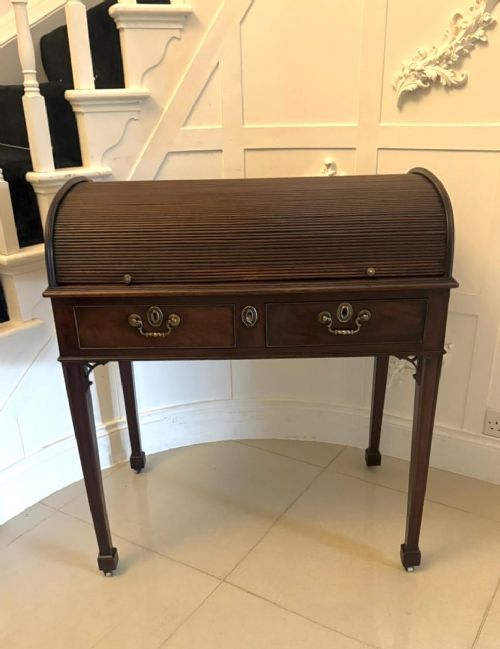
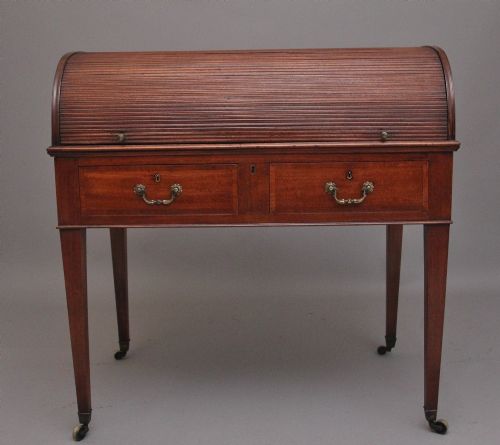
A dark mahogany cylinder desk is a form of writing furniture distinguished by its curved, rolling shutter that encloses the desk surface when closed. These pieces appear across several periods including the Georgian, Victorian, and Edwardian eras, as well as specific reigns like William IV and the English Regency.
The versions most commonly met on this page span the nineteenth century, ranging from compact George III examples to large pedestal and bureau bookcase formats. Makers and workshops applied revival influences such as Louis XVI style and Chippendale style alongside classic Sheraton proportions.
Beyond standard writing desks, the category encompasses related forms like tambour desks and miniature furniture variants. Buyers encounter variations in scale, from small tabletop pieces to massive kneehole layouts intended for substantial studies.
Materials and construction
Construction relies heavily on solid and veneered mahogany, frequently selected for rich grain patterns including flame mahogany. Cabinetmakers integrated contrasting timbers such as satinwood and partridgewood for interior details and banding.
Hardware and mounts incorporate polished brass and ormolu, while writing surfaces are traditionally inset with panels of leather. Glazed doors appear on bookcase sections where upper compartments form part of the cabinet.
Listings feature mahogany, brass, leather, and ormolu across 19th-century and Edwardian periods.
The markers of quality
Quality rests upon the selection of timber and the precision of the rolling cylinder mechanism. Fine grain figuring in flame mahogany and the integration of secondary woods like satinwood indicate superior workshop standards.
The architectural execution of details, from brass fittings to internal pigeonholes and pull-out writing slides, separates standard production from exceptional cabinetwork.
The Dark Mahogany Cylinder Desk Glossary
- Cylinder desk
- A writing desk featuring a curved, quarter-circle wooden shutter that rolls back to reveal the writing surface and interior drawers. This mechanism conceals papers when the desk is shut.
- Tambour
- A flexible shutter formed of narrow strips of wood glued to canvas or leather backing, allowing it to slide along a track. It serves a similar enclosing function to the solid cylinder front.
- Flame mahogany
- A veneer cut from the fork of the mahogany tree where the branch joins the trunk. It creates a distinctive, fiery flame-like pattern across the wood.
- Ormolu
- Gilded bronze used for decorative mounts and fittings on furniture. It adds metallic contrast to the dark wood surface.
- Kneehole desk
- A desk with a central recess for the sitter's legs, flanked by pedestals of drawers. It provides a stable freestanding workspace.
Dark Mahogany Cylinder Desk: Frequently Asked Questions
What is a cylinder desk?
A cylinder desk is a form of writing furniture featuring a curved wooden roll-top that encloses the desk interior. When pulled down, the shutter hides the writing surface and pigeonholes from view.
These pieces combine the enclosed security of a bureau with the practical workspace of a traditional writing table. They served as primary desks for correspondence in formal homes.
How do I date a mahogany desk?
Dating relies on stylistic markers, construction methods, and the specific characteristics of the mahogany timber used. Pieces span Georgian, Regency, William IV, and Victorian periods.
Examination of the interior drawers, secondary woods, and brass hardware helps determine the manufacturing era. Cabinetmakers altered proportions and decorative motifs across these decades.
Where were these desks used?
These desks were designed for private studies, libraries, and drawing rooms in large period houses. They held writing materials, correspondence, and ledgers for household management.
The lockable cylinder mechanism allowed owners to secure private papers without moving them to a separate cabinet.
What is tambour construction?
Tambour construction uses narrow wooden slats fastened to a flexible backing fabric to form a rolling shutter. This technique allowed makers to curve wood around corners where solid panels would fail.
It appears on desks and writing cabinets as an alternative to the solid quarter-cylinder front.