

Dark Mahogany Book Shelving
Dark mahogany book shelving brings warmth and deep timber tones to a room, offering practical storage for volumes while grounding the interior with traditional cabinetmaking.
Dark Mahogany Book Shelving
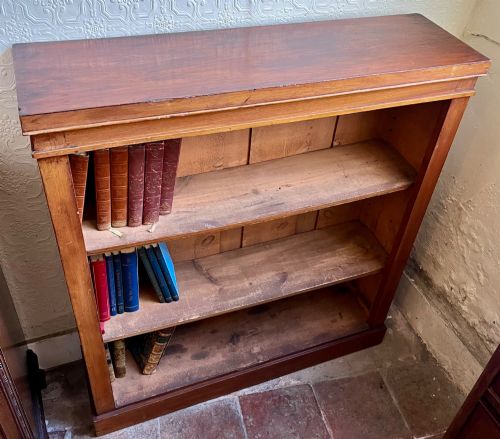
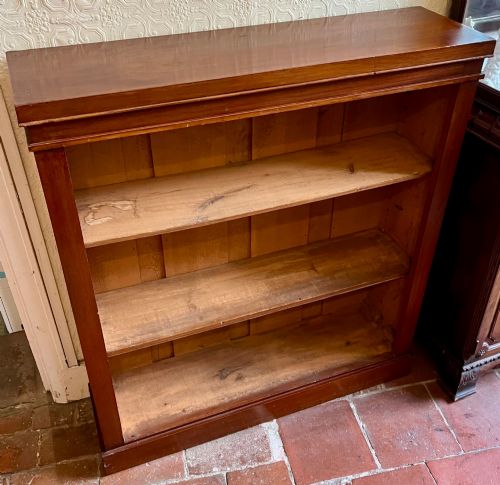
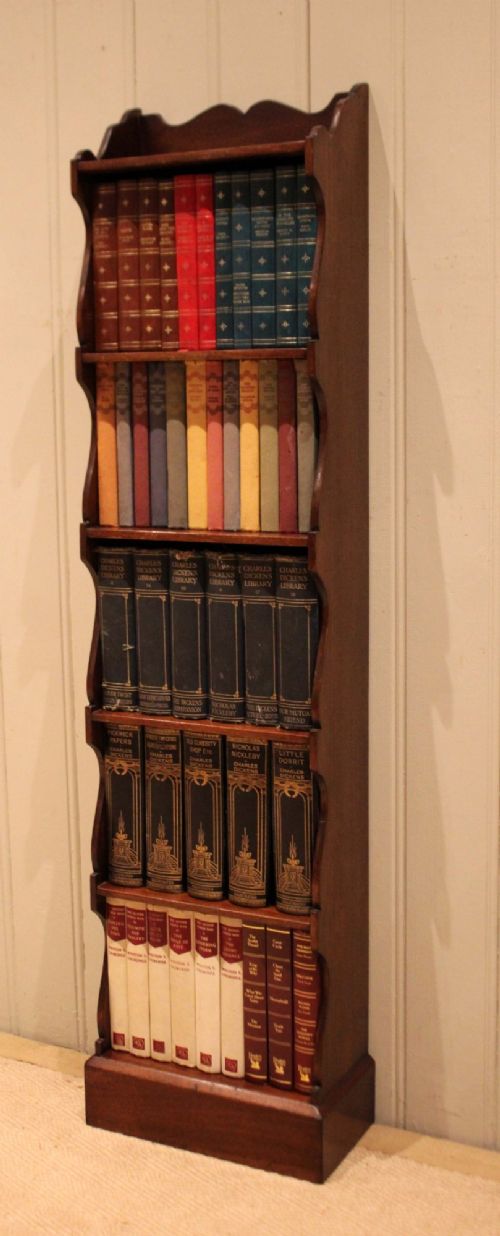
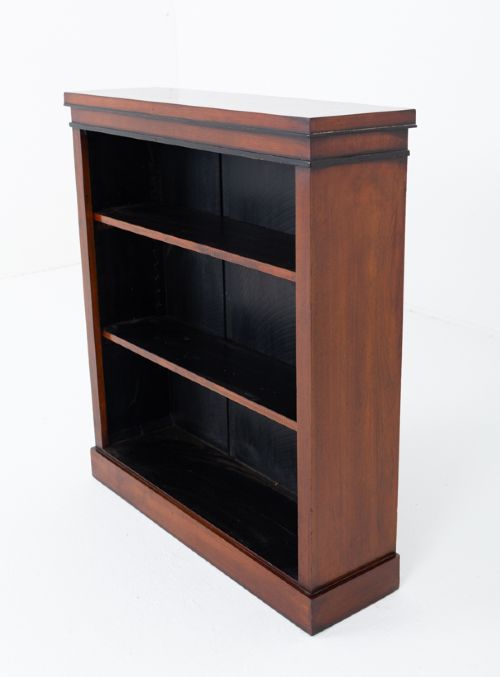
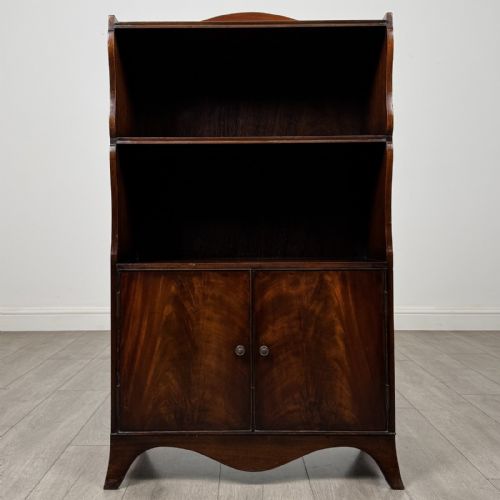
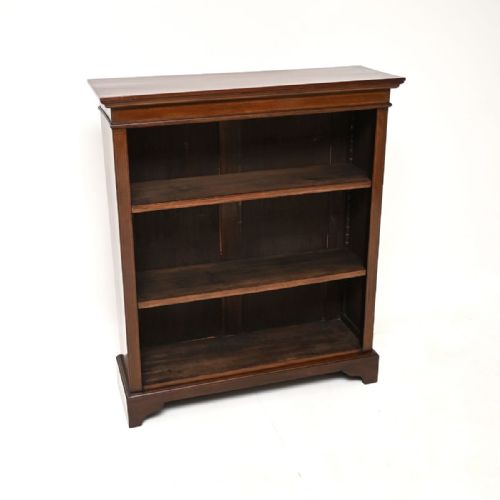
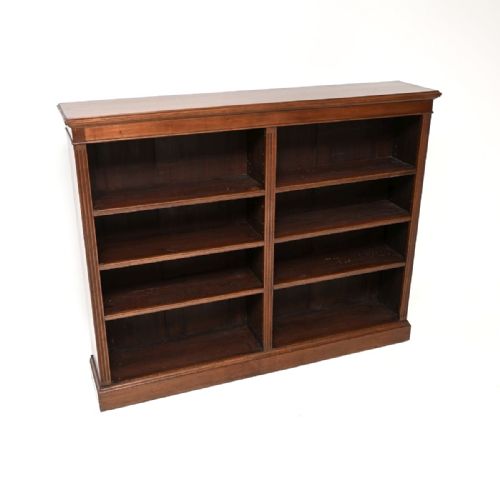
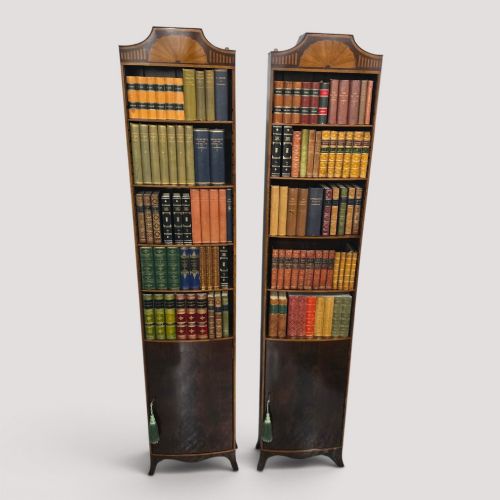
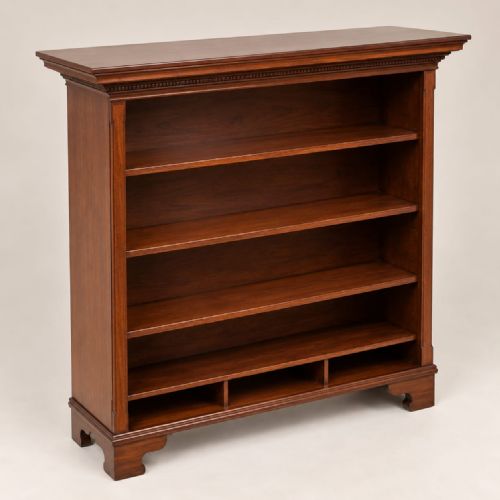
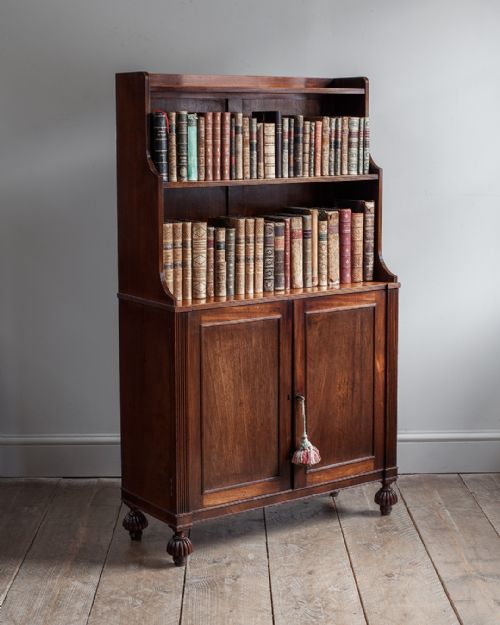
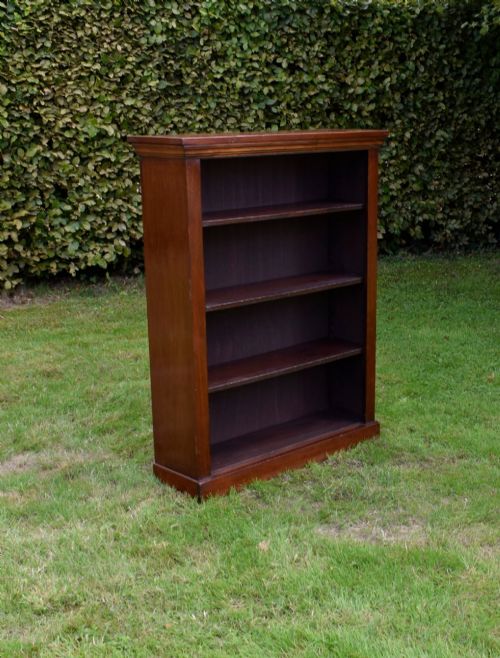
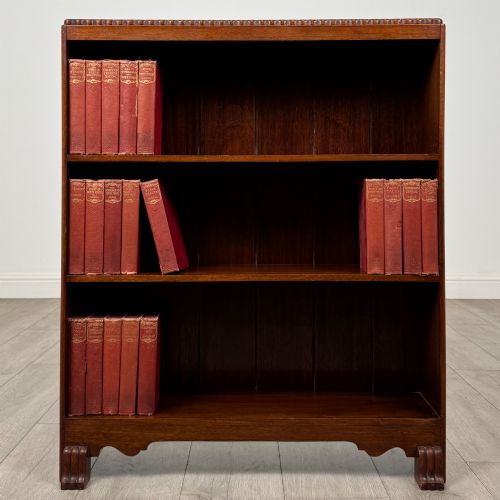
When you search for dark mahogany book shelving, you encounter open bookcases, tiered whatnots, narrow wall units, and sectional stacking systems designed to hold libraries of various sizes. These pieces span from the Georgian and Regency eras through the Victorian period and into the Edwardian and early twentieth century. The version you are most likely to meet on this page is the open-front mahogany bookcase, often fitted with adjustable shelving and sometimes displaying subtle inlay work.
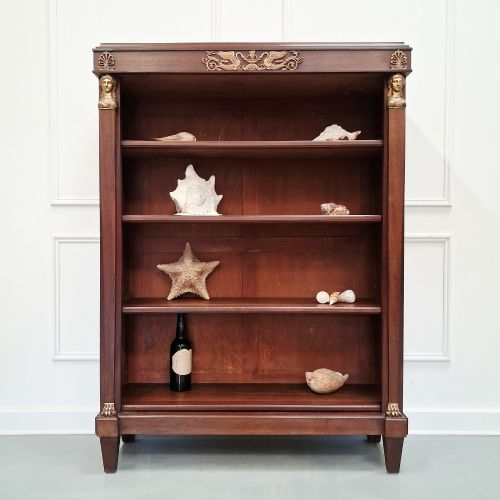
The forms range from compact corner cabinets and four-tier étagères to large library bookcases and breakfront cabinets. Makers utilised rich mahogany timbers combined with brass, glass, pine, and leather accents to create functional furniture for studies, parlours, and drawing rooms. Whether you select a tall nineteenth-century bookcase or an Edwardian open unit, these items combine display space with sturdy book storage.
How they were made
Cabinetmakers constructed these pieces primarily from solid mahogany and mahogany veneers, often incorporating pine for internal carcases and backing boards. Timber selection focused on rich grain patterns and deep natural colour, which workshops polished to a warm finish. Brass fittings, such as shelf racks, castors, and handles, appear alongside glass doors and leather trim.
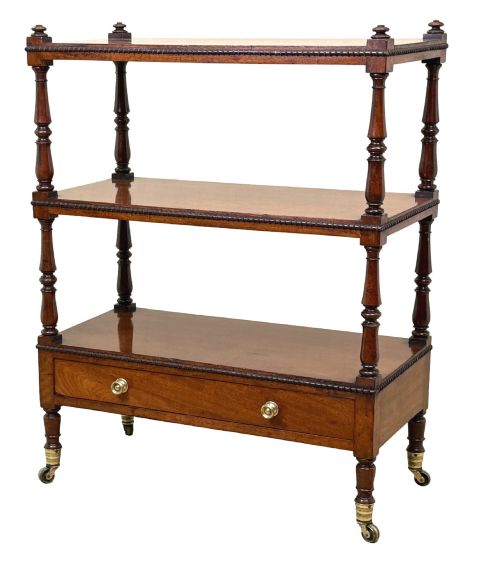
Construction methods varied from traditional dovetailed joints and pegged framing in Georgian and Victorian workshops to sectional stacking mechanisms in later twentieth-century designs. Tiered whatnots and waterfalls utilised slender turned supports and precise joints to maintain stability across multiple levels of shelving. Inlaid details in satinwood or contrasting woods occasionally decorate Edwardian panels.
Dark Mahogany Book Shelving Retail Price Guide 2026
Typical asking prices for dark mahogany book shelving among the pieces listed under this phrase on Sellingantiques today, from the lower quarter to the upper quarter. They describe what is for sale here now, not the wider market.
Materials recorded across the inventory include solid mahogany, mahogany veneers, brass, glass, pine, rosewood, leather, and satinwood.
What varies in quality
Quality in these pieces rests upon the selection of the timber and the integrity of the cabinet construction. Finer examples display carefully matched mahogany veneers, solid timber backs, and well-executed decorative details like carving or fine inlay work. Simpler pieces rely on straightforward pine carcases faced with mahogany, serving a purely utilitarian purpose.
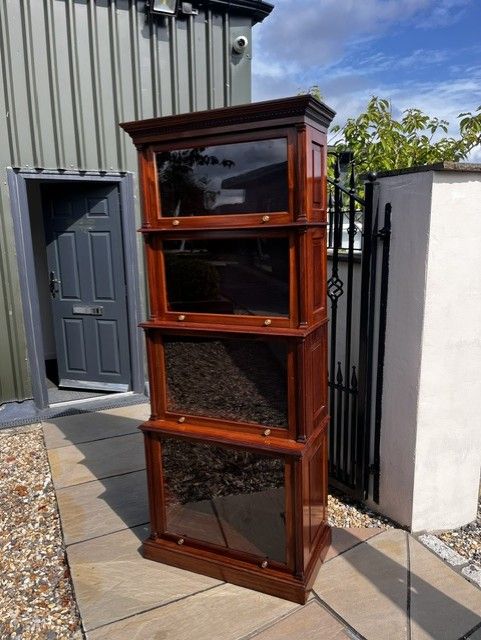
The sophistication of the mechanism and hardware also distinguishes the tiers of manufacture. Adjustable shelving systems utilising brass pins and rack strips indicate higher workshop standards than fixed shelving secured with simple screws. Stacking barrister bookcases rely on smooth mechanical operation of their glazed doors to demonstrate superior period engineering.
Gillows·Waring and Gillows·Globe Wernicke
The Dark Mahogany Book Shelving Glossary
- Waterfall bookcase
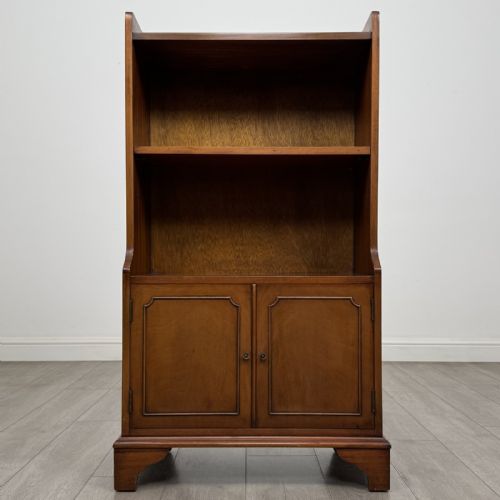
- A set of open shelves that steps back progressively from bottom to top, creating a terraced profile popular in the Regency period.
- Whatnot
- A piece of freestanding furniture consisting of several open shelves tiered above one another, used for displaying books or decorative objects.
- Barrister bookcase
- A sectional stacking bookcase with glazed doors that lift and slide inward above each shelf, popular in the early twentieth century.
- Étagère
- A piece of furniture with a number of open shelves for holding small articles or books, often lighter in proportion than a standard bookcase.
- Breakfront
- A large cabinet or bookcase where the central section projects forward from the flanking sections, creating architectural depth.
Dark Mahogany Book Shelving: Frequently Asked Questions
How do I adjust the shelves?
Many Victorian and Edwardian open bookcases use brass rack strips set into the interior sides, allowing small support clips to move up and down freely. You simply lift the shelf off the clips and relocate them to the desired height.
Older Georgian pieces often feature fixed shelving or rely on traditional wooden support fillets screwed into the interior carcase. For these variants, altering shelf heights requires professional carpentry intervention.
Are these bookcases suitable for heavy books?
Solid mahogany construction and sturdy pine carcases provide substantial load-bearing capacity for standard libraries and heavy reference volumes. Adjustable models with strong brass supports handle weight reliably across wider spans.
However, delicate waterfall units or narrow four-tier whatnots suit lighter reading material and decorative displays rather than heavy folio collections.
How do I tell a Regency piece from a Victorian one?
Regency dark mahogany book shelving typically exhibits cleaner classical lines, lighter proportions, and often incorporates brass gallery rails or delicate turned columns. Timber finishes from this era tend to show a rich, warm reddish-brown hue.
Victorian pieces generally appear heavier and more robust, frequently incorporating deeper plinths, carved corbels, and adjustable library shelving mechanisms developed later in the nineteenth century.
How do I care for the mahogany finish?
Maintain the surface by dusting regularly with a soft, dry cloth to prevent particulate accumulation. Periodically applying a traditional beeswax polish nourishes the timber and preserves the depth of the mahogany grain.
Keep the furniture away from direct sunlight and heat sources to prevent the timber from drying out or the polish from fading over time.