
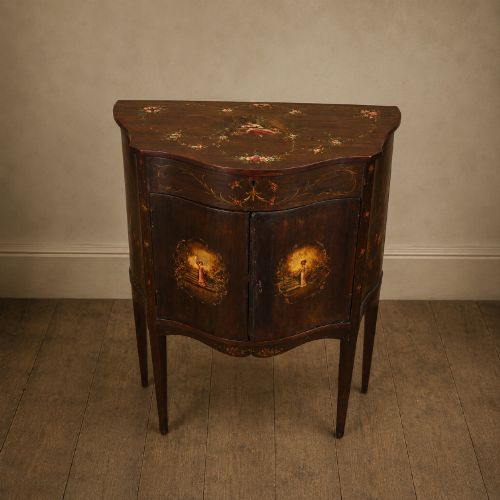

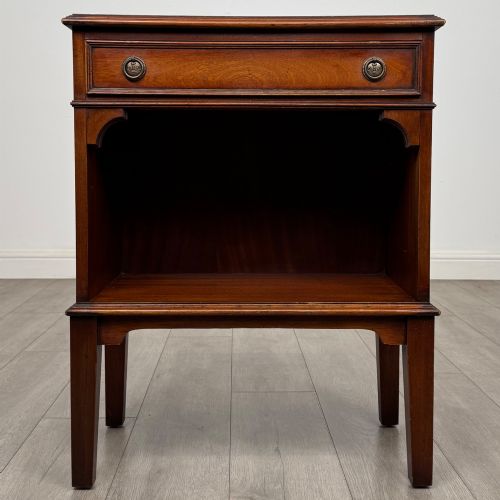
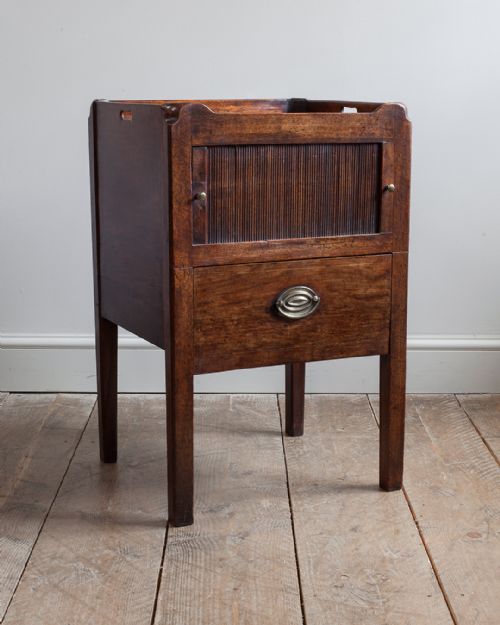
Dark Mahogany Bedside Cabinet
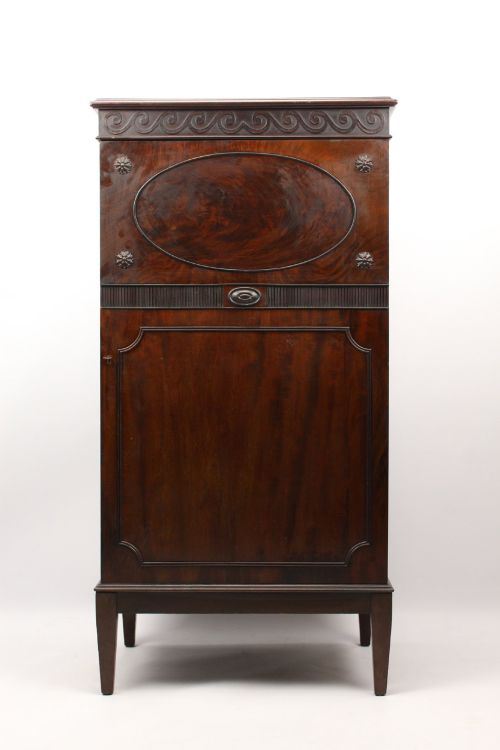
A dark mahogany bedside cabinet brings rich timber and practical form beside the bed, holding necessities out of sight.

Dark Mahogany Bedside Cabinet
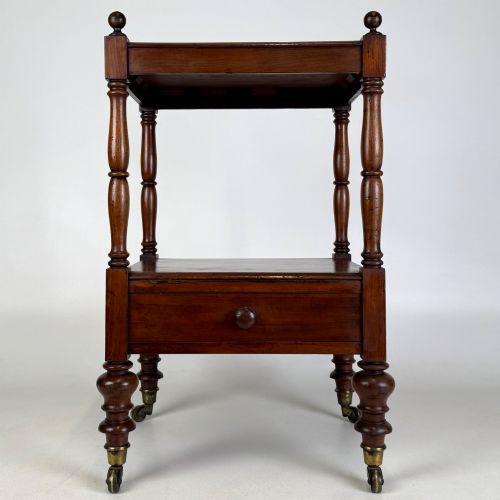
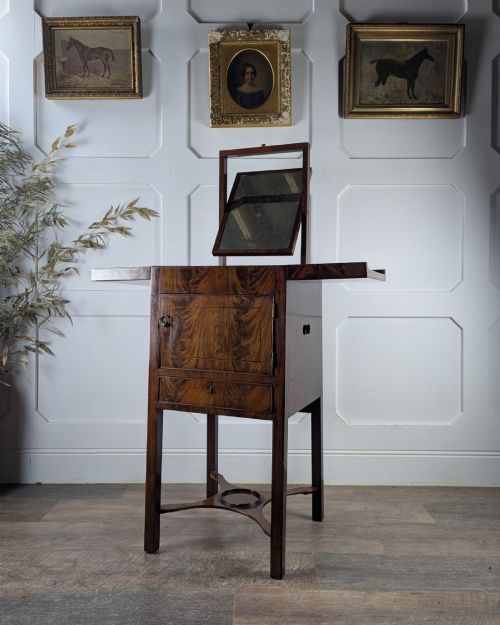
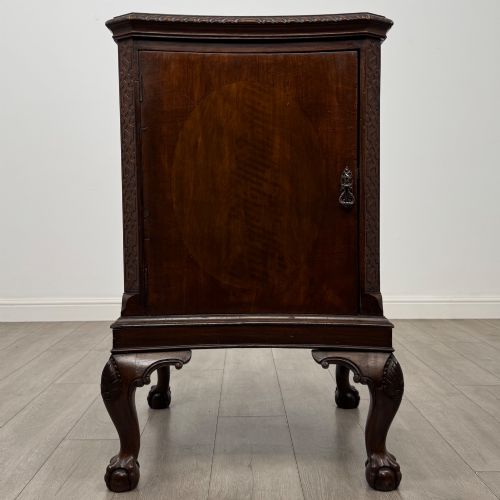
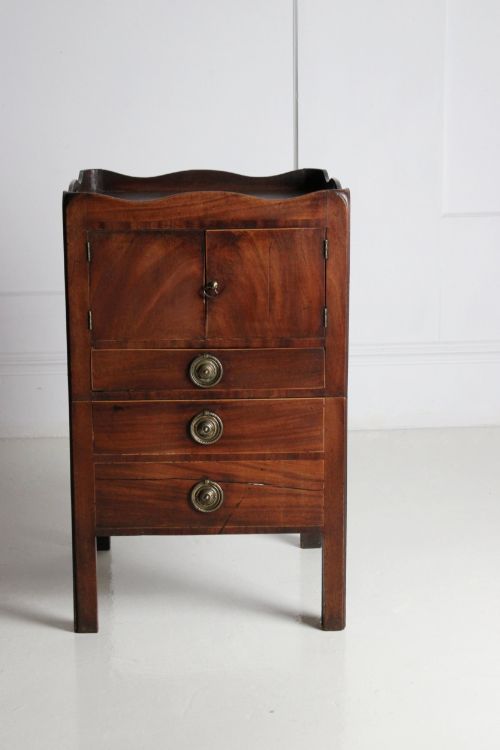
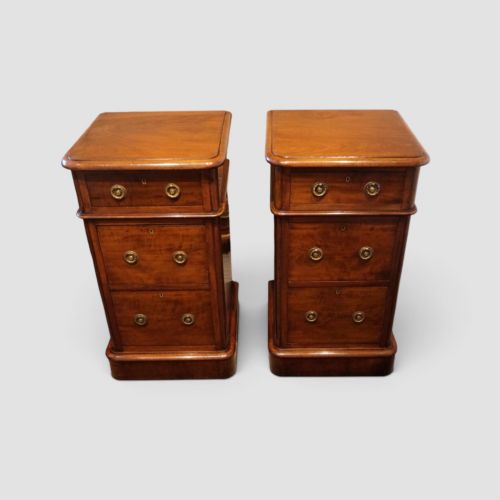
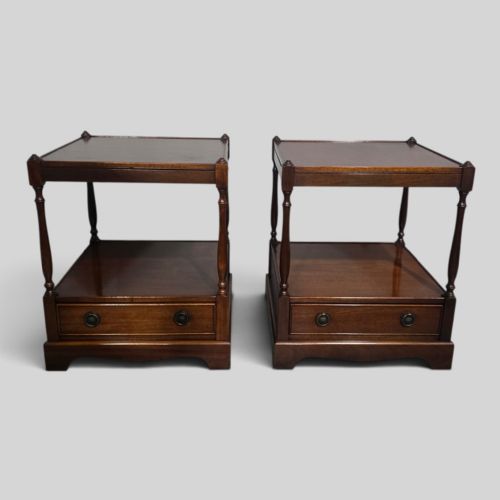
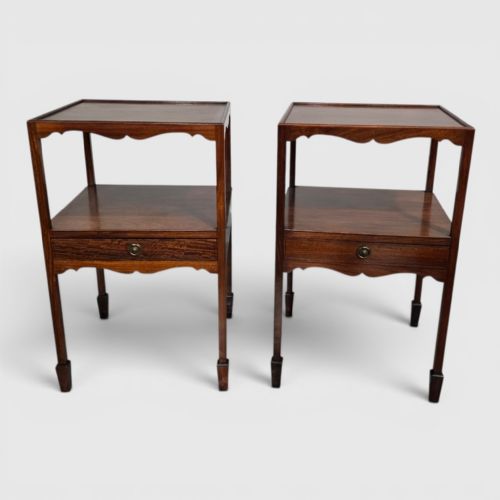
When you search for a dark mahogany bedside cabinet, you enter a field dominated by pieces spanning the eighteenth, nineteenth, and early twentieth centuries. The selection encompasses Georgian pot cupboards, Victorian nightstands, Edwardian pedestal cabinets, and Regency cylindrical forms, alongside revival pieces from later decades. These items served intimate daily duties in period bedchambers, evolving from enclosed commodes and washstands into dedicated lamp tables and bedside chests.
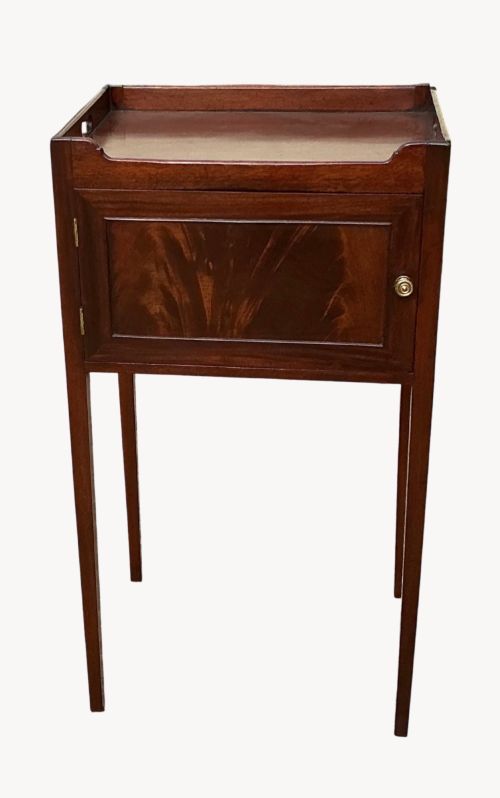
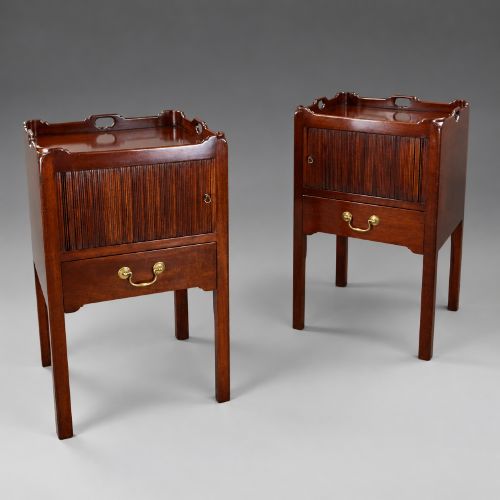
The version you are most likely to meet on this page is the nineteenth-century Victorian pot cupboard or the eighteenth-century Georgian bedside cabinet. These traditional forms frequently feature single doors enclosing interior shelving or storage space, occasionally accompanied by small drawers or tray tops designed to contain water jugs and personal items. Proportions remain compact by design, ensuring the furniture fits neatly beside period bed frames without dominating the room.
Timbers and construction methods
Makers utilised dense native and imported timbers, frequently selecting Cuban mahogany and flame-mahogany veneers for their rich grain patterns and depth of tone. Construction relied upon traditional joinery techniques, uniting solid carcases with dovetailed drawers and panelled doors that accommodated the natural movement of the wood over time.
Surface enrichment often involved contrasting details such as boxwood inlay, delicate hand painting, or applied ormolu mounts in French Empire examples. Finishing coats of polish deepened the natural hue of the mahogany, creating the characteristic dark, reflective sheen valued by collectors.
Some nineteenth-century bedside cabinets doubled as deception tables, pretending to be respectable writing desks until opened.
Assessing craftsmanship and proportion
Quality in a dark mahogany bedside cabinet rests upon the selection of timber and the precision of the cabinetmaker's joinery. Superior examples display continuous, well-matched grain across drawer fronts and doors, whereas lesser pieces rely on simpler construction with plain, unfigured wood.
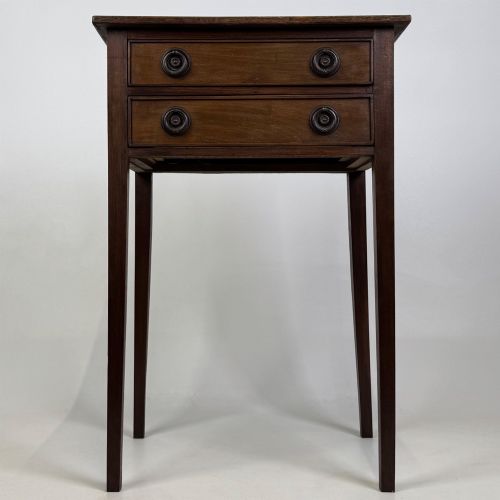
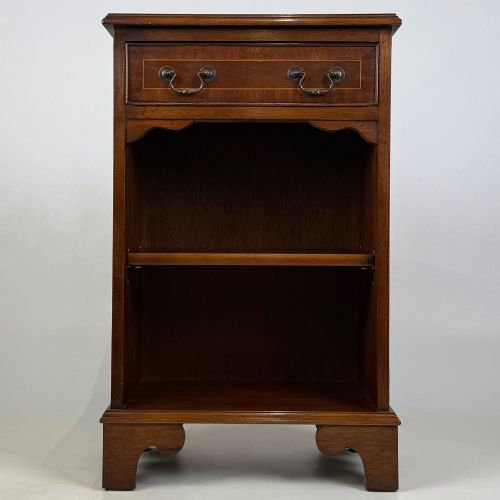
The handling of architectural details also distinguishes finer items, from crisp mouldings and neat boxwood stringing to the integrity of original brass handles and turning on the legs. Structural honesty, such as uncompromised timber thickness in the carcase and original internal fittings, separates workshop masterpieces from standard domestic furniture.
Denby & Spinks·Gillows
The Dark Mahogany Bedside Cabinet Glossary
- Cuban mahogany
- A dense, heavy timber sourced from the Caribbean, prized for its dark colour and fine grain. Cabinetmakers favoured it for high-status furniture during the eighteenth and nineteenth centuries.
- Pot cupboard
- A small enclosed bedside cabinet designed originally to house a chamber pot. These pieces usually feature a single door above a concealed interior compartment.
- Flame-mahogany
- A veneer cut from the fork of the mahogany tree where the branch meets the trunk. This method yields a distinctive, swirling flame-like pattern across the wood surface.
- Tray top
- A raised rim edging the top surface of a small table or cabinet. This feature prevented items from rolling off the surface during use in the bedchamber.
- Serpentine
- A curved furniture front characterised by a convex centre flanked by concave ends. This contour requires skilled woodworking to shape accurately.
Dark Mahogany Bedside Cabinet: Frequently Asked Questions
What is a dark mahogany bedside cabinet?
A dark mahogany bedside cabinet is a compact wooden storage piece designed to stand beside a bed. These items originate predominantly from the Georgian, Victorian, and Edwardian eras.
Historically, they functioned as nightstands, pot cupboards, or washstands before evolving into the lamp tables and bedside chests recognised today.
How were these cabinets used originally?
In period bedchambers, these cabinets served a variety of private domestic needs. They concealed chamber pots, held chamber candlesticks, and stored personal night-time belongings.
Over successive decades, their utility shifted toward supporting bedside lighting, reading material, and small personal clocks within reach of the bed.
How do I identify a Georgian piece?
Georgian cabinets often display restrained classical proportions, solid mahogany construction, and simple panelled doors. Details such as bracket feet or straightforward square legs are typical of the period.
Makers of this era focused on timber figure and structural utility rather than heavy surface ornamentation, resulting in clean, functional silhouettes.
How do I care for mahogany furniture?
Mahogany requires stable room environments away from direct heat sources and strong sunlight to prevent the timber from drying or fading. Regular dusting with a soft, dry cloth preserves the finish.
Applying occasional appropriate wax polish helps nourish the grain and maintains the deep lustre characteristic of period pieces.