




Dark Hardwood Throne Chairs
Dark hardwood throne chairs carry deep carving and commanding presence, making them the ultimate statement seating for a dramatic interior.
Dark Hardwood Throne Chairs
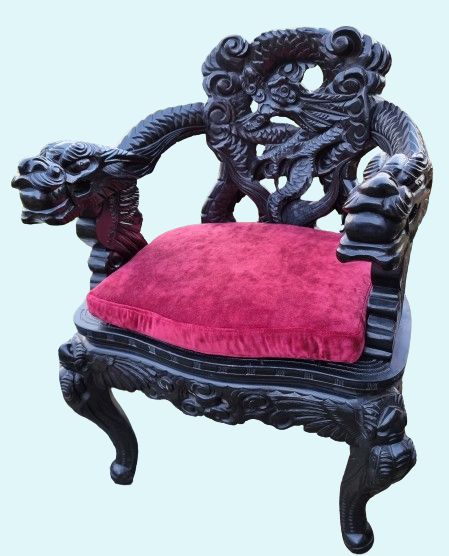
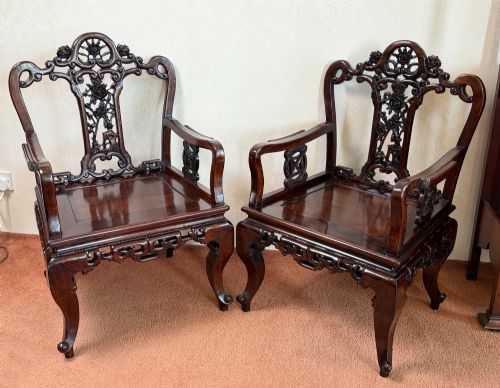
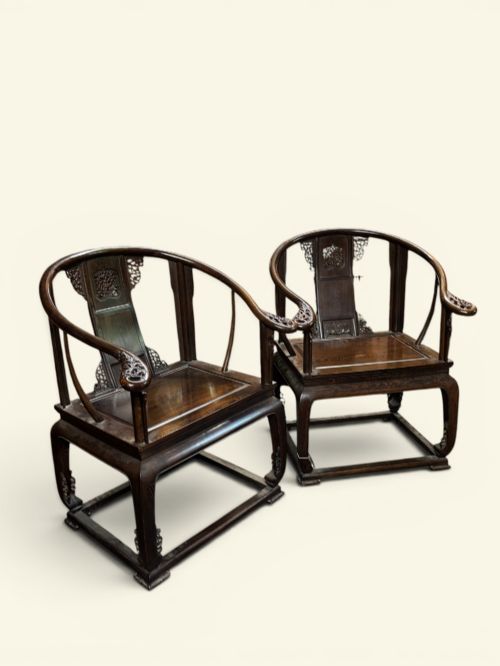
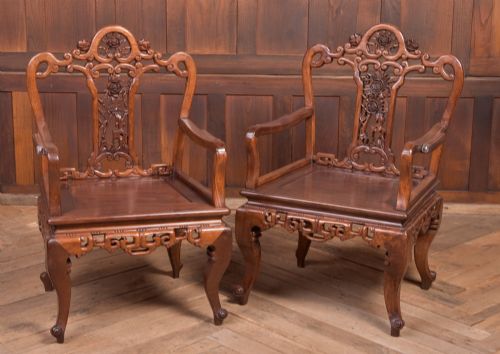
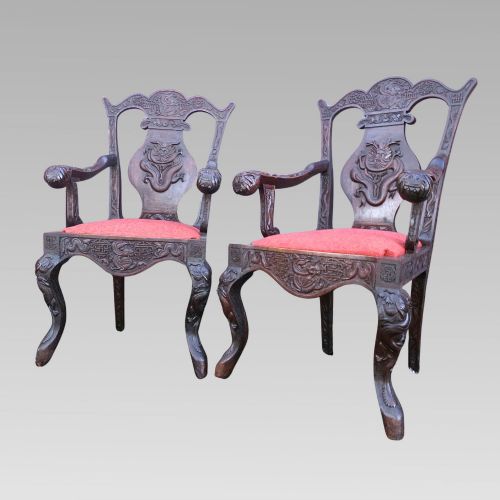
Dark hardwood throne chairs represent substantial seating options shaped by diverse cultural traditions, appearing frequently in nineteenth-century Oriental and Anglo-Indian designs. These pieces often take the form of armchairs, horseshoe-back chairs, or matching sets designed to command attention in a room.
The selections on this page span several decades, notably the nineteenth century, with specific examples dated around eighteen-eighty, eighteen-ninety, nineteen-hundred, and nineteen-twenty. Buyers encountering these listings will find distinct regional variations, from Chinese Qing Dynasty creations to Burmese and Indian Moghul iterations.
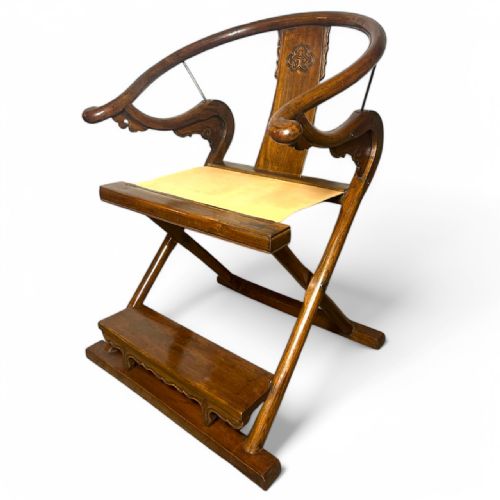
Forms extend beyond single armchairs to include pairs, folding horseshoe-back throne chairs, and occasionally hall furniture or settles. Each piece utilises dense timber to support elaborate sculptural work that defines the character of the seating.
How they were made
The construction of dark hardwood throne chairs relies on dense timbers such as rosewood, teak, and hongmu. These heavy materials provide the structural integrity required to support deep, intricate carving without compromising the frame.
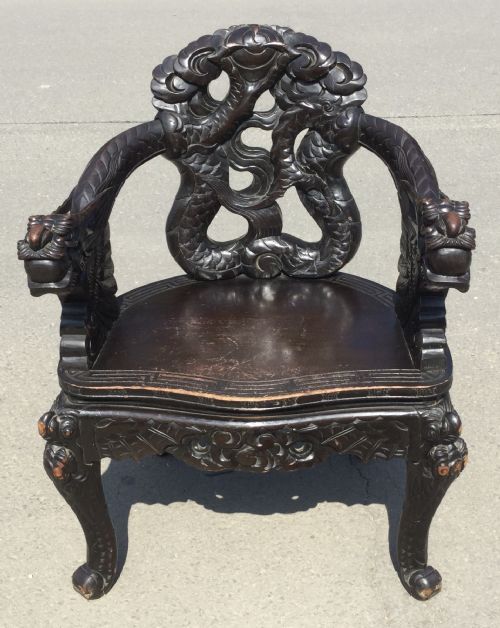
Joinery and sculptural techniques involve profuse hand carving directly into the wood, frequently depicting traditional motifs like dragons or ceremonial patterns. Certain pieces incorporate contrasting elements like marble inserts or velvet upholstery to soften the dense wooden structures.
Materials recorded across the inventory include rosewood, teak, marble, velvet, hongmu, and general dark hardwood.
What varies in quality
The standard of carving distinguishes superior dark hardwood throne chairs from simpler versions. Crisp, deeply undercut relief work executed with precision elevates a piece above shallow or hurried ornamentation.
The choice of timber and the preservation of the original surface condition also determine the standing of an item. Dense, highly figured rosewood or hongmu paired with intact structural joinery commands greater attention from collectors.
The Dark Hardwood Throne Chairs Glossary
- Hongmu
- A category of dense, dark tropical hardwoods prized in Chinese furniture making. It translates literally to red wood and provides a heavy, durable base for intricate carving.
- Horseshoe-Back
- A chair design featuring a continuous curved crestrail that sweeps forward to form the armrests. This ancient form supports an upright posture while offering ergonomic support.
- Qing Dynasty
- The final imperial dynasty of China, spanning from sixteen-forty-four to nineteen-installed-twelve. Furniture from this period is characterised by ornate carving and imposing proportions.
- Anglo-Indian
- A style describing items made in India by local artisans for British patrons during the colonial period. It blends traditional Indian carving profusion with European furniture forms.
Dark Hardwood Throne Chairs: Frequently Asked Questions
How do I identify a Qing Dynasty throne chair?
Qing Dynasty examples typically feature heavy proportions and deep, symbolic carving such as dragons or floral motifs. They utilise dense hardwoods like hongmu and rosewood.
Examining the construction methods and the crispness of the hand-carved details helps separate genuine nineteenth-century period pieces from later interpretations.
Where should I place a throne chair at home?
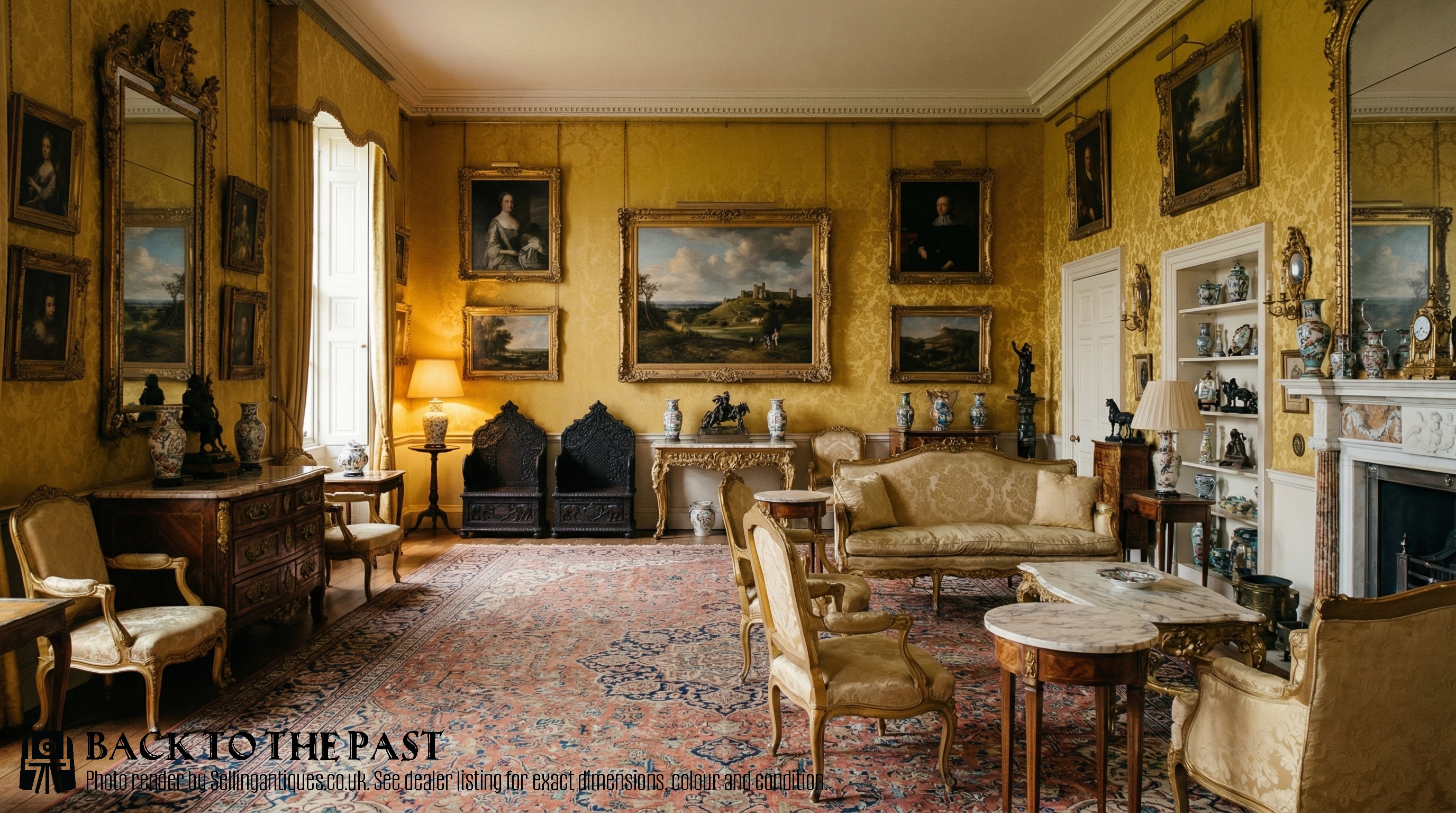
These imposing seats demand space to be fully appreciated, working well as focal points in large living rooms, studies, or entrance halls. Pairing them with simpler surroundings lets the intricate woodwork stand out.
Ensure the floor can support the substantial weight of dense tropical hardwoods before positioning them permanently.
What is the difference between rosewood and hongmu?
Rosewood is a broad botanical classification known for distinct grain patterns and heavy weight. Hongmu is a specific traditional Chinese term encompassing various dense, dark exotic hardwoods.
Both materials were chosen for throne chairs because they accept fine, sharp detail without chipping during carving.
Are horseshoe-back chairs comfortable to sit in?
The curved rail supports the arms and back simultaneously, distributing weight evenly across the upper body. They were designed for upright ceremonial or scholarly use rather than lounging.
Adding a custom silk or velvet cushion can make daily seating more practical without altering the historical frame.