




Dark Green Study Desk
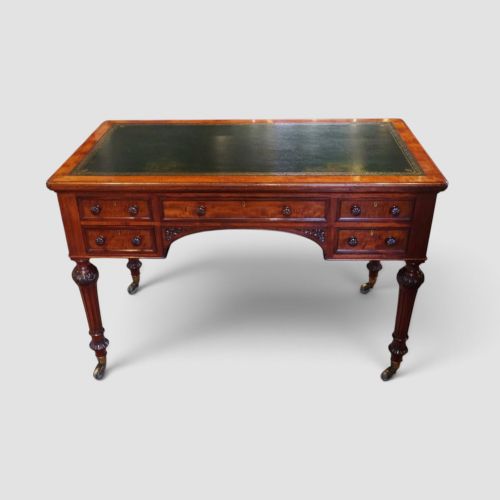
A dark green study desk brings a strong traditional tone to a room, offering practical writing surfaces paired with rich coloured leather.
Dark Green Study Desk
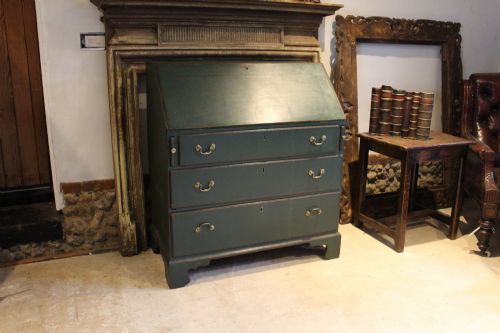
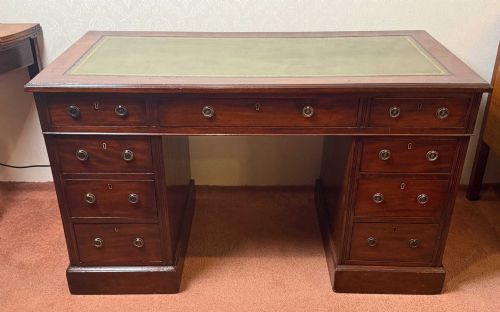
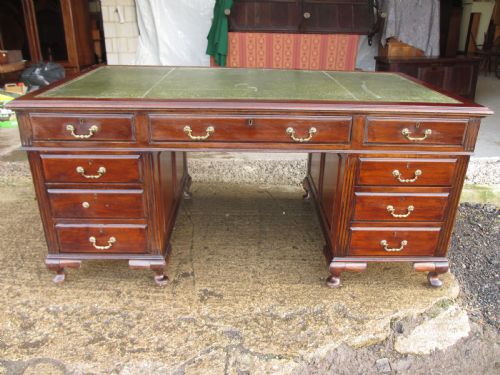
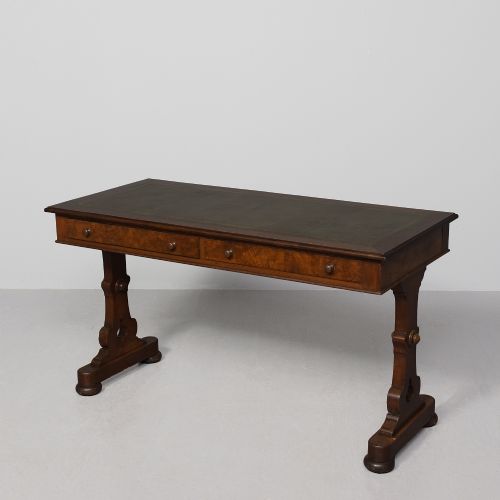
When you search for a dark green study desk, you find an assortment of antique writing furniture, including pedestal desks, writing tables, and bureaus spanning from the eighteenth century to the Edwardian period. These pieces generally feature inset leather writing surfaces in deep green shades, paired with timber carcases.
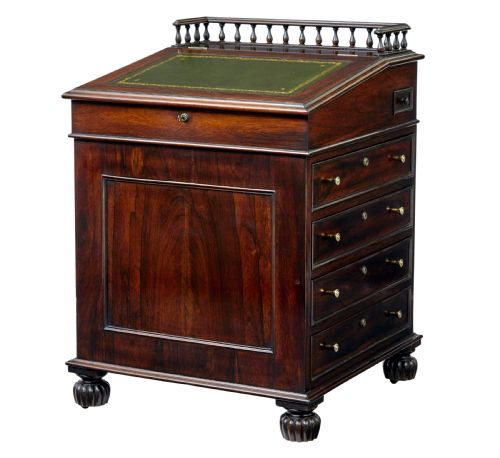
The selection on this page leans heavily towards nineteenth-century walnut and mahogany examples, alongside Georgian and Edwardian designs. You will encounter pedestal desks, kneehole writing desks, and Davenport desks, often accompanied by matching study chairs and armchairs.
Makers such as Holland & Sons and Gillows of Lancaster appear among the listings, alongside simpler vernacular pieces. Forms range from partners desks designed for two users to compact ladies writing desks suitable for domestic studies.
What varies in quality
The distinction between ordinary and exceptional pieces lies in the selection of timbers and the crispness of carved or inlaid details. Finer examples display superior timber grain matching, substantial solid brass mounts, and meticulous attention to secondary woods used in drawer linings.
Attribution to documented workshops like Gillows or Holland & Sons elevates a piece through proven standards of construction and design proportion. Additionally, the survival of original leather surfaces and matching desk chairs adds considerably to the integrity of the ensemble.
Dark Green Study Desk Retail Price Guide 2026
Typical asking prices for dark green study desk among the pieces listed under this phrase on Sellingantiques today, from the lower quarter to the upper quarter. They describe what is for sale here now, not the wider market.
The inventory records various writing forms including Davenport desks, bureau plat tables, and large partners desks equipped with leather inserts.
Holland & Sons·Gillows of Lancaster
The Dark Green Study Desk Glossary
- Pedestal desk
- A heavy freestanding writing desk comprising two supporting pedestals of drawers with a central desktop section. These typically feature inset leather tops and substantial storage capacity.
- Partners desk
- A large double-sided pedestal desk built with drawers and cupboards on both faces, allowing two people to work opposite one another. These pieces originated to accommodate business partners or banking colleagues.
- Bureau plat
- A freestanding French writing table featuring a rectangular top with a leather writing surface and one or more drawers in the frieze. These tables rest on slender or cabriole legs rather than pedestals.
- Davenport
- A compact nineteenth-century writing desk featuring a sloping, hinged desktop over a side-opening pedestal of drawers. They were originally designed for space-saving domestic use in studies and boudoirs.
Dark Green Study Desk: Frequently Asked Questions
How do I style a dark green study desk?
Pair the desk with traditional seating such as a mahogany Gainsborough chair or an oak desk chair to maintain historical continuity. Position the piece to allow natural light across the green leather writing surface.
Keep surrounding decor complementary by using neutral wall colours that highlight the rich timber tones and the deep green leather insert. Brass desk accessories echo the original hardware found on these period tables.
How do I care for antique leather desk inserts?
Maintain the green leather surface by dusting it regularly with a dry, soft cloth to prevent particulate accumulation. Avoid placing hot cups or moisture directly onto the leather to protect the finish.
Periodically apply specialised leather balms recommended for antiques to keep the material supple. This prevents the surface from drying out or cracking over time.
How can I tell a Victorian desk from a Georgian one?
Georgian desks, dating from the eighteenth century, frequently employ simpler geometric proportions, classical bracket feet, and distinct cabinetmaking techniques. Mahogany and oak predominate, often with restrained crossbanding and understated brass handles.
Victorian pieces often display heavier proportions, more exuberant carving, and richer revival styles such as Renaissance Revival or French Empire influences. Walnut and heavily figured mahogany become more prominent in later nineteenth-century manufacturing.