






Dark Elm Console Table
Dark elm console table pieces are sturdy timber surfaces spanning centuries of Chinese provincial and European country craft, prized for deep patination.
Dark Elm Console Table
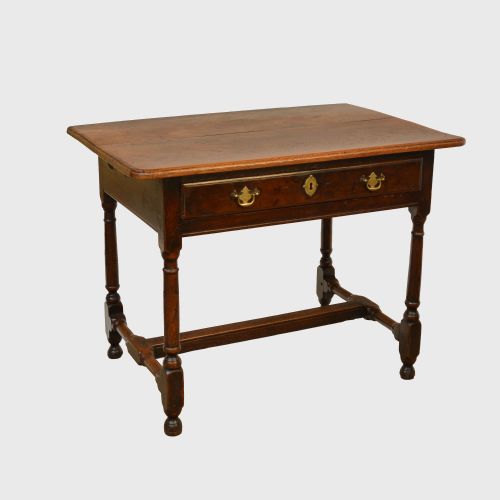
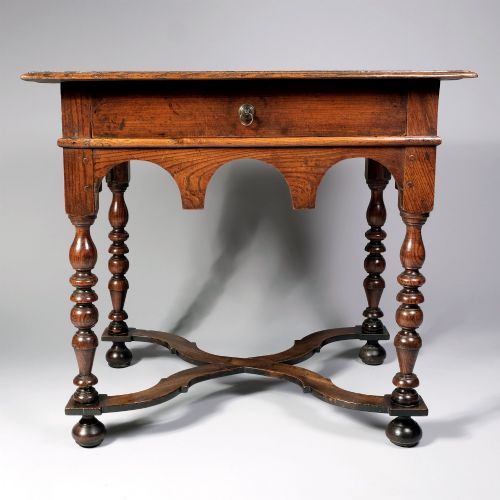
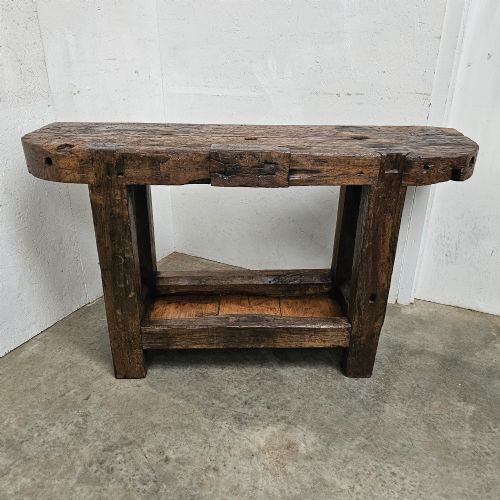
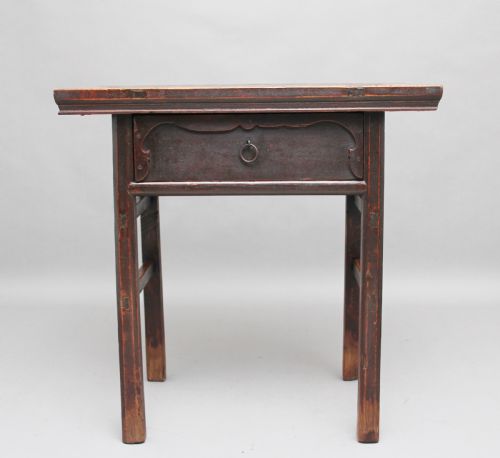
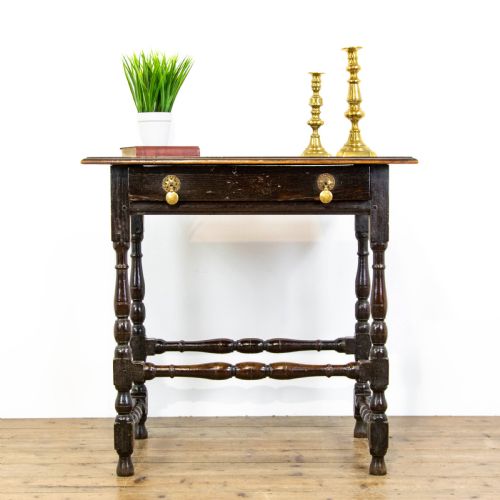
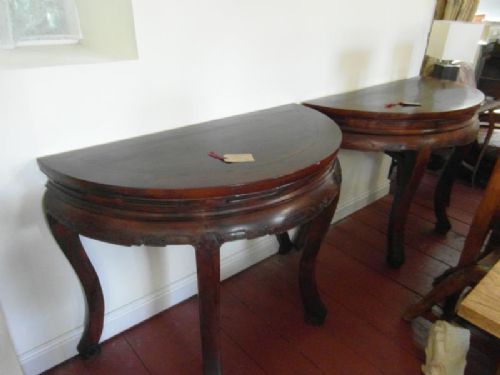
A dark elm console table brings together robust provincial construction and centuries of practical utility, spanning origins from European country workshops to Chinese provincial traditions. When buyers search for a dark elm console table, they encounter forms ranging from low altar tables and workbenches to side tables and tavern pieces.
The material selection leans heavily on elm, oak, yew, and hardwood, often framed by centuries including the seventeenth, eighteenth, and nineteenth periods. Most examples appearing here sit within Chinese provincial styles and Georgian country traditions, offering deep timber tones and straightforward construction.
How they were made
Makers utilised solid timbers such as elm, oak, and yew, frequently pairing plank tops with sturdy trestle or side structures. Construction methods relied on traditional joinery that accommodated the natural movement of dense timber over generations.
Surface finishes developed through decades of daily use, sometimes incorporating lacquer or simple oil treatments to protect the hardwood. Brass fittings occasionally appear on drawers and cabinets, complementing the dark grain of the primary timber.
Dark Elm Console Table Retail Price Guide 2026
Typical asking prices for dark elm console table among the pieces listed under this phrase on Sellingantiques today, from the lower quarter to the upper quarter. They describe what is for sale here now, not the wider market.
Listings feature elm, oak, yew, and hardwood across seventeenth, eighteenth, and nineteenth century periods.
What varies in quality
Quality rests in the depth of the timber's grain and the integrity of the original construction rather than decorative excess. Pieces retaining honest patination and minimal structural intervention stand apart from heavily restored examples.
Proportion and utility dictate the standing of each piece, distinguishing utilitarian workbenches and simple side tables from refined altar tables and Georgian tavern forms.
The Dark Elm Console Table Glossary
- Altar table
- A long, narrow table originating from Chinese domestic and ceremonial spaces, often featuring upturned flange ends. These pieces provide stable surfaces suited to display.
- Trestle table
- A table structure composed of horizontal beams supported by vertical legs or trestles. This method offers sturdy weight distribution for heavy timber tops.
- Patina
- The surface sheen and colour acquired by wood through decades of handling and ageing. A deep patina indicates long service and proper care.
- Plank-top
- A tabletop constructed from wide boards joined side by side. This construction method highlights the natural grain of elm and hardwood.
- Side table
- A small functional table designed to stand against a wall. These versatile forms appear frequently in country and provincial workshops.
Dark Elm Console Table: Frequently Asked Questions
What is a dark elm console table?
A dark elm console table is a sturdy timber surface originating from European country workshops or Chinese provincial traditions. These pieces function as side tables, altar tables, or workbenches.
They feature solid timber construction, often displaying deep grain patination developed over centuries of practical use.
How do I care for antique elm?
Antique elm requires consistent indoor humidity levels and protection from direct heat sources to prevent timber splitting. Regular dusting with a dry cloth preserves the original surface.
Avoid harsh chemical polishes that can degrade the historic finish and alter the natural timber tone.
Where were these tables made?
These tables originate from diverse regions, including European country houses and Chinese provincial workshops. Craftspeople utilised locally available hardwoods to build functional furniture.
Regional differences appear in the leg structures, joinery methods, and proportions of each table type.
How do I identify eighteenth century elm?
Eighteenth century elm displays distinct hand-cut joinery and dense grain patterns shaped by primitive hand tools. Signs of age include surface wear and timber movement consistent with period use.
Comparing construction details with known Georgian and Chinese provincial examples helps confirm the manufacturing era.