

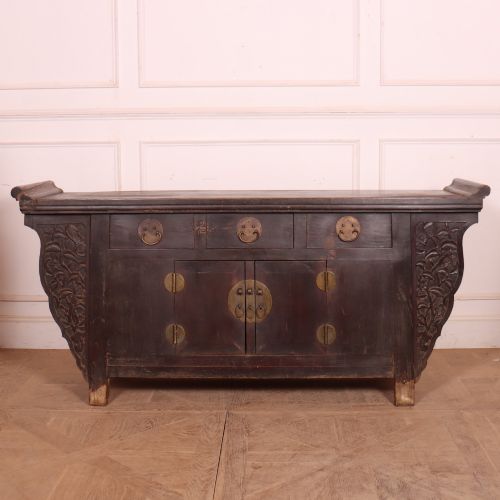


Lacquered Chinese Altar Table
A lacquered Chinese altar table brings striking surface depth and architectural form to a room, offering both history and utility.
Lacquered Chinese Altar Table
A lacquered chinese altar table typically presents as a long, narrow surface traditionally designed for ceremonial display, though domestic variants appear frequently in trade. These pieces originate from periods spanning the eighteenth and nineteenth centuries, often categorised under Qing Dynasty or Chinese regional styles.
The items found here include authentic altar tables alongside related forms like side cabinets, console tables, and half tables. Buyers frequently encounter nineteenth-century examples finished in red or black lacquer, sometimes utilising elm or other hardwoods beneath the finish.
How they were made
Construction relies heavily on traditional timber frames, with elm, pine, and general hardwoods providing the structural carcass for the finished surfaces. Artisans applied successive coats of lacquer to the wood, building a durable and lustrous exterior that often required meticulous polishing.
Metal elements such as brass appear as decorative mounts or functional hardware, complementing the wooden framework. Certain pieces incorporate other materials like marble tops, pairing stone inserts with the lacquered wooden structures.
Lacquered Chinese Altar Table Retail Price Guide 2026
Typical asking prices for lacquered chinese altar table among the pieces listed under this phrase on Sellingantiques today, from the lower quarter to the upper quarter. They describe what is for sale here now, not the wider market.
Many an altar table spent its early life holding ancestral tablets before retiring to gracefully display modern table lamps.
What varies in quality
The depth and preservation of the lacquer finish distinguish standard items from superior examples. Tables retaining rich layers of red or black lacquer with minimal degradation demonstrate finer original craftsmanship.
Structural integrity and the quality of the underlying timber, whether elm or mixed hardwood, dictate the durability of the form. Finer pieces maintain crisp carving details and stable joinery across console and altar table designs.
The Lacquered Chinese Altar Table Glossary
- Lacquer
- A durable resin finish applied to wooden furniture to create a smooth, glossy protective coating. This technique has a long history in Asian decorative arts.
- Altar table
- A long, narrow console traditionally used for ceremonial offerings in domestic or temple settings. Their proportions make them well-suited for modern narrow hallways or behind sofas.
- Qing Dynasty
- The final imperial dynasty of China, spanning from sixteen-fourteen-four to nineteen-twelve. Furniture from this era encompasses varied regional provincial styles.
- Demi-lune
- A half-moon shape used for console tables designed to sit flush against a wall. These half tables offer a compact footprint for smaller spaces.
Lacquered Chinese Altar Table: Frequently Asked Questions
What is an altar table?
An altar table is a long, narrow surface historically used in temples or homes for ritual displays and offerings. Their distinctive proportions feature elevated ends and slender legs.
Today, these tables serve wonderfully in modern interiors as console tables in hallways or slim display surfaces against living room walls.
How do I clean lacquered wood?
Lacquered surfaces require gentle care to preserve the finish over decades of use. Dusting with a soft, dry cloth is usually sufficient for routine maintenance.
Avoid chemical polishes and keep these pieces away from direct sunlight and extreme humidity fluctuations to protect the lacquer layer.
Where should I place an altar table?
The narrow profile of an altar table makes it ideal for transitional spaces like hallways, entryways, or narrow landings. They also sit effectively against living room walls beneath artwork.
Ensure the table is positioned away from heat sources to prevent any movement in the timber substructure.
How do I identify nineteenth-century pieces?
Nineteenth-century pieces often display traditional construction methods, hand-applied lacquer finishes, and timber choices such as elm and native hardwoods. Stylistic markers connect them to Qing Dynasty traditions and regional Chinese workshops.
Examining the underside and joinery helps reveal the age and construction techniques used by the original makers.