
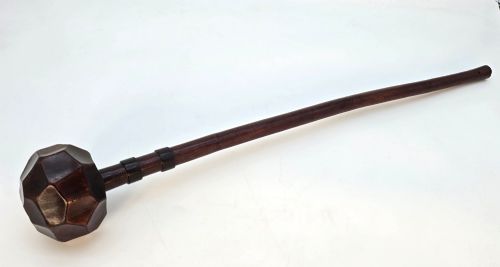


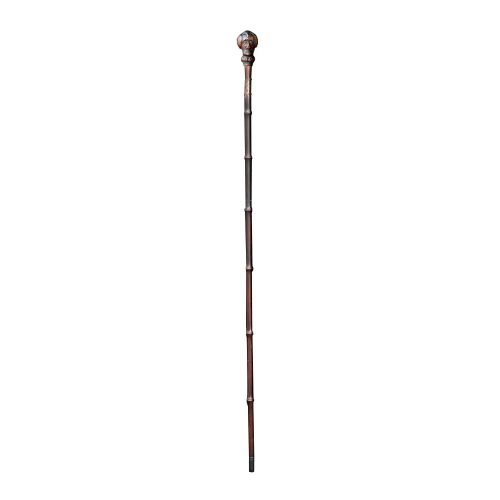
Dark Brown Walking Stick
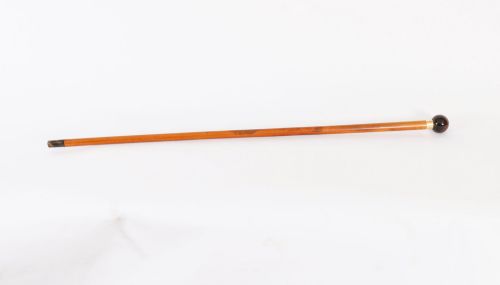
A dark brown walking stick is a functional gentleman's accessory, offering sturdy everyday support and occasional concealed blades.
Dark Brown Walking Stick
A dark brown walking stick encompasses various styles of gentleman's canes and supports seen across the Victorian, Edwardian, and early twentieth-century periods. These pieces include sword sticks, swagger sticks, and standard walking canes designed for daily use or military attire.
Materials range from native hardwoods and oak to exotic rosewood and malacca, often paired with handles fashioned from horn, steel, or eighteen-carat gold pommels. Many examples feature root-ended handles or carved details reflecting the Aesthetic Movement, Gothic Revival, and Jacobean Revival styles.
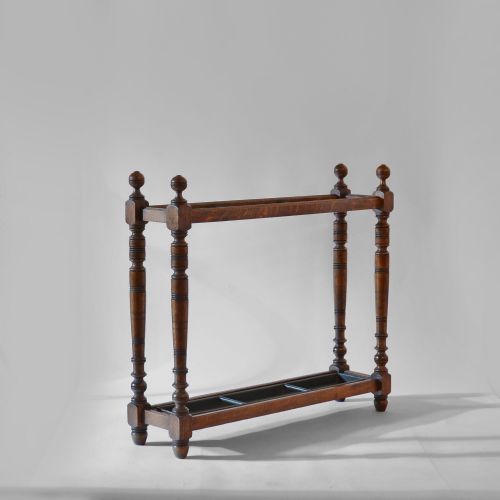
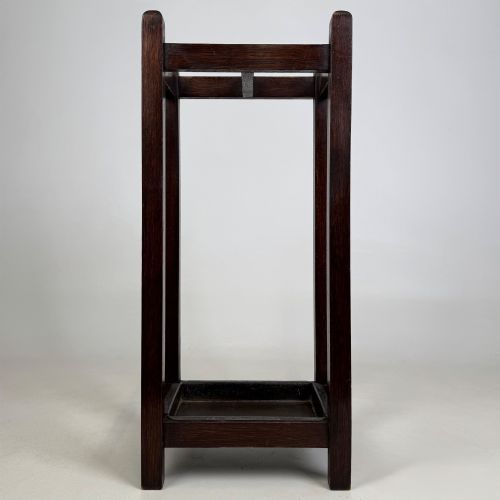
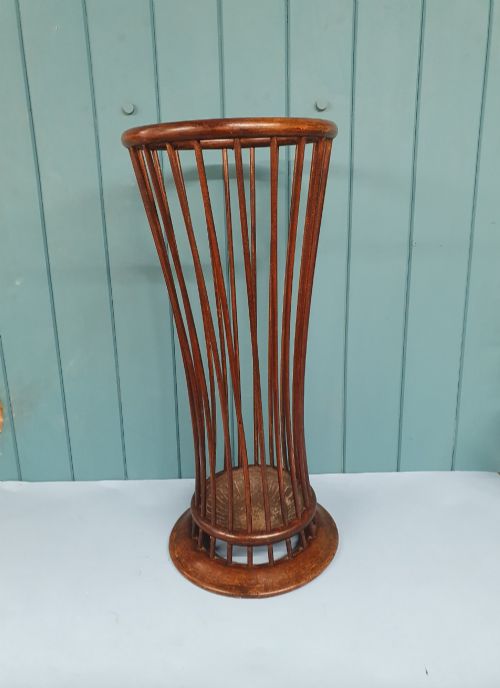
Alongside hand-held canes, the category extends to hall furniture like umbrella stands and stick stands in oak, walnut, and elm. These larger pieces serve to house collections of walking sticks and umbrellas in country houses and hallways.
How they were made
Maker construction combines traditional woodwork with metalworking, shaping natural timbers such as oak, rosewood, elm, and malacca into straight shafts. Handles and pommels utilise animal horn or cast metals like brass and steel, sometimes secured with eighteen-carat gold mountings.
Specialised examples incorporate hidden mechanisms for concealed blades within sword sticks, whilst hall stands employ turned elements like barley twist columns and woven panels such as bergere. Metal drip trays are frequently integrated into the base of these stands to catch moisture from wet umbrellas.
Several walking sticks double as concealed blades, letting a Victorian gentleman look after his posture and his perimeter simultaneously.
What varies in quality
The distinction between standard utility items and finer examples rests upon the choice of materials and the presence of precious metals or maker signatures. Gold pommels and named makers like Thomas Johnson elevate a piece above ordinary turned wood.
Proportion and decorative ambition separate utilitarian hall stands from grand country house furniture. Elaborate carving, specialised joinery, and unusual handles like root-end grips or horn shaping demonstrate higher standards of workmanship.
Thomas Johnson
The Dark Brown Walking Stick Glossary
- Pommel
- The rounded handle or knob at the top of a walking stick. These can be plain wood, carved horn, or cast in metal such as brass, steel, or eighteen-carat gold.
- Sword stick
- A walking cane containing a concealed blade within the wooden shaft. They typically feature a release mechanism near the handle.
- Knobkerrie
- A traditional African wooden throwing club or walking stick. Examples often feature a rounded head carved from dense hardwood.
- Bergere
- A type of woven cane panelling used in the backrests or sides of hall furniture. It appears on larger umbrella and stick stands from the period.
- Barley twist
- A type of spiral turning used on the wooden columns of stick stands. This decorative joinery technique imitates the shape of a twisted rope.
Dark Brown Walking Stick: Frequently Asked Questions
How do I identify a sword stick?
A sword stick conceals a steel blade inside the wooden shaft, typically released by a hidden catch or screw mechanism near the handle.
Inspect the join where the handle meets the shaft to see if the two sections separate cleanly to reveal the blade.
Where were stick stands placed?
Hall stick stands and umbrella stands were traditionally positioned in the entrance halls or boot rooms of country houses and town residences.
They provided a designated storage space for walking canes, swagger sticks, and wet umbrellas belonging to gentlemen and visitors.
What is a swagger stick?
A swagger stick is a short walking cane traditionally carried by military officers as a symbol of authority rather than for physical support.
These pieces often feature metal caps or military insignia and are lighter and shorter than standard walking sticks.
How are different periods dated?
Dating relies on the prevailing design styles, such as the Gothic Revival or Aesthetic Movement, alongside the choice of materials and construction methods.
Maker marks, engraved gold pommels, and specific wood types like oak or malacca further help narrow down the decade of manufacture.