



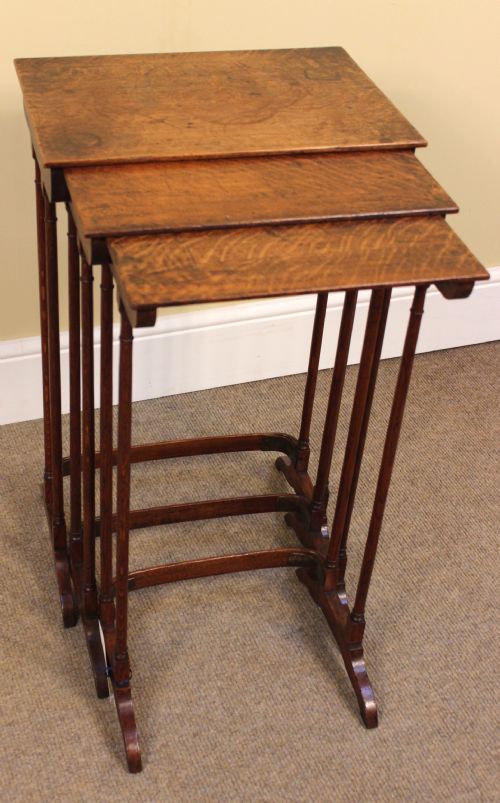


Dark Brown Stacking Tables
Dark brown stacking tables offer a practical surface solution, combining nested functionality with rich timber tones for flexible living.
Dark Brown Stacking Tables
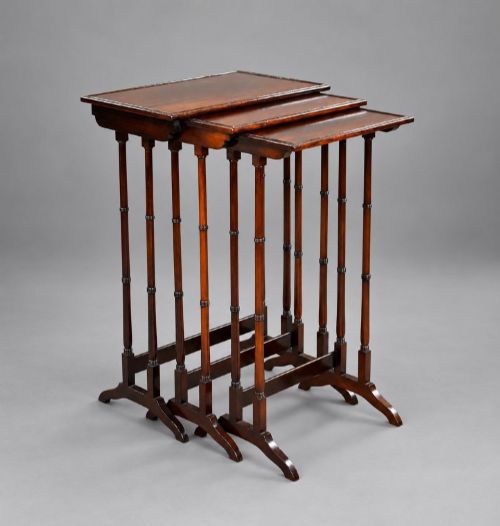
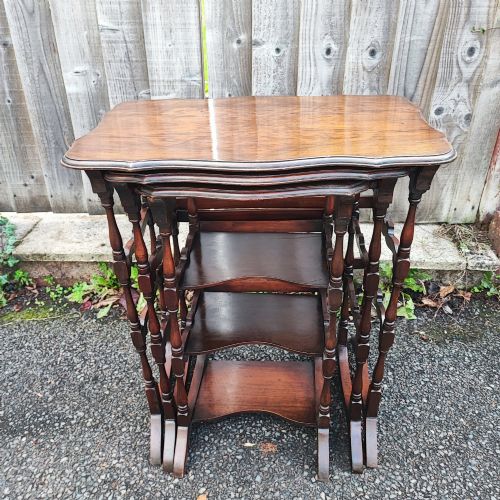
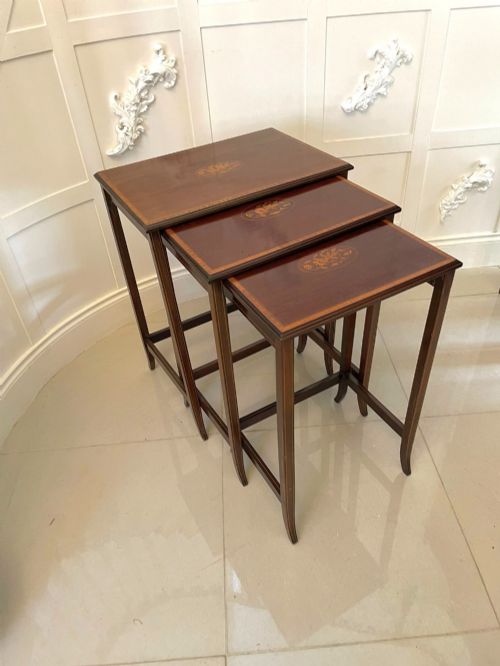
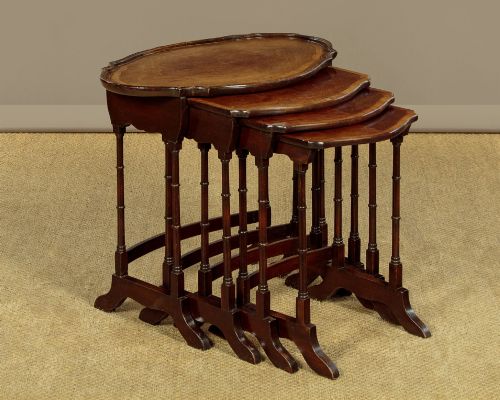
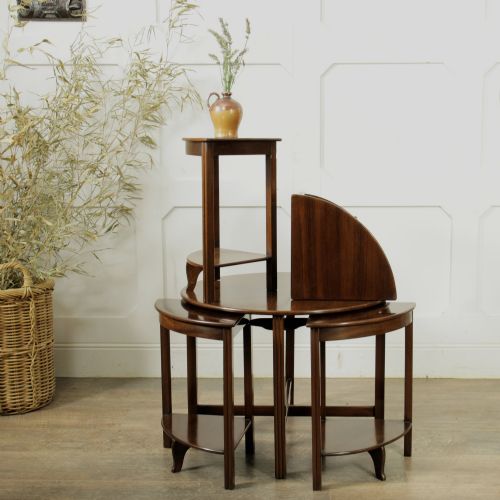
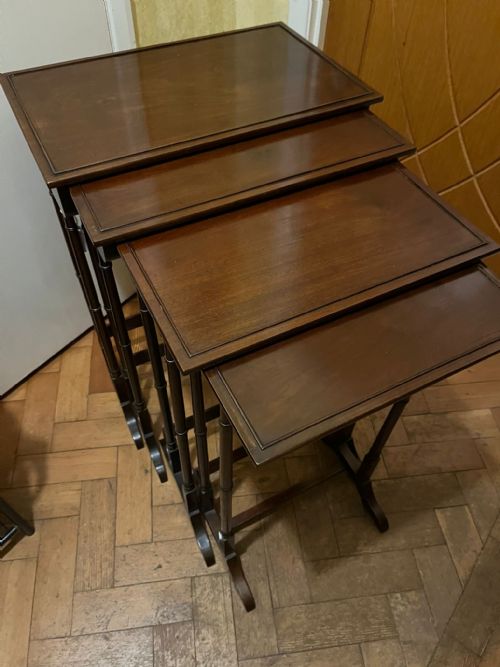
Dark brown stacking tables appear primarily as sets of three or four occasional pieces, often known historically as quartetto tables, designed to slide neatly beneath one another when floor space is required. These dark brown stacking tables emerge frequently from Edwardian and Victorian workshops, alongside later 1930s examples and Asian export pieces.
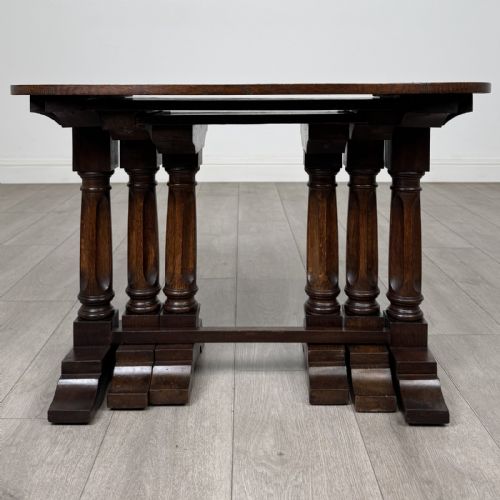
The selection on this page centres heavily on nests of tables in mahogany, oak, teak and various hardwoods. Buyers encounter circular, oval, square and rectangular tops spanning periods from the mid-nineteenth century through to the early decades of the twentieth century.
Materials and construction methods
Makers utilised dense timbers such as mahogany, oak, teak, rosewood and hardwood to construct these nesting sets, often selecting figured grain for visual depth. Structural integrity relied on sturdy turned legs, stretcher supports and occasionally subtle inlay work or carved details.
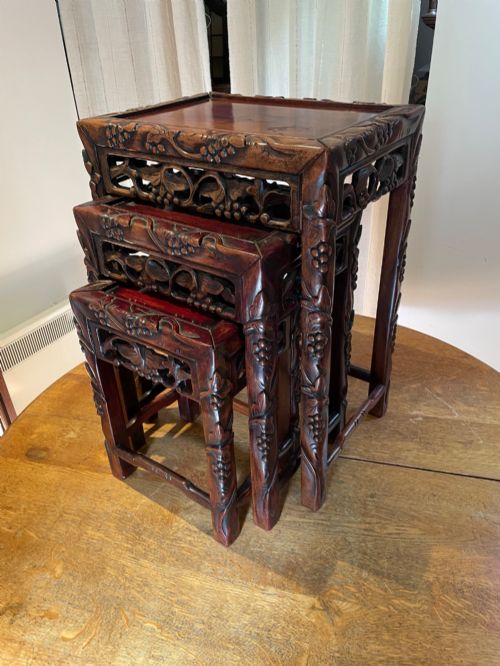
Asian export and Chinoiserie variants incorporated carved hardwood and specific decorative motifs applied to the timber surfaces. Traditional cabinet-making joints ensured that each smaller table scaled down precisely to fit beneath its predecessor.
Dark Brown Stacking Tables Retail Price Guide 2026
Typical asking prices for dark brown stacking tables among the pieces listed under this phrase on Sellingantiques today, from the lower quarter to the upper quarter. They describe what is for sale here now, not the wider market.
Listings feature mahogany, oak, teak, rosewood and hardwood across Edwardian, Victorian, nineteenth-century and 1930s periods.
Distinctions in quality and execution
Quality reveals itself in the precision of the nesting mechanism, where tables slide smoothly and sit level without rocking when deployed independently. Superior examples employ finely figured mahogany or carefully selected oak with crisp, clean carving rather than heavy, indistinct mouldings.
Construction depth separates standard utility sets from finer parlour pieces, evident in thicker tabletops, robust leg turnings and intact structural framing beneath each surface.
The Dark Brown Stacking Tables Glossary
- Quartetto
- A set of four matching tables designed to nest within one another. This term appears frequently in nineteenth and early twentieth-century descriptions for stacking sets.
- Nest of tables
- A group of graduated occasional tables built to fit together in a single footprint. They are pulled out individually for serving tea or holding lamps.
- Chinoiserie
- European artistic styles reflecting Chinese motifs and techniques. These pieces often feature carved or decorated hardwood surfaces.
- Inlay
- A decorative technique where contrasting materials are inserted into depressions in the wood surface. Edwardian makers often utilised light wood stringing against dark mahogany.
Dark Brown Stacking Tables: Frequently Asked Questions
How were dark brown stacking tables used?
These tables served primarily as occasional surfaces in Victorian and Edwardian drawing rooms, kept tucked together to save space until guests arrived for tea or card games.
Hostesses pulled out the graduated tiers individually to hold cups, books or small lamps around the room before stacking them back into a single unit.
What is a quartetto nest?
A quartetto nest refers specifically to a set of four tables engineered to slide sequentially beneath the largest main table.
This format gained popularity during the nineteenth century and remained a staple through the Edwardian period for maximising surface area in compact parlours.
How do I distinguish Edwardian sets from Victorian ones?
Victorian examples often display heavier timber proportions and deeper mahogany tones associated with mid-nineteenth-century domestic interiors. Edwardian versions tend towards lighter framing, sometimes incorporating subtle string inlay or more delicate turned supports.
Are Asian export stacking tables different from British ones?
Asian export and Chinoiserie sets typically utilise dense oriental hardwoods and feature distinct carved motifs rather than the classical British mahogany or oak veneer finish.
They reflect international trade styles while retaining the exact same functional nesting design found in contemporary European furniture.