
Dark Brown Oak Shelves
Dark brown oak shelves offer practical storage and deep historical character, spanning utilitarian wall units and grand library bookcases.
Dark Brown Oak Shelves
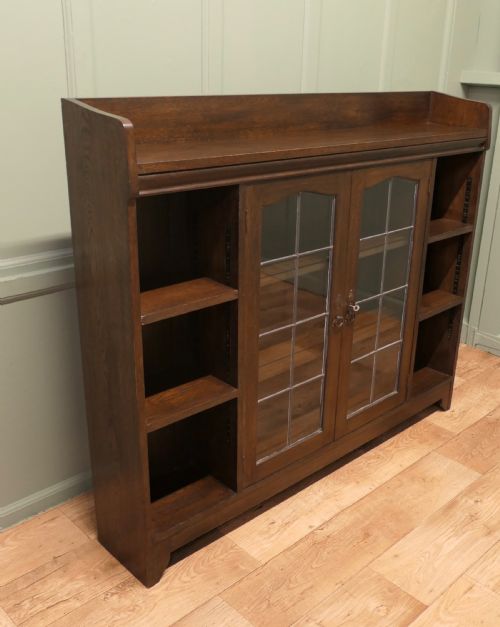
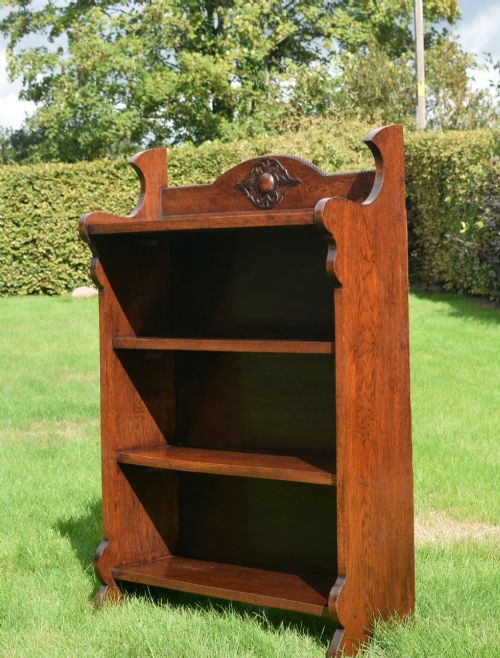
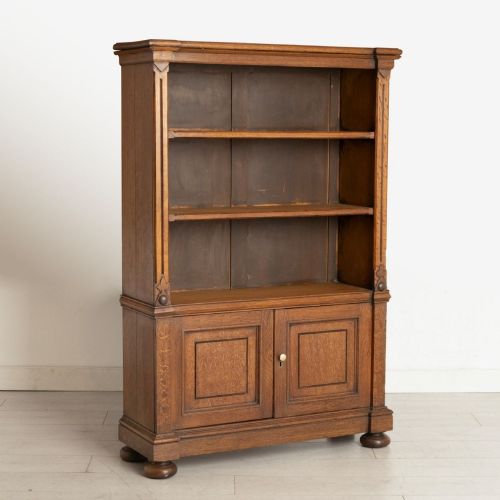
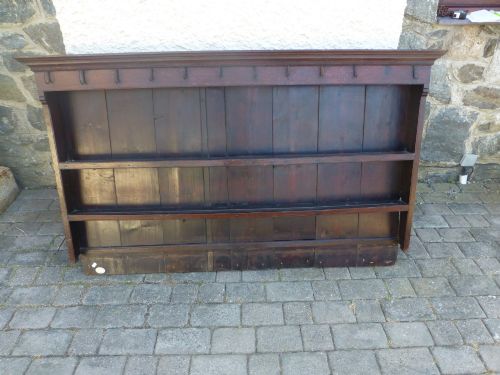
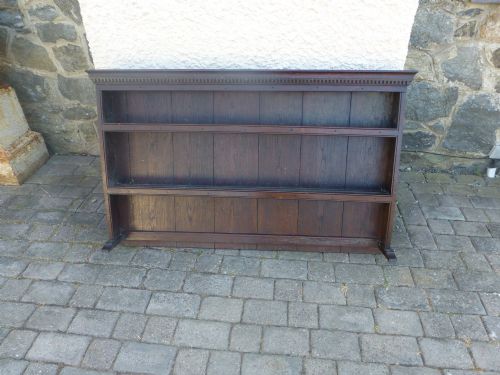
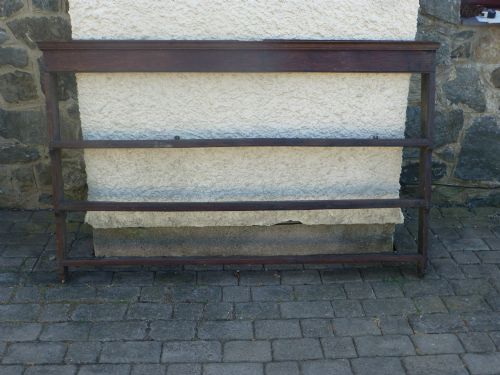
When you search for dark brown oak shelves, you encounter a practical variety of storage furniture including open bookcases, dresser plate racks, and wall-mounted units. These pieces range from compact Edwardian and 1920s examples to substantial Victorian library bookcases and 18th century Georgian dressers.
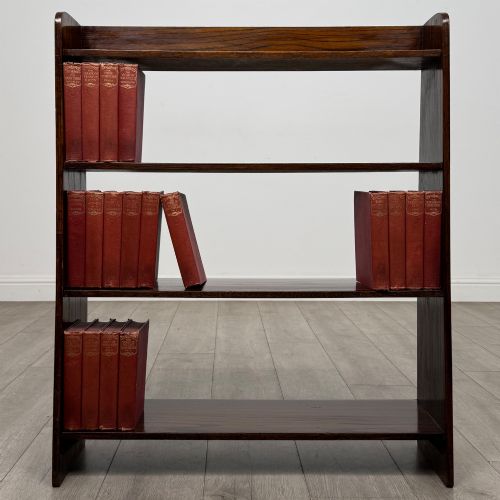
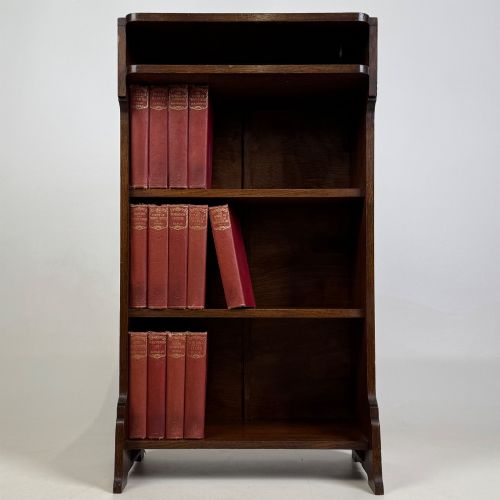
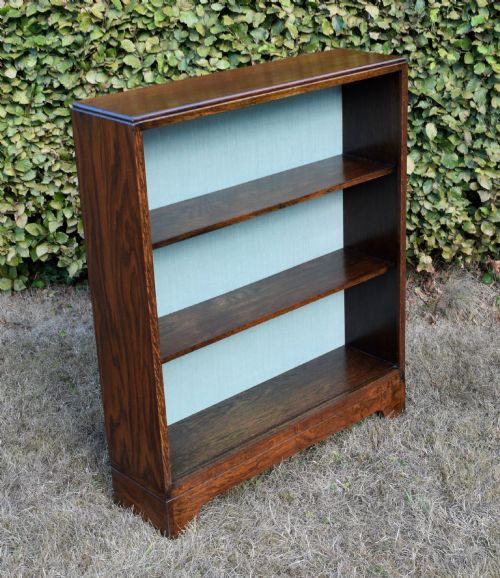
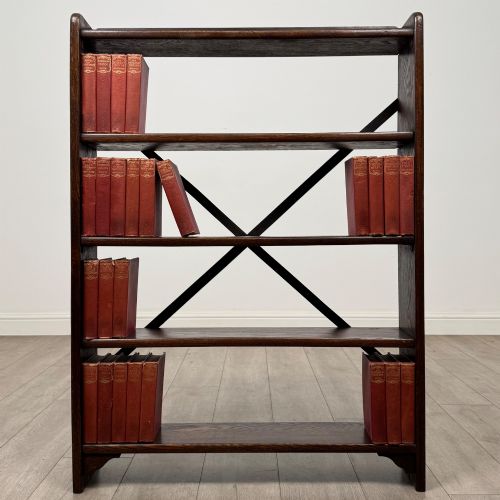
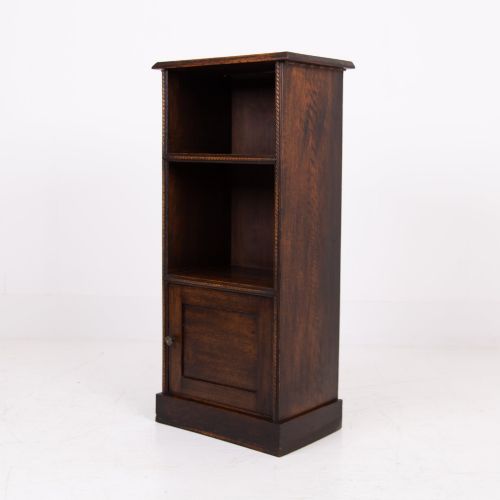
The version you are most likely to meet on this page is the open oak bookcase from the Edwardian period or the early 20th century. These items provide accessible display and storage space while displaying the deep timber tones characteristic of aged oak.
What varies in quality
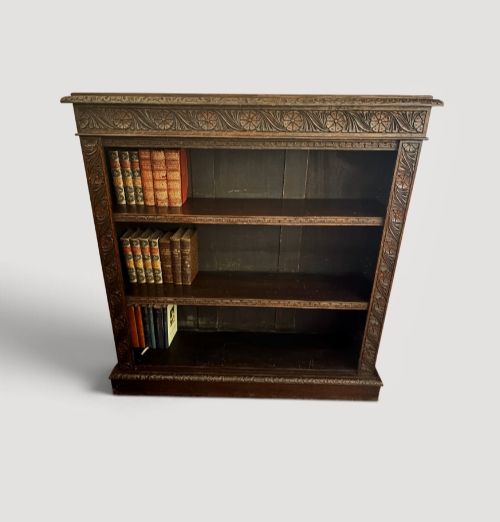
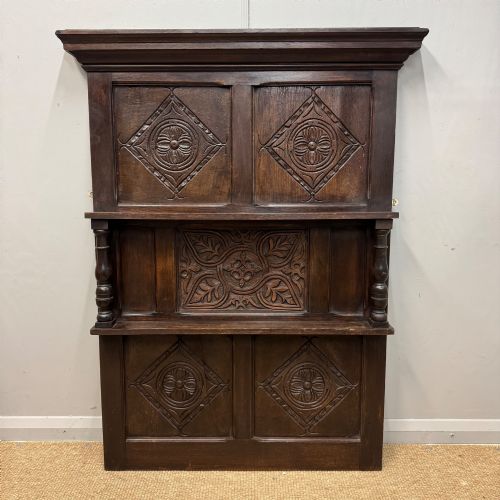
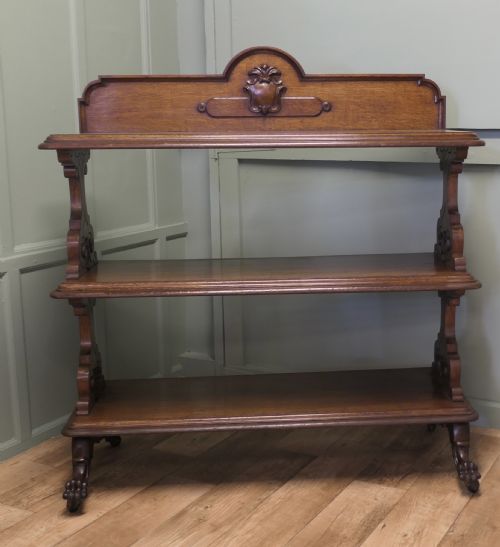
Quality in these pieces rests upon the selection of timber and the integrity of the construction, distinguishing robust architectural bookcases from lighter utility items. Superior examples feature well-figured solid oak, cleanly carved details such as Jacobean or Gothic revival motifs, and original hardware.
The refinement of the joinery and the consistency of the dark brown finish separate standard commercial items from exceptional library and dining room furniture.
Several pieces include unexpected surfaces, such as a leather top on a 1930s bookcase and hooks designed for a reception valet.
The Dark Brown Oak Shelves Glossary
- Open bookcase
- A piece of furniture designed for storing books without front doors. These units allow immediate access to volumes and showcase the interior book bindings alongside the wooden frame.
- Welsh dresser
- A traditional kitchen or dining unit featuring a lower sideboard with cupboards or drawers surmounted by open plate racks. They provide dual display and storage functions.
- Plate rack
- A set of wooden shelves specifically slotted or grooved to hold ceramic plates upright. They were traditionally mounted on walls or sat atop dresser bases.
- Breakfront
- A large cabinet or bookcase where the central section projects forward from the flanking wings. This architectural arrangement creates depth and visual interest in larger rooms.
- Pot board
- An open lower shelf on a dresser base historically used for storing pots and heavy kitchen utensils. It provides structural stability to the base frame.
Dark Brown Oak Shelves: Frequently Asked Questions
How do I date an oak bookcase?
Dating relies on examining construction methods, timber thickness, and stylistic clues such as carved mouldings or integrated adjustable shelf tracks. Earlier 18th century pieces utilise hand-cut joinery, whereas 20th century examples often employ mechanical fixings.
Hardware components like brass handles and hinges also offer reliable chronological markers when they remain original to the piece.
Are these shelves suitable for heavy books?
Most solid oak bookcases and library shelves are structurally robust enough to hold heavy volumes without sagging. Adjustable shelving systems found in Victorian and Edwardian pieces support substantial weight when the timber thickness is adequate.
Shorter shelf spans naturally offer greater load-bearing capacity than wider, open configurations.
How should I care for dark oak?
Maintain the wood by dusting regularly with a dry cloth and occasionally applying natural beeswax to nourish the finish. Avoid placing oak furniture in direct sunlight or near heat sources to prevent the timber from drying out.
Keeping consistent room humidity preserves the stability of the joints and prevents warping.
What is the difference between an Edwardian and Victorian bookcase?
Victorian bookcases often exhibit heavier proportions, darker finishes, and ornate decorative elements such as Gothic revival carvings or breakfront symmetry. Edwardian examples tend to be lighter in scale, reflecting a turn towards simpler domestic interiors.
Both periods utilise solid oak, but the execution of decorative details differs according to the prevailing taste of each era.