


Antique Carved Shelving
Antique carved shelving covers everything from wall brackets to large bookcases, built to display possessions in period interiors.
Antique Carved Shelving
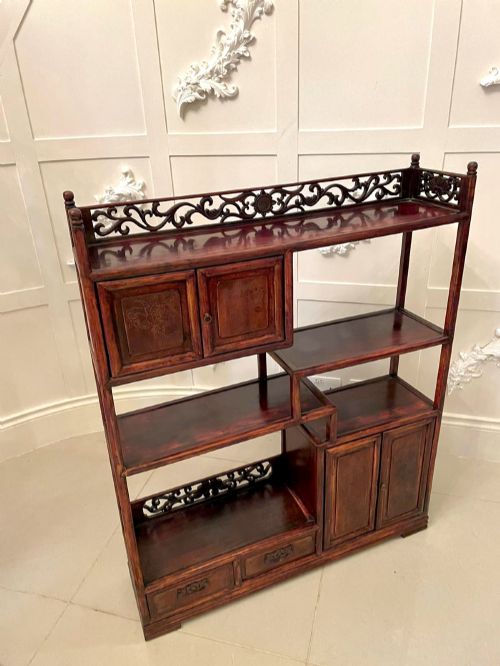
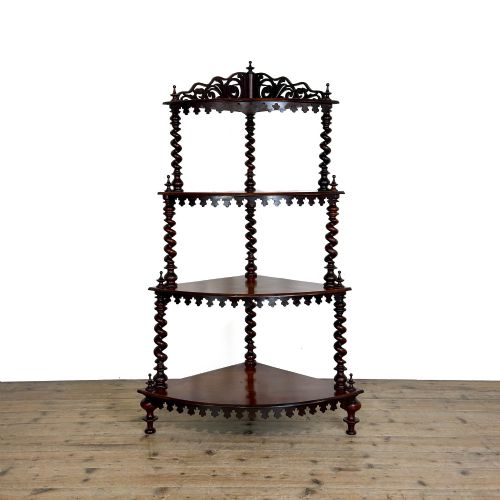
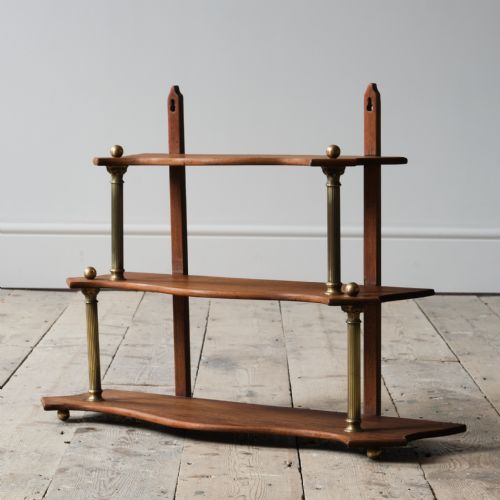
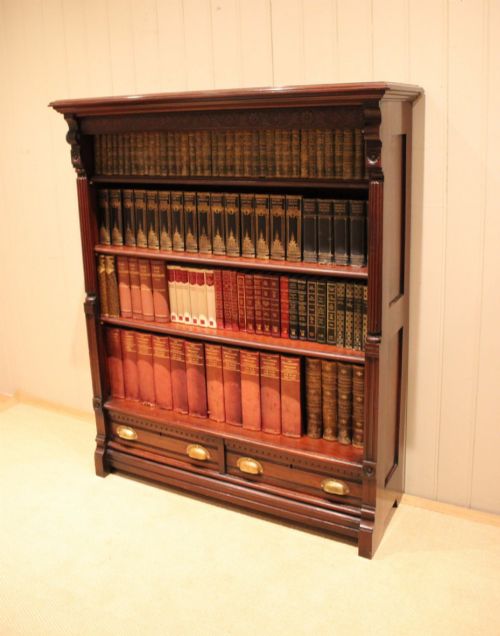
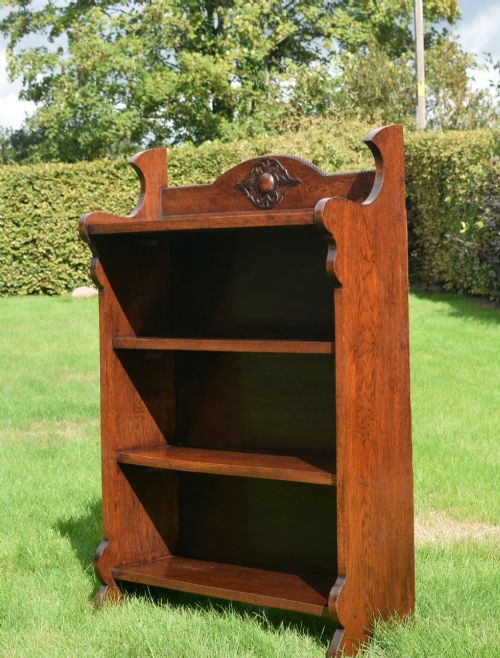
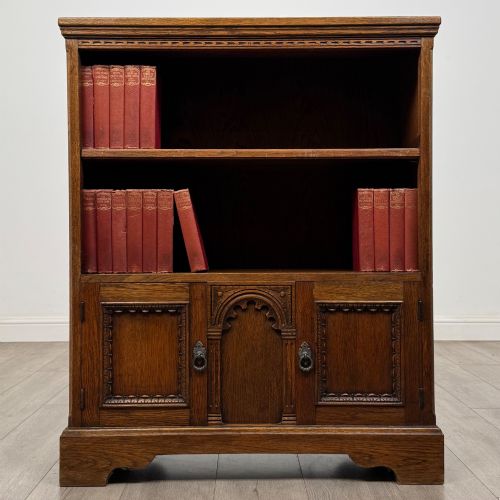
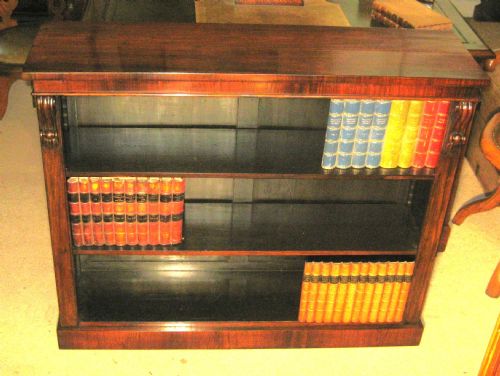
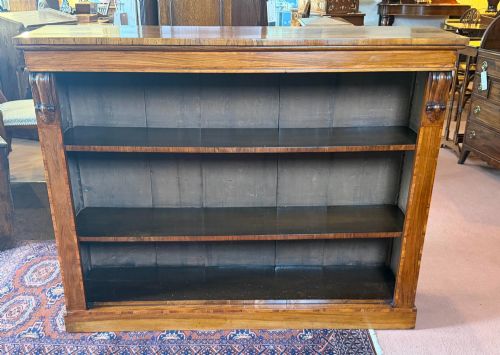
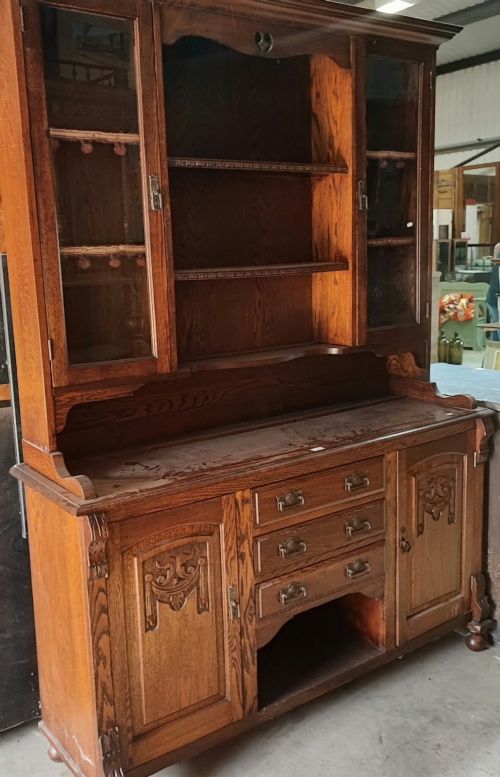
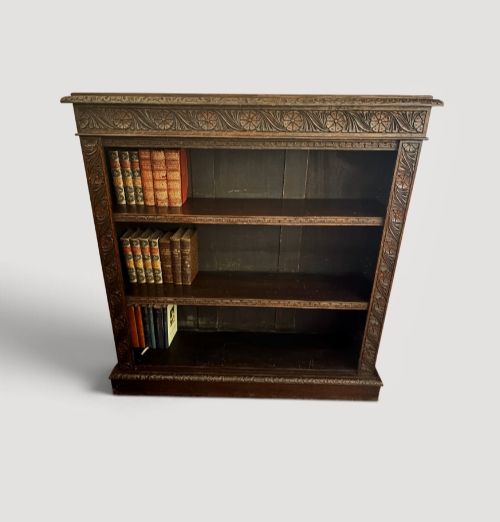
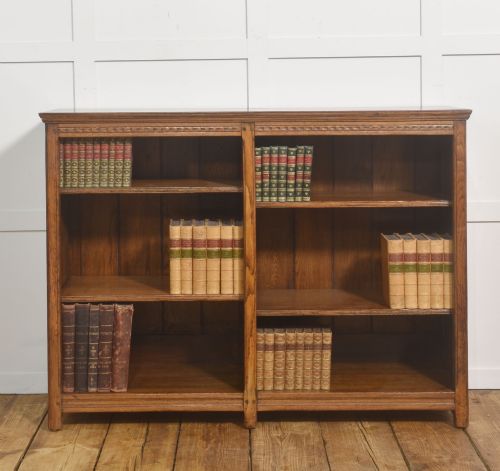
When searching for antique carved shelving, buyers encounter open bookcases, corner whatnots, wall brackets and dressers spanning the nineteenth century through the Edwardian period. The most common forms on this page are oak and mahogany open bookcases, alongside walnut wall shelves and decorative wooden brackets.
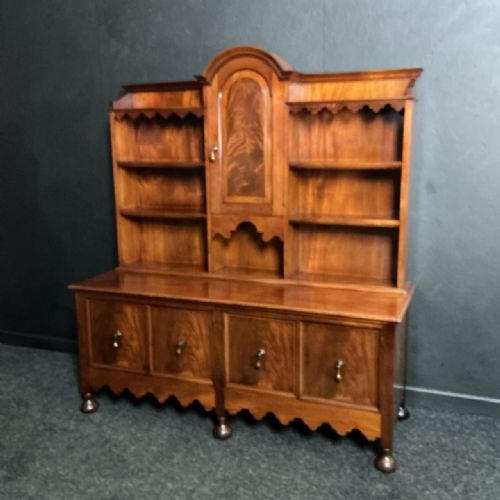
Pieces range from compact corner units designed for tight spaces to large breakfront bookcases and Welsh dressers with adjustable shelves. Materials stretch across oak, walnut, mahogany, rosewood and teak, reflecting the varied tastes of Victorian and Edwardian makers.
How they were made
Cabinet makers utilised solid timbers such as oak, walnut and mahogany, often pairing them with brass hardware or incorporating burr walnut veneers for visual depth. Construction relied on traditional joinery methods to support heavy volumes and display items securely over generations.
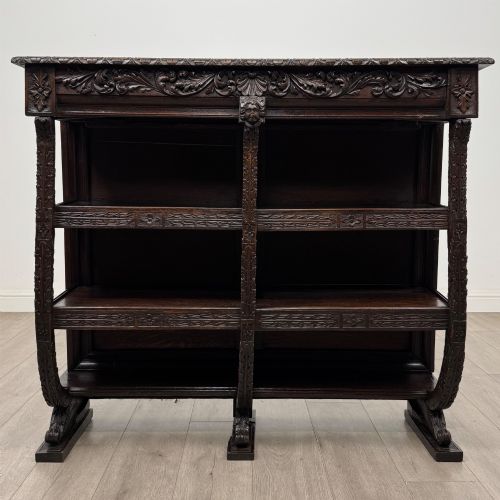
Carving was executed by hand, producing distinct details like green man motifs, Gothic tracery and Baroque cherubs on structural cornices and shelf friezes. Ebonisation and gilt finishes appeared alongside natural wood polishes to suit specific interior styles of the nineteenth and early twentieth centuries.
Listings feature oak, mahogany, walnut, rosewood, pine and padauk across forms from wall brackets to large bookcases.
What varies in quality
The degree of refinement in the hand-carved elements separates standard utility shelving from high-status pieces commissioned for period homes. Crisp detailing on motifs like green men or cherubs indicates superior craftsmanship by skilled carvers.
Selection of timber grain, particularly matched burr walnut or figured mahogany, defines the visual hierarchy of the piece. Robust internal construction, such as properly functioning adjustable shelving mechanisms, underpins the lasting utility of bookcases and dressers.
The Antique Carved Shelving Glossary
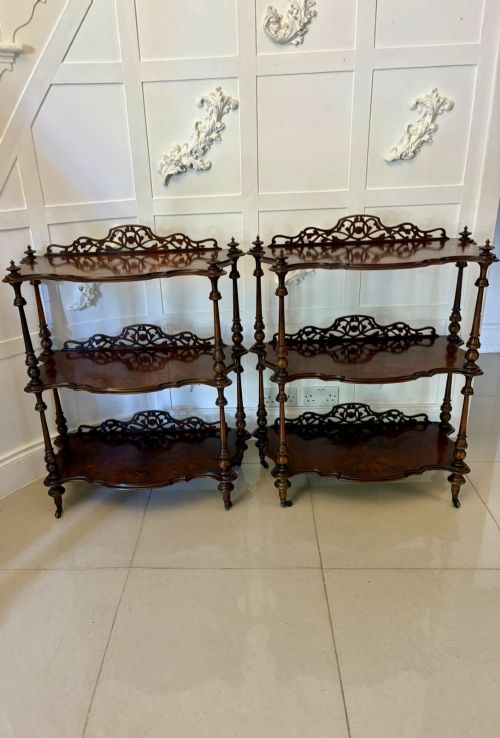
- Whatnot
- A tiered open piece of furniture designed for displaying ornaments and small objects, frequently fitted with corner posts.
- Breakfront
- A large cabinet or bookcase where the central section projects forward from the flanking wings.
- Welsh dresser
- A traditional kitchen or dining room storage unit featuring base cupboards surmounted by open plate shelves.
- Etagere
- A French stand with a series of open shelves for displaying small decorative items.
- Green man
- A sculptural architectural ornament depicting a human face disgorged from foliage, popular in carved woodwork.
Antique Carved Shelving: Frequently Asked Questions
How do I clean antique wooden shelves?
Dust surfaces regularly with a soft, dry cloth to prevent dirt accumulation on carved details. Avoid modern silicone sprays that build up residue and damage period polishes.
Apply a microcrystalline wax sparingly once or twice a year to nourish the timber. Buff gently with a clean cloth to maintain a natural satin sheen.
Are antique shelves strong enough for modern books?
Many larger bookcases and shelving units feature adjustable wooden shelves capable of supporting heavy loads. Solid oak and mahogany construction provides substantial weight capacity for daily book storage.
Inspect the shelf thickness and support battens before loading heavy volumes. Distribute weight evenly across the surface to prevent long-term sagging in wider spans.
What is the difference between a whatnot and a bookcase?
Whatnots are primarily decorative open tiered stands intended for ornaments, porcelain and smaller collectables. They often stand in corners or feature delicate turned supports.
Bookcases focus on functional storage for volumes, utilising deeper enclosed or open shelving. Many period bookcases include adjustable wooden shelves for accommodating books of varying heights.
How do I distinguish Victorian from Edwardian shelving?
Victorian shelving often displays heavier proportions, darker woods like walnut or rosewood, and dense carving influenced by Gothic or Baroque revivals. Ebonised finishes and rich burr veneers are characteristic of this era.
Edwardian pieces generally exhibit lighter golden oak tones, simpler lines, and restrained ornament. The Arts and Crafts influence becomes apparent in functional, unpretentious oak designs.