
Open Oak Bookshelves
When you search for open oak bookshelves, you seek sturdy timber shelving that displays volumes without blocking the room.
Open Oak Bookshelves
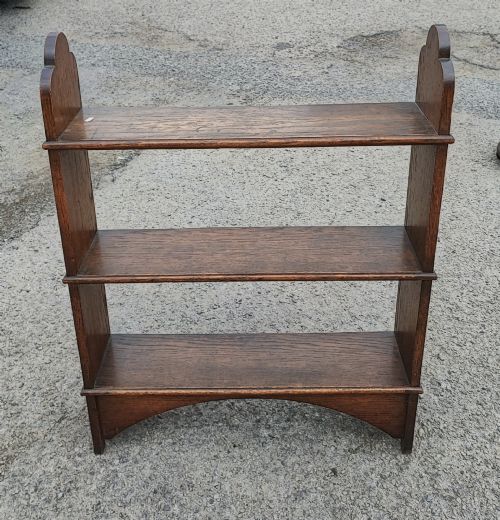
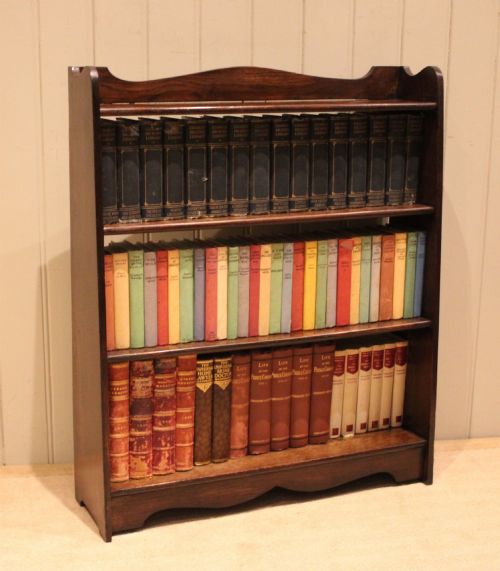
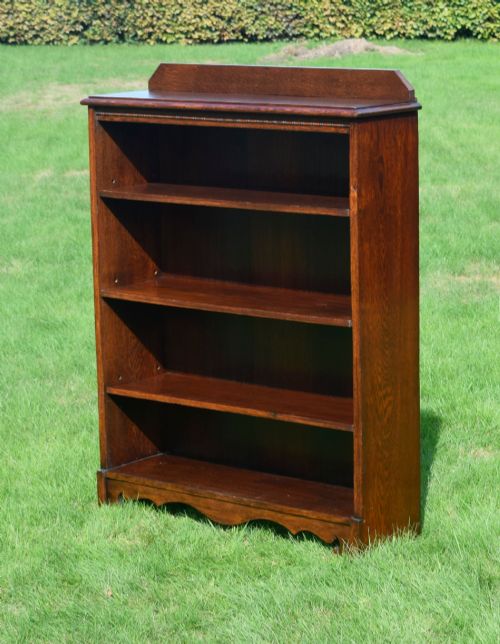
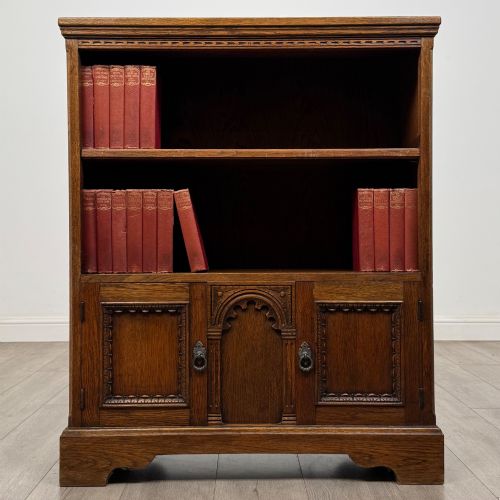
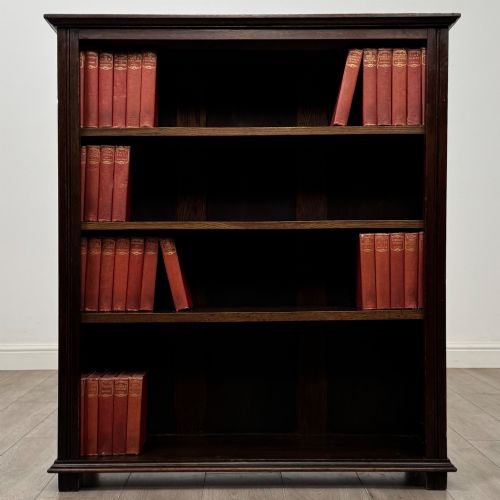
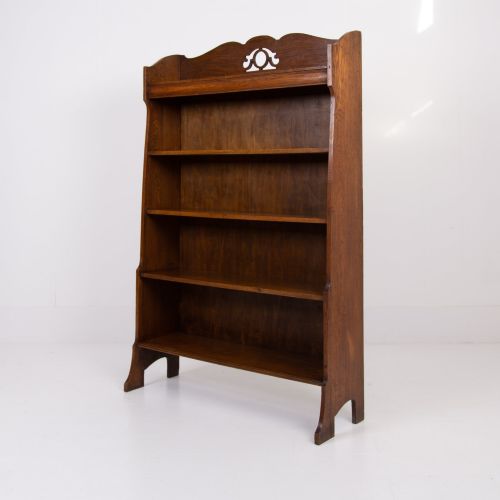
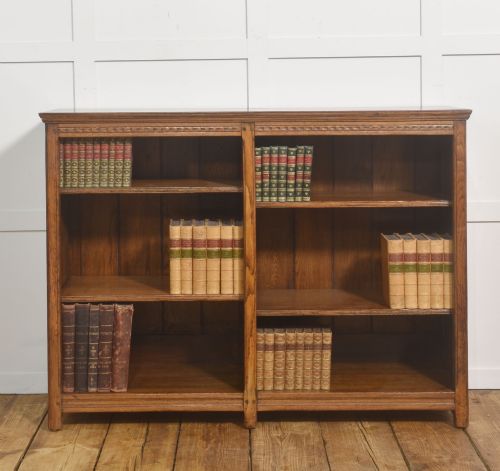
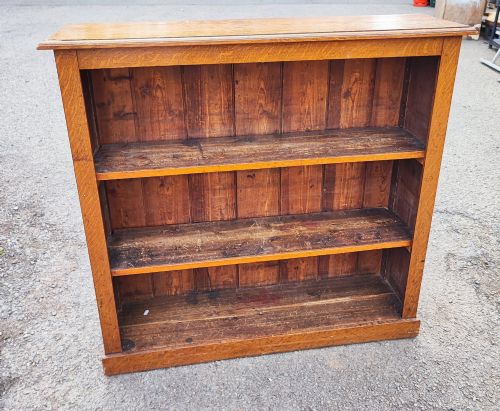
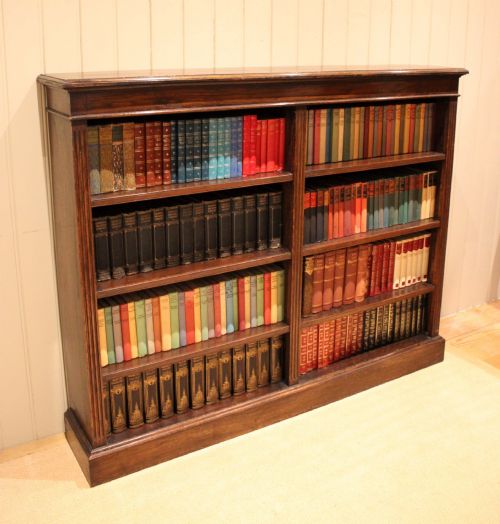
Open oak bookshelves provide accessible storage for home libraries, appearing most frequently in Edwardian, Victorian, and Arts and Crafts styles from the late nineteenth and early twentieth centuries. These pieces range from small dwarf units and low library shelves to tall, narrow upright cases designed to fit domestic spaces.
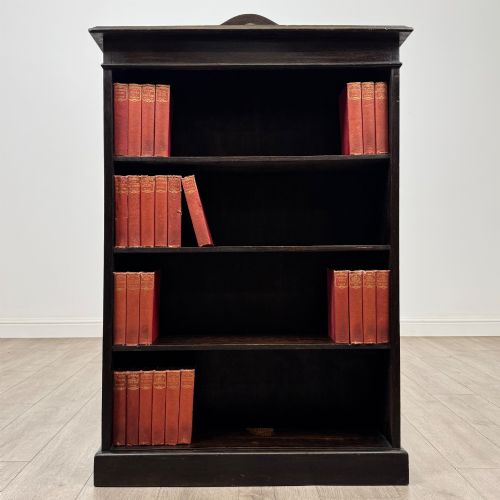
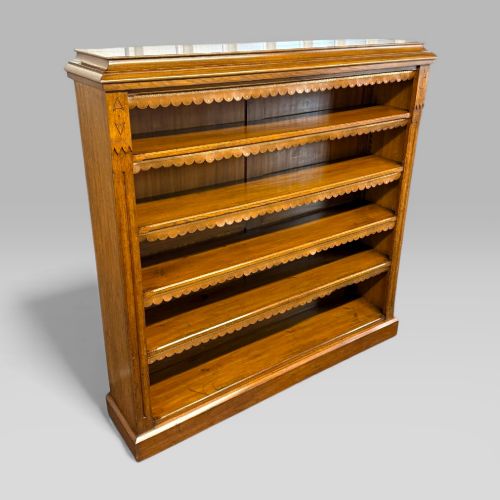
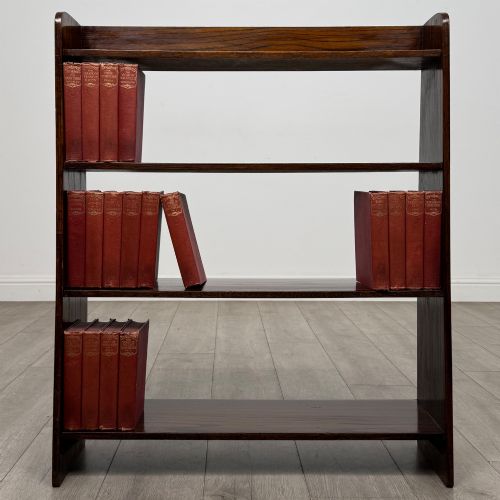
Makers and designers of the period produced variations such as waterfall shelves, angled formats, and items featuring carved ornamentation or ebonised details. Many examples include adjustable shelving or side compartments, showing how makers adapted standard bookcase forms for everyday utility.
How they were made
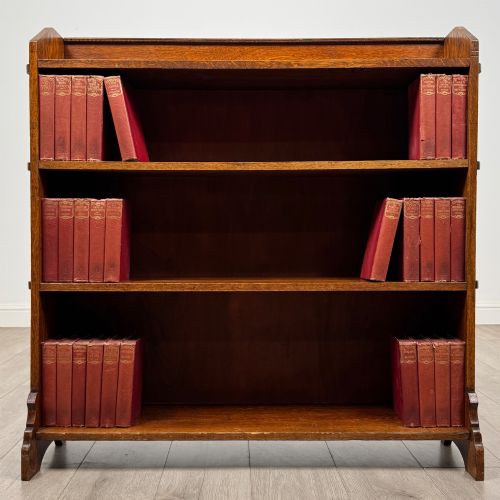
Carpenters constructed these open bookshelves primarily from solid oak and golden oak, sometimes incorporating walnut, ebonised oak, or peg-sided joints. Metal elements such as brass and iron appear in fittings, shelf supports, and structural brackets.
Craftsmen applied decorative carving, beaded edges, and leather tops to specific commissions, particularly within the Arts and Crafts and Gothic revival movements. Workshops utilised straightforward joinery methods, allowing timber grain and natural colour variations to define the exterior finish.
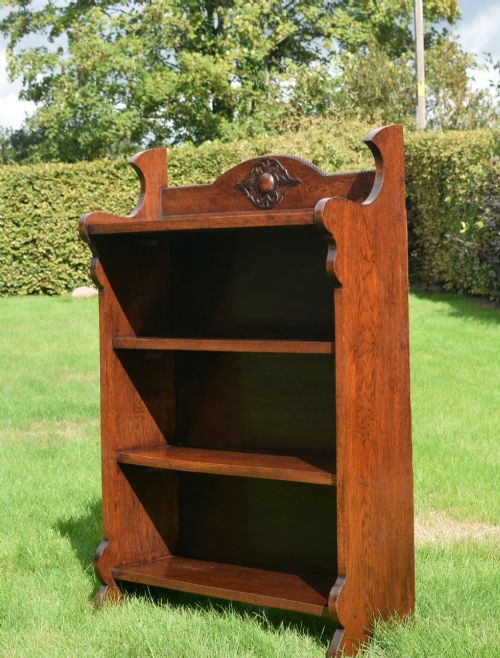
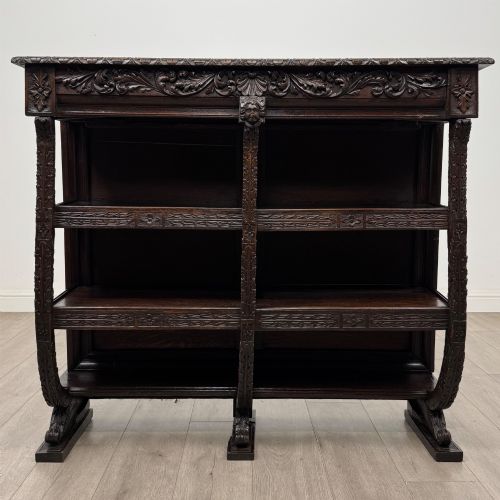
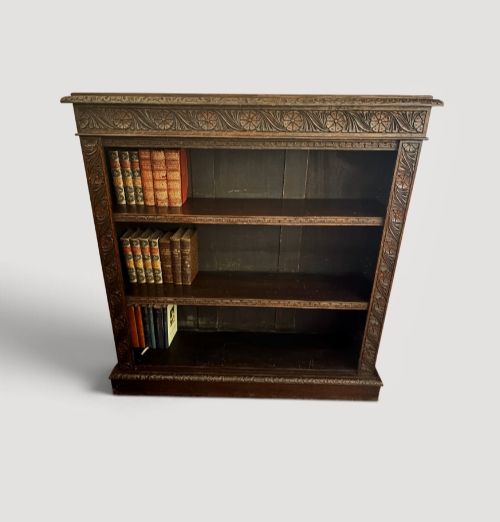
A grinning green man peers out from beneath the shelf edge of a carved dwarf bookcase.
What varies in quality
The degree of craftsmanship shows in the thickness of the timber, the precision of the joints, and the integration of adjustable shelf mechanisms. Superior pieces exhibit careful timber selection, showing consistent grain patterns and solid back panels rather than thin veneers.
Distinction also lies in the execution of carved details, such as handcrafted foliage or green man motifs, compared to simpler mass-produced mouldings. Structural integrity relies on sound uprights and stable plinths that support heavy book collections without bowing.
Heals·Waring and Gillows
The Open Oak Bookshelves Glossary
- Arts and Crafts
- A design movement advocating for traditional craftsmanship, simple forms, and visible construction methods. Pieces from this tradition often display honest joinery and minimal ornamentation.
- Dwarf bookcase
- A low open shelving unit standing beneath standard table height. These low profiles allowed light to pass across a room above the stored volumes.
- Ebonised oak
- Timber treated with a chemical stain or finish to imitate ebony. This dark, formal surface treatment appears frequently on nineteenth-century revival pieces.
- Waterfall bookcase
- A shelving unit where each tier steps back progressively from the bottom to the top. This stepped arrangement creates a sloping profile reminiscent of falling water.
- Adjustable shelves
- Shelving supported by pegs, racks, or metal ratchets that allow the user to alter vertical spacing. This mechanism accommodates books of varying heights.
Open Oak Bookshelves: Frequently Asked Questions
How do I date an oak bookcase?
Dating relies on stylistic clues, construction techniques, and timber types recorded across Victorian and Edwardian periods. Arts and Crafts items often display hand-finished pegged joints from around nineteen hundred.
Later pieces from the nineteen twenties and thirties introduce simpler geometric lines and Art Deco influences. Examining the backboards and shelf supports provides further evidence of the manufacturing era.
Are the shelves adjustable?
Many open oak bookshelves feature movable shelves supported by wooden ratchets, brass pins, or slotted uprights. This adaptability allowed owners to reconfigure the interior space for folios and smaller octavo volumes alike.
Fixed shelves also occur frequently, particularly in simpler utilitarian or smaller dwarf models. Checking the interior sides reveals the presence of shelf support channels or peg holes.
How do I care for antique oak?
Maintaining antique oak involves keeping pieces away from direct heat sources and sudden humidity changes to prevent timber splitting. Regular dusting with a dry, soft cloth preserves the natural grain and wax finish.
Occasional application of bees-wax nourishes the dry wood without building up heavy residue. Avoid silicone-based sprays, which can penetrate the pores and damage the historic surface.
What is golden oak?
Golden oak refers to timber finished with a warm, translucent tone that highlights the natural medullary rays in quarter-sawn boards. This specific hue became popular during the late Victorian and Edwardian eras.
Cabinet makers used light stains and clear varnishes to achieve this bright, reflective surface quality. It contrasts with the darker ebonised or fumed oak finishes typical of earlier revival styles.