




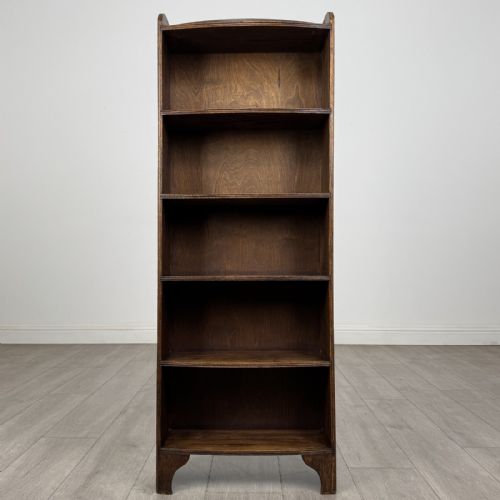
Dark Brown Oak Bookshelf
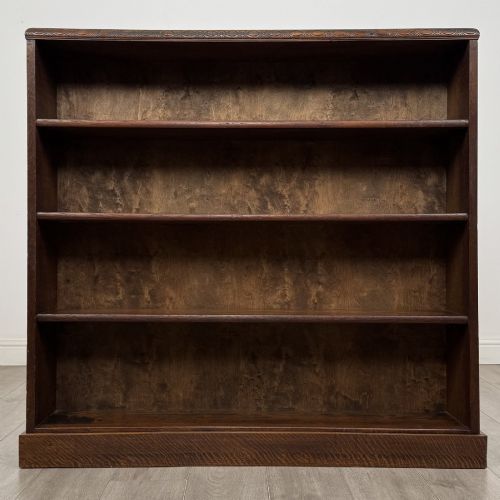
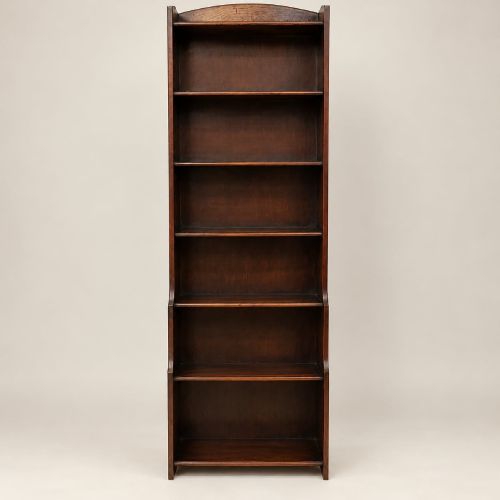
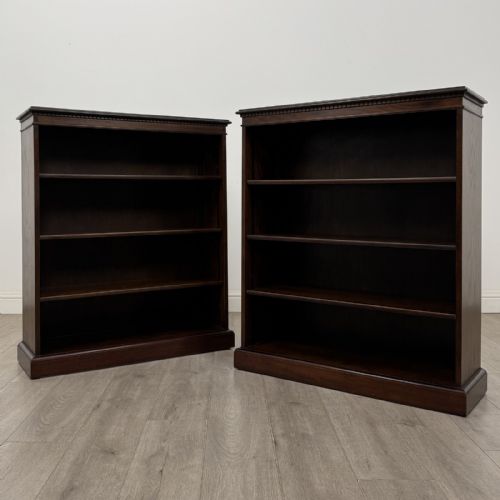
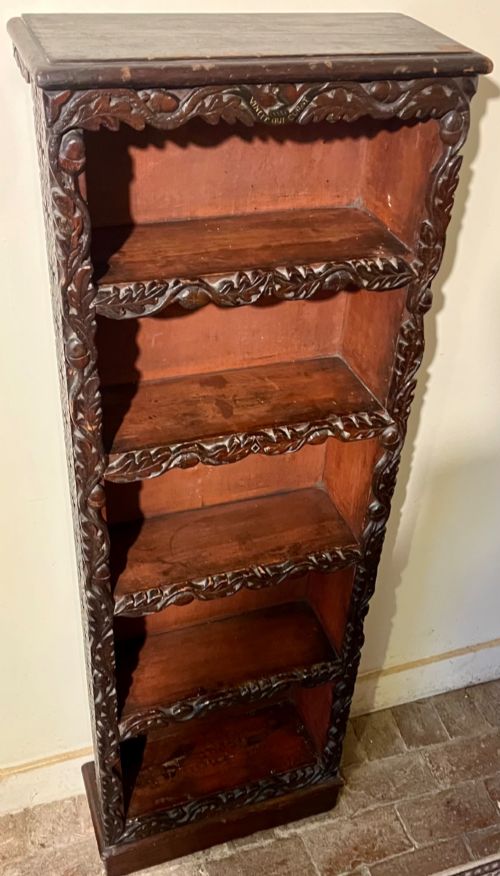
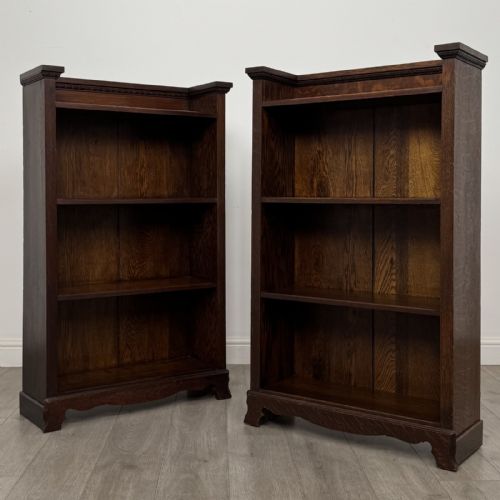
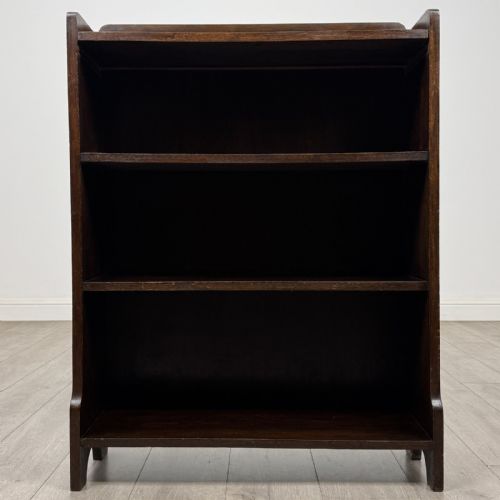
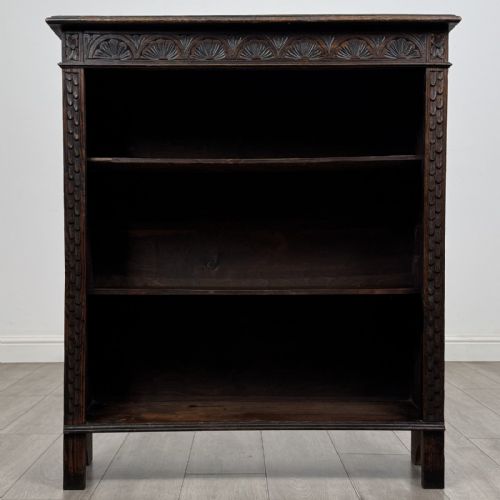
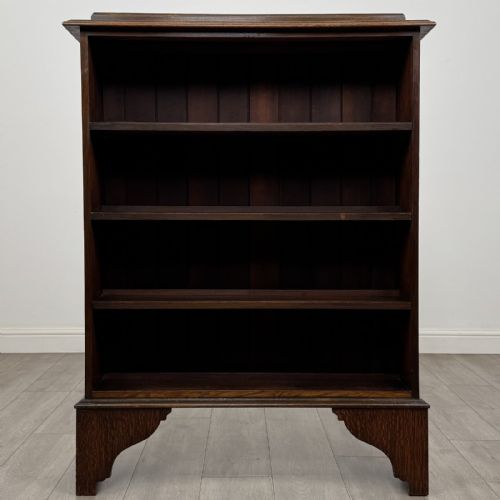
A dark brown oak bookshelf brings grounded utility and rich grain to a room, holding volumes while anchoring the walls of a study or sitting room.
Dark Brown Oak Bookshelf
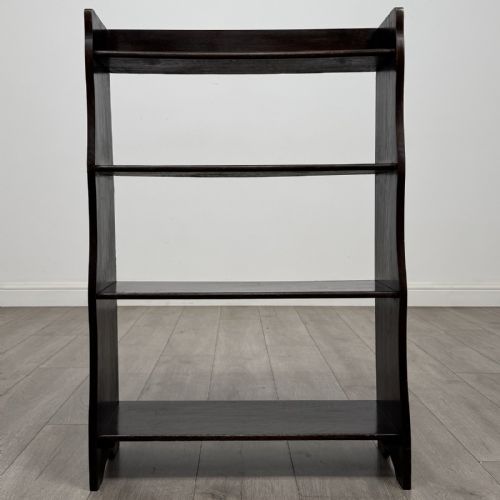
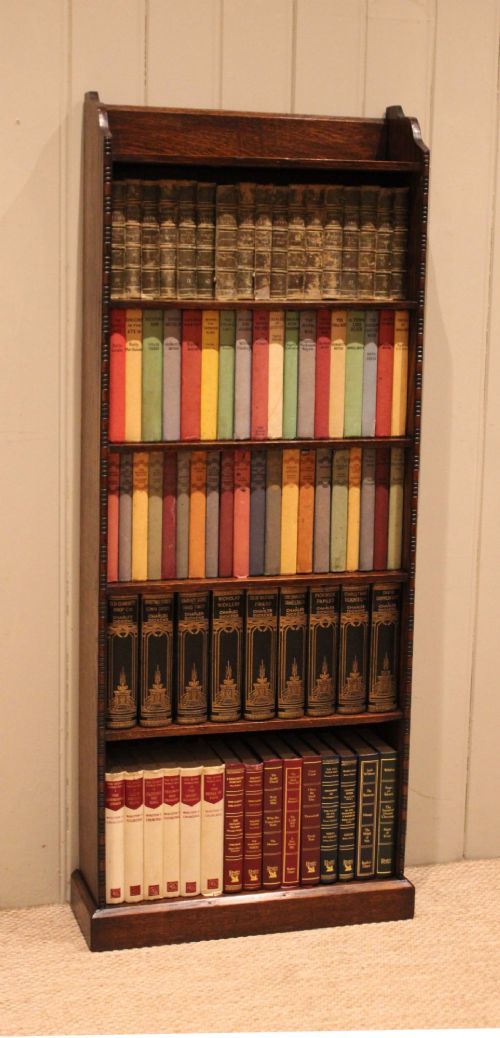
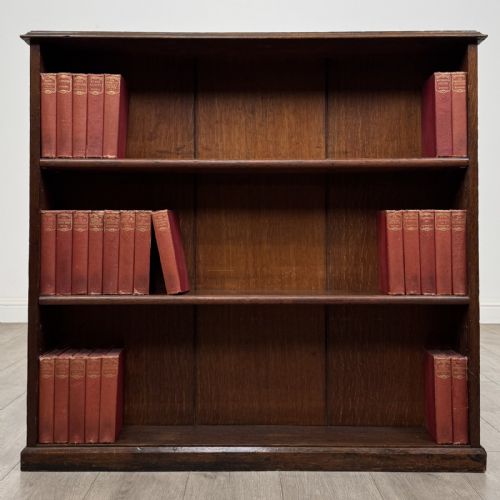
A dark brown oak bookshelf appears in various forms across this selection, spanning the Victorian era, the Edwardian period, and the interwar years of the early twentieth century. Buyers searching for a dark brown oak bookshelf will frequently encounter open formats, small scale proportions, and occasional revolving designs.
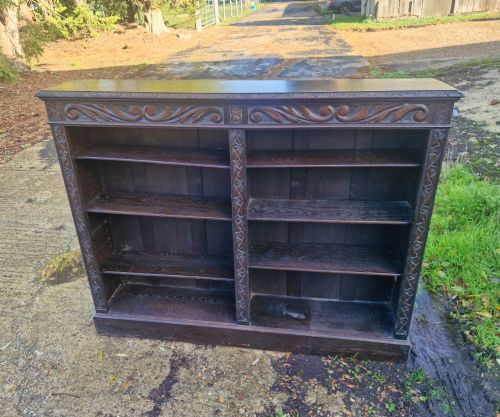
The construction ranges from simple open shelving with beaded edges to elaborate pieces featuring raised galleries, lower drawers, and integrated cupboards. Many examples reflect specific design movements, including Arts and Crafts principles, Gothic Revival influences, and clean Art Deco lines.
Materials and Construction
Makers utilised solid oak and pollard oak to build these pieces, often selecting timber that naturally aged to a deep, dark brown tone. Construction techniques frequently involved visible carving, carved edges, and fret-cut details that highlighted the natural grain of the wood.
Metal components such as brass and iron appear in supporting roles, notably in revolving mechanisms, shelf adjustments, and industrial-style bracing or backs. Fabric occasionally surfaces in related items, while leather inserts top specific library surfaces.
Dark Brown Oak Bookshelf Retail Price Guide 2026
Typical asking prices for dark brown oak bookshelf among the pieces listed under this phrase on Sellingantiques today, from the lower quarter to the upper quarter. They describe what is for sale here now, not the wider market.
Some Victorian and Edwardian volumes clearly spent their youth spinning rapidly on rotating tabletops before finally settling against the study wall.
Design and Execution
The selection of timber grade and the finesse of the joinery define the upper tier of the range. Solid construction with clean, beaded edges or well-executed revival styles commands greater appreciation than plain, unadorned boxes.
The Dark Brown Oak Bookshelf Glossary
- Open bookcase
- A piece of furniture designed for storing books without doors enclosing the front shelves. This format allows immediate access to the volumes stored within.
- Revolving bookcase
- A compact shelving unit mounted on a rotating pivot base. This design permits access to books from multiple angles in a limited space.
- Raised gallery
- A low decorative railing or rim around the top surface of a piece of furniture. It prevents items placed on top from sliding off.
- Pollard oak
- Timber taken from trees that have been pollarded, producing a dense, highly figured wood grain. Cabinet makers valued this material for decorative veneer and surface panels.
- Arts and Crafts
- A design movement prioritising traditional craftsmanship and simple forms over mass-produced ornamentation. Pieces from this style often emphasise the natural texture of the oak.
Dark Brown Oak Bookshelf: Frequently Asked Questions
Where should I place a revolving bookcase?
A revolving bookcase works best beside an armchair or in the corner of a room where floor space is limited. Its rotating function allows you to reach a collection of volumes without needing clearance for doors.
Ensure there is enough clear space around the pivot point for the unit to turn freely without striking nearby furniture or walls.
How do I adjust the shelves?
Many library bookcases include adjustable shelf supports set into the interior uprights. You lift the shelf slightly to disengage it from the support brackets and reposition it at the desired height.
Take care when moving heavy oak boards to avoid scratching the interior side panels.
How do I care for dark oak furniture?
Dust the surfaces regularly with a soft, dry cloth to prevent the accumulation of grit in the carved recesses and grain. Avoid placing the timber in direct sunlight or near heat sources to prevent the wood from drying out.
Apply a mild wax polish occasionally to nourish the dark brown finish and maintain a natural sheen.
What is the difference between Edwardian and Victorian pieces?
Victorian examples often display heavier proportions, darker finishes, and formal revival styles like Gothic or Renaissance details. Edwardian pieces tend to be lighter in scale, incorporating simpler lines alongside Arts and Crafts influences.
Both periods relied heavily on solid oak, but Edwardian designs frequently favoured compact dimensions suitable for smaller rooms.