



Dark Brown Magazine Rack
These dark brown magazine rack examples combine utility and rich timber tones, making them ideal for keeping periodicals tidy beside an armchair.
Dark Brown Magazine Rack
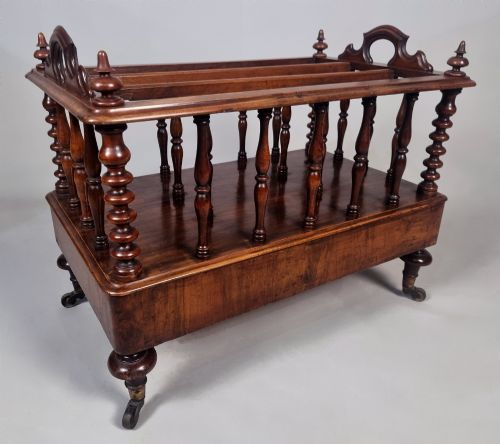
When buyers search for a dark brown magazine rack, they encounter a variety of nineteenth-century and early twentieth-century forms designed for holding papers, folios, and books. These pieces span several distinct periods including the Georgian, Victorian, and Edwardian eras, each bringing its own structural character to the category.
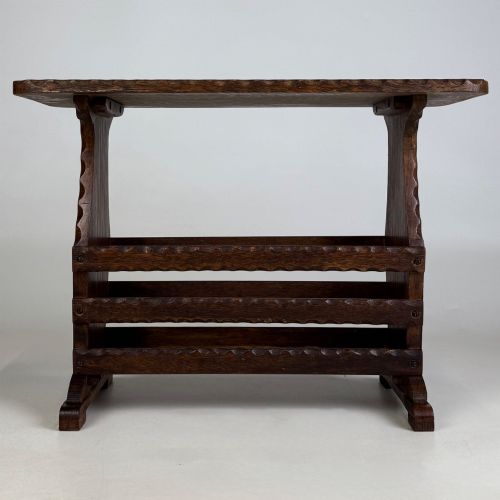
The objects listed on this page encompass not only traditional magazine racks but also related functional forms such as canterburys, book troughs, folio stands, music stands, and log carriers. Mahogany, oak, and rosewood dominate these items, presenting deep, dark brown finishes that suit both period and contemporary interiors.
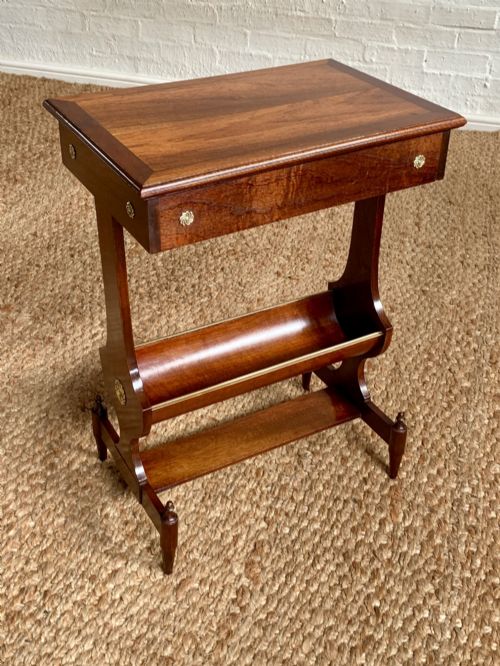
Buyers are most likely to meet mahogany and oak examples on this page, particularly Edwardian side tables with integrated magazine storage and Victorian canterburys. These pieces reflect diverse design movements including Arts and Crafts, Aesthetic Movement, and Regency styles.
How they were made
The construction of these pieces relies heavily on dense hardwoods such as mahogany, oak, and rosewood, frequently accented with materials like brass, ebony, bamboo, and lacquer. Cabinetmakers utilised traditional joinery to build sturdy side tables, open-front slope-shelf troughs, and multi-compartment canterburys capable of supporting heavy folios and logs.
Dark Brown Magazine Rack Retail Price Guide 2026
Typical asking prices for dark brown magazine rack among the pieces listed under this phrase on Sellingantiques today, from the lower quarter to the upper quarter. They describe what is for sale here now, not the wider market.
Some nineteenth-century readers clearly possessed too many folios and not enough tables, leading cabinetmakers to invent furniture that did both jobs.
What varies in quality
The distinction between standard examples and finer pieces lies in the choice of timber and the sophistication of the design, such as the inclusion of ebony banding or brass details on mahogany and rosewood frames. Grand scale items and pieces attributed to documented makers display superior joinery and more ambitious proportions than simple utility versions.
Finer items integrate storage cleverly, combining side tables or drawers with magazine racks and canterburys, whereas basic examples remain singular in their function. The harmony between the dark timber's grain and the secondary decorative elements dictates the overall visual success of each piece.
Liberty London
The Dark Brown Magazine Rack Glossary
- Canterbury
- A low, multi-partitioned stand designed for holding sheet music, books, or periodicals, often featuring a small drawer below. These originated in the late eighteenth century and remained popular through the Victorian era.
- Book trough
- An open-fronted, slope-shelf receptacle intended to hold volumes upright on a desk or beside a fireside. They are frequently encountered in Arts and Crafts designs.
- Folio stand
- A hinged stand built to display large sheets of paper, prints, or large books. Regency examples of these often display grand proportions.
- Log carrier
- A sturdy wooden receptacle designed for holding firewood beside a hearth, often constructed from solid oak in the early twentieth century.
- Aesthetic Movement
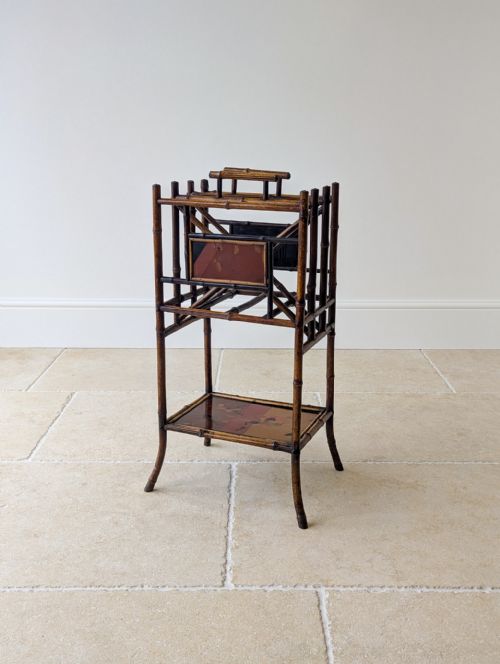
- A late nineteenth-century design style that emphasised visual beauty over narrative content, often incorporating bamboo, lacquer, and Japanese-influenced motifs into household furniture.
Dark Brown Magazine Rack: Frequently Asked Questions
What is a canterbury?
A canterbury is a low stand with upright partitions designed to hold sheet music, magazines, or folios. Many examples also incorporate a small drawer beneath the compartments for smaller accessories.
Originally created in the Georgian period, they continued to be made through the Victorian and Edwardian eras in timbers such as mahogany and rosewood.
How do I date a magazine rack?
Dating depends on observing the timber, the style, and the construction methods used by the maker. Pieces span from Georgian and Regency eras through Victorian, Aesthetic Movement, and Edwardian periods.
Stylistic clues like bamboo construction suggest the late nineteenth century, while oak slope-shelf troughs often point towards the Arts and Crafts movement.
What is a folio stand?
A folio stand is a hinged piece of furniture built to hold large books, prints, or unbound sheets of paper. They often feature adjustable frames to display items at an angle.
Larger Regency examples are particularly grand in scale and were designed for libraries and drawing rooms.
What woods were used for these pieces?
Cabinetmakers utilised a range of hard timbers including mahogany, oak, rosewood, and ebony. These woods provided the necessary strength for items subjected to daily handling of books and papers.
Accents of bamboo, brass, and lacquer also appear across different stylistic movements such as the Aesthetic and Arts and Crafts periods.