
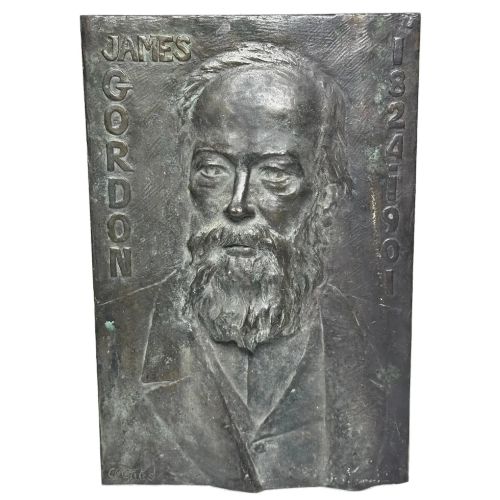
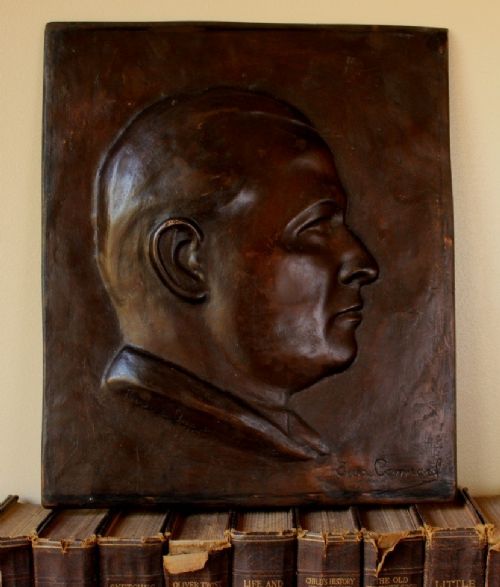
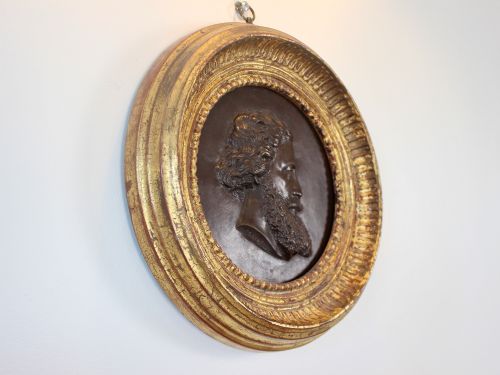

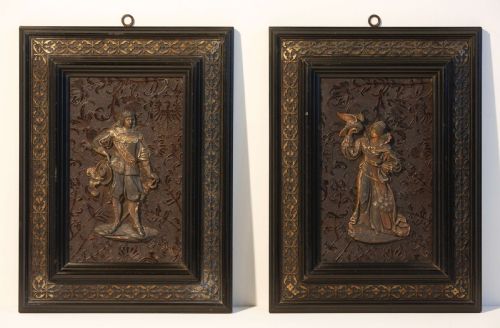


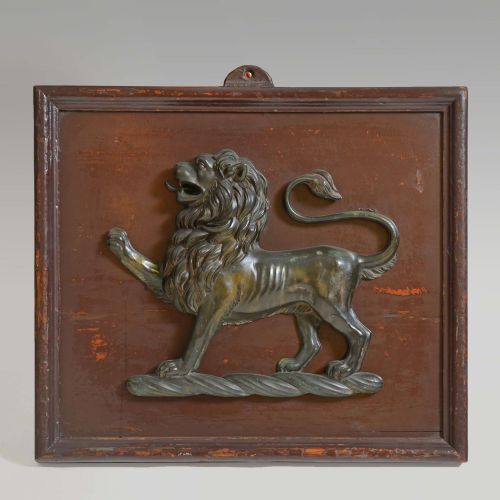


Dark Bronze Relief Plaque
A dark bronze relief plaque brings sculptural depth and historic character to a wall, offering classical portraits, heraldic crests, and figurative scenes.
Dark Bronze Relief Plaque
A dark bronze relief plaque is a cast metal wall piece that projects figures and designs forward from a flat backing. When you search for a dark bronze relief plaque, you encounter pieces designed for interior display, ranging from intimate portrait medallions to monumental wall panels.
The selections span centuries, appearing alongside related pieces in white metal, terracotta, and ebonised wood. You meet works from the eighteenth, nineteenth, and early twentieth centuries, including Edwardian portraits and Grand Tour souvenirs.
Subjects stretch from classical muses and biblical scenes to literary figures like Charles Dickens and Shakespeare, alongside heraldic crests and architectural views such as the Castello Sforzesco.
How they were made
Metalworkers cast these pieces using bronze, white metal, and brass, frequently mounting them within wood, giltwood, or ebonised frames. Certain examples incorporate cast iron or terracotta.
The relief technique builds up the design from a flat ground, capturing fine details in profile portraits, figures, and armorial bearings. Makers often applied dark patination to accentuate the depth and modelling of the cast.
A satirical nineteenth-century plaque records a refugee monkey family in America, proving that Victorian mantelpieces embraced unusual domestic humour.
What varies in quality
Quality depends upon the crispness of the casting and the sensitivity of the modelling in the figures, hair, and drapery. Softer details suggest a worn mould or a hurried secondary cast.
The quality of the material and the finish of the dark patination determine the presence of the piece on the wall. Maker signatures, specific historical attributions, and original mounting frames elevate individual examples.
Alice Gates·Eugene Canneel·MAINFROY·Ernst Wahliss·Gian Federigo Bonzagna·Coalbrookdale·De Grave Short & Fanner
The Dark Bronze Relief Plaque Glossary
- Relief
- A sculptural technique where figures project from a flat background. High relief stands out strongly, while low relief stays flatter to the plane.
- Patination
- The surface coloration and ageing of metal resulting from chemical treatment or natural oxidation. Dark patination defines the shadows and contours of the cast design.
- Medallion
- A circular or oval plaque bearing a portrait or commemorative scene. These often feature prominent profiles of historical or literary figures.
- Heraldic
- Pertaining to coats of arms, crests, and lineage. Such plaques display formal symbols associated with specific clans or families.
- Grand Tour
- Cultural travel undertaken by nineteenth-century Europeans to view classical antiquities. Plaques from this tradition often reproduce famous sculptures or architecture.
Dark Bronze Relief Plaque: Frequently Asked Questions
Are these plaques signed by artists?
Some pieces carry artist signatures, foundry stamps, or attribution marks cast directly into the metal or stamped on the reverse. Signatures help identify the creator or the producing workshop.
Unsigned examples remain common, representing standard Victorian or continental production without individual attribution.
How do I clean a dark bronze surface?
Dust the surface gently with a soft, dry brush to remove particles settled in the recesses of the relief. Avoid harsh commercial metal polishes that strip the dark historic patination.
Preserving the original surface skin maintains the visual depth and character built up over the centuries.
What is the difference between a plaque and a medal?
Wall plaques are generally larger, heavier formats designed primarily for interior display on a wall panel or room surface. They focus on sculptural relief and decorative impact.
Medals are smaller, often portable commemorative objects produced to mark specific exhibitions, awards, or historical events.