


Dark Bronze Putto Statue
A dark bronze putto statue brings classical mythology and playful winged figures into domestic interiors through sculptural bronze work.
Dark Bronze Putto Statue
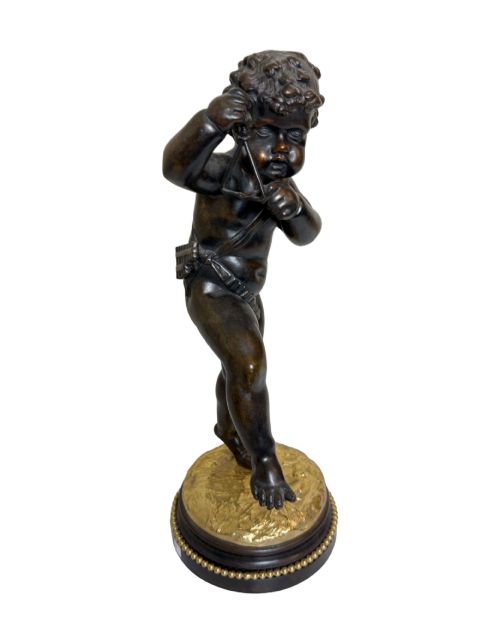
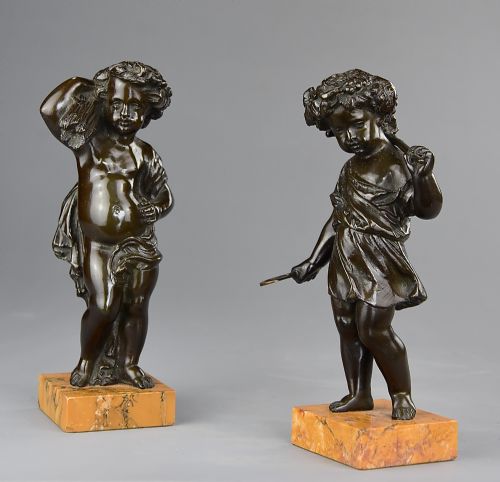
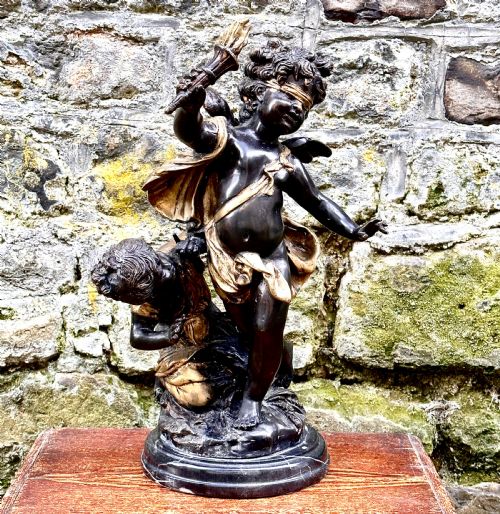
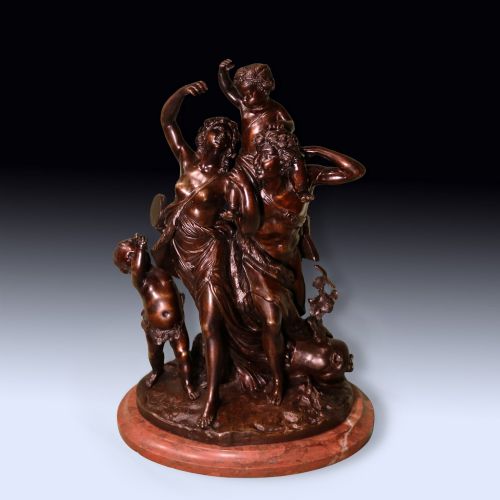
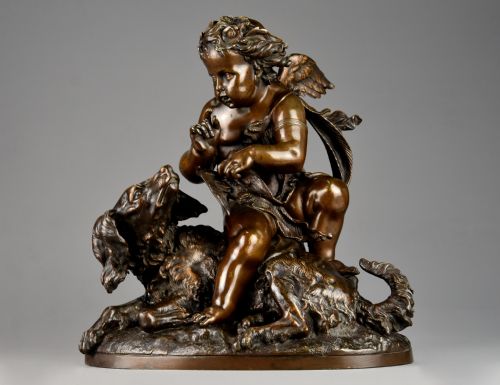
A dark bronze putto statue represents winged cherubs, infants or mythological children cast in metal, frequently appearing in forms such as sculptures, statuettes, doorstops and mantel clocks.
The dark bronze putto statue examples here span periods from the Georgian era through the nineteenth century into the mid-twentieth century, with French and Italian origins predominating.
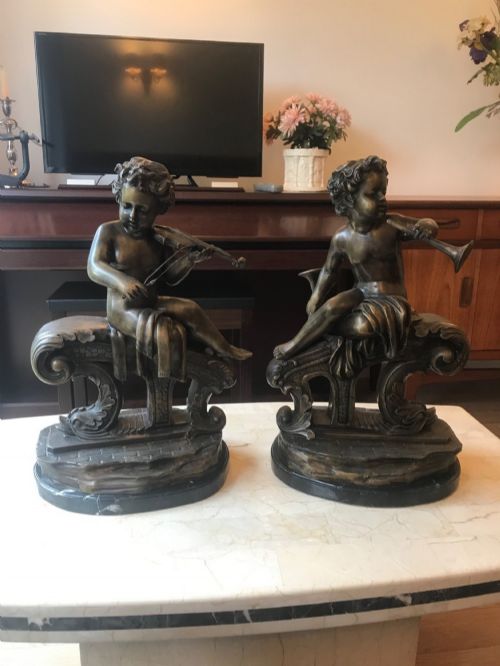
Buyers encounter single figures, pairs and sculptural groups engaged in musical, agricultural or mythological pursuits like grape harvesting with Bacchus.
How they were made
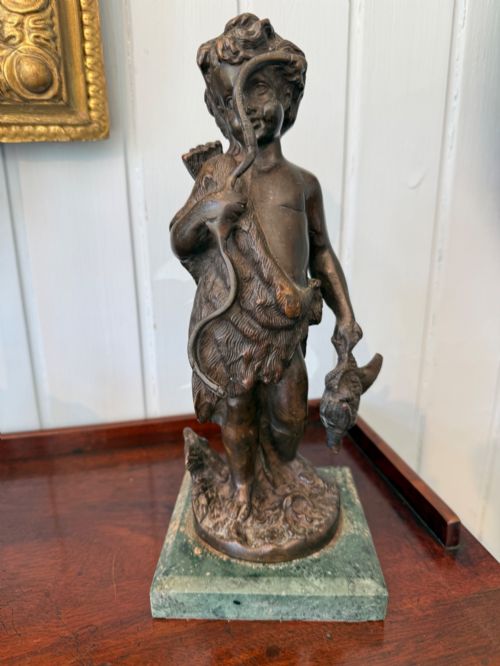
These pieces utilise bronze, often patinated to achieve dark tones, and frequently incorporate marble bases or glass and enamel elements.
Casting methods capture fine details such as musical instruments, harvest sheaves, animals and classical drapery.
Current listings feature nineteenth-century French and Italian bronze works incorporating materials such as marble, wood and enamel.
What varies in quality
Quality rests in the crispness of the chasing and the nuance of the patination upon the bronze surface.
Works associated with named sculptors or established foundries demonstrate superior articulation in the anatomy and expression of the figures.
Claude Michael Clodion·Louis Auguste Moreau·Charles Cumberworth·Bellenot Paris·Pigale
The Dark Bronze Putto Statue Glossary
- Putto
- A plump, naked male child, often winged, derived from classical art and frequently seen in Renaissance and later sculpture. They symbolise various secular and religious themes.
- Patinated Bronze
- Bronze treated with chemicals, heat or acids to produce a darkened or coloured surface finish. This technique protects the metal and defines sculptural contours.
- Grand Tour
- Cultural travel undertaken by wealthy Europeans in the eighteenth and nineteenth centuries to study classical antiquities. Figures from this context often reproduce ancient sculptures.
- Neoclassical
- A style reviving the forms and themes of ancient Greece and Rome, prominent in nineteenth-century decorative arts. It emphasises symmetry, proportion and classical motifs.
- Chasing
- The manual refinement of a cast metal surface using hammers and punches to sharpen details and remove imperfections. This finishing work distinguishes finer bronzes.
Dark Bronze Putto Statue: Frequently Asked Questions
What is a putto statue?
A putto statue depicts a winged infant or cherub, often drawn from classical mythology.
These figures commonly appear holding instruments, fruit or animals in nineteenth-century decorative bronzes.
Where were these statues made?
Many of these bronzes originate from French and Italian workshops during the nineteenth century.
Grand Tour pieces reflect souvenirs brought back by travellers visiting classical sites in Italy.
How do I display a bronze statue?
Bronze statues look effective on mantelpieces, desks or dedicated pedestals where lighting can catch the dark patina.
Pieces paired with marble bases provide stable freestanding display options for interior spaces.
How are periods identified?
Periods are determined through stylistic cues, casting techniques and signature evidence on the bronze.
Nineteenth-century examples frequently reference neoclassical revival styles and classical mythologies.