

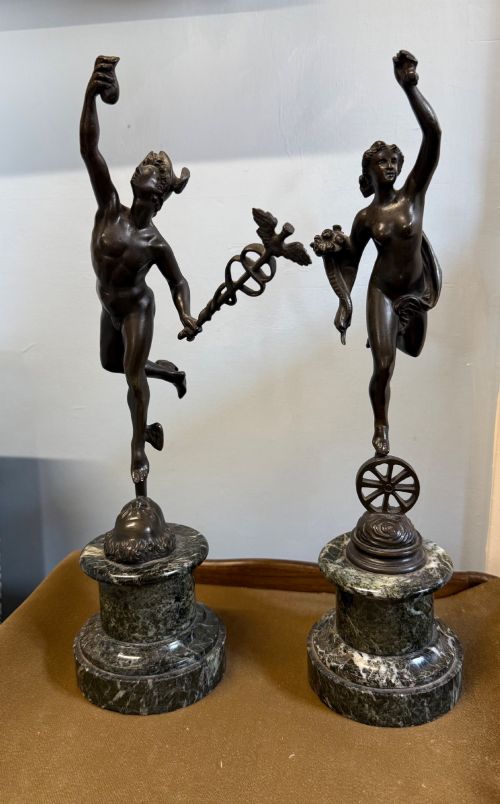
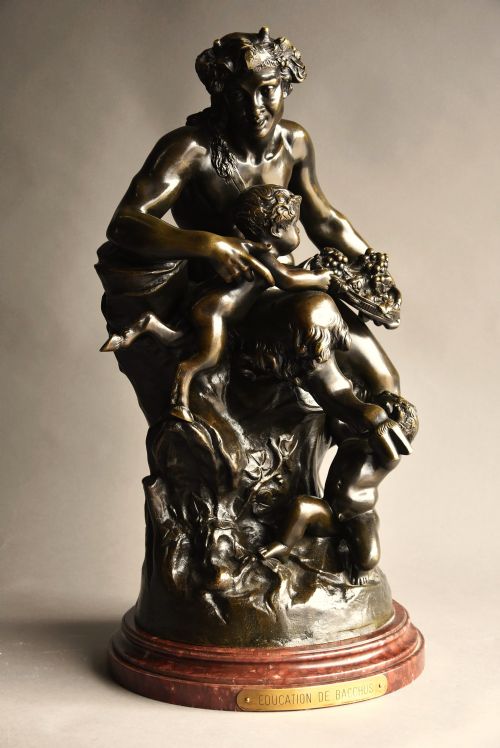
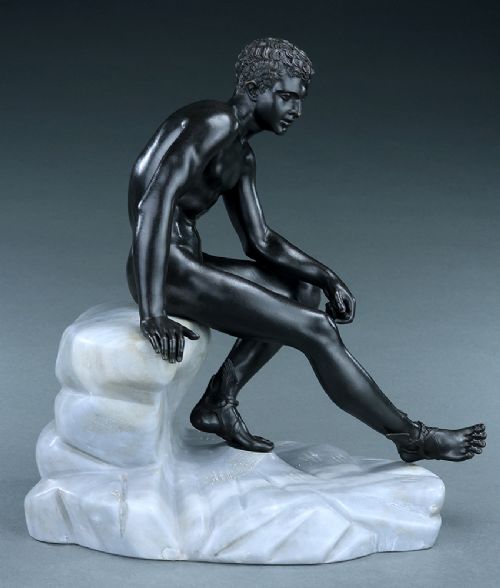
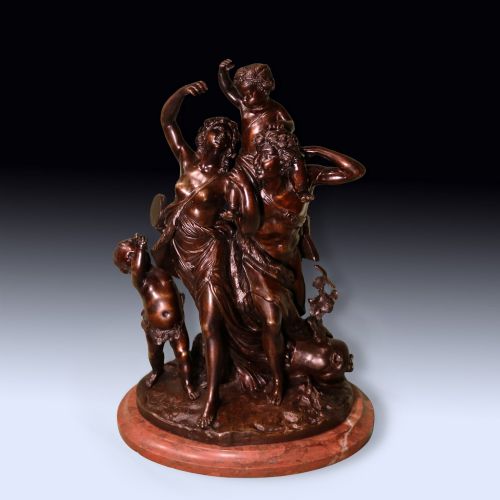
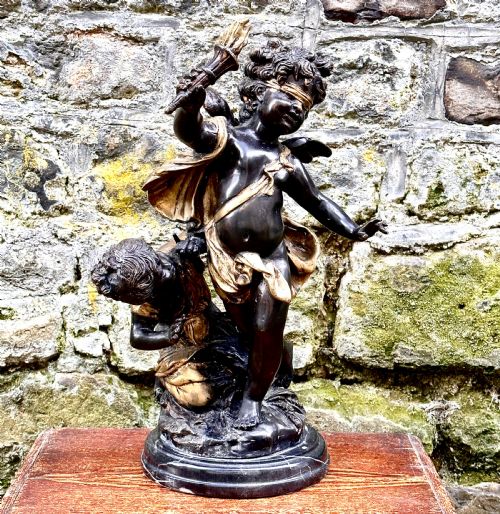
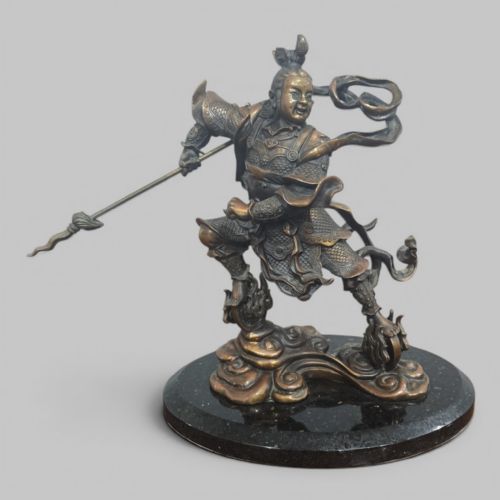
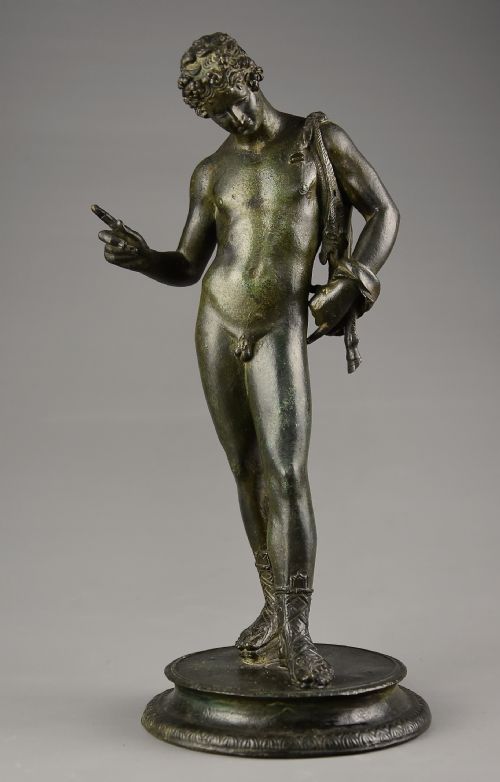
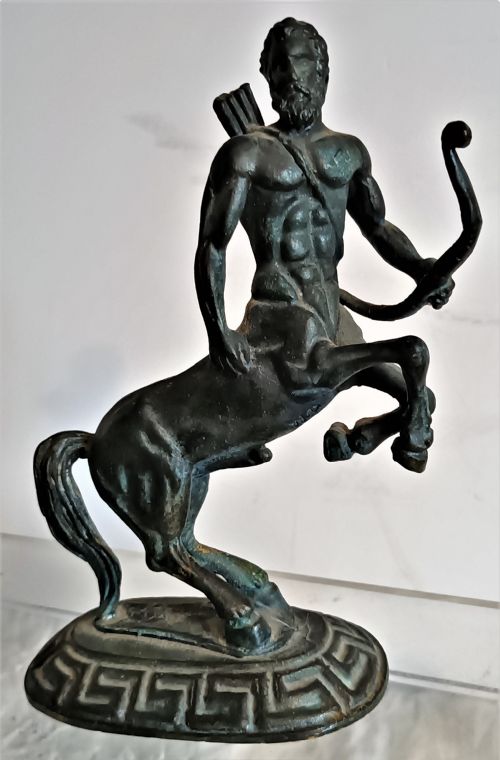


Dark Bronze Mythological Statue
These dark bronze mythological statues bring classical antiquity and nineteenth-century foundry skill into the room.
Dark Bronze Mythological Statue
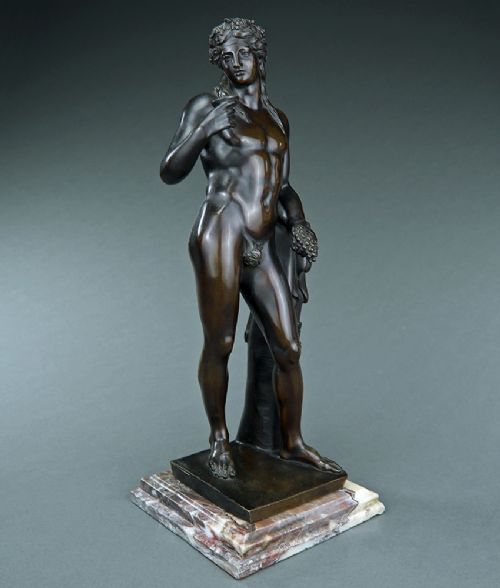
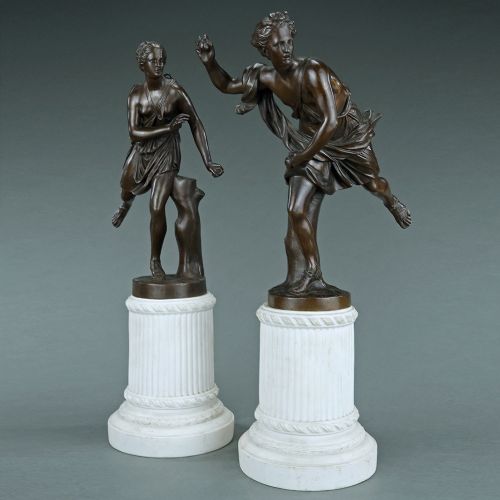
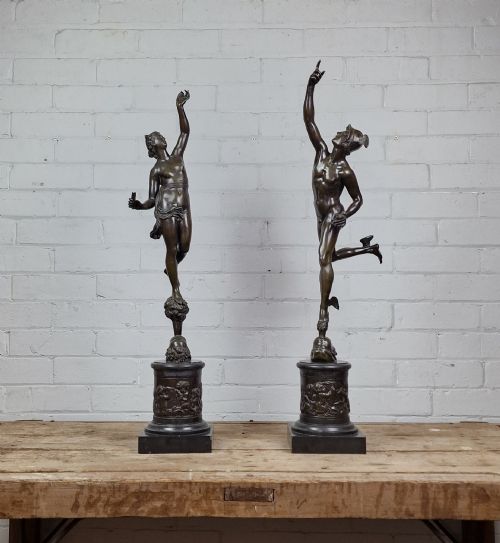
A dark bronze mythological statue depicts classical deities, nymphs, satyrs and heroes drawn from ancient literature and sculpture. When searching for a dark bronze mythological statue, buyers encounter nineteenth-century French casts, Italian Grand Tour souvenirs and reductions after famous Renaissance or antique marbles.
The subjects range from solitary figures such as Narcissus, Hermes and Diana to complex multi-figure groups like satyrs with fauns or the abduction of Sabine women. Most pieces stand upon integral bronze bases or are mounted on marble and slate plinths.
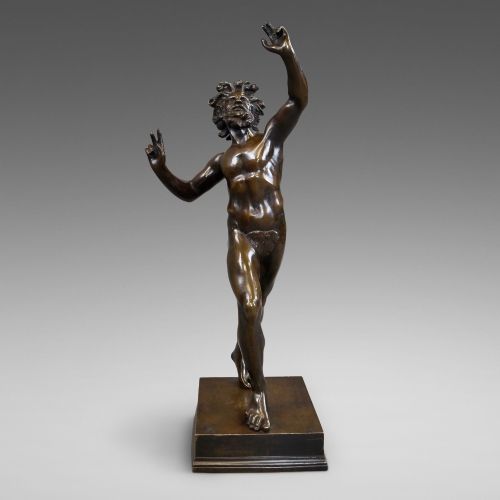
The lineage of these objects extends from direct reinterpretations of archaeological finds in Pompeii and Naples to signed works by prominent nineteenth-century bronze founders and sculptors.
Materials and Casting Techniques
Foundries utilised the lost-wax method or sand-casting to capture intricate details in bronze, ranging from hair texture to musculature and drapery. Molten metal poured into moulds produced solid or hollow figures that required meticulous post-casting chattering and filing.
Dark patination was achieved through chemical treatments applied to the hot or cold bronze surface, creating deep brown, black or dark green tones that mimic aged antiquity. Certain pieces incorporate parcel-gilding, where specific elements receive a thin application of gold leaf or gilt wash for contrast.
Heavier elements often rely on contrasting mounts of black slate, green marble or polished wood to anchor the bronze figures securely.
Dark Bronze Mythological Statue Retail Price Guide 2026
Typical asking prices for dark bronze mythological statue among the pieces listed under this phrase on Sellingantiques today, from the lower quarter to the upper quarter. They describe what is for sale here now, not the wider market.
Several satyrs and fauns on this page appear perpetually ready to pour wine or play the flute.
Assessing Quality and Execution
The distinction between ordinary production and superior quality lies in the crispness of the chase-work and the depth of the metal finish. Finer casts retain sharp facial expressions, articulated fingers and clean separation between drapery folds without soft or blurred edges from worn moulds.
Foundry signatures and reduction marks indicate commercial prestige, but the inherent liveliness of the modelling dictates artistic success. Stronger pieces display correct anatomical proportions and balanced weight distribution whether depicting a dancing faun or a meditating hero.
Barbedienne·Claude Michel Clodion·Auguste Moreau·Pierre Le Faguays·Franz Iffland
The Dark Bronze Mythological Statue Glossary
- Grand Tour
- A nineteenth-century tradition where wealthy travellers collected bronze souvenirs of classical sculptures from Italy.
- Patination
- The chemical treatment applied to the surface of bronze to alter its colour and protect the metal.
- Lost-wax
- A casting method where a wax model is melted out and replaced with molten bronze.
- Parcel-gilt
- A decorative technique where only select portions of a bronze surface are gilded.
- Reduction
- A smaller copy of a full-scale statue, achieved through mechanical pantograph devices in the foundry.
Dark Bronze Mythological Statue: Frequently Asked Questions
What is a Grand Tour bronze?
A Grand Tour bronze is a nineteenth-century souvenir cast in Italy, reproducing famous classical sculptures seen during European travels.
These pieces allowed collectors to bring classical antiquity home into their libraries and drawing rooms.
How do I identify the subject?
Subjects are identified through recurring attributes like thyrsus staffs for Bacchus, quivers for Diana, or winged sandals for Perseus.
Many nineteenth-century figures directly replicate known ancient statues discovered in Pompeii or Rome.
Why are some figures on marble bases?
Marble and slate bases provide stability for heavier bronze figures and elevate the sculpture visually.
Different coloured stones, such as green marble or black slate, were chosen to complement the dark bronze patination.
How should I clean a dark bronze statue?
Dust bronze sculptures gently with a soft, dry cloth to remove surface particles without disturbing the patination.
Avoid using water, oils or commercial metal polishes, which can strip the chemical finish and damage the antique surface.