




Dark Bronze Figural Lamp
A dark bronze figural lamp brings sculptural presence and cast-metal weight to a room, cast in human or mythical form.
Dark Bronze Figural Lamp
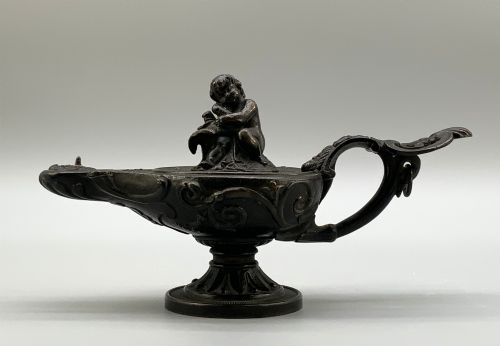
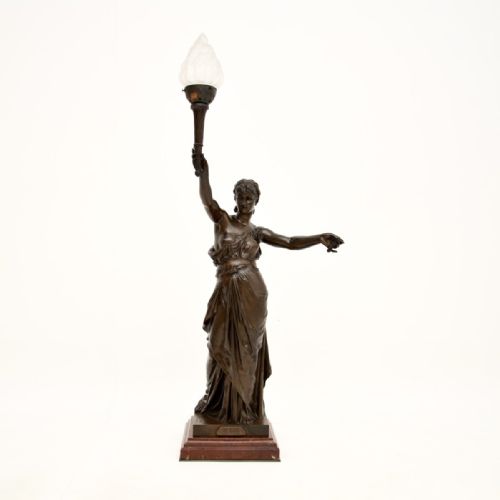
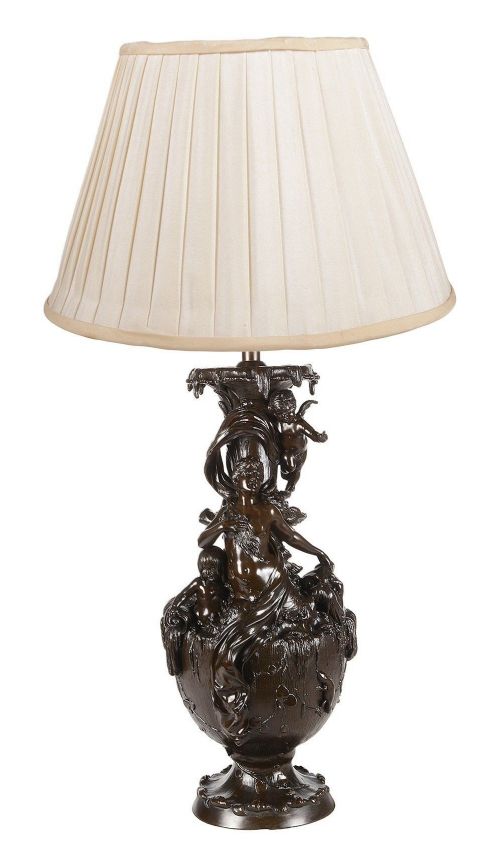
When searching for a dark bronze figural lamp, a buyer encounters pieces shaped as classical figures, maidens, putti, and allegorical subjects like Gloire Et Fortune or La Paix. These works emerge primarily from nineteenth-century French studios, alongside Regency pieces and later adaptations.
The form often takes the shape of a table lamp, a floor lamp, or a torchere standing on a marble or brass base. Many examples double as converted oil lamps or carry shades of frosted glass and fabric.
French nineteenth-century and Art Nouveau styles dominate the selection, ranging from Neoclassical figures to sinuous Art Nouveau creations by named sculptors.
Materials and casting methods
The body of the piece relies on cast bronze or spelter, often paired with structural elements of brass, wood, and china. Bases incorporate white or coloured marble plinths that add stability and weight.
Details are finished with patination to achieve the dark bronze surface, sometimes complemented by ormolu highlights or silvered treatments on spelter figures.
Listings feature works from the nineteenth century alongside Regency and Art Nouveau periods, utilising bronze, spelter, marble, and glass.
Distinctions in craftsmanship
The quality of a figural lamp rests on the crispness of the metal chasing and the fidelity of the sculptural casting. Finer pieces display sharply defined facial expressions, drapery folds, and musculature.
The integrity of the material matters, distinguishing heavy bronze and ormolu from lighter spelter alternatives. Superior mountings, such as solid marble plinths and original fittings, elevate the piece.
Emile Picault·Humphrey Hopper·Ivan Zaiec·Jean-Jules Cambos·H. Moreau·Aug. Moreau·Coutan·Adrien Gaudez·Auguste Moreau
The Dark Bronze Figural Lamp Glossary
- Spelter
- A zinc alloy commonly utilised as a cheaper alternative to bronze for nineteenth-century decorative figures. It accepts patination well to mimic heavier metals.
- Torchere
- A tall stand or lamp designed to hold a light source high. These often take the form of a classical maiden holding a light aloft.
- Ormolu
- Gilt bronze created by applying a finely ground high-carat gold-mercury amalgam to a bronze object. The technique produces a rich golden finish alongside dark patination.
- Patina
- The surface sheen and coloration developed on metal through age or chemical treatment. On these lamps, it provides the characteristic dark bronze tone.
- Grand Tour
- A cultural journey undertaken by nineteenth-century elites who acquired classical bronzes and antiquities in Europe. Pieces from this context often reference ancient sculpture.
Dark Bronze Figural Lamp: Frequently Asked Questions
How do I distinguish bronze from spelter?
Bronze is heavier, colder to the touch, and yields a clear metallic ring when tapped gently. Spelter is a softer zinc alloy that feels lighter and shows a duller sound.
Closer inspection of the base often reveals the underlying greyish metal where the dark patination has rubbed thin on a spelter casting.
Were these always electric lamps?
Many examples began as oil lamps or candlesticks before receiving electrical wiring during later conversions. The original burners or reservoirs are frequently adapted to house lamp fittings.
Retaining the original weighted base and sculptural stem while updating the internal wiring allows these antique forms to function safely in modern interiors.
How should I clean a dark bronze surface?
Dust the figure gently with a soft dry cloth to prevent the accumulation of grit in the crevices of the casting. Avoid abrasive cleaners, polishes, or water, which can strip the original dark patination.
Applying a very light coat of microcrystalline wax occasionally helps protect the metal surface from atmospheric moisture.
What is the significance of the marble base?
Marble plinths provide essential structural stability for tall, top-heavy metal figures and torchere lamps. They add visual contrast to the dark bronze body through white or veined mineral patterns.
Neoclassical and nineteenth-century French designs routinely mounted figures on heavy stone plinths to ground the composition.